
By: Brenda Vega
For college students across the country, COVID-19 has meant a drastic decline in mental health. Long before the pandemic erupted this year, there were signs of a mental health crisis brewing on college campuses nationwide. And now the uncertainty of the future, coupled with restrictions on social gatherings, have left many students feeling more isolated than ever.
“I think the hardest truth to face is that you are not in control of your emotions and feelings. it’s lonely and it’s hard and no one talks about it,” said Jasmin Sanchez, a rising senior at USC who suffers from anxiety and depression and has been living alone since the start of the fall semester.
Sanchez is not alone with this truth. The COVID-19 pandemic has put significant stress on college students, many of whom are worried about increasing financial pressures caused by the pandemic and the lack of easily accessible mental health care.
A survey of more than 18,000 college students on 14 campuses, published July 9 by the Healthy Minds Network, found that the rate of undergraduate and graduate students reporting symptoms of depression, stress and anxiety have long been on the rise, and this year’s academic, social and financial upheaval on college campuses as a result of the pandemic has only added to the struggle.
“COVID has affected the way I feel about going out, I no longer like taking naps or going outside at all because I’m scared and I feel like I’m putting myself at risk, and my family. So I stay away from everyone. I don’t think that’s healthy, I have no control over anything,” said Sanchez who will have to attend classes online in spring as well.
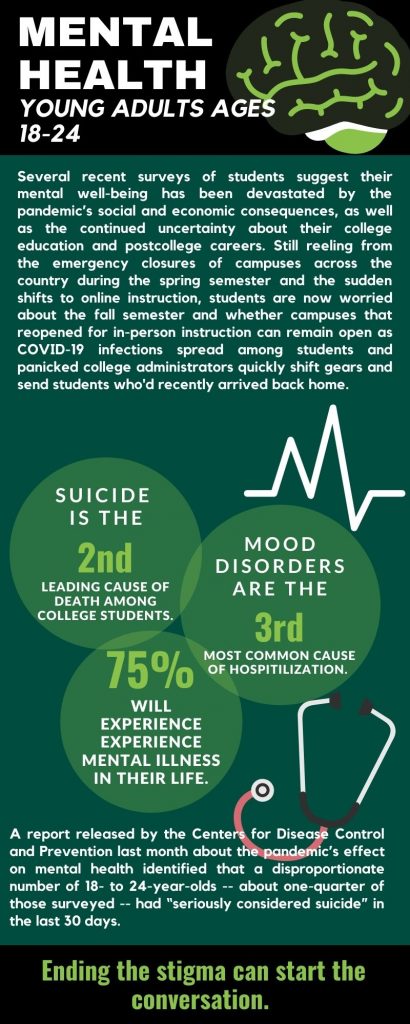
Recent studies have also found that one in four college students has been diagnosed or treated for mental disorders in the past 12 months in the United States alone.
In recent years, mental health of college students has become a top concern across the country and the world. College students’ mental health in the U.S. is deteriorating at a steady rate, and there are several reasons for such a situation.
Mental health problems can affect many areas of students’ lives, reducing their quality of life, academic achievement, physical health, and satisfaction with the college experience, and negatively impacting relationships with friends and family members. These issues can also have long-term consequences for students, affecting their future employment, earning potential, and overall health.
Suicide is the 2nd leading cause of death among students, as well. This shows a drastic need for resources and support as 2021 nears.
Esmeralda Yzguerra, a sophomore at USC has also encountered hardships and confusion as schools across the country have gone virtual in response to one of the most unprecedented health pandemics the world has ever seen. Since March, she has not been able to visit her siblings.
“The pressures of being safe and keeping my family safe has been a lot. Before the pandemic I was really organized and managed my time well but that has faltered.” said Yzguerra who was used to studying with friends at the library or exploring campus during her first year at USC.
Many schools like Cal State LA and UCLA have made it a focus to concentrate on enhanced support for their students and local community.
“Our approach is prudent and will allow students to make steady progress toward their degrees, while ensuring the safety of everyone in our community. I am confident that Cal State LA students will continue to receive an excellent education that prepares them for future success.” said Nancy Wada-McKee, Vice President for Student Life
At UCLA, another California public university facing high rates of mental illness among students. A task force titled “UCLA Against COVID” has been able to not only provide help for their students but also the local LA county by designing and sharing multilingual information across social media platforms.
“Starting in March, there was COVID news everywhere but it wasn’t precautionary measures just headlines. We needed resources that would be available to the diverse LA community that also didn’t speak English. We also started communicated with clinics, non-profits, and hospitals to promote our project,” said Lopez who is currently a public health grad student at UCLA.
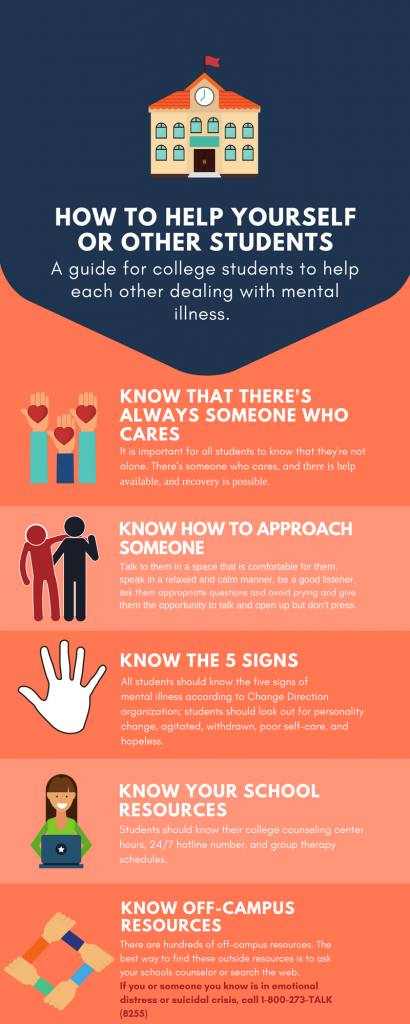
The effects of COVID-19 will continue to sweep the nation. Yet these honest conversations about mental illness and it’s effect on students are happening. Hope exists for the millions suffering through a silent struggle each day
Colleges are working rapidly to improve upon a crisis that has slowly risen and an emphasis on mental health services and support are expanding.
This will hopefully see a new trend in the way colleges and universities treat illnesses such as depression and anxiety for this and future generations. The fact that students are reaching out and looking for help is a huge step in the right direction of advocating for destigmatizing mental illnesses.
You should seek help as soon as you or a loved one recognizes that this could be a problem for you. If you or someone you know is in need of help, please reach out to 1-800-373-TALK. You are not alone, you are loved.
Other Mental Health Resources
National Suicide Prevention Lifeline 1-800-273-8255
National Drug Helpline 1-888-633-3239