
Vitriol has always been part of political debate. That’s why clips such as 2008 Republican nominee John McCain calling eventual winner Barack Obama “a decent, family man” whom he “happen[ed] to have fundamental disagreements with” have been able to retain their impact. They stick out.
Until recently, however, vitriol was very rarely the point.
There are many root causes of the world’s changing politics, but there has been one clear result: the rise of modern right-wing populism.
Populism is an approach to politics which stresses the battle between “the people” and an othered group, often referred to either as a lesser, threatening group or an all-powerful one. On the left, this often manifests as references to class divisions and attacks towards “the 1%.” On the right, this often manifests itself as anti-immigrant policies, heightened nationalism and more.
Moises Naím, a Distinguished Fellow at the Carnegie Institution for Peace and former editor-in-chief of Foreign Policy, groups populism with polarization and the “post-truth era” — a term used to describe greater dissemination of false information and a less clear reality — to form the three ways modern autocratic leaders aim to grow their power.
Over the last decade, those issues have been met with significantly more aggressive rhetoric.
When accepting the Republican Party’s nomination for president, Mitt Romney said “We are a nation of immigrants. We are the children and grandchildren and great-grandchildren of the ones who wanted a better life, the driven ones, the ones who woke up at night hearing that voice telling them that life in that place called America could be better.”
His policies were not pro-immigrant, but the way Romney spoke about such issues never approached the bombast Trump and others like him have.
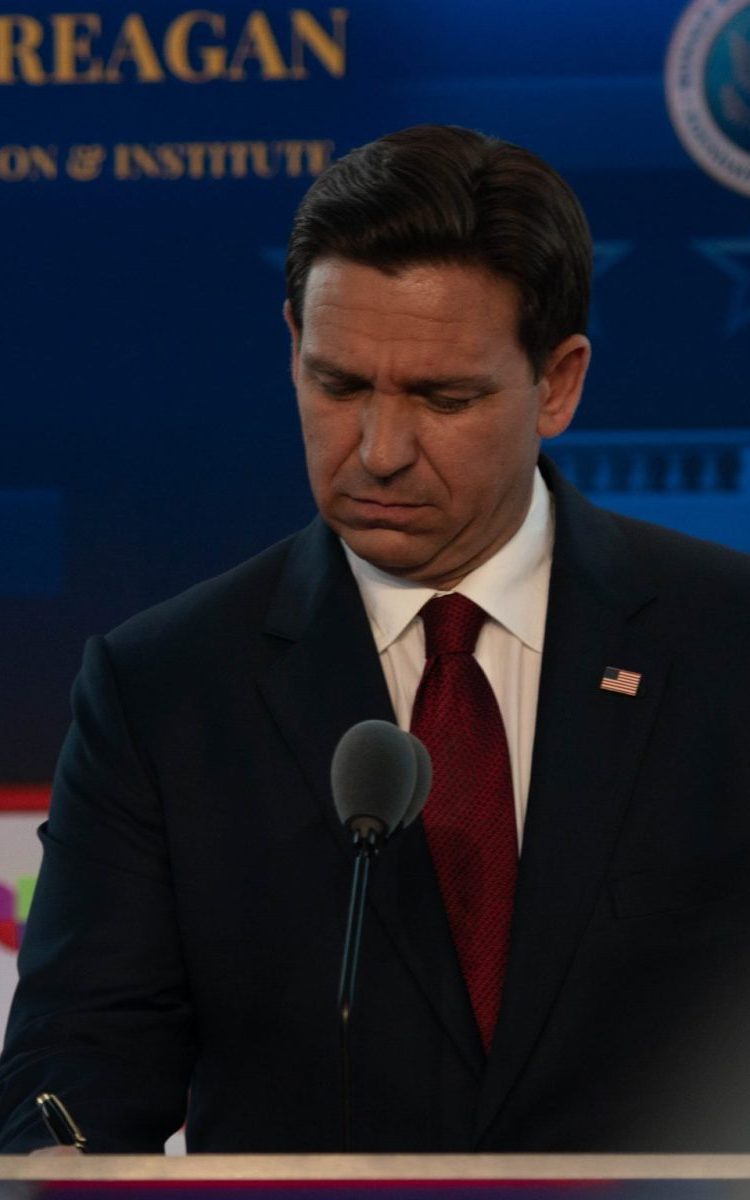
The party’s next candidate famously called Mexican immigrants “rapists and criminals.” Texas Gov. Greg Abbott and Florida Gov. Ron DeSantis have both sent immigrants to other states, some allegedly under false pretenses.
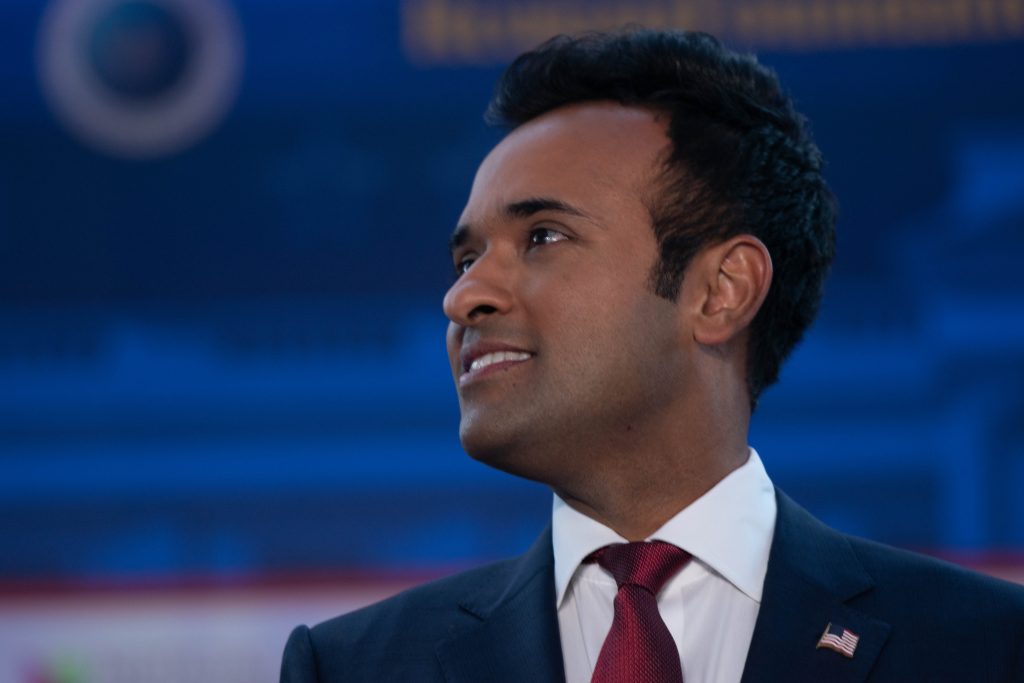
The list of right-wing populist issues has expanded as well. News media was frequently attacked as “fake news” and “the enemy of the people” by a sitting president. Many politicians such as DeSantis and businessman Vivek Ramaswamy have taken to labeling any social movement they don’t approve of as “woke.”
Those in the audience for the second Republican presidential primary debate at the Reagan Library in late September shared in interviews their own views of populism — namely that it means nothing.
“I don’t even register when they say the word ‘populism,’ it just doesn’t resonate with me at all,” said Dean Kunicki, who previously chaired the Ventura County Board of Education. “I think it’s just one of those platitudes that everybody throws out — now it’s the popular buzzword.”
“You know what, I’m not sure what that means to me but I know DeSantis and Vivek have been put in that category,” said Tudy Trgovac, who attended in support of Ramaswamy but left uncertain.
“It doesn’t really mean anything, I don’t know that word,” said Alixe Mattingley, deputy press secretary under Ronald Reagan and then-Vice President George H.W. Bush.
Fox News host Steve Hilton agreed with debate attendees that today, the word populism has little meaning. He does not, however, believe that was always the case.
“There was a time when it was a useful indication of a new direction in terms of policy for the Republican Party,” Hilton said.
Over the last half century, Hilton postulated, the “establishment” — which he defined as the consensus between parties — was in favor of unrestricted globalization and trade, but relaxed about the consequences. Communities declined as manufacturing moved abroad, helping fuel inequality. Donald Trump’s success as a candidate, Hilton said, came through his willingness to talk about that as an issue, as he did in the run up to the 2016 election in Detroit.
“The city of Detroit is the living, breathing example of [Hillary Clinton]’s failed economic agenda. Every policy that has failed this city, and so many others, is a policy supported by Hillary Clinton,” Trump said. “She supports the high taxes and radical regulation that forced jobs out of your community… and the immigration policies that have strained local budgets and the trade deals like NAFTA, signed by her husband, that have shipped your jobs to Mexico and other countries…”
That’s not the only view on what motivated Trump’s rise. Tim Miller was Jeb Bush’s campaign manager in 2016 and witnessed Trump’s political ascendence first-hand. He is now a prominent “never-Trumper.” He acknowledges the issues Hilton mentioned had an effect, but disputes that a movement as large as Trump’s would have come about because of widespread anger at trade policy.
Miller sees Trump’s rise instead as a result of how society looks and what it values.
“Some of it is just more of a loss of cultural cachet and a feeling among people on the right that god-fearing white men and straight relationships are no longer the heroes of our culture,” Miller said. “I was watching one of the New York Young Republicans’ speech… and one of the speeches from that group was like ‘Our heroes are Davy Crockett and Donald Trump, their heroes are Dylan Mulvaney and George Floyd.”
“It speaks to this, like, ‘Heroes should be strong, straight, white guys who are in Christian marriages,” Miller added.
Miller also noted the changes in media over time. Conservative outlets of the past, he said, published articles on John Locke and classical liberalism. Now, however, the Rush Limbaugh model of populist talk radio has taken over.
“If you’re a conservative, you’re watching Fox, Newsmax, [One America News], talk radio, facebook, your Twitter feed, your TikTok is all very populist culture,” he said. “They are exacerbating people’s feelings of resentment. They are radicalizing people… It’s more interesting to hear Tucker [Carlson] talk about how the elites are out to get you than it is to read a National Review piece about regulatory reform.”
Although right-wing populism has had significant electoral success in recent years, it has struggled in many countries to remain effective.
Trump’s support in the Republican Party remains high, but his polling for the general election will likely drop off when he’s back in front of people on a regular basis, at least outside of mentions of his court cases for the 91 crimes he’s been accused of committing.
He also lacks a clear successor, in part because no politician in the country has managed to gain the same hold.
“He is kind of like a Frankenstein monster built out of the New York tabloid culture,” Miller said. “The other thing, Trump just had these weird, heterodox personal views that just happened to overlap with what regular people felt.”
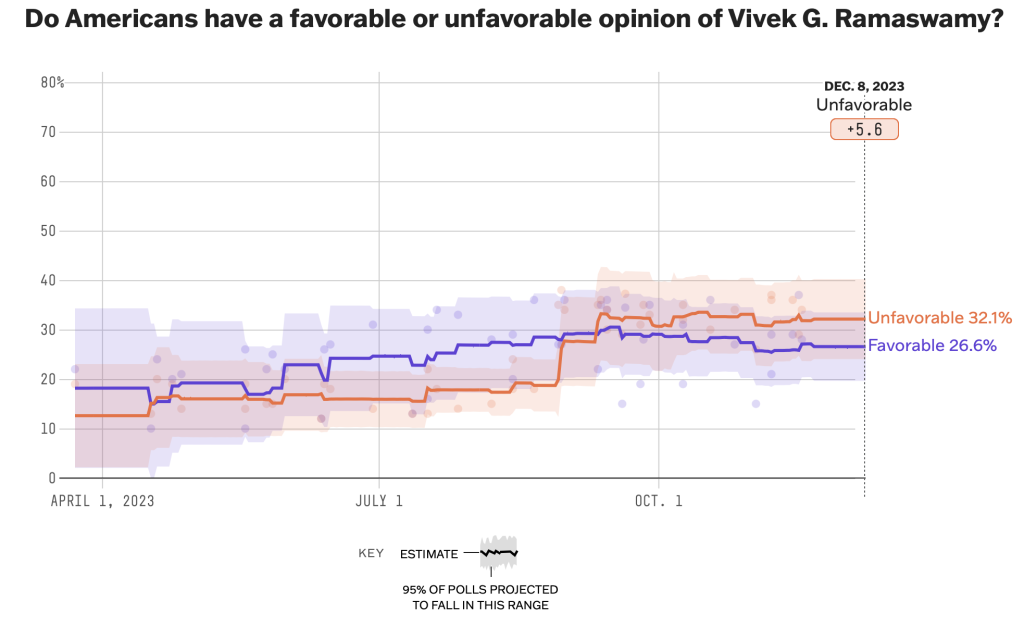
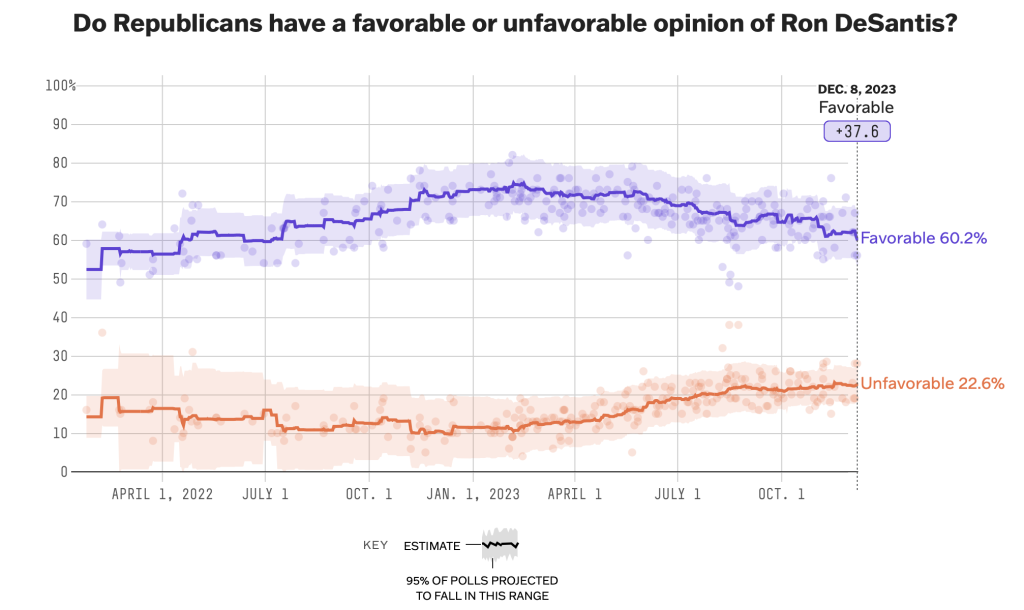
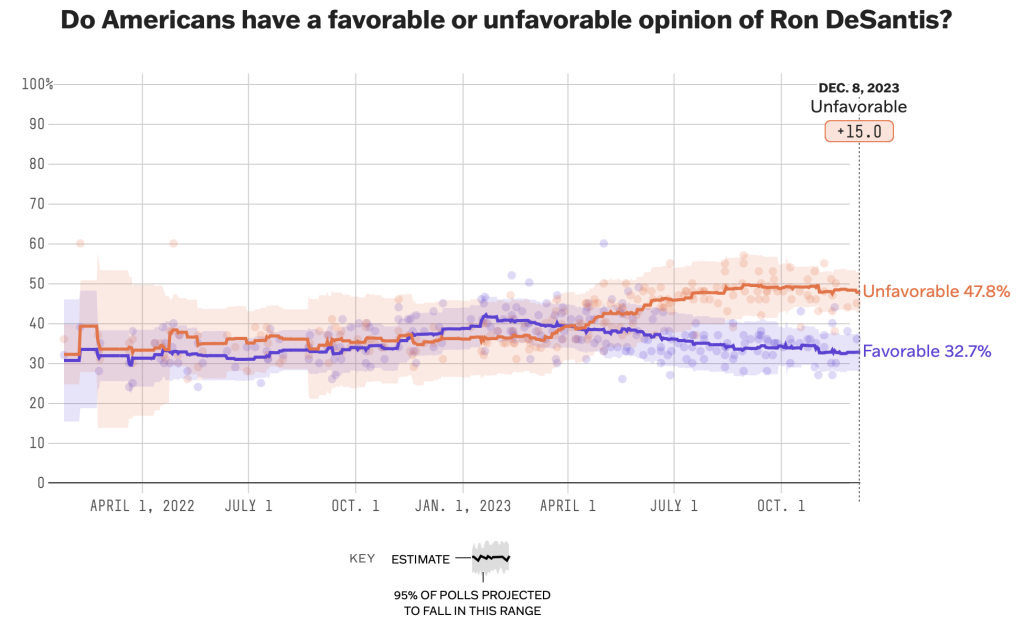
Ramaswamy and DeSantis are two such examples — politicians who have attempted to emulate Trump but lack a key element of Trump’s success. Ramaswamy lacks some of Trump’s ability to line up on policy with his sect of the party and has struggled to avoid coming across as a nerd. Most of the time, DeSantis lacks Trump’s bombast and ability to speak on his feet.
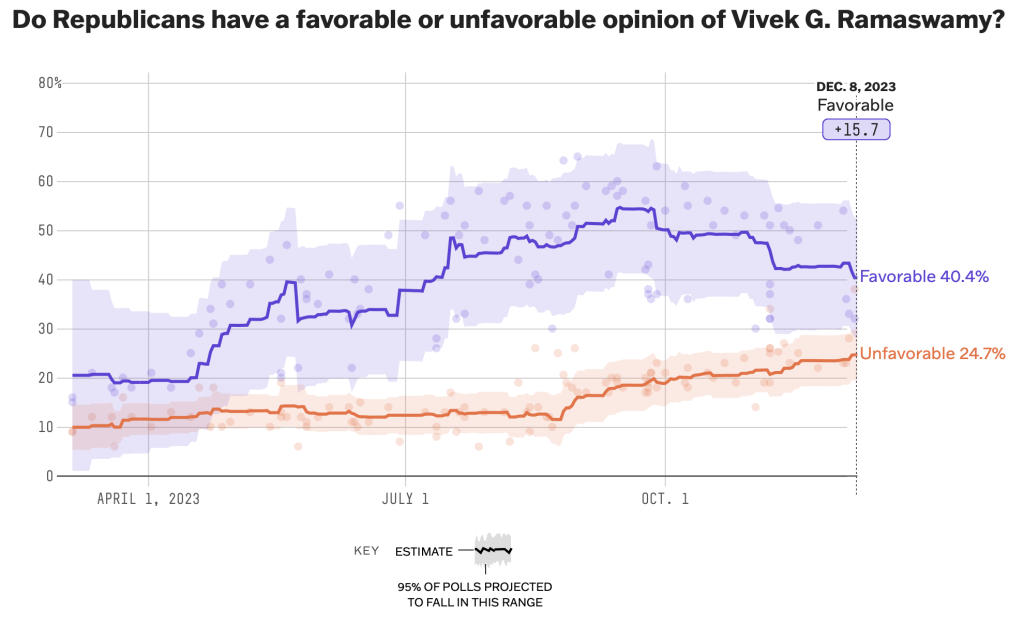
Like Trump, though, Ramaswamy and DeSantis are also significantly more popular within the GOP than at a national level.
DeSantis doesn’t always struggle to speak with authority and panache, however.
In a debate with California Gov. Gavin Newsom, he managed to draw in a room of college students, mostly Democrats, and make them laugh.
USC’s Center for the Political Future hosted a debate watch party during the event, during which thirty-odd students, professors and experts packed into a small lobby, jostled for space, and argued during ad breaks about what the debaters should be saying.
Even in a strong performance, however, students noticed moments when he leaned into populism or was lax with the truth.
His brags that he “back[s] the blue” brought on sighs and rolled eyes. His claim that he “refused to let [Florida] descend into a Faucian dystopia” evoked similar reactions.
The Yale and Harvard graduate’s references to the “elite” never landed in the room. As he and Newsom talked over each other more and more, with Hannity doing little to stop them, students began to speculate that DeSantis’ microphone was louder. They lamented that many questions asked denigrated California before the governors had a chance to respond.
The debate’s advertised live fact-checking and stat-based questions did not go over well in the room.
“I think it’s interesting that every graphic shows Florida doing better than California,” one student said.
“The graphs are way too general, the point of graphs is to be specific,” another added.
DeSantis’ strategy in the debate didn’t excite students, even though it elicited laughter. He hasn’t taken a stance, one student complained in a room suddenly far emptier than when the debate started, he just said Florida works.
The Florida governor’s continued denigration of Covid as having been a threat at any time, the individual anecdotes he used to deny or justify whole political issues and his outward reverence to respected governmental organizations — the military and police — all fall under the populist and post-truth umbrella.
The United States is not the only country with populism on the rise.
“Most of the analysis of America and of Trump I see tries to explain him based on things that happened here — You know, change in free trade policies, Trump’s personality, The Apprentice,” Miller said. “Most of them kind of just ignore that you’ve got mini-Trumps in Brazil and India and Hungary and France.”
The United Kingdom has dealt with similar struggles with populism.
In 2013, then-Prime Minister David Cameron was forced to promise he would run on an issue the right wing of his party had begun badgering him about: leaving the European Union. The issue had been bandied about in the fringes of the Conservative Party but was gaining traction.
Renegotiations with the EU began in 2015, but the deal Cameron came back with was not to the right’s liking. In early 2016, the then-Prime Minister announced a June referendum. At the time, polls predominantly showed the public as wanting to remain a part of the EU.
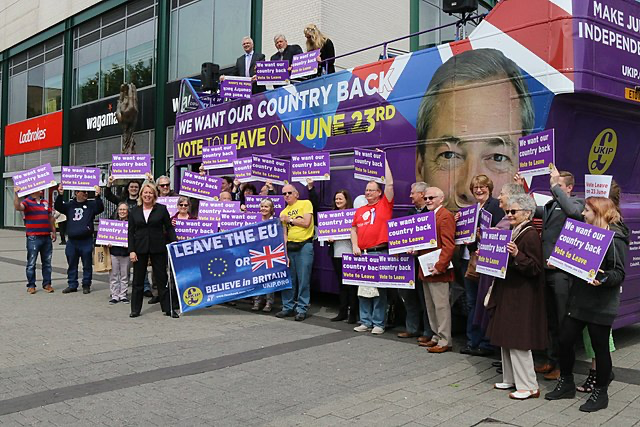
Quickly, the “Vote Leave” campaign got underway.
It claimed leaving the EU could lead to an additional £350 million pounds in funding for the National Health Service every week, even plastering it on the side of a bus. The campaign also advertised that Britain would be able to trade with whatever country it wanted, control its borders and have a “fairer system” of immigration. The primary slogan was “Take back control.”
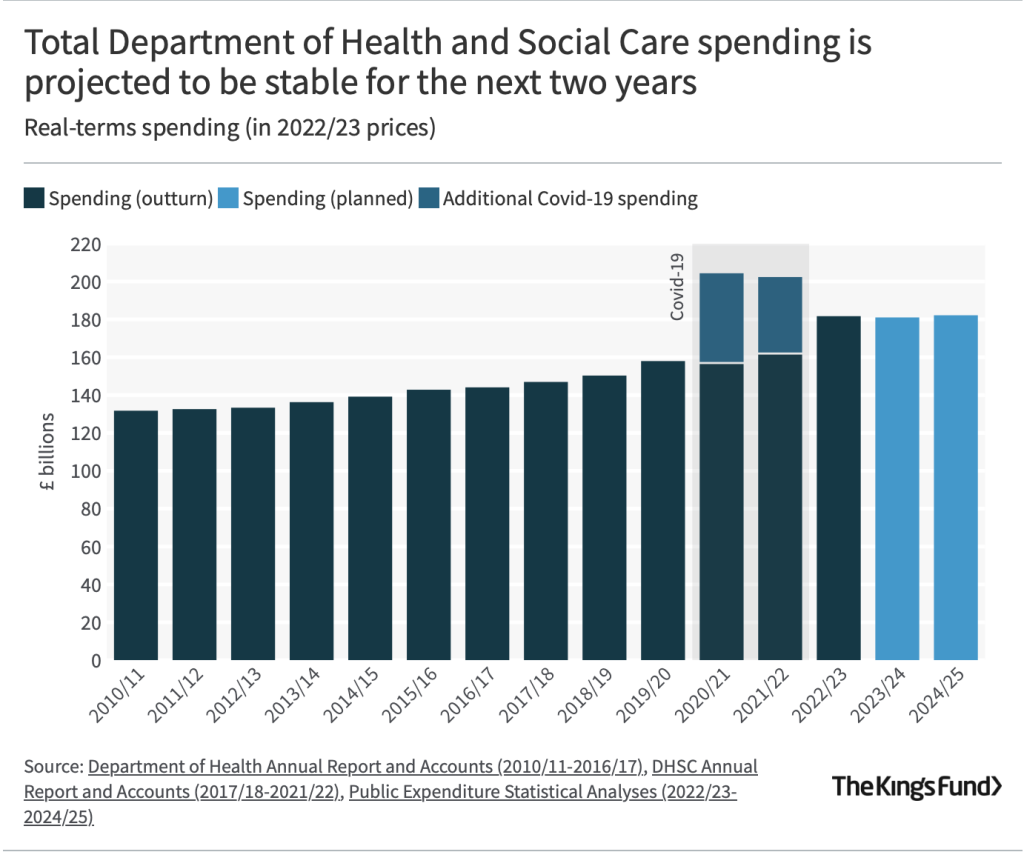
Seven years after the vote, none of those have come to pass. The NHS budget did not change significantly, except during the height of Covid-19.
The trade freedom espoused has been hampered at times by “traffic chaos” for goods entering and exiting the country. The “fairer system” of immigration now involves sending asylum speakers to Rwanda.
Since Brexit passed, the Conservative Party itself has struggled to find stability.
Cameron resigned as prime minister because he felt the country’s leader should believe in the policy that would suddenly dominate the political discourse, giving way to Theresa May.
May struggled to get the party to come together on a deal with the European Union and abruptly called for a general election in the hopes of gaining enough ground in parliament that she could pass a Brexit deal without being at the whims of MPs who wanted to leave the EU without negotiating a deal.
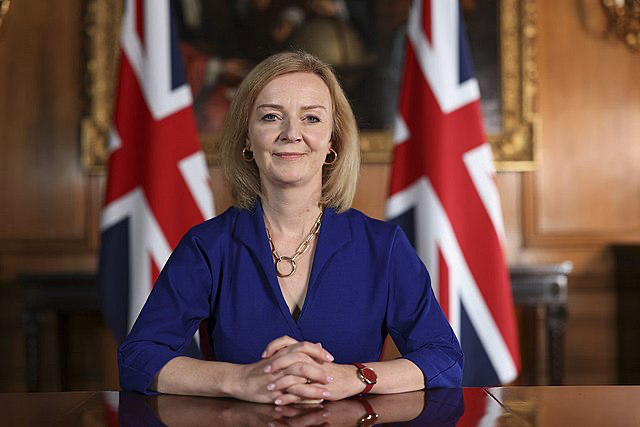
Her plan backfired and she had to enter a coalition with the Democratic Unionists Party, a right-wing party in Northern Ireland. She quickly found herself under pressure from within the party and resigned. A party leadership race led to the promotion of then-Foreign Minister Boris Johnson to the premiership.
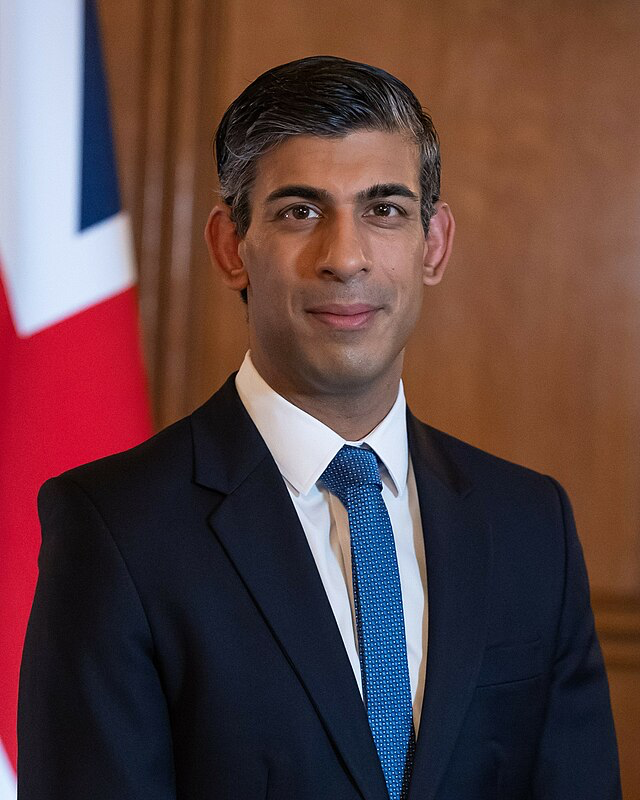
Johnson, like Trump, lacked a clear successor when he was ousted by his party for a myriad of scandals. As such, a tumultuous leadership campaign broke out between eight candidates, which began by having candidates make their case to other Conservative members of Parliament, culminating in a battle between Liz Truss and Rishi Sunak.
Many Conservative Party members — British citizens who pay to be part of the party and were the only ones with the chance to vote on the party’s next leader — were Boris Johnson supporters who felt betrayed by Sunak’s early move to oust the prime minister they had elected, allowing Truss to claim victory.
Within two months, she was gone.
On her second day in office, the Queen died. On her 18th day in office, after a 10-day mourning period, she and her chancellor, Kwasi Kwarteng, introduced a “mini-budget” which was received so poorly the economy crashed as the measure was being read in the House of Commons — the pound lost eight cents to the dollar in hours. The International Monetary Fund publicly criticized the budget. She resigned weeks later, and Sunak was put in charge.
That’s five prime ministers in seven years — hardly a sign of a functioning party.
Not only has the party struggled internally, its polling numbers have been some of the worst in its storied history. While Sunak initially stabilized the party’s support after Truss’ two disastrous months in charge and has used less populist rhetoric than his two immediate predecessors, the Tories’ popularity has hovered at around 27% all year, compared to Labour’s 45%.
For more on the international rise in populism, see the video below.