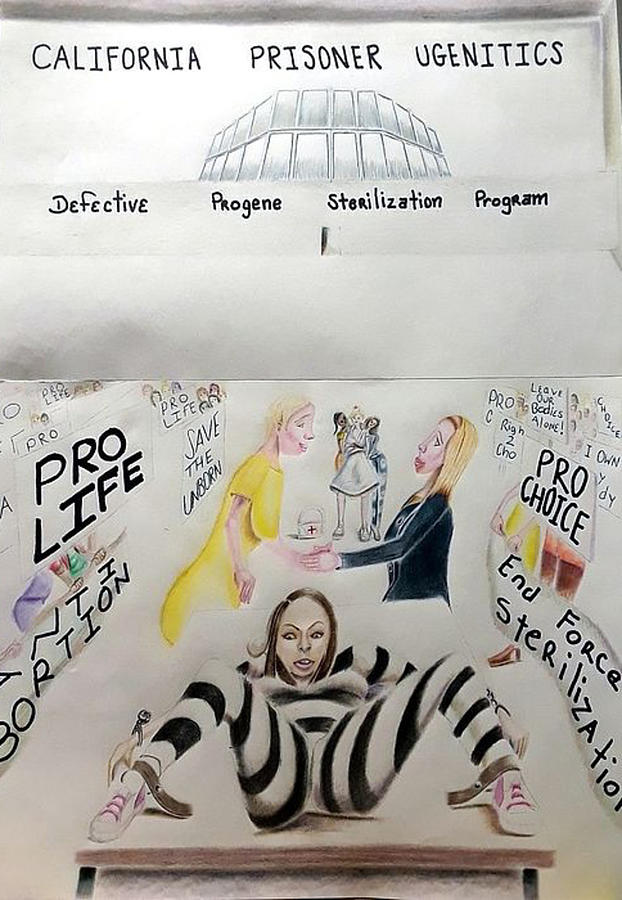
HIDDEN CHAINS
PROPOSITION 6
AND THE PROLIFERATION OF SLAVERY
IN CALIFORNIA'S PRISON SYSTEM
BY JOSH FLOWERS
About 600 miles north of Los Angeles, wedged away from society in a desolate crevice of the Sierra Nevada Mountain Range, eight miles from the nearest sparsely populated town, in a region that experiences both sweltering summers and bone-chilling winters sits California’s High Desert State Prison (HDSP).
Located in an area so remote visitors must trek outside state lines and cross back over just to gain entry, the supermax facility stands as an architecturally brutalist landmark wrapped by a perimeter of 364 miles of electrical fencing and devouring over 1,100 acres of an otherwise barren landscape.
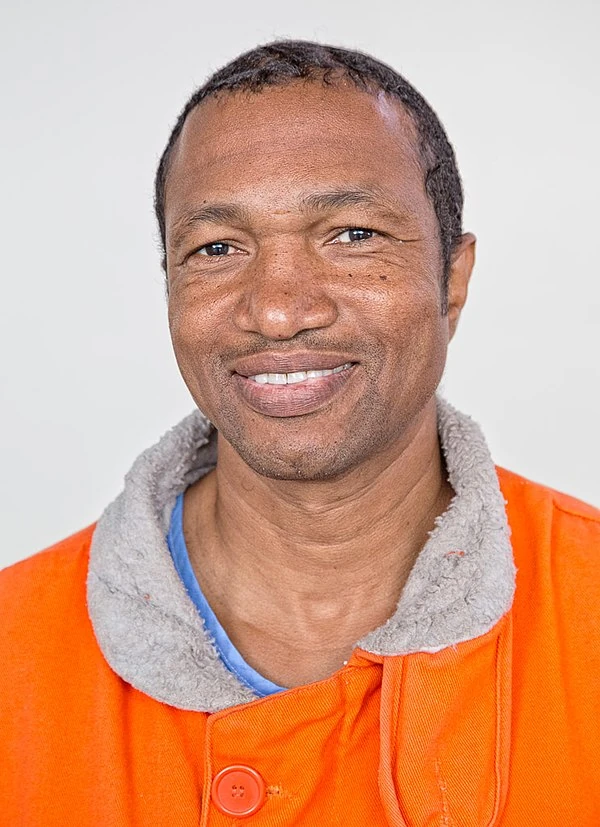
HDSP has capacity for about 2,300 individuals designated by the state as Level IV – the highest classification you can receive. Before he was transferred to the California State Prison in Lancaster County several years ago, Donald “C-Note” Hooker was one of those individuals.
“It’s the worst prison in the state of California,” he attests. “I don’t make that assessment lightly.”
Hooker spent 13 years incarcerated at the maximum-security complex where he was involved in several riots and subjected to bouts of solitary confinement in one of the state’s highly controversial Security Housing Units.
“I feel that I still have PTSD from that prison,” he quietly tells me over the phone.
Despite the suboptimal quality of our call initiated by Hooker’s prison-issued tablet, I still hear slight tremors disrupt his usually strong and confident baritone voice as he recounts his experiences in a facility designed to “rehabilitate” its inhabitants. Hooker still holds a lot of the pain brought to him by both guards and fellow inmates during his time at HDSP, but it’s also where he learned to channel that pain into power.
Now a staunch activist for prison reform working from the inside out, Hooker has spent the last several decades behind bars learning to draw, paint, and write plays and poetry that express the plights of California’s prisoners. He’s sure to let me know he’s 100% self-taught but gives credit to several of the vocational programs he’s participated in as opportunities to hone and showcase his skills.
However, these programs – ranging from coding classes to masonry courses – aren’t always available to every incarcerated person. Spots and resources are limited and there remain long waitlists of folks craving access to truly advantageous opportunities.
Those who aren’t fortunate enough to gain a coveted spot in a community group or career-oriented program are assigned mandatory work which can include anything from cleaning prison facilities to preparing food and washing dishes in an industrial-grade kitchen.
Inmates are paid pennies on the dollar for hours of what Hooker describes as back-breaking manual labor. The state is able to force its inmates to work due to a clause in the Constitution’s 13th amendment that permits “involuntary servitude” as a form of punishment.
The state of California officially joined the United States of America as its thirty-first member on September 9, 1850. Just two years prior, the nation had signed the Treaty of Guadalupe-Hidalgo, ending the Mexican American war, and adding new territory to the country’s massive westward expansion.
As part of the Compromise of 1850, a series of legislative measures aimed at resolving tensions regarding slavery, California was admitted to the Union as a free state, meaning that officially, slavery was illegal.
However, we all know that wasn’t really the case, as it hardly ever is. The state codified protections for forms of labor exploitation that disproportionately affected Black, Brown and Indigenous populations. Convict leasing programs, exactly what they sound like, were just one of the ways the state was able to legalize new forms of ‘sanitized’ slavery.
In 1879, California ratified a new Constitution, the one that currently governs the state.
The Civil War had been waged, the Emancipation Proclamation had been issued and the 13th Amendment had been ratified. Slavery was once again supposed to be abolished.
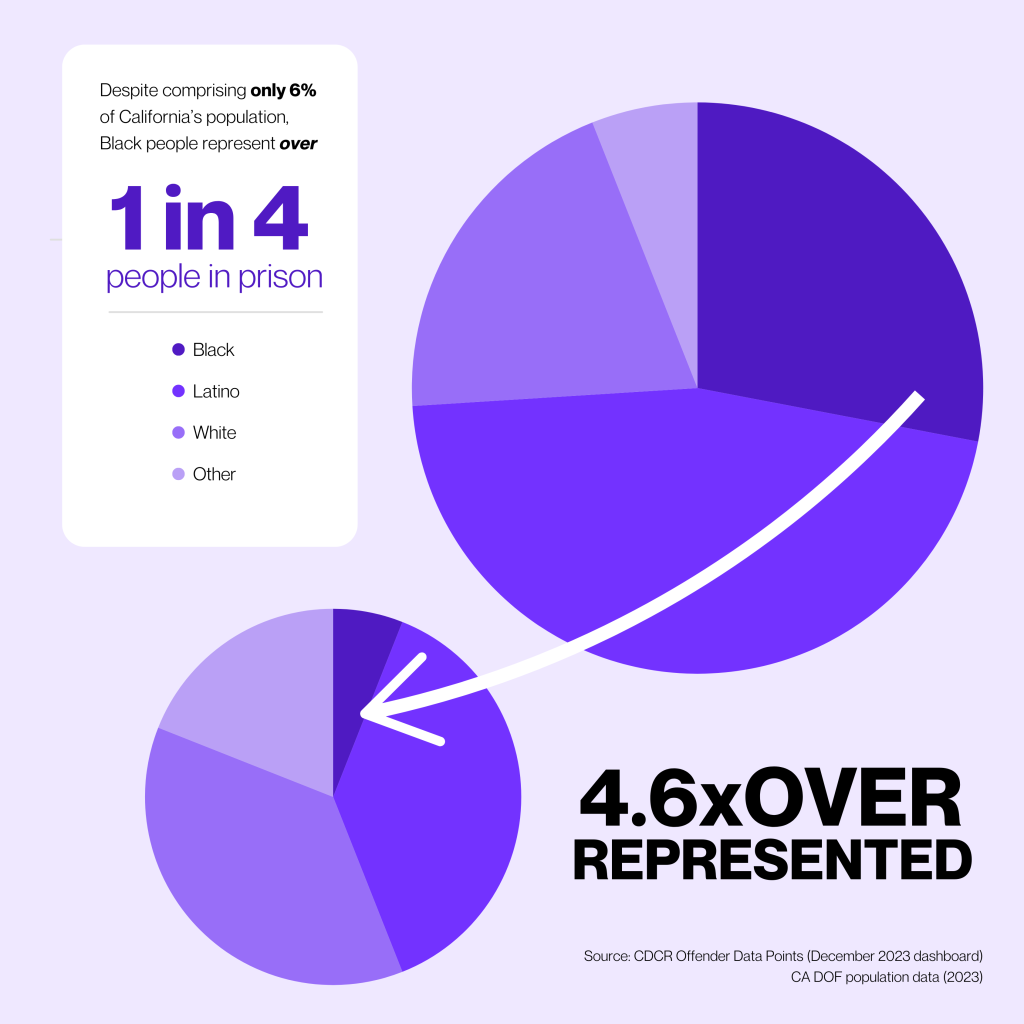
It’s hard not to see the parallels between today’s prison industrial complex and the convict leasing programs of the state’s seemingly distant past. As a young Black person, there’s a lot of weight to seeing our prisons filled with men who look like me.
“Slavery went from a private enterprise to a public enterprise, and now the government uses Black bodies in the same way, only without accountability,” says Hooker.
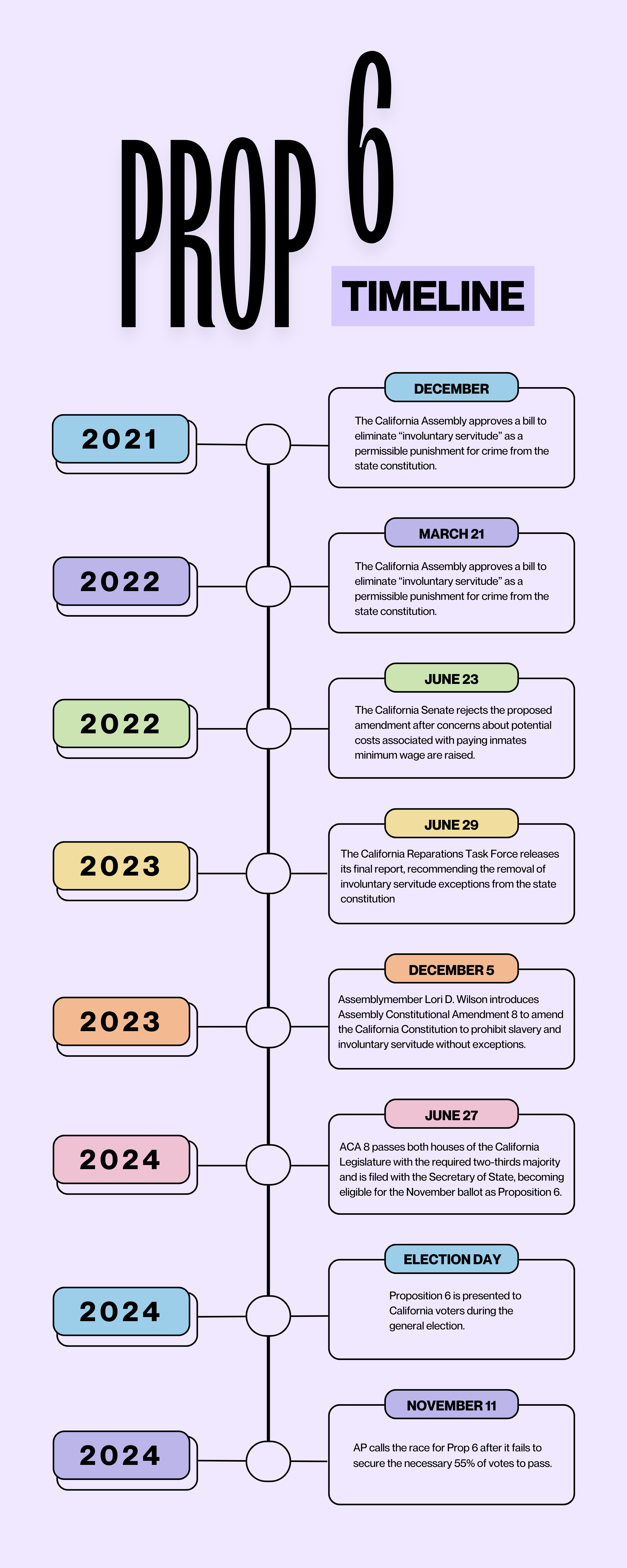
In June of last year, California’s Reparations Task Force issued its final report to the state’s legislature. It was the amalgamation of over 48 hours of testimony from 133 witnesses, more than 28 hours of public comment from open meetings, approximately 4,000 emails and 150 phone calls.
The full report spans 1,080 pages and chronicles the ongoing and compounded harm to Black communities in California as a result of slavery and its lingering effects on American society. It also laid out a comprehensive plan of equitable actions for the state’s legislature.
Three years after the idea was initially proposed (and rejected), California added Assembly Constitutional Amendment 8, later dubbed Proposition 6, to the November ballot. This Fall, the Golden State electorate decided on a measure to “remove [the] current provision that allows jails and prisons to impose involuntary servitude to punish crime.”
Six days after polls closed, the Associated Press officially declared that Prop. 6 failed after nearly eight million Californians voted to keep a framework of moral depravity intact.
Currently, refusing a mandatory work assignment can result in the loss of privileges like phone calls and in-person visits – in some cases, an extension of your sentence. Leagues of bureaucratic red tape to receive medical clearances intertwined with the complexity of prison politics leave many showing up to “work” sick and injured only to exacerbate their ailments or illness on the job.
In unkinder terms, some may argue the state is practically working its inmates to death.
“It’s all physical labor,” he says of being a ‘porter,’ one of the several prison support services staffed by inmates. “You work with chemicals, sweep, mop, and clean the showers and tables. It’s backbreaking work, and it’s mandatory.”
He tells me that he received “20 or 30 minutes, maybe an hour,” of Occupational Health and Safety Administration (OSHA) training, before being required to handle dangerous and foreign materials. Notably, OSHA’s online courses available to employers and the general public are only available in 10-hour and 30-hour programs.
For the inevitable workplace injuries that do occur, C-Note shares that the available medical care is abysmal. And he’s not wrong.
The California Department of Corrections and Rehabilitation has been the victim of two class action lawsuits in the last 20 years for violating Constitutional cruel and unusual punishment protections by failing to provide adequate physical and mental health care to its inmates.
C-Note recalls when COVID-19 made its way into his LA County prison in Lancaster, telling me his fellow inmates were forced to work in prison hospitals despite their fears of catching the highly contagious disease. He detailed the endless hoops to jump through that make medical clearances pointless and coerce sick people into work.
“It’s dehumanizing, especially when you’re working in these dangerous conditions without medical support, and there’s no compensation for your labor.”
There have been nearly 300 confirmed COVID-related deaths in California prisons since the pandemic began and over 97,000 reported cases.
“Some people got really hurt on the job, real bad,” Hooker sighs. Notably, the CDCR does not offer an age cutoff for its labor assignments.
“It literally is tearful to see them having these very elderly men doing this physical labor stuff. I don’t want to be them.”
Proposition 6 could’ve put a stop to that, so why didn’t it pass? In a state whose electorate regularly champions civil liberties for its residents – this same election cycle marriage equality was constitutionally enshrined – how can a system that serves as a facade for chattel slavery not just exist, but thrive well into the 21st century?
It’s simple. Moral disengagement.
The post-election analysis of Prop. 6’s demise continues to push the narrative that the measure failed because the language was vague and confusing. Despite the historical context being made abundantly clear by a thousand-page report given to the legislature earlier this year by the state’s Reparations Task Force, the Attorney General’s office opted to omit the word slavery from the measure’s official title and description completely.
The AG’s Initiative Measures Office did not respond to multiple requests for a comment on their decision, but offered a statement to local media that claimed, “In crafting a title and summary, our office considers a variety of materials, including the complete text of the measure itself and any suggested title, the fiscal analysis prepared by the Department of Finance and Legislative Analyst, and public comments.”
Regardless, according to the Public Policy Institute of California, 80% of likely voters in the state have either attended or graduated from college. Does the argument that an overwhelmingly college-educated electorate didn’t understand the term involuntary servitude really seem plausible?
Perhaps, the conversation needs to take a look at some of the ugly truths. Californians also voted overwhelmingly in support of Prop. 36, a tough on crime measure to increase various penalties that will undoubtedly disproportionately affect Black and Brown populations by extending existing sentences and increasing prison populations.
They voted against raising the minimum wage and establishing wider rent control. Housing and income are the two most essential things to keeping people out of our prisons, look at any study on recidivism. These things are connected.
The failure of Prop. 6 must not simply be dismissed as a misunderstanding of language, it’s part of a much larger problem – a social mechanism that allows voters to rationalize and excuse injustice without confronting the implications of their decisions.
This is what social psychologist Albert Bandura calls moral disengagement: a process of detachment that enables us to ignore or support harm while maintaining our sense of righteousness.
Through moral disengagement, California’s electorate found ways to shift blame, sanitize the issue, and distance themselves from the consequences of keeping such language in the Constitution. These mechanisms reveal how deeply entrenched systems of inequality are upheld not through overt malice and violence, but rather through a subtle yet insidious detachment from moral reality.
“Involuntary servitude was too abstract, too whitewashed. It doesn’t carry the force of what slavery means in our modern context,” says Hooker.
This linguistic sanitization is not accidental, it reflects a larger tendency to use euphemistic language to avoid uncomfortable truths. Over the last several years, similar legislation to remove the “exception clause” from various state constitutions across the country has been largely successful. Transcending partisan lines, Alabama, Tennessee, Texas, and Nevada are just a few examples of constituencies with overwhelmingly conservative majorities that removed these policies.
“Alabama!” Sam Lewis exclaims emphatically during our conversation. “Let that just sit for a minute…” And it does.
“Alabama passed this legislation. Nevada passed this legislation. Utah passed this legislation,” the list goes on. “What does that tell you? Those are all red states, right? They all took the exception clause out of their constitution because they saw slavery as morally wrong.”
Lewis is the executive director of the Anti-Recidivism Coalition, a social advocacy group working to end mass incarceration in California that spearheaded the Prop. 6 campaign.
On election day, Lewis and his team fielded calls from voters seeking more information on the ballot measure. He shared that many people believed ending involuntary servitude meant ending all work for inmates.
“Because we didn’t fully understand what we were voting on, we voted against it,” he says.
Had the measure passed, it didn’t mean inmates would simply stop working. In fact, according to Hooker, most of the people in prison want to work. Though the California Department of Corrections and Rehabilitation is far from perfect, there are programs offered by the state that make positive impacts and those tend to be the assignments inmates are actually interested in.
“All of the science, all of the numbers demonstrate that if people have access to robust rehabilitation, they do not reoffend,” Lewis declares. “And if they do not reoffend, that enhances our public safety.”
Many voters placed the blame for Prop. 6’s failure on legislators and bureaucrats who, they argued, should have addressed the issue themselves, but to Hooker “everything starts with the voters, not the people you elect to office.” He adds that politicians often push difficult decisions back to voters instead of taking a stance themselves and this diffusion of responsibility allows individuals to absolve themselves of guilt.
When everyone is to blame, no one is.
Prop. 6’s inability to pass also reflects how incarcerated individuals are often stripped of their humanity. Hooker believes there is an element of dehumanization, “focused on criminals. It’s like, ‘You had your day in court, so this is what you deserve.’”
This mindset allowed voters to justify inaction by framing slavery as a deserved consequence and enabled them to disregard the real-life impact of forced labor on incarcerated people, many of whom are already victims of systemic racism and economic inequality.
“We should all agree as Americans that slavery is just morally wrong, and when a person does violate the social norms or break laws, we find a way to help correct them and return them to society,” Lewis articulates.
While the failure of Prop. 6 is a sobering reminder of the power of moral disengagement, it provides an opportunity to confront these issues and demand change. To Minister King X Pyeface, it’s also about ending the systemic plights of minority Californians.
“No more economic violence, no more racist capitalism, no more fascist racism,” he attests. “More shared humanity, more ending hostilities. Most of all, liberate our elders, those who have been subjected for decades and are being used as utilities to sit in the system as examples of the worst of the worst.”
King met Hooker over two decades ago when the two were in High Desert State Prison. They bonded over fruitful debates of politics and prison reform, becoming bonded as “brothers of the struggle.”
“You know, I seen his struggle is my struggle,” King tells me.
We have to wait a minute as his car reveals its age by interrupting our conversation with a loud and repetitive clicking sound. He’s sitting in a parking lot, calling me after getting back from Sacramento where he just wrapped up a press release with his organization. He jokes that there’s not great money in running a nonprofit, but the reward is in the work.
King is the Director of California Prison Focus and K.A.G.E. Universal Artists’ Cadre. After spending almost 20 years in state and federal prisons, he’s now dedicated himself to the cause of prison reform and progressive rehabilitation.
“Everyone deserves a second chance, because no one is beyond redemption,” he reflects.
King spent the last several months leading up to the election campaigning for a number of state ballot propositions that aim to address what he feels are the biggest issues plaguing the community.
“When we talk about the 13th Amendment’s exception clause, we’re talking about a loophole that allows modern-day slavery to persist. And that’s what Prop 6 was here to end.”
Voter education must be prioritized. Many people lack a true understanding of how the criminal justice system operates and how forced labor disproportionately impacts marginalized communities. Partnerships with advocacy groups, academics, and formerly incarcerated individuals can help bridge this gap. Systemic change requires collective accountability. Politicians, voters, and institutions must work together to dismantle the mechanisms of moral disengagement that perpetuate injustice.