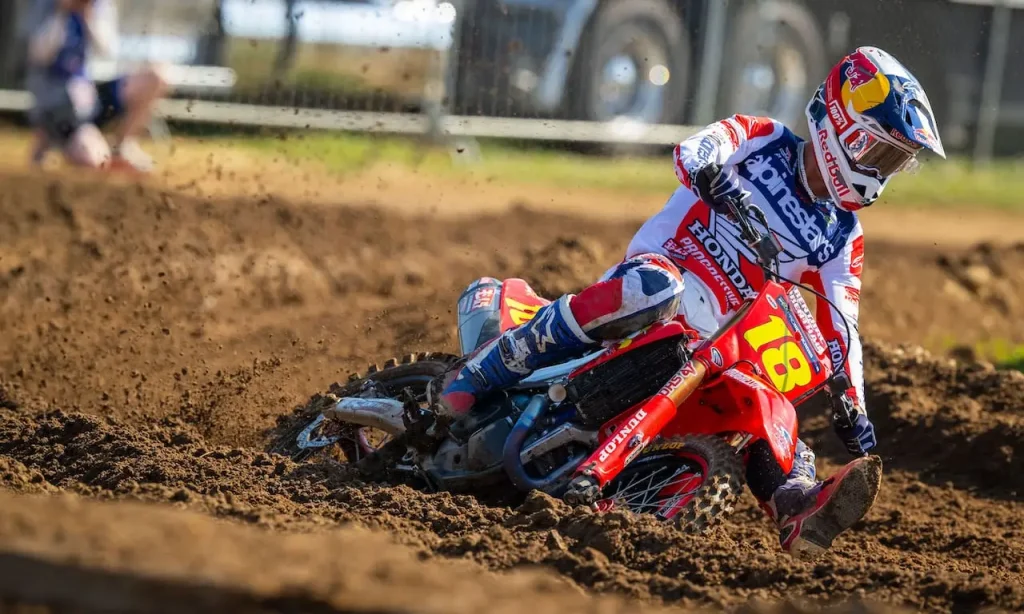
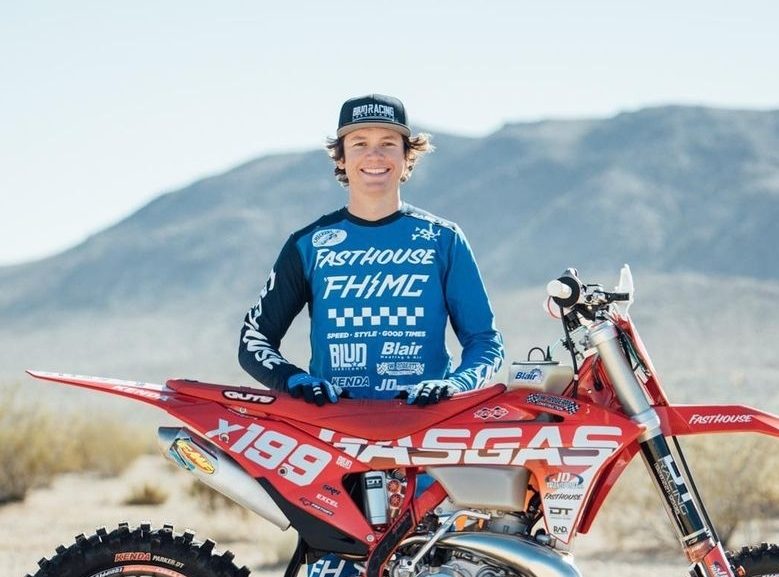
It was March 24, 2024 and professional motocross racer Clayton Roberts is in the best shape of his life.
Roberts, 22 at the time, was lining up for the American Motorcyclist Association, also known as AMA, National Hare & Hound Championship in Murphy, Idaho, a 100-mile off-road race.
He was racing in the same series in which he saw success the year prior, conquering the class below winning the National Hare & Hound Championship in the Pro 250cc division and also the Pro Motorcycle Baja Racing Championship.
However this time around, Roberts was two months into a new challenge, jumping up into the Open Pro division which is the premier class for riders.
Roberts lined up on the starting gate alongside around 200 other riders with nothing but grass and dirt terrain ahead.
When the gates dropped and the riders dispersed, Roberts came out ahead of the pack in 2nd place.
However when Roberts reached about 300 yards into the race, he caught a lip, landed too far on his front tire and was launched off his bike at about 70 miles per hour. Roberts hit the ground, flew up off the ground and rolled around before landing on his back.
(Warning: viewer discretion is advised)
One rider stopped his race, got off his bike and signaled to the track marshals that Roberts was down and not moving.
“I knew that I was paralyzed and knew what that meant,” Roberts said.
Roberts was then airlifted to a Boise hospital around 48 miles away where he underwent emergency surgery to stabilize his spine by addressing two spinal fractures. Besides the spinal fractures, he also suffered a broken clavicle and multiple rib fractures.
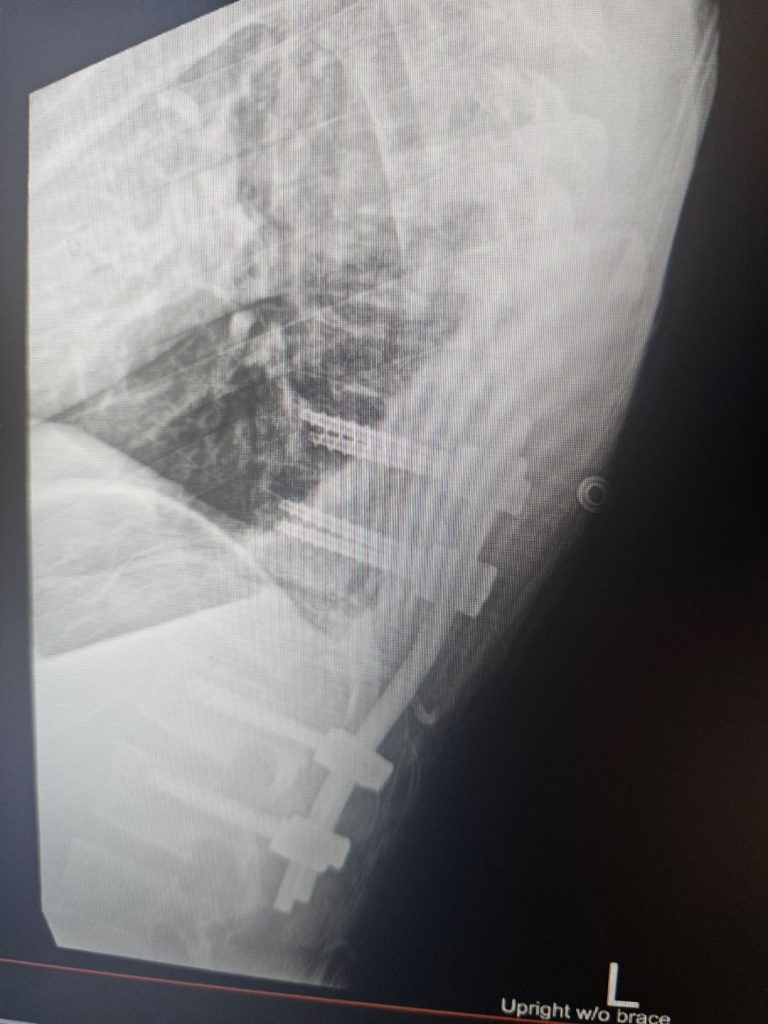
“I don’t really remember too much from the crash. I knocked myself out, so I remember leading up to it, and then that’s about it,” Roberts said. “Initially after, the realization of what was going on was that I felt like it didn’t set in right away.”
Doctors shared with Roberts that it is highly unlikely he would ever not just race, but walk again after being paralyzed. He knows there’s hope through physical therapy that he can walk one day, but that hasn’t deterred his spirit.
“The mindset became competitive right away because of the fact that this isn’t going to determine anything I’m doing, whether I’m walking or not,” Roberts said. “Looking at people I know that have been successful in a wheelchair helped, and I was ready to get out of the hospital as quickly as I could and get back to being active of some sort.”
Roberts began his rehab process a little over two weeks after the accident, laying out steps that he wanted to hit throughout his recovery.
“My first goal when I got out of the hospital was to get back driving and I knew I wanted to do that right away,” Roberts said. “That happened a month and a half after my injury, so that was a big step. Becoming independent was the next big thing, which was around the same timeframe, as far as just day to day needs go and continue the therapy I still go to.”
Now 23, Roberts has continued to rehab relentlessly along with going to the gym, working out and finding any exercise he can. He hasn’t seen any significant progress in terms of movement in his lower half, but he’s recovered his feeling in some parts such as his hip flexors and some feeling at the top of his left leg.
In June, a little over a year after his accident, Roberts began to ride again in the form of a modified three-wheeled mountain bike and modified three-wheeled road bike. He’s able to ride and jump with his friends and family now, and hopes to potentially get into four-wheel racing in the future.
On December 5, Roberts hit his biggest milestone in his recovery process so far by riding a dirt bike again for the first time since his accident. He was able to hop on an adaptive bike set up with his gear shifts on the handlebars to go along with a harness system to protect him.
It was a special moment for him as he was able to ride with his dad and younger brother again, and another step in his recovery process.
Many riders like Roberts have suffered life-altering injuries from racing motocross. While a life-altering injury in motocross is rare, suffering an injury racing isn’t.
In fact it’s almost inevitable, with 95% of motocross riders having experienced injury at some point in their careers.
While some paralyzed riders have recovered to the point where they can ride again like Roberts, others can’t due to the severity of their injuries or in some cases, even death.
Multiple riders have suffered life-altering injuries that result in paralyzation in recent years, including professional rider Jerry Robins, and even some younger riders have died as a result from participating in the sport they love.
These accidents have brought awareness to how devastating the sport can be and raise the question for riders, teams, fans and parents alike: Is there anything that can be done to make an inherently dangerous sport safer?
An amateur motocross bike, such as a 50cc, can reach speeds up to 25-40 miles per hour while the top motocross bike, a 450cc, can go as fast as 80-120 miles per hour.
Add that in with the fact that these riders are clearing jumps that are tens and hundreds of feet during a race, and it’s clear how injuries are so common to occur. One crucial mistake could cost not just a race, but also a rider’s body as well.
While some crashes are sometimes caused by in-race mistakes such as over or under jumping a landing, others could be considered freak accidents that have little to no logic behind them.
One way the sport can become a bit safer according to Roberts is through helmet communications with riders and their teams in terms of signaling if there’s been a crash up ahead or if they’re approaching a lapped rider to avoid any unnecessary crashes.
A lot of Roberts’ recovery process has been funded by a non-profit organization called Road 2 Recovery, which helps negotiating with hospitals and insurance companies, fundraising efforts for injured riders, and accruing the necessary medical equipment.
The organization was founded by Jimmy Button, a former professional rider who raced for 11 years. Button was at the pinnacle of AMA motocross, racing in Supercross where riders race in America’s biggest stadiums.
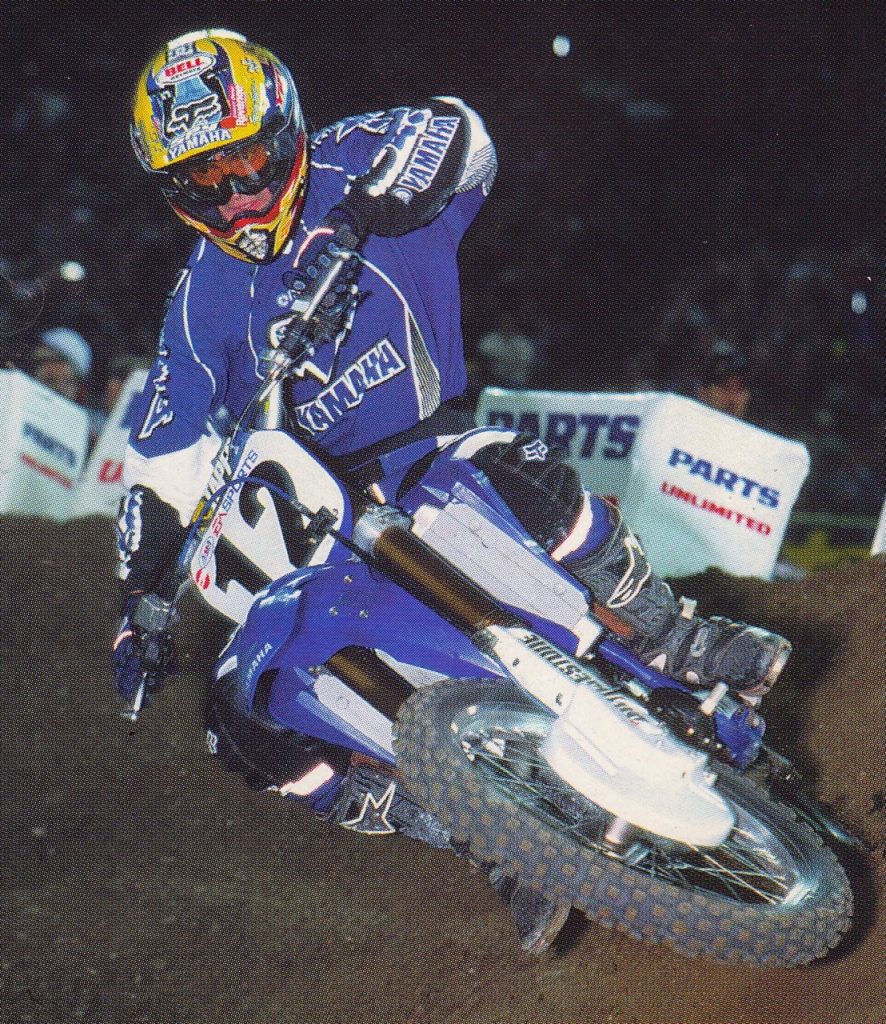
Like Roberts, Button’s life changed in an instant during a 250cc Supercross race at Qualcomm Stadium. On January 22, 2000, Button was entering the whoops section of the track when his front wheel dropped too low and he flew over the handlebars, landing on his head during the process.
It seemed to be a minor crash at first and certainly common for one of the most technical sections of the track, but it ended up being far more serious with Button being paralyzed from the neck down with a bruised spinal cord at his second and third vertebrae.
Button was told he would also likely never walk again, but through rehabilitation over the years he regained the feeling of his body to walk and live a life outside of racing.
When Button was in the hospital, he was fortunate enough to be at the top of the sport making a great living with insurance and his team around him. He knew that many other riders wouldn’t have the same resources as him and wanted to help those in need.
So he founded Road 2 Recovery right after his crash and it’s now helped 155 riders, raising over $13 million for those riders to this day.
“The second a rider goes down with a major injury, we are either there if it’s a race or someone’s on the phone with us within minutes,” Button said. “Everyone’s very well connected in our sport, so people know they can go to us to find answers and get everything on track as soon as possible. Time is of the essence, especially at the beginning stages.”
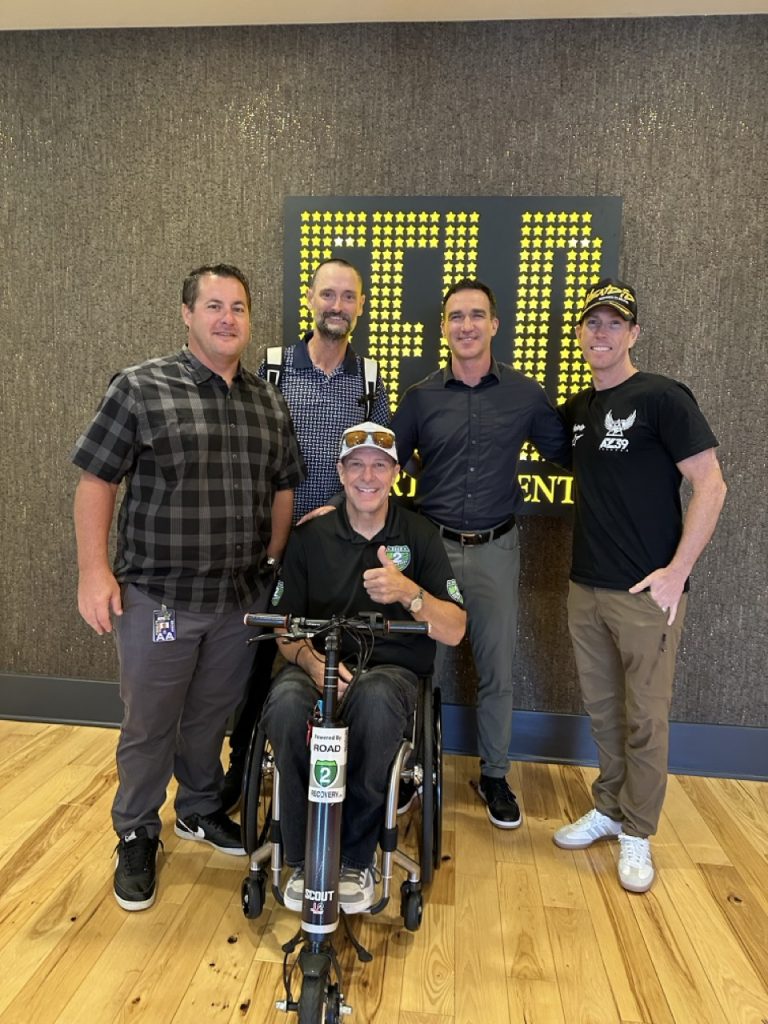
Through his 25 years of helping to run the foundation and through representing riders as an agent, Button’s seen the highest and lowest points of the sport with his foundation also helping the families of riders who have died from racing.
Compared to the time period where he was a racing professional in the 90s, Button mentions how a rider’s protective gear has stayed the same, but the technology now is much better.
“They have a lot more data on impact, motion and speed regarding helmets and their construction,” Button said. “You’d see older boots in your garage too and they would just sag over, but they don’t do that anymore. They’re very firm and well structured.”
There’s also a new piece of safety equipment that is being tested out in motocross, and that is an airbag covering the rider’s upper body.
“I would expect in the next couple of years that all the other manufacturers will have some sort of airbag system,” Button said. “It’s more of an upper body, cervical and neck protection. I think that that will help with a lot of back injuries, neck injuries and certainly internal injuries. The tech is developing and getting better and so I think the safety level is coming up due to that.”
Italian motorsport safety equipment company Alpinestars were the first to develop a fully functional airbag system for riders, but it’s been years in the making and the product tested the waters in other motorsports first.
Alpinestars started having conversations about developing an airbag riders can wear during races in 2001 and started to log data and tested the product in 2003 for the road racing series MotoGP.
Testing for the airbag with MotoGP ran until 2009 where Alpinestars made changes to its airbag by making them lighter for riders and widening their coverage, targeting the collarbone specifically as it was the most common injury for MotoGP racers.
More racers began to use it over the years, citing how the extra protection is worth it considering wearing it doesn’t feel like it’s affecting their racing.
According to Alpinestars media communications manager Chris Hillard, the Tech-Air airbag system can detect a crash in 40 milliseconds. Once a crash is detected, it inflates around the racer’s upper body in 25 milliseconds.
“The sensors, accelerometers and the gyroscope are all feeding information to the ECU, or electronic control unit,” Hillard said. “Then, the algorithm basically detects what’s good or normal racing or something abnormal. In the blink of an eye, it can decide it’s abnormal and you’re going to crash and deploy.”
Now, every rider in MotoGP is required to wear one with the racing league implementing it as mandatory equipment in 2018 after data showed it severely reduced injuries including broken collarbones.
Alpinestars moved into data logging for an airbag for motocross riders in 2016, but Hillard knew it would be the most difficult and trickiest system to develop because of the physical, unpredictable racing features.
Plus, many riders were not using chest protectors back in 2016 and it was a difficult process to convince them to use it. Alpinestar’s motocross airbag model focused on inflating out of a chest protector rather than a bodysuit used for MotoGP.
More riders now have been using chest protectors in the last five years, with Alpinestars being able to develop its motocross airbag more efficiently with the expanded use of chest protectors.
Another challenge is that motocross crashes are much different than MotoGP crashes.
In motocross, riders could fly over the handlebars of the bike or drop from a certain height when they crash while in MotoGP, the riders slide and roll most of the time when they are launched from their bike. Plus, motocross riders want to get up and go back racing as quickly as they can so Alpinestars is trying to make sure the airbag doesn’t hinder that.
More motocross riders have used an airbag in races as of late, including professional 250cc Supercross rider Austin Forkner. Once motocross airbags are fully brought into the sport, it’ll be a huge technological advancement.
“It’s in the interest of absolutely everybody to make the sport safe, but I think that the inherent danger in Motocross is higher than perhaps in other sports because of the complicated nature of the sport itself,” Hillard said. “But again, I know full well that there’s a general understanding that we need to get it somewhere, and we need to improve safety.”
New equipment and technology is helping riders be more safe out on the track, but an often overlooked part in preventing injuries is body preparation and recovery.
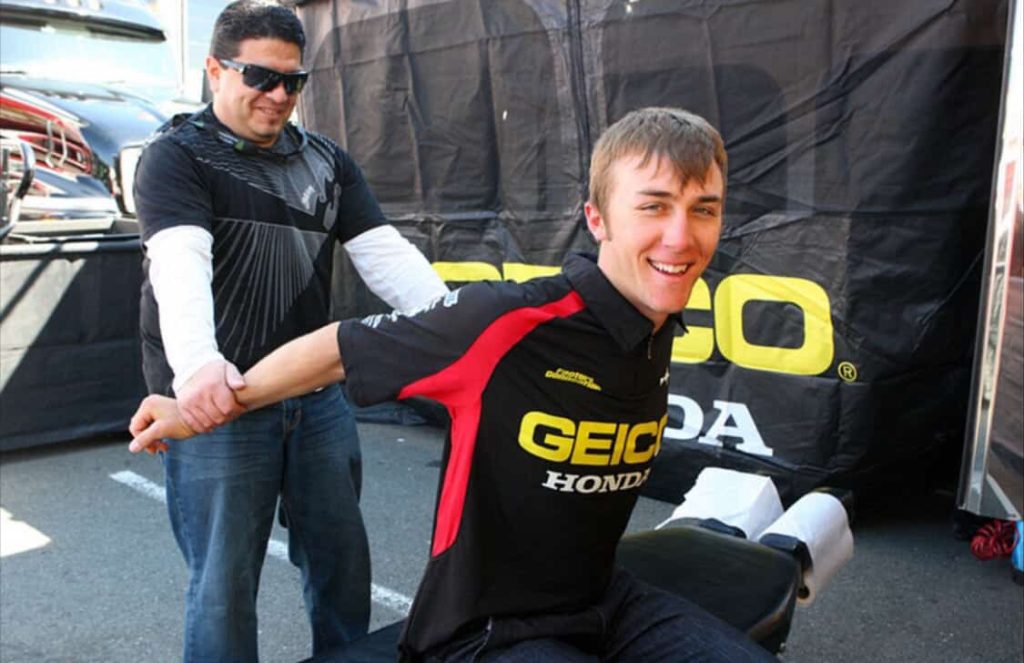
Steve Navarro, also known as “Dr. Feelgood” in the motocross community due to his high level of sports therapy and his love for Mötley Crüe, knows this better than anyone.
For 22 years, Navarro has worked with some of the best riders of the sport like two-time 250cc AMA Supercross champion Justin Barcia and four-time 450cc AMA Motocross champion Eli Tomac.
While he’s reached the upper echelon of assisting the best of the best, he also helps out younger riders looking to reach those heights. Over the last seven or eight years, he’s noticed the effect that the lack of recovery from extensive training has had on younger riders especially in warmer training hotbeds like Florida, Georgia and South Carolina.
“For some of these younger kids, their bodies are still developing and they’re put under much stress from heat, humidity and significant training,” Navarro said. “They haven’t been taught proper hydration. They might be drinking water, but they’re not necessarily hydrating and can be a little bit of an issue in terms of getting enough electrolytes.”
Stress and lack of recovery can lead to an increased risk of injury, with Navarro mentioning some of the most recent, concerning injuries that have popped up as of late like lacerated spleens, hip dislocations, and fractured femurs and scapholids in the wrist.
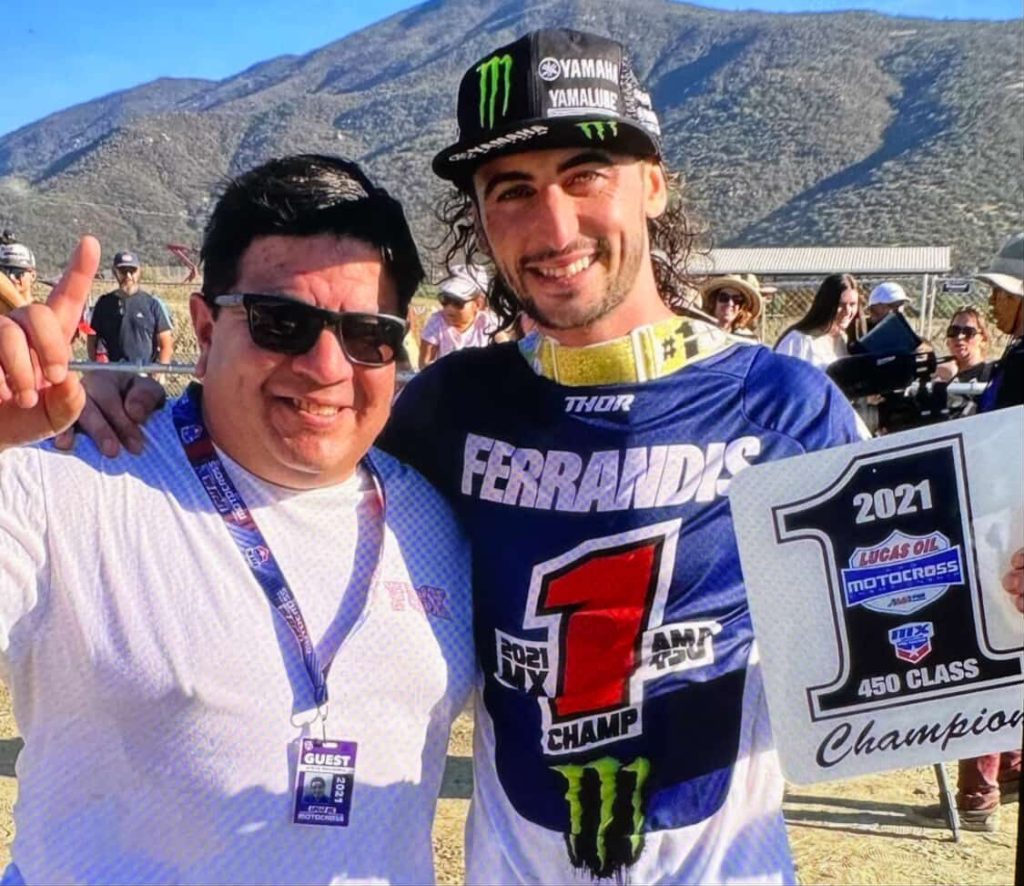
It’s also not just younger riders who have been dealing with a slew of injuries as of late, it’s also some of the best professional riders who have been dealing with injuries with increased training at the source of these issues.
Barcia (knee), 2024 Supercross 450 champion Jett Lawrence (torn ACL), two-time 450 Supercross champion Eli Tomac (broken fibula) and 2018 Supercross 450 champion Jason Anderson (illness) have all missed extended amounts of time this season thanks to injuries or sickness.
In Anderson’s case, he dealt with constant thyroid problems and Epstein-Barr virus, which unbalanced his metabolism, caused constant fatigue and impaired his ability to regenerate.
The issue for a lot of riders, whether that’s at the amateur or professional level is lack of recovery like Navarro mentioned. However, another factor plaguing the recovery process is travel and jet lag.
On the professional level, riders only have one or maybe two months off the whole year because in total, they’re competing for four championships.
From January to the beginning of May, riders compete in Supercross which features more compact tracks in baseball or football stadiums across the country.
At the end of May, professional riders move on to Motocross which features wider tracks on more natural terrain in rural parts of America until August.
Then, the SuperMotocross World Championship playoffs and final are a combination of Supercross and Motocross tracks with three races taking place in September.
The most gruesome travel schedule comes after the SuperMotocross World Championship, when riders head overseas to compete in the FIM (Fédération Internationale de Motocyclisme) World Supercross Championship. While this is the last championship series for the year, some riders switch teams and bikes during this time to prepare for the Supercross/Motocross gauntlet.
This year’s World Supercross Championship takes riders to Argentina, Canada, Australia, Sweden and South Africa during November and December. That’s over 35 races for the whole year, not to mention the time spent at practice, gym, cycling, rowing, running and flying in between those races can take a toll.
In fact, only one 450cc rider out of the whole professional field raced in every single race in 2025 and that’s Justin Cooper.
“The level of recovery hasn’t really caught up to the level of training, and that’s where the sport needs the most attention right now,” Navarro said. “Doing blood work every six to eight weeks in the middle to latter part of the season is crucial, especially when their bodies are fatigued from training for several months.”
An amateur’s schedule depends on the age group and talent level they fall in, but the top riders race around 10 national races a year, traveling throughout the country multiple times a year.
The combination of travel, intense training schedules and improper recovery methods have led to the buildup of injuries recently, but the sport inherently needs to and can be safer.
Besides the helmet communication that Roberts mentioned, Navarro mentioned there needs to be better on track communication as well between riders and track marshalls.
A lot of times, riders are looking for the best lines on the track and aren’t picking their heads up sooner to see if there is a yellow flag, red cross flag for an injury, or blue flag for a lapped rider.
Installing lights on the side of the track that signal what flag is being flown by the marshalls will help clear unnecessary crashes. Plus, having extra marshals helping out riders badly injured is a necessity at every race and can potentially save someone’s life especially at outdoor races where not every corner is being watched by spectators.
Motocross is an inherently dangerous sport, and its riders know the consequences if they aren’t nearly perfect during their race. With recent injuries plaguing younger riders and even many professionals, rider safety is at the forefront of riders minds.
Organizations like Road2Recovery and AlpineStars are leading the way in the injury recovery process and protection for riders. However, the groups in charge of the sport’s races themselves need to take more charge in making sure riders are as protected as possible.
Whether that’s through better scheduling, more track marshalls or safer racing conditions, these groups like the AMA and FIM need to look out more for riders safety to reduce the recent amount of injuries and deaths.
The risk of injury in motocross is still inevitability high and riders know that, but the continued efforts by all parties involved to make motocross safer is an excellent sign of growth for a sport that at times, has been reluctant to change.