In spite of its recent surge with expanded legislation, sports gambking has been present since the inception of gaming. Instead of the big players in today’s regulated marketplace of wagering such as DraftKings, FanDuel, MGM Gaming, and Caeser’s, organized crime syndicates ran the show offering their own odds and lines.
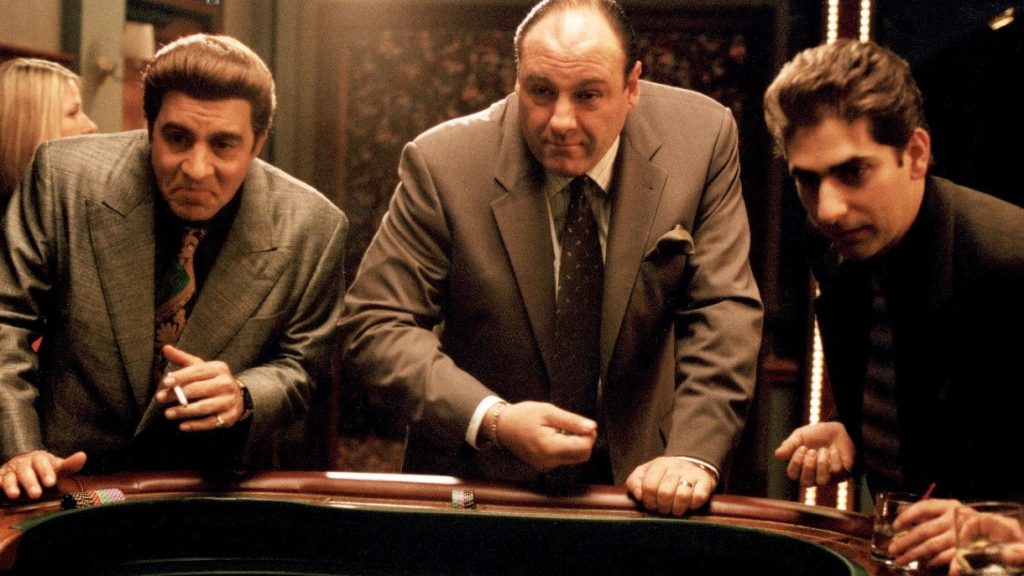
This environment surrounding old-school betting forged a sour perception of the habit, seeing it as an illegal and dangerous means of entertainment. However, the dangers around sports gambling are multifaceted. On one end of the spectrum, gambling is heavily addicting and may lead to financial ruin in the long run of some. Then, what happens when someone eventually loses more than they have? Well, when the mob is in charge of collecting debts, they do not take no for an answer. Injuries, death threats, and even the seizure of assets would occur in the event of denying such a powerful organized crime group.
However, the dangers of sports betting do not only apply to those wagering, but to the professional and amateur leagues that organize the sport. In the 1919 MLB World Series, several players from the Chicago White Sox were caught colluding with members of the mob to strategically lose games. After White Sox owner Charles Comiskey failed to pay his players what they found to be fair wages after several successful seasons, eight players opted to help gambling syndicate leader Arnold Rothstein in rigging the series. As a result, all eight White Sox players were permanently banned from ever competing in the MLB. This included young star “shoeless” Joe Jackson – who unwittingly agreed to join the other players, then clearly didn’t pull any punches in any of the World Series games.
“Shoeless” Joe Johnson and the rest of the banned cast from the 1919 White Sox are not alone in the scope of harshly punished athletes at the hands of gambling tampering. ESPN’s documentary film Playing for the Mob details the actions of Henry Hill – a mobster who orchestrated the biggest cash robbery at the time. Hill found himself in the pockets of several Boston College basketball players in 1978 – with Rich Kuhn at the epicenter, who brought in key players Ernie Cobb and Jim Sweeney – formulating season-long point shaving schemes to ensure maximum profits. In this case, Kuhn was sentenced to 10 years in prison on racketeering charges.
Even more recently, gambling from the players perspective has brought to light significant moral conundrums surrounding NFL star receiver Calvin Ridley. During a tulmanous 2021 season for Ridley, which included him voluntarily stepping away from the Atlanta Falcons for “personal mental health reasons,” he was caught wagering on NFL games. It was discovered that he hadn’t bet on any games involving the Falcons, nor used any inside information to illicit unfair wagering (according to him). However, upon this discovery, NFL Commissioner Roger Goodell announced that Ridley would be suspended indefinitely, with the ability to first file for reinstatement after a year.
Comparatively, the last five players that faced suspension from the NFL for being charged of domestic violence served, on average, less than a five game absence. Ridley’ suspension reflects a significantly higher degree of concern by league officials of gambling compliance than to domestic violence. Even former Seahawks linebacker Mychal Kendricks was arrested on felony offenses of insider trading, and was only tagged with an 8 game suspension. Despite an absence of evidence to suggest Ridley’s wagers entailed any key information that could point to tampering, the league took this offense more seriously than an actual instance of insider trading.
So what does this mean? Why does the NFL and all other leagues take gambling amongst players so seriously? It’s simple, actually. Regardless of if professional leagues are rigged or not, if point shaving occurs nightly or never, the only aspect with any value is the perception of fairness amongst the fans. Leagues feel obligated to strike down on players who violate their policies with tremendous wrath because it aids in maintaining the integrity of the league in the eyes of the casual observer. But where is the line? Would Ridley’s parents be punished for using his knowledge to place bets? Would Ridley’s former roommates? What about the roommates’ family? You see, there is a clear issue at hand with the depth in which this can go.
In the past, leagues would plainly ignore the presence of gambling in sports. However, today it is impossible to avoid. During the 2022 Super Bowl, several $6 million 30-second slots were filled by the previously mentioned companies – a campaign that seemingly found success leading up to the game that saw over 31 million Americans wager upwards of $7.5 billion. Even during the College Football Playoff National Championship, when the Georgia Bulldogs intercepted Bryce Young and Alabama with just a minute remaining – a moment that secured the victory and brought a championship to Athens, Georgia for the first time in over 40 years – ESPN’s Chris Fowler shouts “…and Georgia is going to cover the Crimson Tide…” as victory grew imminent. While rubbing commercials and daily betting shows in your face certainly plays a major role in integrating gambling into everyday sports culture, the play-by-play announcer in the National Championship game calling that a team will now cover the spread as the first way to address the audience after a game-defining moment truly demonstrates the evolution in sports consumption that we are under.
Although much of this revolution in broadcasting is somewhat intuitive, direct insights from industry experts creates a guided understanding of how such a reshaping of the landscape will unfold. MSG Network’s Lawrence Caputo discussed how the New York Regional sports broadcasting company has, is, and will continue to integrate gambling content into their ongoing productions. According to Caputo, MSG began making headway on the gamblinng front four years ago when New Jersey first legalized wagering. With incredibly deficient precedent on what would be allowed to air – given that New York was still illegal and promoting gambling without also providing avenues to remedy addiction is necessary – the network simply crafted their plans to eventually pounce. MSG began production on three betting-centric shows, which eventually aired their daily broadcasts in October 2021. One show takes on a ‘Mad Money’ format, another showcases a panel of experts, and the last focusses on NFL wagering.
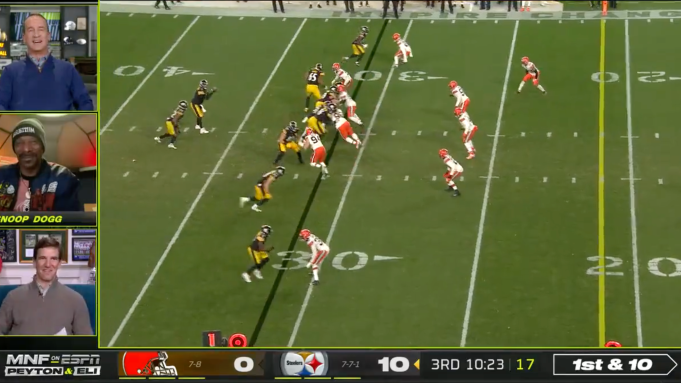
In February 2022, MSG Network experimented with “Bet-A-Palooza,” an attempt to fully integrate gambling into the broadcast of an NBA basketball game between the New York Knicks and the Golden State Warriors. Taking on a Twitch-like approach, the broadcast utilized the L-Bar popularized by ESPN Monday Night Football ‘ManningCast.’ MSG created an alternative way of consuming their broadcasted professional sports with their own gambling experts commentating throughout the game. The lower third of the screen showcases a crawl of live betting lines for games across the league, showing stats, updates, and every piece of valued information to a gambler.
However, Caputo claimed their version of this broadcast will be far from the last. He suggests that for innovation to take hold in sports media, a smaller broadcasting network, such as where he works, needs to take the initial risky step. According to him, the industry and its top players – ESPN, CBS, NBC, NFL Network, etc. – will always act as ‘fast followers.’ These networks will certainly jump in on innovative means of broadcasting immediately, but only once it has been proven successful in the eyes of audiences. As was the case with instant replay, adding a score box on the screen, and even the first down lines being painted on the broadcast.
While networks have shown resistance to be the first to act with broadcasting innovation in the past due to overt risk, gambling integration promises significantly greater risk. In such a young and emerging market, much of the legality, morality, and ethicality of sports wagering has yet to be seen. Even before news hit the mainstream media about MSG’s experiment with an immersive betting broadcast, Caputo says his network received multiple calls from the NBA saying, “What the hell are you doing?” There will always be risk in sticking your neck out and being the first to creation, however Caputo finds it necessary. “It had to be someone like us to do this first, the big players wouldn’t be the ones to experiment with this, but you can bet your ass they already have something in place for if our broadcast proves successful,” he said.
Caputo continued to discuss how it is great that MSG is showing innovation and doing alternative betting broadcasts for events, but that they’re only so big and have a finite reach. He says, “It needs to be a major network doing this – for a show to syndicate a game and show the odds for all the games going on.” Since MSG only owns the rights to Knicks, Rangers, and Islander games, they cannot fully integrate the entire scope of broadcasting in their streams. He suggests that ESPN, NFL Network, or another major company that owns the rights to widespread matches will find insurmountable success in a “redzone-type” production that jumps around through games under a gambling lens.
“It’s on the horizon,” says Josh Tucker, the VP of social programming for the NFL. As projected, the NFL is likely to continue producing alternative means of consuming games. According to Tucker, there are a multitude of directions the league is likely to take in pursuit of content expansion. Considering the resounding successes of the ManningCast and Nickelodeon streams, it can be expected that other versions of streaming will be made available in the future. Furthermore, the expanding and dominating platforms that streaming services such as Apple TV+, Hulu, or Prime Video provide should cause a sharp increase in revenue money for the league, the teams, and the players alike. It is also apparent that gambling content production will not only surge surrounding the league, but also in the league’s own production of its games.
The NFL’s introduction of gambling integration in broadcasting demonstrates a level of hypocrisy, as they punish players harshly for participating in an activity that they regularly promote. Although the demonstrated care shown towards players surrounding the gambling legislation is severely lacking, the players are far from the only ones impacted by the NFL’s changing take on sports gambling. Despite the warnings attached to every piece of gambling content shown, highlighting a gambling addiction hotline, there is little conversation surrounding the impact that such distinct changes will have on the fans.
In 2015, Dr. Rick Grieve at Western Kentucky University examined the impacts of the legalization and integration of sports gambling into mainstream consumption will effect fan engagement. “We found that most people said, ‘we don’t think it’s going to have that big of an effect on our fan experience,” he said. “If anything is probably going to enhance it.” He continued to discuss how gambling allows fans to not only root for their team, but to reap financial rewards from their success. When it comes to the eventual presence of gambling integration in broadcasting, Dr. Grieve foresees those initially distracting factors to “fade into the background.” He cites the example of how he found the first down line to be a terrible distraction when it first appeared in NFL broadcasts, however he would currently be remiss if he had to watch a game without it. When it eventually becomes normalized, he finds that its presence in everyday sports consumption will only help fandom, not hurt. He sees big fans as receiving additional opportunities to engage with their teams and sports, while casual and non observers will gain incentives to watch more sporting events. This entire scenario generates significantly more eyes towards any given broadcast, providing enough incentive for networks to comply with the exorbitant demand for gambling content and advertisements. Given the downswing in viewership on daily sporting programs, media outlets are chiming at the bits with this newfound revenue stream.
Given Dr. Grieve’s background as a psychology PhD, I was curious about his opinions on the ethicality of social integration into our daily lives. While he was weary about discussing such a topic because he recognizes there are inherent addictions to sports gambling, he finds that sports wagering is whatever the consumer makes of it. “If individuals do it in a healthy manner, it’s no different than any other hobby,” Dr. Gieve claimed. “Conversely, we can have unhealthy relationships with any hobby out there.” He recognizes the relationship with those if you gamble to be so much of that relationship with sugar, coffee, or even video games. He does recognize, however, the issues that are specific to the gambling industry. He said, “They profit off of everybody, but they profit off of those who have difficulty controlling behavior the most.”

When asked if he saw parallels between the allure of gambling and that of “get rich quick” campaigns, as seen through their respective advertisements, Dr. Grieve found that they each target a specific mental fallacy. “The big draw for any type of gambling is that I can make a lot of money really quickly.” He continues, “our natural cognitive bias is to think that we’re better at doing something than we actually are and so we’re going to be more likely to make risky wagers because we think we know more than we do.” Although he perceives gambling as more of a hobby, Dr. Grieve agrees that sports books must promote resources to provide help for those struggling with addiction.
So how do leagues promote healthy habits? As of now, the only way they seek to fight against harmful addictions is through advertising for gambling hotlines. When speaking with a member at the Los Angeles Gambling Hotline – a source that would not reveal their name – it was clear that changing legislation and prevalence of gambling in the media has directly led to an increased influx of calls during the 2021-22 NFL season. When asking how the continued spotlight that sports leagues will put gambling under will impact their ability to help others, the individual said that they anticipate needing to expand as the betting companies do because they anticipate addictions to grow rampantly.
While it has yet to be seen how the NFL and other leagues will commit to gambling being integrated in a healthy manner, it is clear that they will dive into this pile of money and secure as much as possible heading into the next television rights deal. Viewers around the country should anticipate increased gambling related commercials, sponsors on the field, and even broadcasts directly geared towards the live bets available during a game. The next decade of sports broadcasting will entail more changes than seen in the past century, largely on the back of sports betting becoming an integral part of the packing of sports.