
Courtney Young
Courtney Young was a teenage girl that was struggling. She could not sleep at night, suffered from anxiety, resorted to alcohol use and had a general sense of disconnection from her life.
“One night I just had an emotional breakdown. It was really terrible. I was just crying and really, really sad,” she said.
At 18, she tried to take her own life by ingesting prescription medication. This would not be her last attempt. She attempted suicide one more time.
From the age of five years old, Young knew she was in the wrong body.
According to an estimate done by the UCLA Williams Institute, the leading research center on sexual orientation and gender identity law and public policy, there are approximately 200,000 transgender individuals living in California, with 49,100 of that number comprising youth.
“It was really confusing for me growing up, especially mentally,” they said. As Young evolved they chose a pronoun that suited their identity.

Life in the 1980s and 90s in the Westchester neighborhood of Los Angeles was not the most welcoming for what was then referred to as the “Gay and Lesbian community” in the best of circumstances. Homosexuals were not officially allowed to serve in the military, the legalization of gay marriage was far off, and violence against gay people often went unchecked.
“I felt very isolated. There were no trans folks or anybody that identified as LGBTQ,” Young said. The initialism LGBT did not come into common usage until the 1990’s.
Young did not enjoy spending time with female classmates, but relished playing sports with boys from the age of five years old.
“I was just always wanting to be the best at sports growing up because it was like the one way that I could express my boy side,” they said.
Basketball felt like a calling and one that allowed the space to escape reality and be “masculine.”
Young played basketball with the boys until they started puberty at twelve years old.
“I remember like at practice it would be like you keep your shirt or you’d have no shirt and I always wanted to take my shirt off and they were like I’m sorry, but you can’t do that. I was like, ‘Why?,’” they said. “I remember that vividly.”
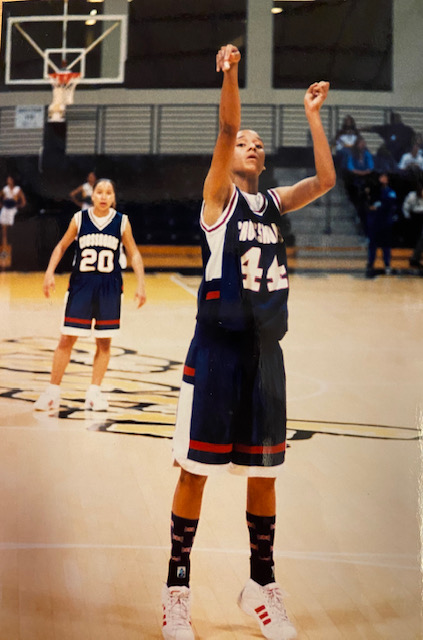
However, playing basketball was not enough for Young to feel in sync with their body.
“I never felt like a girl, even intimately. It was really hard for me sometimes because I just didn’t feel like I was performing in my body. That was really hard to navigate,” they said.
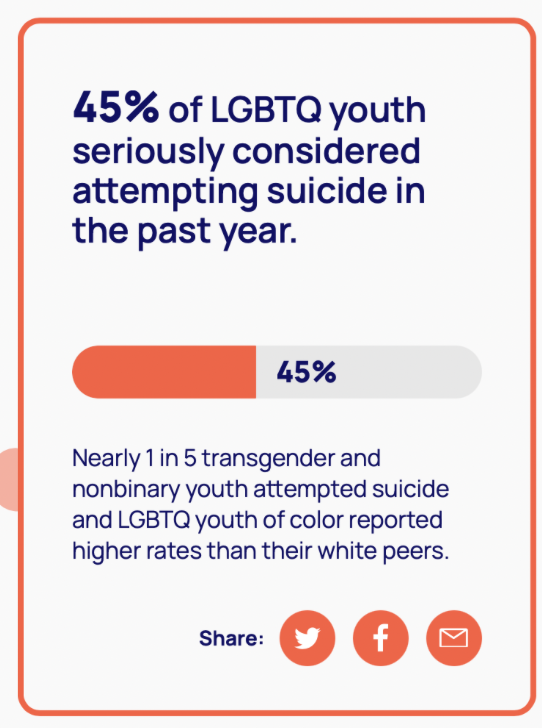
According to a study done by the Trevor Project, a nonprofit organization focused on suicide prevention efforts among lesbian, gay, bisexual, transgender, queer, and questioning youth, nearly 20% trans youth of color attempted to take their own lives last year.
“I internalized a lot of sadness for not feeling like there is a place for me in this world. I literally was like, ‘I don’t know how to be or where to be or how people were expecting me to be,’” Young said.
Social stigma is another obstacle that can make life difficult for transgender individuals. They may feel isolated or rejected by their families, friends, and communities. They may also struggle to find acceptance in romantic relationships or in social situations.
Young felt like a long term relationship was impossible because possible partners might not want to have children with them.
Young was in one relationship for over a decade, but it came to an end after their partner’s family was not supportive of the relationship.
“I was in a relationship with a woman and her parents wanted their child to be in a heterosexual relationship with a cis man,” they said. “I was never going to be this man.”
Young’s girlfriend at the time wanted children, but with a biological male. They decided to end their relationship.
“Dealing with loss in a relationship when nobody’s lost anything, or nobody’s dead I think is even harder than losing someone because it’s like the loss of someone and not being there, but then knowing that they’re there,” Young said.
Transgender people often face discrimination, a lack of access to healthcare, and social stigma that can prevent them from living their lives to the fullest.
“As with any marginalized group, feeling the need to hide, transform, or distort essential parts of the self in order to be safe and accepted can cause and contribute to stress, anxiety, depression,” said Angel Kahane, a psychologist that provides specialized treatment for a wide range of concerns inducing depression, anxiety, life transitions, and sexual orientation. “I imagine some transgender youth face a sense of hopelessness, believing that who they are will never be accepted/acceptable and internalized societal bias/stigma.”
Transgender people have suffered so often – the discrimination, abuse and mental health struggles, as well the loss of friends – that in many cases they have little choice but to become resilient.
As many parts of the United States have become more tolerant for transgender people, old wounds that transgender people faced are slowly coming to light.
Young’s moment of realization came in her early thirties when they were working for an LBGTQ+ Youth Group.
“There were quite a few youth that were identifying as non-binary or trans. Being a facilitator, that youth group 100% changed my mind in terms of feeling comfortable about really being who I am,” Young said.
After spending two years in the youth group, Courtney decided to begin a medical transition from female to male.
Their first step was to undergo testosterone hormone therapy since they struggled with having breasts.
Testosterone therapy for individuals transitioning from female to male can result in a reduction in breast size and a redistribution of fat, leading to a flatter, less rounded appearance of the breasts.
Young then decided to undergo top surgery, a surgical procedure that aims to create a more masculine chest contour for individuals transitioning from female to male by removing or reducing breast tissue and thereby affirming their gender identity.
In order to proceed with the surgery in California, Young needed a mental health provider competent in transgender health to sign off on the procedure.
“I just essentially told my story [to the therapist] and just kind of talked about the traumas of living in a body that doesn’t feel like yours,” Young said.
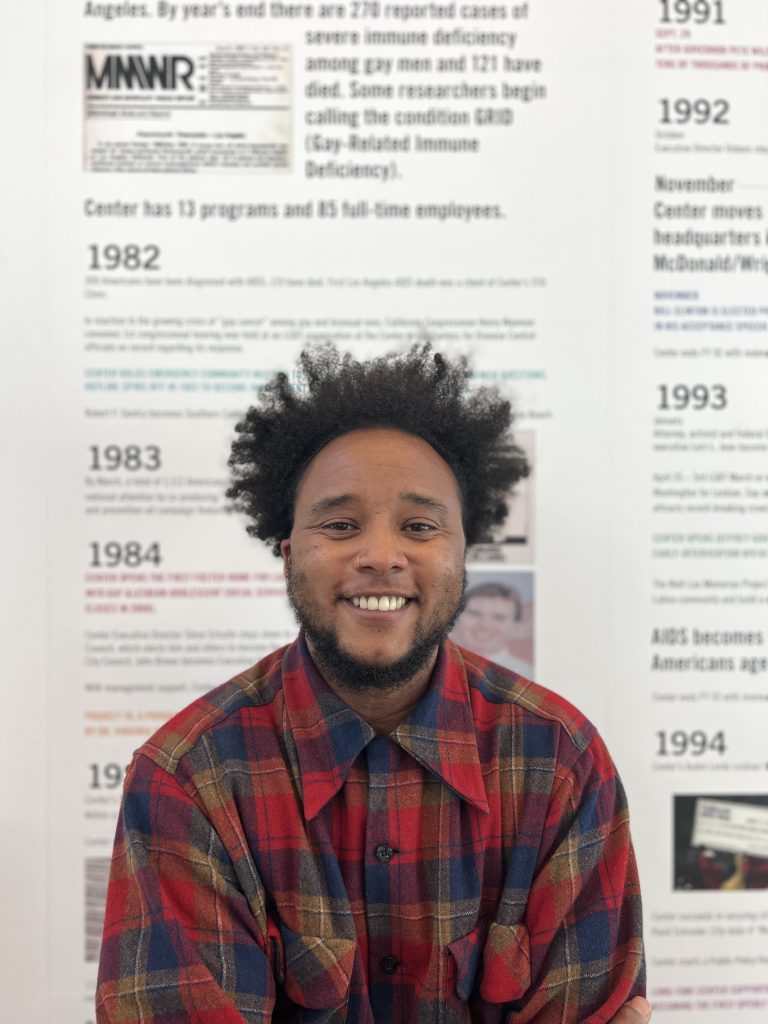
“It was the best day of my life. When I woke up in the hospital bed and just knew that, like, I no longer had breasts, it was the greatest day ever.”
Following the surgery, Young continued to take testosterone and enjoy life in their new body. They experimented with facial hair, new clothing, and an overall sense of immense confidence.
Despite all the challenges Young faced prior to their transition, they are determined to live their authentic self and give back to their community.
“If I can help anyone feel a sense of love and care, helping folks find housing, or spending quality time with somebody that’s in crisis, or just need somebody to not feel alone, whatever that looks like for that particular person, I’m willing to show up and be there for them,” they said.
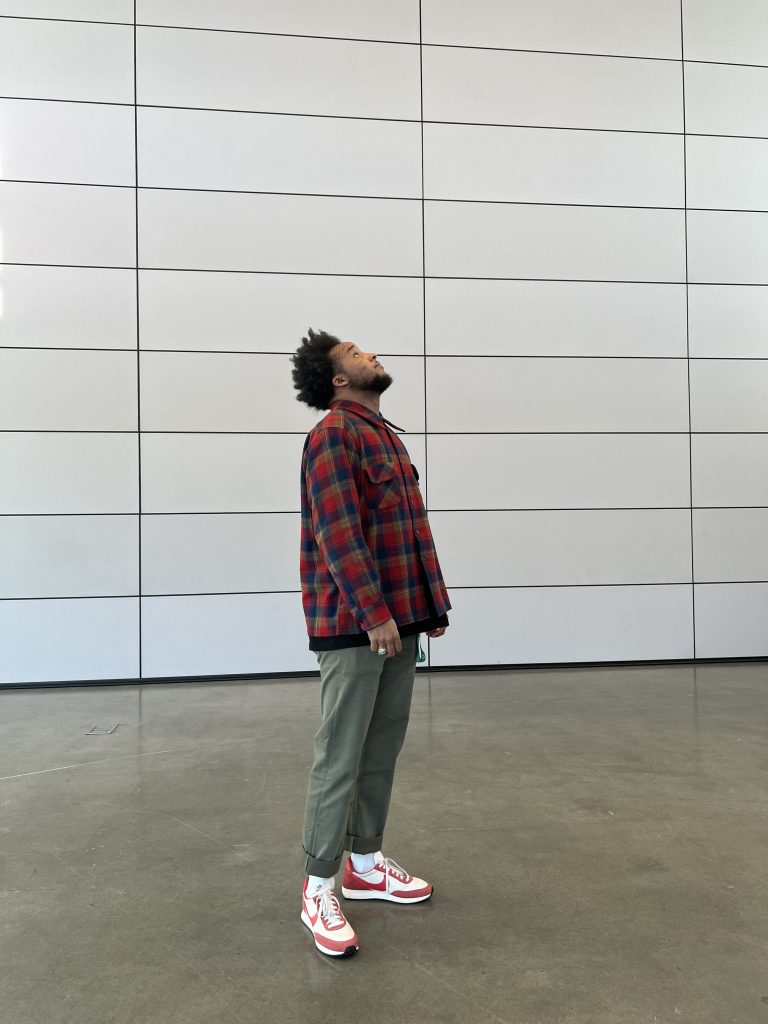
Young now works at the Los Angeles LGBT Center as community advocate to raise awareness about the challenges they face, and help homeless youth find housing as a coordinator for the Host Homes Program, an initiative that aims to connect young people without stable housing to safe and welcoming homes.
The program promises guidance, support, and resources for the young people it works with.
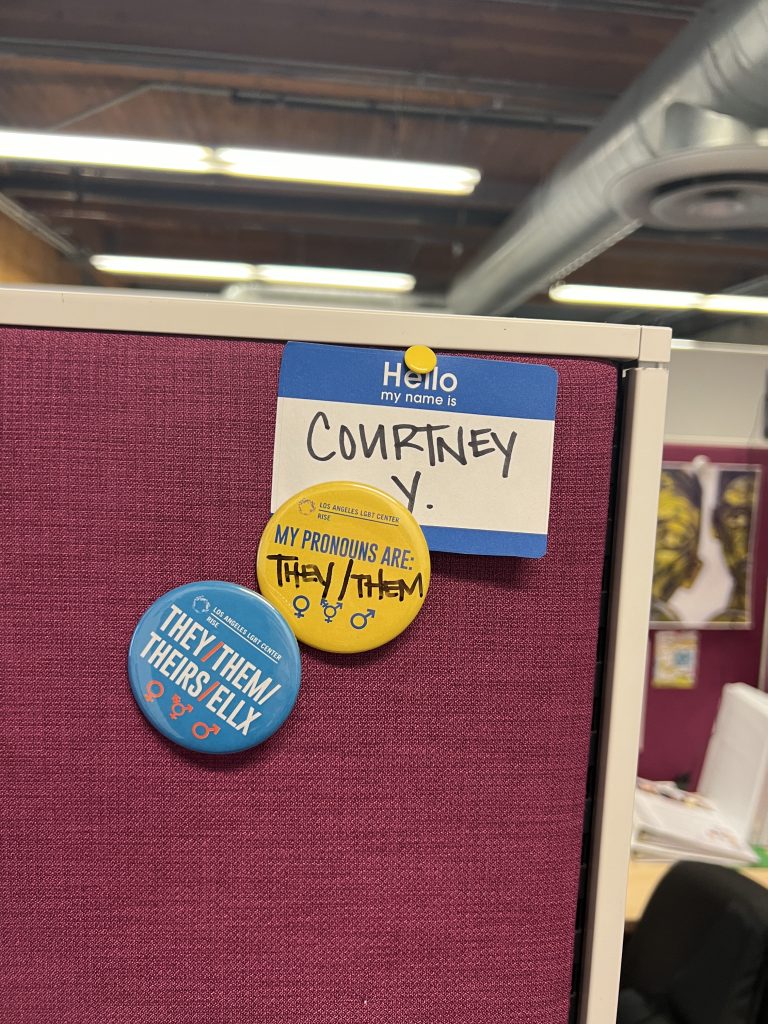
“It’s heavy to do work with people that you see so much of yourself in,” Young said. “While it is heavy, it’s also really rewarding because people just want to be loved and supported, you know?”
The Los Angeles LGBTQ Center, founded in 1969, aims to offer vital support and services on a large scale to those in need.

“I think the continued support of places like the center and the community support with one another, I think is going to be what gets us across all the hurdles that we have to face,” Young said.
Val Diaz
If you were to look up Val Diaz on Instagram two years ago, you would not have been able to find anything. Val was not Val. She was Juan Pablo.
Val has been transitioning from male to female for the last two years.

In a stark contrast to her former self, Val sits before me with long jet black hair and a face as smooth as a baby. Behind her, a trans flag is proudly displayed on the wall.
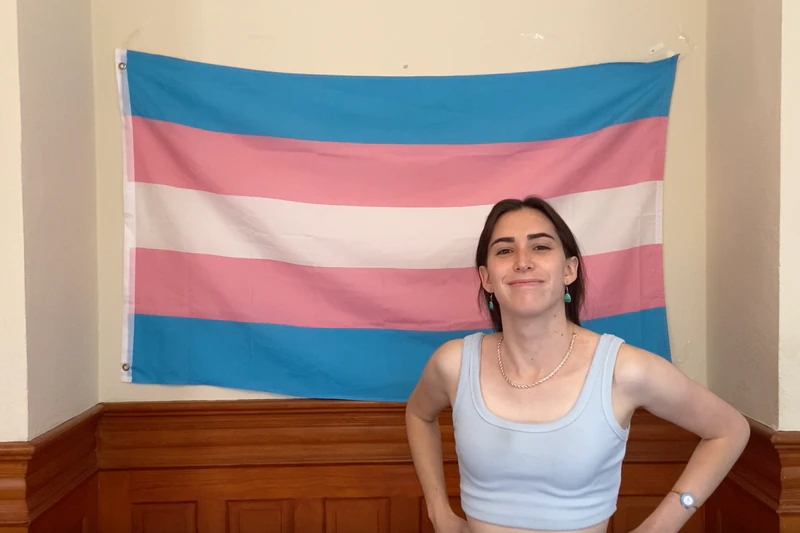
“I’m a trans woman,” Val says confidently.
At the start of her day she showers, brushes her teeth and does her makeup – and then takes her hormone pills each morning.
“I take two pills of spironolactone every day and two pills of estrogen,” she said.
Spironolactone and estrogen fuel the feminization in a human body. The hormones contribute to breast growth, smoothness of skin, rounder hips and other key attributes.
Without these hormones, Val would be back in her former body.
Val receives her hormones from USC Student Health, who offer a plethora of health services for transgender people. Her student health insurance covers 90% of the therapy. Unlike other clinics across the country, all USC requires is informed consent.
“So as long as you go, you say that you want to get them, you sign some stuff, you’re good to go,” she said. “I got there and the doctor was like, ‘OK, so do you want to start writing the prescription now?’ And I was like, Wait, no, no, no, no, no. I still have to talk with my parents.”
According to Val, many transgender students at USC are not aware of the services offered to them
USC Student Health offers gender affirming health care, healthcare that provides tailored medical services and support to transgender and gender diverse individuals, meeting their specific needs and promoting their well-being while respecting their gender identity
According to their pamphlet, they “ offer services ranging from primary care (including cancer and sexually transmitted infection screening) to hormone therapy.” They also have a mental health service and work with the LGBTQ+ Student Center.
Dr. Patty Pinanong, the Gender Affirming Care Team Lead Physician, is devoted to ensuring patients like Val receive the care they need.
After her morning routine, Val decides what to wear. She is 10 minutes late to class but that does not bother her. Her newfound confidence in her body shows in her style. “Before, I had three pairs of jeans and a bunch of graphic tees and rotated them,” she said. “Now, I like an academia style where I go for a really clean kind of aesthetic with neutral colors.”

Val, a journalism major, heads to class in Annenberg. She is a part of the radio team and broadcasts her newly found voice for many to hear.
When she is not working or hanging out with her friends, Val is researching doctors that can provide a consultation for bottom surgery — a surgery that transforms the male genitalia into that of a female.
“In the middle of the night or whatever, I have this urge to look it up,” she said. “It just comes to me like a little spark.”
Unlike her hormone therapy, this surgery requires a letter from two therapists before receiving a consultation from a surgeon.
Val’s personal therapist will write the letter. The other letter will have to come from a therapist she finds from USC’s Student Health that specializes in transgender health.