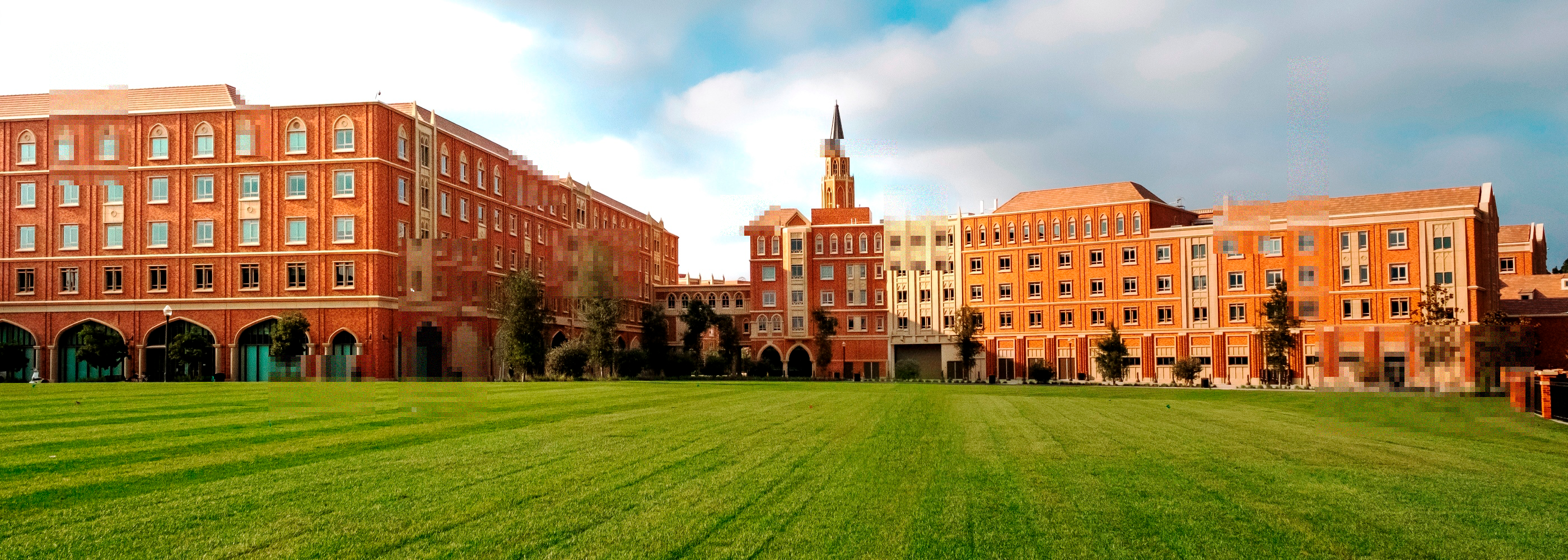
Click to hear a day in the life of an online University of Southern California student.
Emily Costa, now a schoolteacher, completed her undergraduate degree at the University of New Hampshire in 2017. She moved to Boston and occupied her time working a nonprofit—where she met someone who had been accepted to USC. As someone interested in pursuing further education, she was intrigued. USC recruiters told her that she could attend online and still work full time at the nonprofit while she pursued her degree.

“That’s what I did, for my first year of classes. I worked full time, and I took three classes that year,” Costa said. “I didn’t really feel comfortable leaving the New England area, and USC gave me the option to get a really good education.”
Recruiters assured Costa that the time zone difference or full-time obligations wouldn’t be a problem, as other people were in the same boat as her. Costa was satisfied with the program—she got to teach at the same time that she earned a more advanced degree that could genuinely help her with future career prospects. Her only gripe was with the curriculum’s sometimes rigid cohort, where individual classes could not be ordered at the student’s convenience.
“The assignment [for that class] was really cool, but I wish I could have gotten those classes over with all in one semester,” Costa said. “I would have gotten the same out of it as spreading them out throughout the program, and it was just sort of stressful in that last semester having to do it because you’re working on the licensing exam.”
The online program enabled Costa to teach at the same time she learned, with some assignments incorporating her classroom or students’ progress all the way from Boston. Others focused more on Costa’s development, which she said was a welcome experience.
“We had to pick one area of growth that we wanted to work on, and mine was that I wanted to be less hard on myself,” Costa said. “Now I’m really confident, both in my abilities to teach and also build relationships with students as sort of a lifelong learner.”
Costa credits part of her success to the program, which she said focused on producing reflection in the student-teachers. It was an ideal fit for someone who wanted to work while they bettered themselves, without all the costs associated with an on-campus degree.
2U, an online program management company, or OPM, is the architect behind the online Master of Arts in education that Costa earned, as well as several other online programs offered at USC. This particular degree, however, is also the oldest of the bunch; it was the first online program that 2U officially offered at a university, the product of a joint effort between co-founder John Katzman and then-dean of the Rossier School of Education Karen Gallagher in 2009.
While Costa was in the midst of earning her degree from a cozy town in Vermont, reporters at the Wall Street Journal— who had spent week after week pouring over the publicly available data on federal loan borrowers from the Department of Education— would come across something of an anomaly. Despite USC’s relatively small online cohort, graduate students under the university’s online programs borrowed more in federal loans than any other graduate program in the country. They traced the programs back to 2U, a black box of a company with little transparency to their recruiting process worked.
Andrea Fuller and Lisa Bannon, both staff writers at the education desk for the publication, homed in on USC in search of a story. It wasn’t long before they started to hear back from a myriad students who were dissatisfied with their online program experiences.
Graduate after graduate would tell Bannon, in charge of the student interviews, how recruiters pushed them to enroll and take out massive loans with the promise that they would see a return on investment. A former 2U employee shared materials used to train recruiters, including a graphic that explicitly detailed how to approach and manipulate certain prospective students, such as black women, Hispanic men, or veterans.
“With the cartoon characters, that was a really bad look,” Fuller said in an interview.
Unlike previous Fuller’s previous run-ins with colleges, USC was radio silent when it came to the Journal’s queries. Not a single request for comment was acknowledged.
“It was pretty clear that they didn’t comment, and it was really frustrating,” Fuller said. “We would ask them a list of questions and they would just ignore it, unlike some other stories in our series where, you know, college presidents were willing to get on the phone with us and make statements.”
It got to the point where 2U and USC’s unwillingness to cooperate was halting the story; official statements of the two institutions were at odds with what sources were telling the journalists.
“With this story, the hardest thing was… I almost want to say dealing with USC. I would go back to them and be like, ‘so you told us in a previous statement that the GPA requirement was 3.0, but 2U is saying it’s not a firm and fast rule—can you explain the discrepancy?’” Fuller said. “There wasn’t an answer, no matter how many times we asked. That was really difficult.”
Following the article’s publishing in 2022, USC released an internal statement to students pursuing a master’s in social work, claiming that they were looking into terminating their contract with 2U. A subsequent statement by then-Provost Charles F. Zukoski clarified that the contract will remain until 2030.