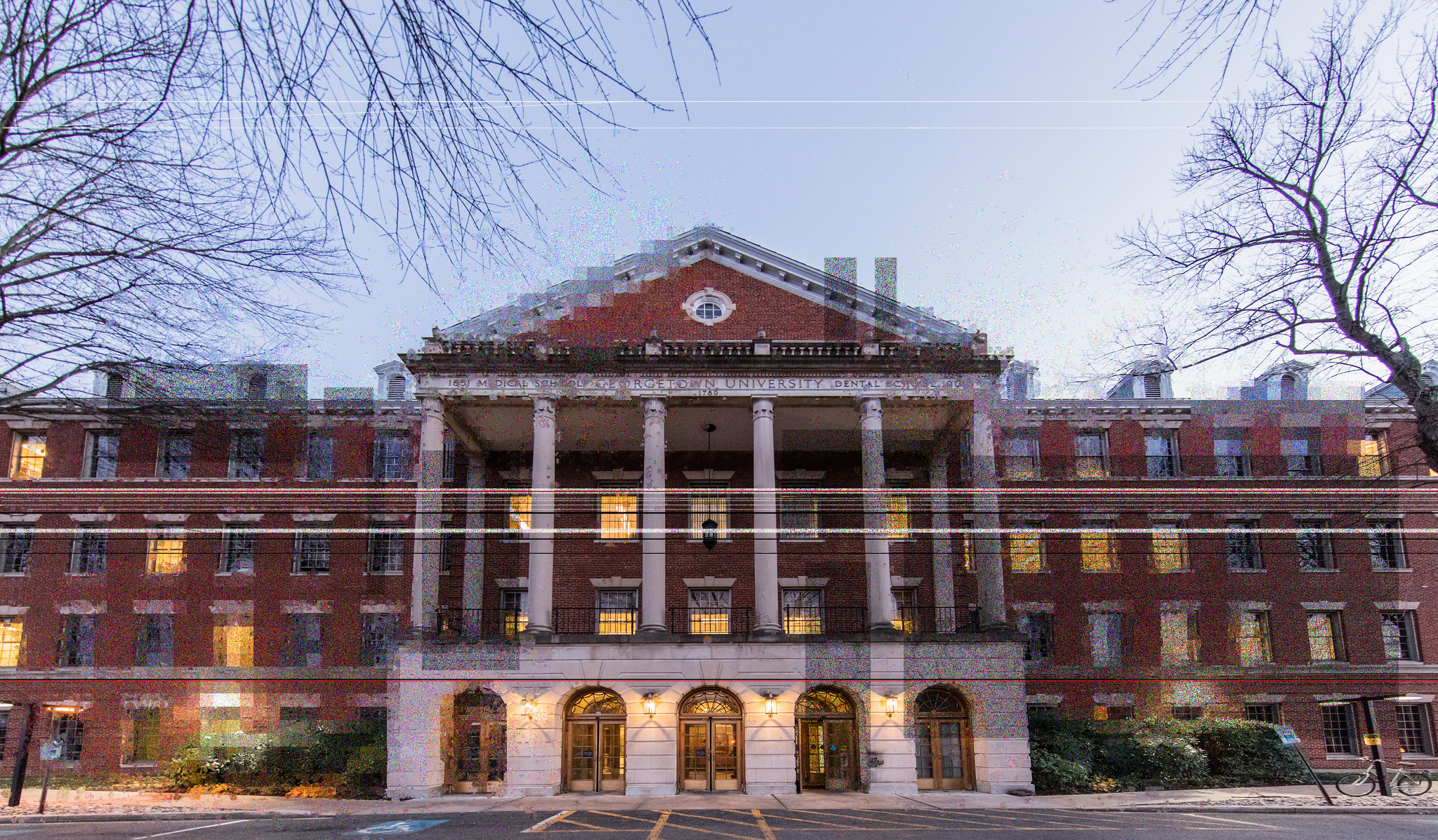
Click to hear a day in the life of an online Georgetown student.
‘Accessibility’ was the word on Tanner Thompson’s mind when he first laid eyes upon the website for Georgetown’s online Master of Science in business.
Thompson’s journey to postgraduate began in 2016, when he took a job right after obtaining his undergraduate degree. He was making a solid income—around $40,000 a year—but something was missing. He saw that even a little extra education went a long way (around six figures, to be exact) and the obvious choice was to go back to school and get a masters in finance.
When it came time to pick a college, it felt like he didn’t even have to think about it. Living in Utah and working full time with limited funds, online school was a no-brainer. He couldn’t afford to make long commutes or move away from his place of employment at Wells Fargo.
“Georgetown is the first thing you see when you google online masters,” Thompson said. “There’s Vanderbilt, there’s some in Utah, but I think Georgetown has some sort of search engine optimization, because it was right there at the top. It’s very professional, and clearly they invested a lot. They even had an admissions counselor give me an hour-long entrance counseling review, and by the time you know it’s $80,000, you’re already sold.”
But what exactly is there to be sold on? Given that so many online degrees are offered at absolute bargain prices, a triple-digit price tag on a full degree seems silly. That is, until you remember: this is Georgetown.
Born and raised in Baltimore, Thompson already harbored a respect for the Georgetown name, which dominates the leaderboards. Based on that alone, the counselor told him, the quality of the program is a cut above what he’d get elsewhere, so of course, the price was a little higher. He said the counselor even had him memorize the full name of the program: “Georgetown University Master of Science and Finance.”


Once Thompson was accepted, things seemed to be living up to his expectations. The curriculum was exact, with an emphasis on the students’ cohorts and taking the same classes together, give or take a few electives. In Thompson’s case, said cohort was only eighty students, and the program insisted upon them feeling included. Toward this end, students were invited to a one-week residency on campus and a program-wide banquet.
“At first, they really did make you feel like you were a part of the Georgetown community,” Thompson said.
These efforts were the work of the Georgetown administration— the university’s online degrees are kept separate from the rest of the student body, with only a few public about their relationship with 2U.
Eager to get involved, Thompson rose to the challenge of class president, ingratiating himself even more with the college as a middleman between the program’s tight-knit community and Georgetown administration. Student government became the modus operandi for how Thompson would interact with his cohorts, quickly setting himself apart from the rest. He even took the time to tutor others in the program, all the while maintaining an A average for his first few semesters.
“One of my goals was to be a very accessible class president, so I was always in our class group chat which had around eighty people,” Thompson said. “I was very involved.”
He noticed right away that students liked to complain— a lot. The volume of complaints, however, didn’t exactly match up with their substance, according to Thompson. Coming from Baltimore and then living in Utah, his perspective on the program tended to differ from that of some other students.
“Privilege was definitely a factor,” Thompson said.
His stint as class president wasn’t just fielding endless complaints, however. In the midst of his degree, a few female students voiced concerns about sexual harassment, coming to him only after they tried both the Dean of Students and the chair of the program. Unsatisfied with the inaction of the administration, the students went to Thompson, hoping for better results. When the topic surfaced during a meeting with Dean of Students and the program chair, both only expressed concern to Thompson about the school being sued by students.
“Some people did feel more comfortable talking to me because they didn’t feel welcomed fully by the administration,” Thompson said. “It was really more reserved in that case.”
Although his reception to the program and much of his interactions with administration were positive, the weather would only stay sunny for so long. An off-campus accident lead to Thompson requiring accommodations to finish his degree, which brought some of the less-than-ideal qualities of the program to life.
“There was an entire thing called the Disability Services Department, and I was never made aware of it. It was buried in page six or seven of the syllabi of the courses, but it was never mentioned,” Thompson said. “When I found out, it was way too late.”
Toward the end of his stay at Georgetown, Thompson experienced issues with how he was treated by other students. Along with his condition, Thompson had reached a breaking point. Facing an academic expulsion and at his wits’ end, he decided to try seeking help from the Georgetown racial grievances office located on-campus in D.C. They told him they couldn’t help, but there was one thing he could do—sign a nondisclosure agreement, which would prevent him from talking about his experiences at Georgetown any further. The employee he spoke to refused to drop the matter, citing pressure from above, and Thompson was pursued through email or by other university employees following his refusal to sign.
“I almost laughed in his face. I was kind of shocked,” Thompson said. “He was just like, if you don’t sign a nondisclosure agreement the fact that you’re going to be expelled will haunt you.”
In retrospect, Thompson doesn’t feel any ill-will towards the university, and still valued what experience he got from the program.
“I’m not angry at Georgetown,” Thompson said. “Overall, Georgetown did live up to my expectations, meaning what was promised on the website did deliver.”
Much of the information around the degree was only revealed to Thompson by a recruiter, and the presence of third-party companies in the program was not made evident during his recruiting process in 2016. He knows the company as 2SU, the alias it used for Syracuse university, which he also attended online.
Thompson describes the atmosphere at Syracuse as much warmer, as opposed to Georgetown’s professionalism.
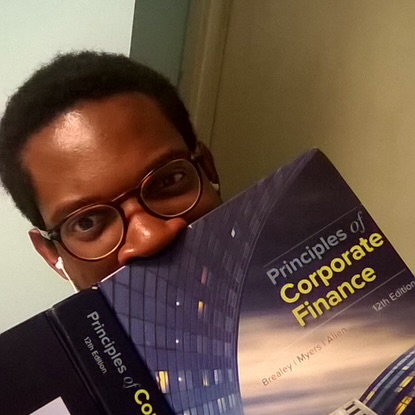
“It’s more normal,” Thompson said. “You can choose whatever you want, and there’s more electives.”
Thompson has since earned two master’s degrees at Syracuse, and hopes to delve further into certificate programs that would enable him to work in “Quant,” or quantitative analysis, a lucrative niche of finance that applies complex mathematics to market trends.