
It’s been over a year since the war in Ukraine first broke out. Now, the world’s spotlight on Eastern Europe has sparked people’s curiosity in the region, including their cuisine. San Diego locals can get their fix at Pomegranate, one of the city’s few Eastern European joints. Owner Dimitri Sakaliuk is from Georgia, the country, not the state – Which sometimes leads to confusion.
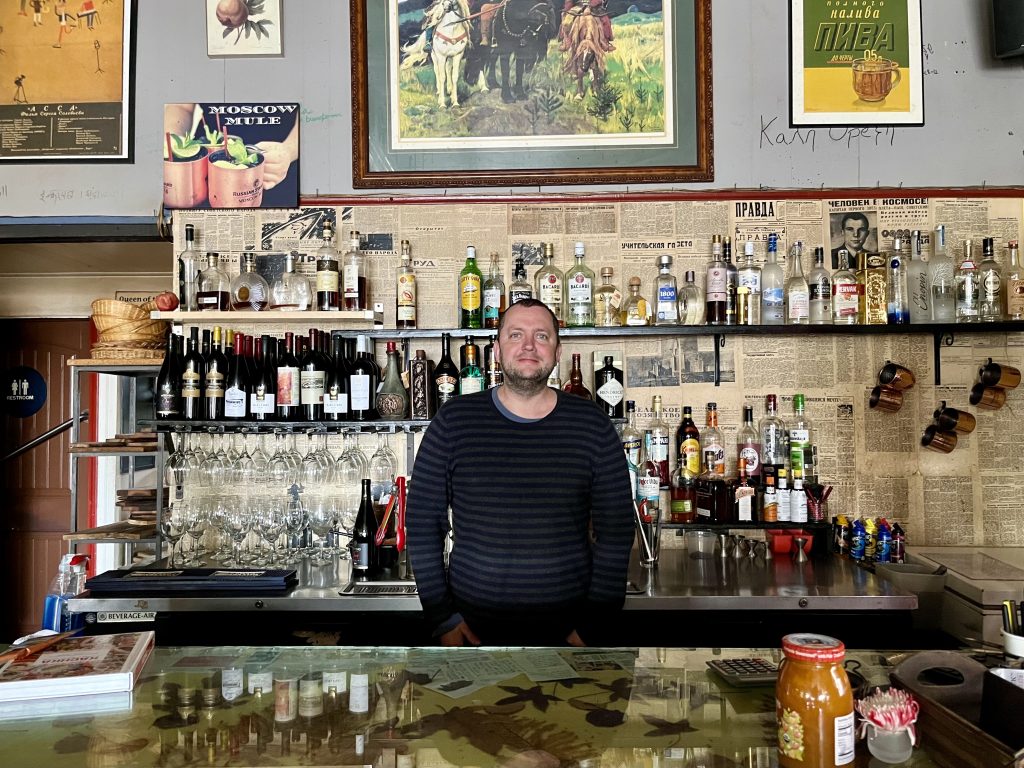
“We still sometimes have a phone call and ask if we have fried chicken,” he joked. They don’t have fried chicken, but they do have Chicken Tabka, a fried Cornish hen with garlic and pomegranate molasses. It is one of the handful Southern California restaurants that serves Eastern European cuisine. The majority of the dishes he serves are from Georgia, but the rest are from other countries, including Russia and Ukraine.
Although Pomegranate is not technically a Russian restaurant, it has experienced several harassing phone calls regarding the conflict in Ukraine.
“The first couple of weeks, it was pretty bad,” he explained. “Our hostess who picks up the phone, she always said that somebody’s calling and blaming us for starting the war with Ukraine.”
That’s simply not the case. Still, Sakaliuk said most of his customers are against the war. “I have personally relatives who had to flee from Ukraine. We hired a lot of Ukrainian people right now. More Ukrainian employees who recently came to the country. We try to help people the best way we know how.”
On the other side of the city at Pushkin Russian Restaurant, employees began to receive similar phone calls.
Pushkin specializes in Russian cuisine, but their menu also highlights Ukrainian and Armenian dishes. Yulia Yumatava, a hostess at Pushkin said the calls started to roll in when news of the invasion first broke out.
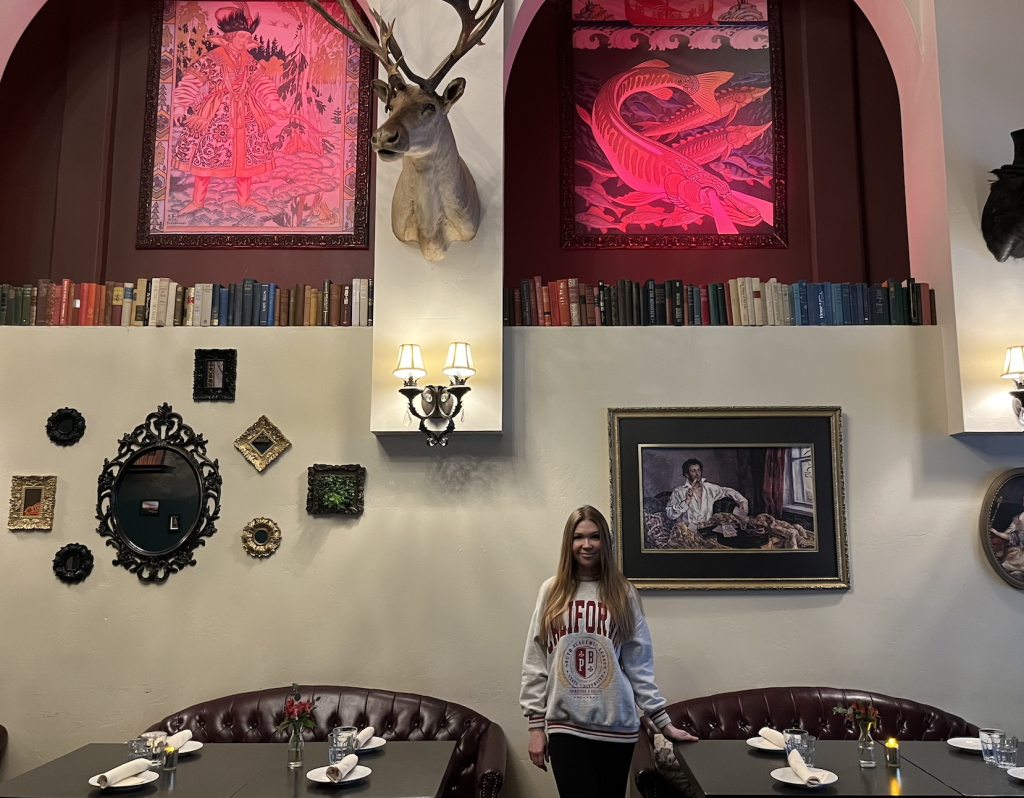
“People were like, ‘You’re a Russian restaurant, you support Putin, you support invasion of Ukraine… you’re evil and stuff like this,” she said.
The accusations didn’t make any sense to Yumatava. “We are a Russian restaurant in the USA. Probably the people who work here and who opened this restaurant, they also had their reasons to move out of Russia.”
The first few weeks of business at Pushkin were difficult when Russia first invaded Ukraine. But then, things began to turn around. “I would say the first couple of weeks were pretty tough because we got these hateful calls and I noticed that we got less customers than usual. But later, it was actually kind of like positive feedback, because like many people started coming… They were trying to show their support,” Yumatova said. “It really warms my heart that people are so understanding.”
Sakaliuk said people stop by his restaurant to try something new. “When they try it and they like it so much, they’re so surprised and become regulars. It’s something that opens their eyes,” he said. “You get surprised, you get a new discovery… I think it’s just beautiful.”
At Pushkin, Yumatova said that not only are customers curious, but they have also been a source of support during this difficult time. “And many customers, they are actually really curious. I’m from Russia, they asked me, how’s your family doing? They’re safe.”
In uncertain, scary times, people turn to creature comforts, including their favorite meals. On the other side of the world in Southern California, folks are doing the same. West Hollywood has one of the largest Russian-speaking communities in the United States, originating from countries including Russia, Ukraine, Armenia, Georgia, Belarus and beyond.
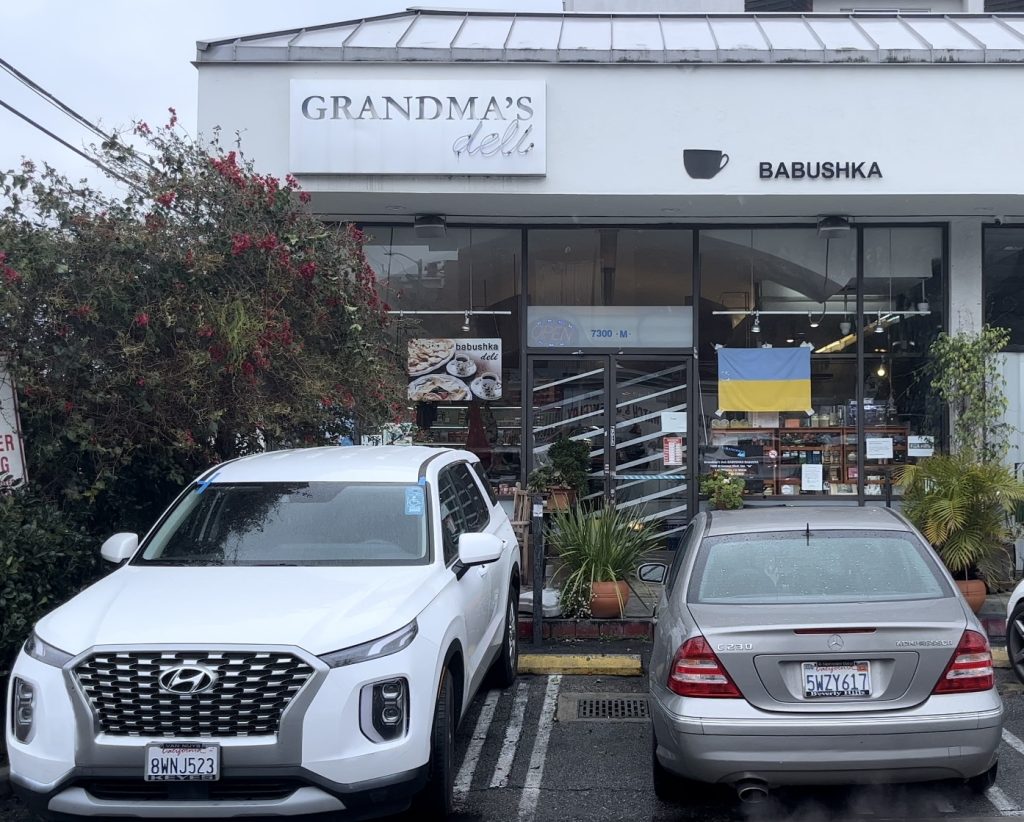
Nestled off Sunset Boulevard in WeHo is Grandma’s Deli Babushka, the City’s go-to for Ukrainian and other Eastern European staples. Konstantin Chvouim , the deli’s owner, said that the war has brought a new sense of curiosity about the region’s food. “Not only to Ukrainian food, but to Ukrainian culture, also, and to Ukrainian people,” he said.
Chvouim, 76, moved to the United States from Odessa, Ukraine in 1993 after the collapse of the Soviet Union without plans to stay long. Fast forward to today, he’s a popular face in the neighborhood. He’s been the owner of the deli for over 20 years and has no plans of going anywhere soon. “I love my country. This is my home now,” he said.
Babushka’s deli plays an important role for Russian speaking residents in WeHo. His store carries foods from across Europe, from Ukraine to Italy, from Piroshkis to gourmet coffees. He believes that no one should have to walk more than a block for a fresh cup of Italian espresso. Luckily for his neighbors, they don’t have to.
During a time of high tension, shops and restaurants specializing in Eastern European goods have become a catalyst of community. Chvouim describes Babushka as a social club. Walking into his deli, he makes you feel right at home. Whether you have ties to the Ukrainian/Russian speaking community, or you’re a beginner interested in exploring Eastern European cuisine, Chvouim welcomes his customers with open arms. He believes that no matter where you come from, a shared interest in food and culture has the power to bring people together. “We are the same. We speak different languages, but we are the same because we love culture,” he said.
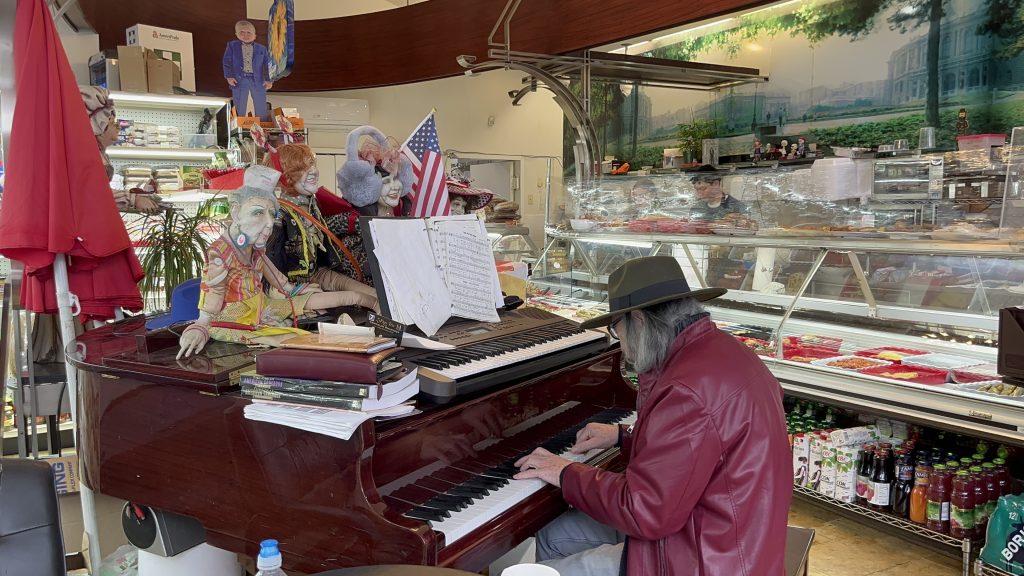
Before he owned Babushka, Chvouim was a professional musician and master of the blues. On any given day you’re likely to find him tickling the piano keys and singing tunes in both English and Ukrainian. It’s all part of the social club vibe he’s going for.
The Russian-speaking community in West Hollywood is a tight-knit one. According to Chvouim, it’s small enough where it seems like everybody knows everybody. People come to his deli not only to buy groceries, but to connect with others in the community. It’s a place where Russian and Ukrainian speaking folks can speak their own languages and shop for foods that remind them of home.
Ukraine’s geographic position has created a unique cuisine profile influenced by its bordering nations. “Ukraine is a country of the borderland between two huge civilizations between the Christian West, and between the east, like Asia,” said Lylo. Foods from Ukraine have many overlapping characteristics to other foods from across the region. Many countries have their own variations of certain dishes. For example, on menus you’ll see dishes such as pierogies, vareniki or pelmeni, which are all varieties of potato dumplings.
“Depending on where the food is coming from, definitely affects the flavor, the taste,” said Sakaliuk. Georgian dumplings, called khinkali, are similar to other variations of Eastern European dumplings, but have a taste unique to the region. “They look like [soup dumplings] with a lot of broth, but they would add their own seasonings and spices that grow only in Georgia, in the mountainous regions,” he said.
If you’ve ever been to a restaurant serving Soviet food, chances are you’ve seen borscht on the menu. It’s a sour soup made from beetroot, giving it its signature bright red color. It’s common across Eastern Europe, yet, debate remains about exactly where it comes from. A few years ago the Russian Government claimed ownership over the dish, saying “Borscht is one of Russia’s most famous & beloved dishes & a symbol of traditional cuisine.”
Experts say otherwise.
Ihor Lylo, author of “Ukraine. Food and History” is among them. [history of borscht] “Russia never recognized that Ukraine has a separate cuisine,” he said. “[Borscht] is well known in countries like Poland, Lithuania, Moldova, Romania, perhaps in Russia as well. But it’s an original dish from Ukraine.”
Why the confusion? At one time the land that Ukraine occupies today was under Russian rule. It’s theorized that ethnic Ukrainians under Russian rule created the dish in the late 17th or early 18th century. Yet, the dish continues to be a mainstay across the region.
While some still disagree, borscht is widely recognized as a Ukrainian dish by many experts and organizations. In 2022, the United Nations Educational, Scientific and Cultural Organization (UNESCO) recognized the art of cooking Ukrainian borscht as an “Intangible cultural heritage in need of urgent safeguarding.”
The U.N released a statement declaring, “the displacement of people and bearers threatens the element, as people are unable not only to cook or grow local vegetables for borscht, but also to come together to practice the element, which undermines the social and cultural well-being of communities.”
Lylo said that the recognition was a “moment to be proud” for himself and fellow Ukrainians.
By the way, borscht isn’t the only Eastern European specialty that has hard to trace roots – vodka does too, according to Sakaliuk. “People in Ukraine will swear it’s Ukrainian, Polish people will say ‘No vodka was invented in Poland,’ Russians will swear to God it’s Russian. It’s hard to find the roots. That’s why I would call it Eastern European,” he said.
Vodka is believed to have originated somewhere in Poland or Russia, but it’s hard to pinpoint exactly where it came from. The first documentation of the production of the liquor was in 9th century Russia. At Pushkin restaurant, they make a serve variety of flavored vodkas made in house. “Berry, fruity flavors, some like more funky flavors, like dill and jalapeno,” Yumatava said. She also made it clear that “not all Russians drink vodka,” but it is the most popular liquor in the country.
Members of the community have come out to show their support to their Eastern European neighbors and enjoy the cuisine they have to offer. Ihor Lylo said that these connections are more important than ever, “It’s an element of the social life. We need to meet new people. We need to feel the support from each other.”
After over a year of conflict in Ukraine, there seems to be no end in sight at times. While folks in Eastern Europe try to cope with the pressures of war, food still seems to be a place of comfort. While the way these foods are prepared vary by region, they are all made with a similar ingredient; Love, which connects all.
Community support, compassion and love are key to maintaining hope during these difficult times. Lylo explained that as Ukrainian refugees have begun to disperse across the globe in light of the war, they have brought their cuisine to their new homes. It serves as a bridge between these two worlds. “It’s the best example of how this works and how it’s going on in the time of the building of the new relationship between the different nations in different cultures”, he said.