
Deprecated: voku\helper\UTF8::extract_text(): Implicitly marking parameter $length as nullable is deprecated, the explicit nullable type must be used instead in /var/www/ascjcapstone/public_html/spring-2024/blasscyk/wp-content/plugins/simply-static/vendor/voku/portable-utf8/src/voku/helper/UTF8.php on line 1622

Deprecated: voku\helper\UTF8::file_get_contents(): Implicitly marking parameter $offset as nullable is deprecated, the explicit nullable type must be used instead in /var/www/ascjcapstone/public_html/spring-2024/blasscyk/wp-content/plugins/simply-static/vendor/voku/portable-utf8/src/voku/helper/UTF8.php on line 1842

Deprecated: voku\helper\UTF8::file_get_contents(): Implicitly marking parameter $max_length as nullable is deprecated, the explicit nullable type must be used instead in /var/www/ascjcapstone/public_html/spring-2024/blasscyk/wp-content/plugins/simply-static/vendor/voku/portable-utf8/src/voku/helper/UTF8.php on line 1842

Deprecated: voku\helper\UTF8::getSupportInfo(): Implicitly marking parameter $key as nullable is deprecated, the explicit nullable type must be used instead in /var/www/ascjcapstone/public_html/spring-2024/blasscyk/wp-content/plugins/simply-static/vendor/voku/portable-utf8/src/voku/helper/UTF8.php on line 2580

Deprecated: voku\helper\UTF8::html_entity_decode(): Implicitly marking parameter $flags as nullable is deprecated, the explicit nullable type must be used instead in /var/www/ascjcapstone/public_html/spring-2024/blasscyk/wp-content/plugins/simply-static/vendor/voku/portable-utf8/src/voku/helper/UTF8.php on line 3029

Deprecated: voku\helper\UTF8::lcfirst(): Implicitly marking parameter $lang as nullable is deprecated, the explicit nullable type must be used instead in /var/www/ascjcapstone/public_html/spring-2024/blasscyk/wp-content/plugins/simply-static/vendor/voku/portable-utf8/src/voku/helper/UTF8.php on line 4301

Deprecated: voku\helper\UTF8::lcwords(): Implicitly marking parameter $lang as nullable is deprecated, the explicit nullable type must be used instead in /var/www/ascjcapstone/public_html/spring-2024/blasscyk/wp-content/plugins/simply-static/vendor/voku/portable-utf8/src/voku/helper/UTF8.php on line 4365

Deprecated: voku\helper\UTF8::ltrim(): Implicitly marking parameter $chars as nullable is deprecated, the explicit nullable type must be used instead in /var/www/ascjcapstone/public_html/spring-2024/blasscyk/wp-content/plugins/simply-static/vendor/voku/portable-utf8/src/voku/helper/UTF8.php on line 4444

Deprecated: voku\helper\UTF8::rtrim(): Implicitly marking parameter $chars as nullable is deprecated, the explicit nullable type must be used instead in /var/www/ascjcapstone/public_html/spring-2024/blasscyk/wp-content/plugins/simply-static/vendor/voku/portable-utf8/src/voku/helper/UTF8.php on line 5625

Deprecated: voku\helper\UTF8::str_camelize(): Implicitly marking parameter $lang as nullable is deprecated, the explicit nullable type must be used instead in /var/www/ascjcapstone/public_html/spring-2024/blasscyk/wp-content/plugins/simply-static/vendor/voku/portable-utf8/src/voku/helper/UTF8.php on line 5762

Deprecated: voku\helper\UTF8::str_delimit(): Implicitly marking parameter $lang as nullable is deprecated, the explicit nullable type must be used instead in /var/www/ascjcapstone/public_html/spring-2024/blasscyk/wp-content/plugins/simply-static/vendor/voku/portable-utf8/src/voku/helper/UTF8.php on line 6022

Deprecated: voku\helper\UTF8::str_replace(): Implicitly marking parameter $count as nullable is deprecated, the explicit nullable type must be used instead in /var/www/ascjcapstone/public_html/spring-2024/blasscyk/wp-content/plugins/simply-static/vendor/voku/portable-utf8/src/voku/helper/UTF8.php on line 7678

Deprecated: voku\helper\UTF8::str_slice(): Implicitly marking parameter $end as nullable is deprecated, the explicit nullable type must be used instead in /var/www/ascjcapstone/public_html/spring-2024/blasscyk/wp-content/plugins/simply-static/vendor/voku/portable-utf8/src/voku/helper/UTF8.php on line 7913

Deprecated: voku\helper\UTF8::str_titleize(): Implicitly marking parameter $ignore as nullable is deprecated, the explicit nullable type must be used instead in /var/www/ascjcapstone/public_html/spring-2024/blasscyk/wp-content/plugins/simply-static/vendor/voku/portable-utf8/src/voku/helper/UTF8.php on line 8704

Deprecated: voku\helper\UTF8::str_titleize(): Implicitly marking parameter $lang as nullable is deprecated, the explicit nullable type must be used instead in /var/www/ascjcapstone/public_html/spring-2024/blasscyk/wp-content/plugins/simply-static/vendor/voku/portable-utf8/src/voku/helper/UTF8.php on line 8704

Deprecated: voku\helper\UTF8::str_titleize(): Implicitly marking parameter $word_define_chars as nullable is deprecated, the explicit nullable type must be used instead in /var/www/ascjcapstone/public_html/spring-2024/blasscyk/wp-content/plugins/simply-static/vendor/voku/portable-utf8/src/voku/helper/UTF8.php on line 8704

Deprecated: voku\helper\UTF8::str_to_lines(): Implicitly marking parameter $remove_short_values as nullable is deprecated, the explicit nullable type must be used instead in /var/www/ascjcapstone/public_html/spring-2024/blasscyk/wp-content/plugins/simply-static/vendor/voku/portable-utf8/src/voku/helper/UTF8.php on line 9064

Deprecated: voku\helper\UTF8::str_to_words(): Implicitly marking parameter $remove_short_values as nullable is deprecated, the explicit nullable type must be used instead in /var/www/ascjcapstone/public_html/spring-2024/blasscyk/wp-content/plugins/simply-static/vendor/voku/portable-utf8/src/voku/helper/UTF8.php on line 9111

Deprecated: voku\helper\UTF8::str_upper_camelize(): Implicitly marking parameter $lang as nullable is deprecated, the explicit nullable type must be used instead in /var/www/ascjcapstone/public_html/spring-2024/blasscyk/wp-content/plugins/simply-static/vendor/voku/portable-utf8/src/voku/helper/UTF8.php on line 9352

Deprecated: voku\helper\UTF8::strcspn(): Implicitly marking parameter $length as nullable is deprecated, the explicit nullable type must be used instead in /var/www/ascjcapstone/public_html/spring-2024/blasscyk/wp-content/plugins/simply-static/vendor/voku/portable-utf8/src/voku/helper/UTF8.php on line 9515

Deprecated: voku\helper\UTF8::strip_tags(): Implicitly marking parameter $allowable_tags as nullable is deprecated, the explicit nullable type must be used instead in /var/www/ascjcapstone/public_html/spring-2024/blasscyk/wp-content/plugins/simply-static/vendor/voku/portable-utf8/src/voku/helper/UTF8.php on line 9652

Deprecated: voku\helper\UTF8::strspn(): Implicitly marking parameter $length as nullable is deprecated, the explicit nullable type must be used instead in /var/www/ascjcapstone/public_html/spring-2024/blasscyk/wp-content/plugins/simply-static/vendor/voku/portable-utf8/src/voku/helper/UTF8.php on line 11118

Deprecated: voku\helper\UTF8::strtocasefold(): Implicitly marking parameter $lang as nullable is deprecated, the explicit nullable type must be used instead in /var/www/ascjcapstone/public_html/spring-2024/blasscyk/wp-content/plugins/simply-static/vendor/voku/portable-utf8/src/voku/helper/UTF8.php on line 11348

Deprecated: voku\helper\UTF8::strtolower(): Implicitly marking parameter $lang as nullable is deprecated, the explicit nullable type must be used instead in /var/www/ascjcapstone/public_html/spring-2024/blasscyk/wp-content/plugins/simply-static/vendor/voku/portable-utf8/src/voku/helper/UTF8.php on line 11403

Deprecated: voku\helper\UTF8::strtoupper(): Implicitly marking parameter $lang as nullable is deprecated, the explicit nullable type must be used instead in /var/www/ascjcapstone/public_html/spring-2024/blasscyk/wp-content/plugins/simply-static/vendor/voku/portable-utf8/src/voku/helper/UTF8.php on line 11483

Deprecated: voku\helper\UTF8::substr(): Implicitly marking parameter $length as nullable is deprecated, the explicit nullable type must be used instead in /var/www/ascjcapstone/public_html/spring-2024/blasscyk/wp-content/plugins/simply-static/vendor/voku/portable-utf8/src/voku/helper/UTF8.php on line 11698

Deprecated: voku\helper\UTF8::substr_compare(): Implicitly marking parameter $length as nullable is deprecated, the explicit nullable type must be used instead in /var/www/ascjcapstone/public_html/spring-2024/blasscyk/wp-content/plugins/simply-static/vendor/voku/portable-utf8/src/voku/helper/UTF8.php on line 11868

Deprecated: voku\helper\UTF8::substr_count(): Implicitly marking parameter $length as nullable is deprecated, the explicit nullable type must be used instead in /var/www/ascjcapstone/public_html/spring-2024/blasscyk/wp-content/plugins/simply-static/vendor/voku/portable-utf8/src/voku/helper/UTF8.php on line 11926

Deprecated: voku\helper\UTF8::substr_count_in_byte(): Implicitly marking parameter $length as nullable is deprecated, the explicit nullable type must be used instead in /var/www/ascjcapstone/public_html/spring-2024/blasscyk/wp-content/plugins/simply-static/vendor/voku/portable-utf8/src/voku/helper/UTF8.php on line 12018

Deprecated: voku\helper\UTF8::substr_in_byte(): Implicitly marking parameter $length as nullable is deprecated, the explicit nullable type must be used instead in /var/www/ascjcapstone/public_html/spring-2024/blasscyk/wp-content/plugins/simply-static/vendor/voku/portable-utf8/src/voku/helper/UTF8.php on line 12172

Deprecated: voku\helper\UTF8::titlecase(): Implicitly marking parameter $lang as nullable is deprecated, the explicit nullable type must be used instead in /var/www/ascjcapstone/public_html/spring-2024/blasscyk/wp-content/plugins/simply-static/vendor/voku/portable-utf8/src/voku/helper/UTF8.php on line 12566

Deprecated: voku\helper\UTF8::trim(): Implicitly marking parameter $chars as nullable is deprecated, the explicit nullable type must be used instead in /var/www/ascjcapstone/public_html/spring-2024/blasscyk/wp-content/plugins/simply-static/vendor/voku/portable-utf8/src/voku/helper/UTF8.php on line 12984

Deprecated: voku\helper\UTF8::ucfirst(): Implicitly marking parameter $lang as nullable is deprecated, the explicit nullable type must be used instead in /var/www/ascjcapstone/public_html/spring-2024/blasscyk/wp-content/plugins/simply-static/vendor/voku/portable-utf8/src/voku/helper/UTF8.php on line 13030

Deprecated: voku\helper\UTF8::wordwrap_per_line(): Implicitly marking parameter $delimiter as nullable is deprecated, the explicit nullable type must be used instead in /var/www/ascjcapstone/public_html/spring-2024/blasscyk/wp-content/plugins/simply-static/vendor/voku/portable-utf8/src/voku/helper/UTF8.php on line 13496

Deprecated: voku\helper\UTF8::reduce_string_array(): Implicitly marking parameter $remove_short_values as nullable is deprecated, the explicit nullable type must be used instead in /var/www/ascjcapstone/public_html/spring-2024/blasscyk/wp-content/plugins/simply-static/vendor/voku/portable-utf8/src/voku/helper/UTF8.php on line 13827

Notice: Function _load_textdomain_just_in_time was called incorrectly. Translation loading for the simply-static domain was triggered too early. This is usually an indicator for some code in the plugin or theme running too early. Translations should be loaded at the init action or later. Please see Debugging in WordPress for more information. (This message was added in version 6.7.0.) in /var/www/ascjcapstone/public_html/spring-2024/blasscyk/wp-includes/functions.php on line 6121

Notice: Function _load_textdomain_just_in_time was called incorrectly. Translation loading for the twentyseventeen domain was triggered too early. This is usually an indicator for some code in the plugin or theme running too early. Translations should be loaded at the init action or later. Please see Debugging in WordPress for more information. (This message was added in version 6.7.0.) in /var/www/ascjcapstone/public_html/spring-2024/blasscyk/wp-includes/functions.php on line 6121

Warning: Constant FS_METHOD already defined in /var/www/ascjcapstone/public_html/spring-2024/blasscyk/wp-config.php on line 88
Prep School Sports in South Los Angeles? – How three programs are changing the landscape of historically elite sports.

By Brooklyn Blasscyk

Picture a group of students playing cricket. To the untrained American eye, it may look like a baseball game with a pitcher preparing to throw toward someone at bat —but it is shaped more like a paddle here. There’s a small handful of kids clad in white scattered around the field, eager for the ball to come their way. 

But this match isn’t being played at a posh school in Britain or at an elite prep school on the East Coast. The unlikely playing field is the grass patch at Kelly Park in Compton, and the young players come for the most part from lower-income communities across South Los Angeles. 

What are they doing here? Despite the unexpected environment, they’re still learning about teamwork and determination while having fun a little outside of their comfort zone, just like any other youth cricket team.

There is a growing community of organizations working to make historically elite sports more accessible to L.A. kids, regardless of their geography, and financial, racial or ethnic backgrounds.

This Kelly Park practice is the work of the Southern California Junior Cricket Academy (SCJCA, for short), founded by Mustafa Khan in 1995. 
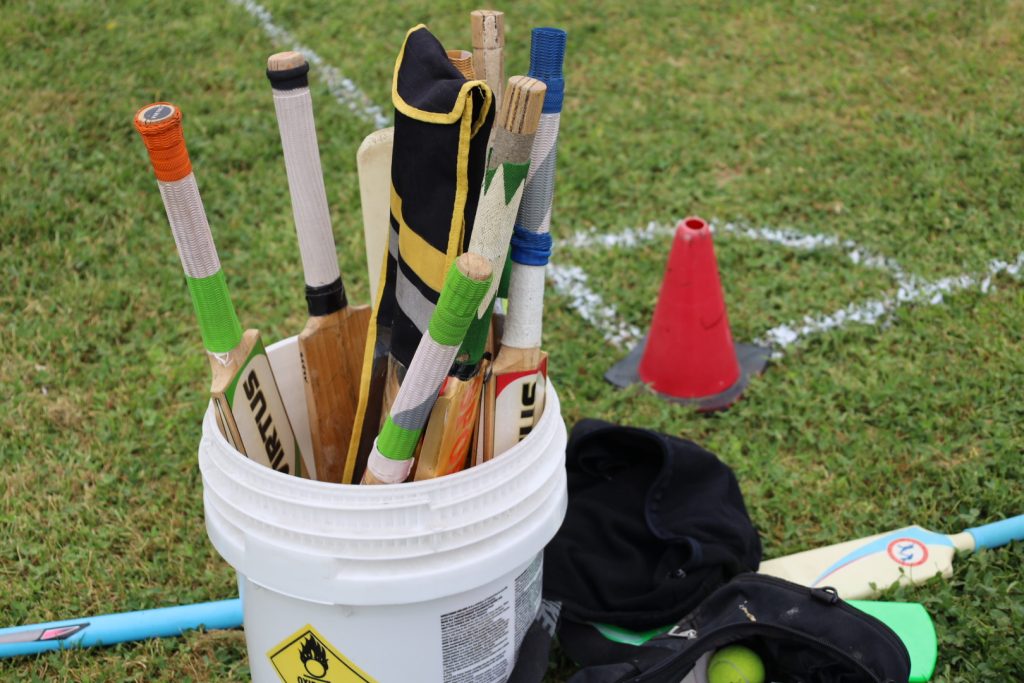
Bats new and old, wooden and plastic, make up the cricket academy’s gear. Photo by Brooklyn Blasscyk.

Khan was inspired to start the organization by hard times. In the early nineties, his father, mother and sister died one after another in his early forties. He lost his home shortly after. In 1995, he checked into a Downtown Los Angeles community for people without housing called Dome Village. 

Here, one of the community volunteers introduced him to cricket, a sport he had heard of but knew little about. Three months later in the summer, he found himself on a grass pitch in the rural village of Hambledon, England, competing in an international tournament where the sport was born in 1750. 

When Khan talks about cricket, you would think he is a reborn pastor delivering a sermon: “If cricket can change me at the age of 45 and restore my faith in God and in life and make me productive again, imagine what it could do for young kids in the inner cities.” 

It was this moment of realization for Khan where the cricket academy was born.

This sort of belief, that once-elite sports can have a transformative effect on young people in underprivileged communities within Los Angeles is at the root of efforts to make them accessible.

Cricket, polo, squash and field hockey — sometimes labeled as “country club” or “Ivy League” sports —  have historically been accessible largely to the children of upper-crust people, whether as a result of the costs associated with playing or access to the courts, fields or grounds where they are played. 

Many of these factors apply to other costly sports — horseback riding, golf and fencing— and they can also require admission into exclusive private programs. Some of those barriers have faded with time amid efforts to make such sports more accessible, but there are social and cultural barriers, as well. If no one tells a child they can play a strange sport, why would they even want to? 

There are reasons. Such sports can even reinforce elite status, setting players apart and facilitating admissions to prestigious schools and clubs, meaning that underprivileged players might use them to enter circles of influence that they might not otherwise be able to access. Harvard’s acceptance rate for recruited athletes in all sports was 88% in 2018, while the overall acceptance rate was merely 5%. So being a rowing star can facilitate admission.

In the U.S., such elite sports are often centered in the northeast, where the Ivy League institutions that tend to grant them special value, reside. In 2019, of the 7,000 registered Ivy League athletes, 195 were recruited from Fairfield County, Connecticut, where the median household income in 2021 was $101,194. In comparison, for all of West Virginia, one of the poorest states with a much larger population than Fairfield County, just two of its athletes accepted. 

Breaking Barriers 

While some elite sports like golf and tennis have diversified economically and racially thanks to trailblazing role models and other factors, maybe sports like cricket, lacrosse and rowing can follow.

The idea of widening the player pool to broaden access to new sporting opportunities is nothing new. The 20th century saw many athletes break barriers and make way for players from all backgrounds. 

When Jackie Robinson “broke the color line” in 1947, he became the first Black professional baseball player permitted in Major League Baseball. When he played his first game for the Brooklyn Dodgers, it marked a dramatic social change in the most popular sport in the United States. In the 77 years since then, baseball has become a sport reflective of the nation’s — and some regions of the world’s — many diverse communities. Other major sports, like basketball and football followed a similar path, and eventually some elite sports did too.
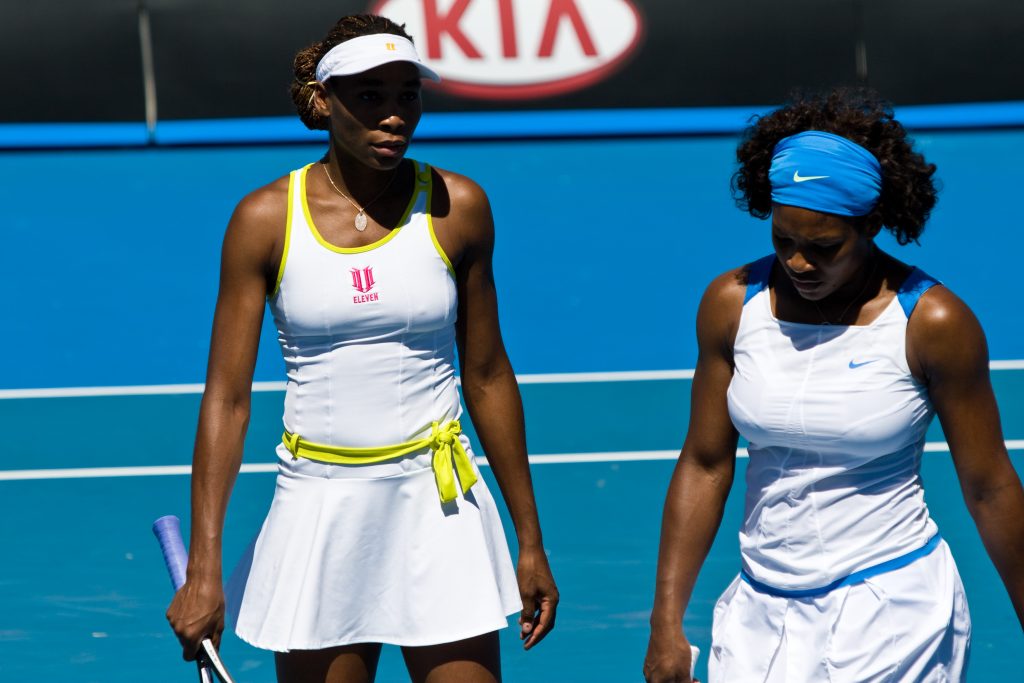
Australian Open-The Williams Sisters” by Julie Edgley is licensed under CC BY-SA 2.0.

With Compton serving as the backdrop, Venus and Serena Williams began learning tennis despite it being a sport with a notable shortage of prominent Black women in the game, with one large exception: Althea Gibson, one of the first Black athletes to win a Grand Slam. The Williams sisters went  on to win Olympic golds and dozens of Grand Slam Tournament titles between them. They also served as inspiration for a subsequent generation of players, like Coco Gauff, Naomi Osaka and Alycia Park.   

Playing the Long Game

Cricket was unheard of in Compton, according to Khan. Without easy access to the sport with elaborate rules, cricket is something few big-city American kids ever get a chance to try. 

Alexander Gonzalez and Angel Celaya are in sixth and eighth grade, respectively. Gonzalez has been practicing with the cricket academy for almost a year, while Celaya has been on the team for more than five. 

Both of them had no idea what cricket was when they first approached the team practicing in Kelly Park. Khan and assistant coach Chris Olivares invited them over to learn. Later, they offered them a chance to practice regularly. Celaya ended up joining the team in 2019 and Gonzalez joined last year. 
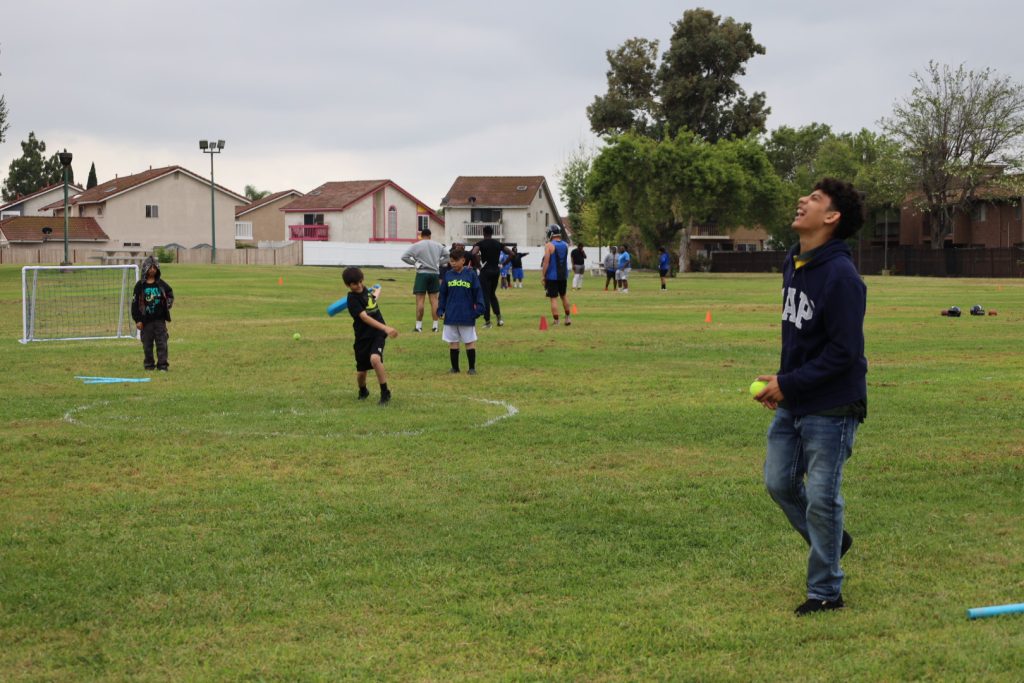
Gonzalez (at bat) and Celaya (bowling) keeping practice light and cracking jokes. Photo by Brooklyn Blasscyk.

Gonzalez and Celaya aren’t thinking of cricket as a plus for college admissions down the road. They’re just kids who want to play a sport none of their friends have heard of. It gets them out of the house, as they don’t have the option to practice at home. 

Gonzalez, who is a foster child from Compton, explained, “I have a car in my backyard and a pool, so my foster parents won’t let me play back there.”

So they go to Kelly Park every Saturday morning and start warming up practicing underarm bowling and bat swing stances. While a handful of players, including Gonzalez, walk a few blocks from nearby homes, others like Celaya require a greater commitment. 

Coach Olivares describes how even getting the kids to the park can be a challenge, asking Celaya, “How many times have I had to pay for your Ubers to get to practice? How many times have I given you a ride?” 

But once they’re here, they focus for the next three and a half hours on a short version of the game (some cricket matches can last up to five days). 

When asked what quality they’ve learned the most while playing cricket, the two boys respond with the same answer immediately: “Patience.” 

They’ve also honed their communication skills both on and off the field. Learning how to effectively convey strategies and provide support for their teammates is crucial, but as Olivares attests, this has also benefited their communication with coaches. The players are more likely to flag an issue ahead of time and work through a solution with their coaches rather than sit by idly and let problems fester.

But it’s more than just picking up new skills. For some of these kids from Compton, the tournaments and related field trips mark their first time out of town, giving them access to new cultures and walks of life.

The Underdogs

RowLA’s competitive team captain and high school senior Emily Lopez knows she’s not the typical rower. Coming from Crenshaw, rowing was not only something she was unfamiliar with, it was unimaginable unless she somehow magically managed to live by the ocean. 

When RowLA came into her life in middle school, she had to make going to practice accessible. Today, she commutes by city bus at five in the morning to Basin H in Marina Del Rey for practice an hour later. 

Here in the marina, Lopez leads her team despite not having the “insane” — meaning, expensive — boats her competitors race with. They don’t have a plethora of high-end uniforms they can choose from depending on the race, and they don’t have their own boathouse. None of this matters to Lopez and her teammates.

Still, when she travels with her team to contend in regattas, which are competitions for rowing, she must mentally prepare herself for the high-end teams she’ll be up against: “We’re definitely looked down on as a program because we’re so little.” The teams they’re competing against have 45 girls, while RowLA has just 10 girls ready to compete. And because the program is relatively new compared to others  — they only started 10 years ago — they lack the history that might earn them respect: “They’re like, there goes RowLA, watch them try again.”

Screenshot 2024-05-06 at 11.51.37 AM
Screenshot 2024-05-06 at 11.52.46 AM
Screenshot 2024-05-06 at 11.51.50 AM
Screenshot 2024-05-06 at 11.52.16 AM
Screenshot 2024-05-06 at 11.52.28 AM
previous arrow
next arrow

RowLA is an organization that subsidizes most of the costs associated with rowing for young girls and women anywhere in Los Angeles County, with members hailing from Glendale to Inglewood to Culver City. With RowLA, it doesn’t matter what your background is. Anyone who wants to join and is willing to commit to the program has the opportunity to participate with a scholarship.

While these scholarships and the program as a whole are funded largely through private donations, former executive chair Desa Philadelphia noted the discrepancy between her program and more established, affluent ones on the other side of the country.

Philadelphia details how the average East Coast elite team member they compete against might be paying $3,500 to attend their regattas. “That’s our fee for the whole year,” Philadelphia says. While this is still a pretty penny for some families in the program, if she can lower the barrier to entry so that the price of private rowing instruction is less, she considers it a job well done. By contrast, she says that some coaches in the Northeast charge $25,000 a year per athlete for their training. 

Even as the underdogs at regattas facing off against well-funded teams with lots of training and the best equipment, Lopez and her team remain steadfast. “It was scary at first,” she said.  “And then, I mean, we raced and I saw that we were with them. We were just as good. And it was like, ‘We can do it without having all that extra money, all that like legacy.‘”

Breaking Through

All video by Brooklyn Blasscyk.

In 2023, the NCAA reported that 83% of its registered lacrosse players across all three divisions were white. It can be a daunting reality to some prospective players of different ethnic and racial backgrounds when they don’t see where they fit. 

But Ciji Henderson of Harlem Lacrosse isn’t shaken by the numbers. Harlem Lacrosse, as the name implies, is an organization that was founded in New York City in 2011, where it would bring coaches and equipment to local schools to introduce the sport to less privileged kids.

She was hired as the program’s West Coast executive director when it ventured out to Compton in 2017, attempting to help popularize it in the West. Since then, the program has been embedded in three public schools in Compton. This means that their coaches are at school day in and day out, like full-time school faculty members. Involvement is also completely free for the players, including all equipment and travel fees for tournaments they compete in. 

At Davis Middle School in Compton, one of the three schools Harlem Lacrosse West is embedded in, practice turns into wall-ball when it’s raining. Photo by Brooklyn Blasscyk.

With a school district that has a student population that is 83% Latino and 14% Black, it is not the traditional demographic for lacrosse players. 

But, Henderson says, it is the right environment, and the same goes for any other school: “[Lacrosse] is so heavily elitist, but more and more entities are transcending into this sport. And that is how you grow anything.”