Formula 1, Media Representation, and the Female Future of Motorsport
“Female interest in motorsport doubled in just four years, from 2016 to 2020. ”
Antigone “Tiggy” Valen is one of those role models. Valen is a host and co-founder of “F1R THE GIRLS,” a podcast covering Formula 1 from a female perspective. Like Ashley and many fans, she found her passion for the sport after watching the hit Netflix show “Drive to Survive”.

“Drive to Survive” has become a crucial gateway to usher in new fans of the sport; according to a 2022 survey, 30% of American F1 fans stated that the docudrama was a major reason they became a fan of F1.
That same year, “Drive to Survive” hit the top of Netflix charts in 33 markets, with ESPN viewership in the United States of F1 Grands Prix more than doubling from 2018 to 2022 alongside the Netflix show’s success. Notably, F1 CEO Stefano Domenicali shared in 2022 that women now make up 40% of global F1 fans.
Numbers keep going up, with total race attendance in 2023 setting a record of 6.15 million, up 50% from 2019, the year “Drive to Survive” debuted their first season.
However, research by Females in Motorsport revealed that out of nearly 40 total hours of “Drive to Survive” across 60 episodes, women spoke for slightly over an hour, making up just 2.65% of the run time.
Evidently, even though female interest in motorsport has skyrocketed in recent years, the industry is still playing catch-up catering to the increasing female fanbase.
“As I was consuming content and media and listening to podcasts, it just didn’t really feel like there were that many women talking about it, and there have been women in the sport for a long time but not nearly enough,” Valen said.
That’s why Valen and her friends Chesa Sacchi and Sarah Hannigan created “F1R THE GIRLS” (FTG) in 2022, previewing and analyzing F1 races. They also regularly interview industry professionals across all fields in the sport.
“It’s incredibly important in any industry, but especially in sports and especially in Formula 1 where women unfortunately have been left out of the conversation for so long, to show young women—whether they want to become fans, employees in motorsport, or a driver—that there are mentors doing these things already and breaking those barriers,” Valen said.
“F1R THE GIRLS” is in the top 1% of most followed podcasts on Spotify, with over 90% female listeners across 110 countries. As of March 2024, FTG has an audience of over 100,000 people and growing, across podcast listeners, social media followers, and Discord community members.
“Now there are more and more female content creators in the space than ever, which is so great,” Valen said. “But we’re happy to to be a part of that and to give women a space that feels a little bit more welcoming, I think, than some of the traditional media and content out there.”
“When you go to a race and all the merchandise that is sold are hats for men and shirts that aren’t cut for a female body, that’s evidence that the space that you’re in is not built for women.”
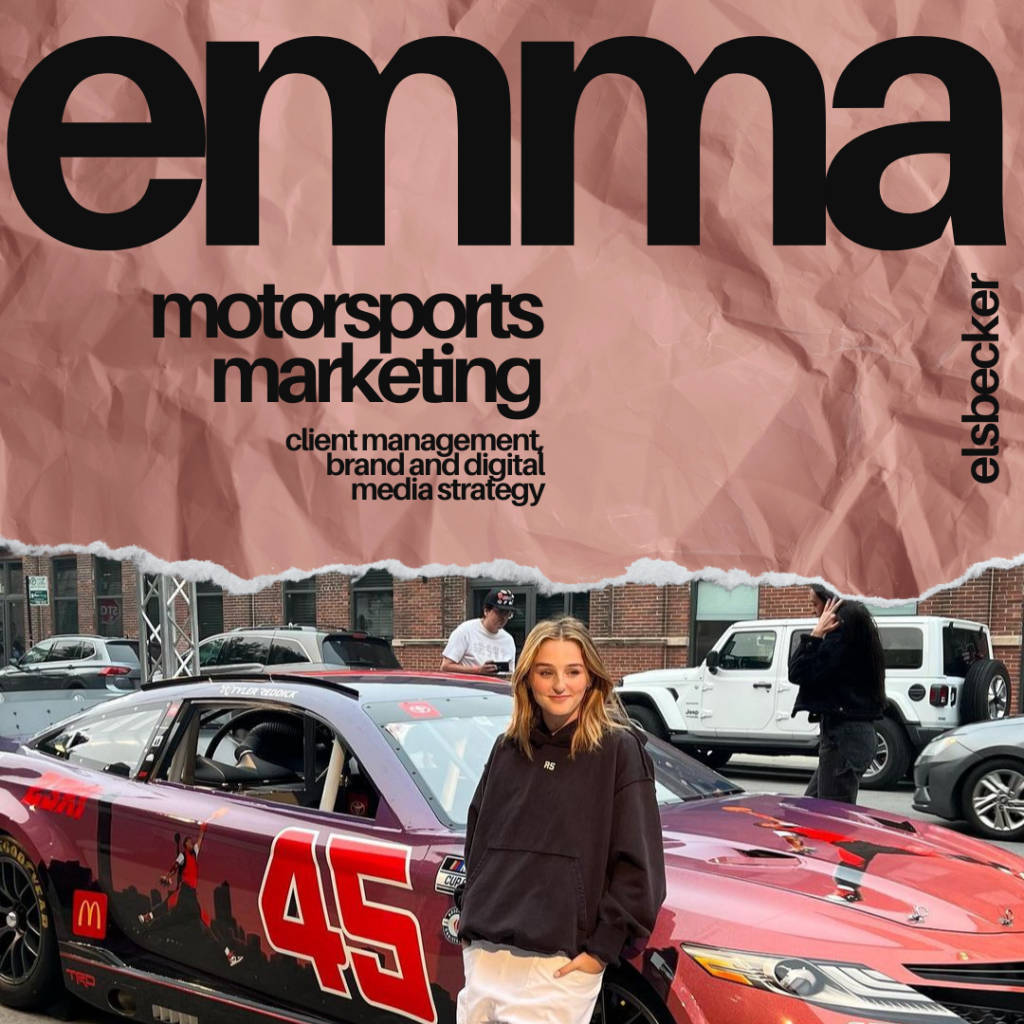
According to Emma Elsbecker, a freelance motorsports marketing consultant, this lack of a comfortable and welcoming space is “the crux of the issue.” She points out that there are very little opportunities for female fans to actively engage with the sport, namely through purchasing opportunities.
“When you go to a race and all the merchandise that is sold are hats for men and shirts that aren’t cut for a female body, that’s evidence that the space that you’re in is not built for women,” Elsbecker said.
“Female fans are always undervalued because we don’t have products for them to buy,” Elsbecker said. “It’s great that new fans can watch Formula 1 and can attend some races, but when you go to a race and all the merchandise that is sold are hats for men and shirts that aren’t cut for a female body, that’s evidence that the space that you’re in is not built for women.”
Elsbecker believes that until women start showing up on fiscal reports, racing series and sponsors will overlook female audiences as an important fanbase.

Likewise, Valen believes that executive leaders need to recognize the purchasing power of female fans in order to sustain growth and interest.
“We are good consumers in terms of consuming content, but also consuming merch, going to events, showing up, and bringing energy,” Valen said. “So I think it’s really important to to lean into that and to show that we can bring all that to the table.”
Jacob Agajanian, the president and co-founder of Race Service, thinks it even goes beyond catering specifically to the basic conception of what the “female fan” wants. Apart from being a creative agency, Race Service also has a clothing line, featuring unisex products that intentionally do not distinguish between genders and latch on to the oversized streetwear trend.
“It’s not about making super specific things, like a V-neck for women and stuff like that,” he said. “It’s more so about the style.”
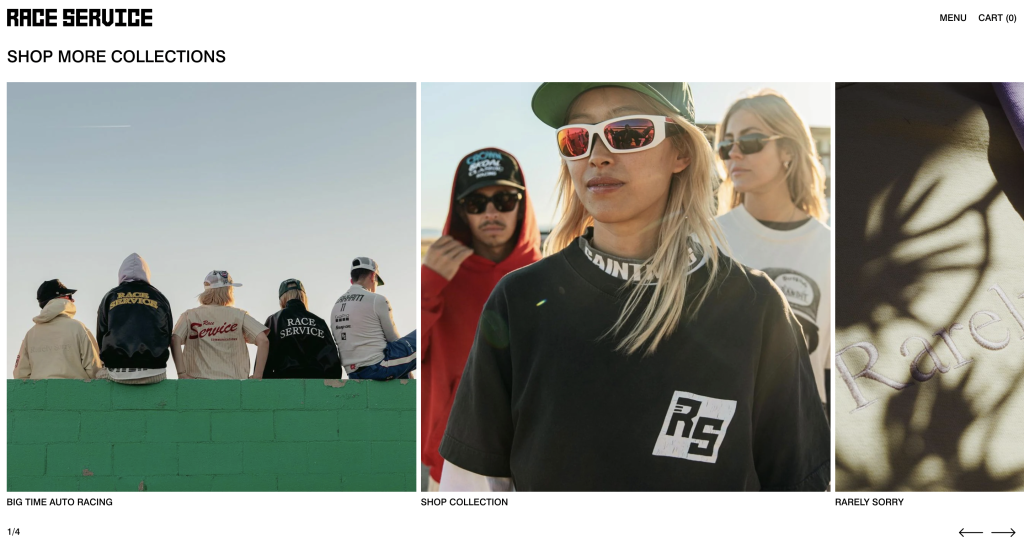
The merchandise sold at races claim to be unisex just like Race Service’s items, but the difference lies in that Race Service deliberately designs their clothing that way, while the products displayed at racetracks are really just men’s sizes that adopt the unisex label out of convenience.
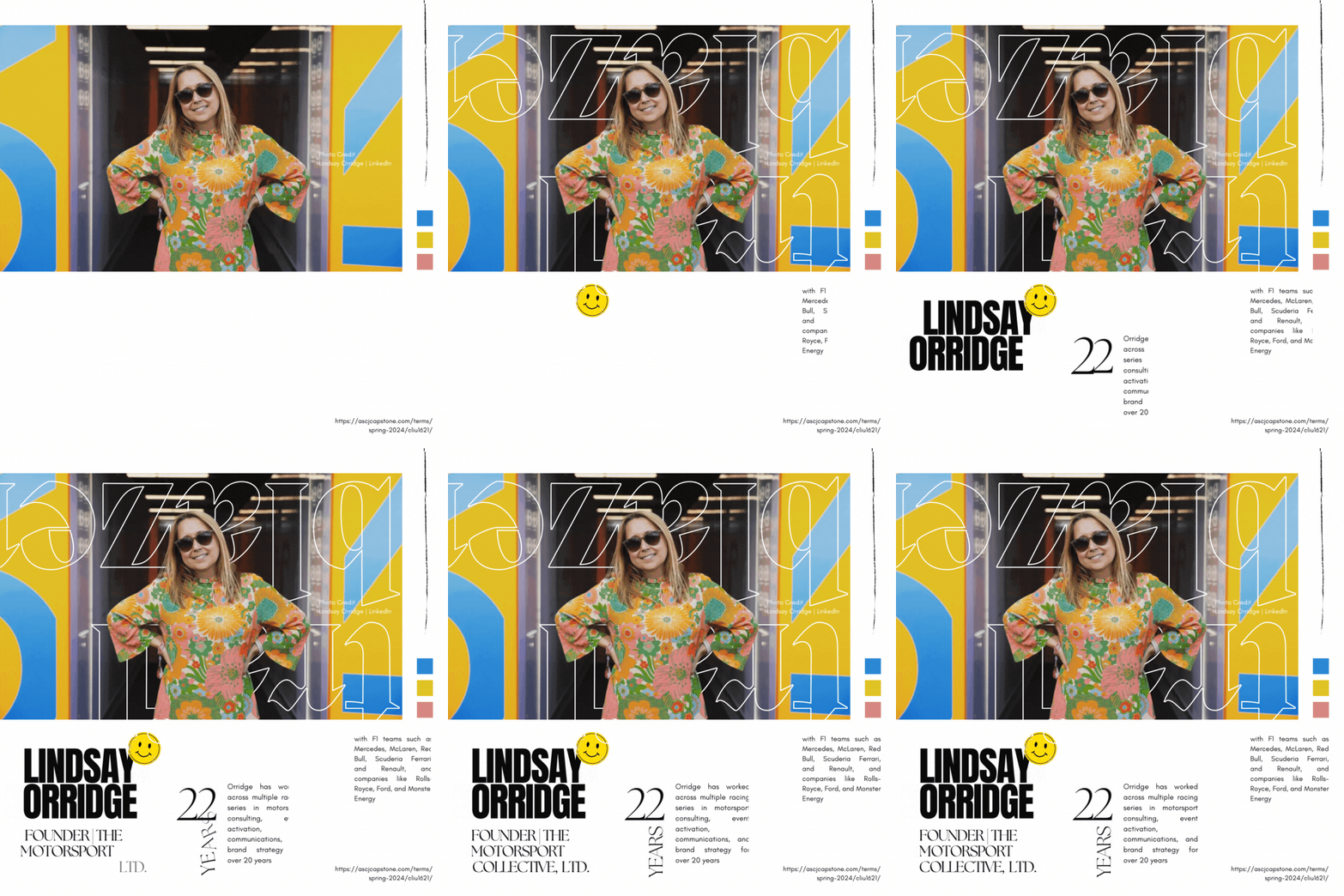
Lindsay Orridge, an expert in motorsport consulting and communications, also believes making merchandise more accessible and appealing to women, particularly through more thoughtful brand partnerships, will encourage long-term participation in the sport.
“It might seem as simple as ‘more female-focused brands should sponsor drivers and teams,’ but I think that’s an over-simplification of the opportunity,” she said. “Not all women align with female-focused brands, for example. I myself don’t identify with traditional female beauty, cosmetics, and lifestyle brands, and I don’t think I’m alone in that.”
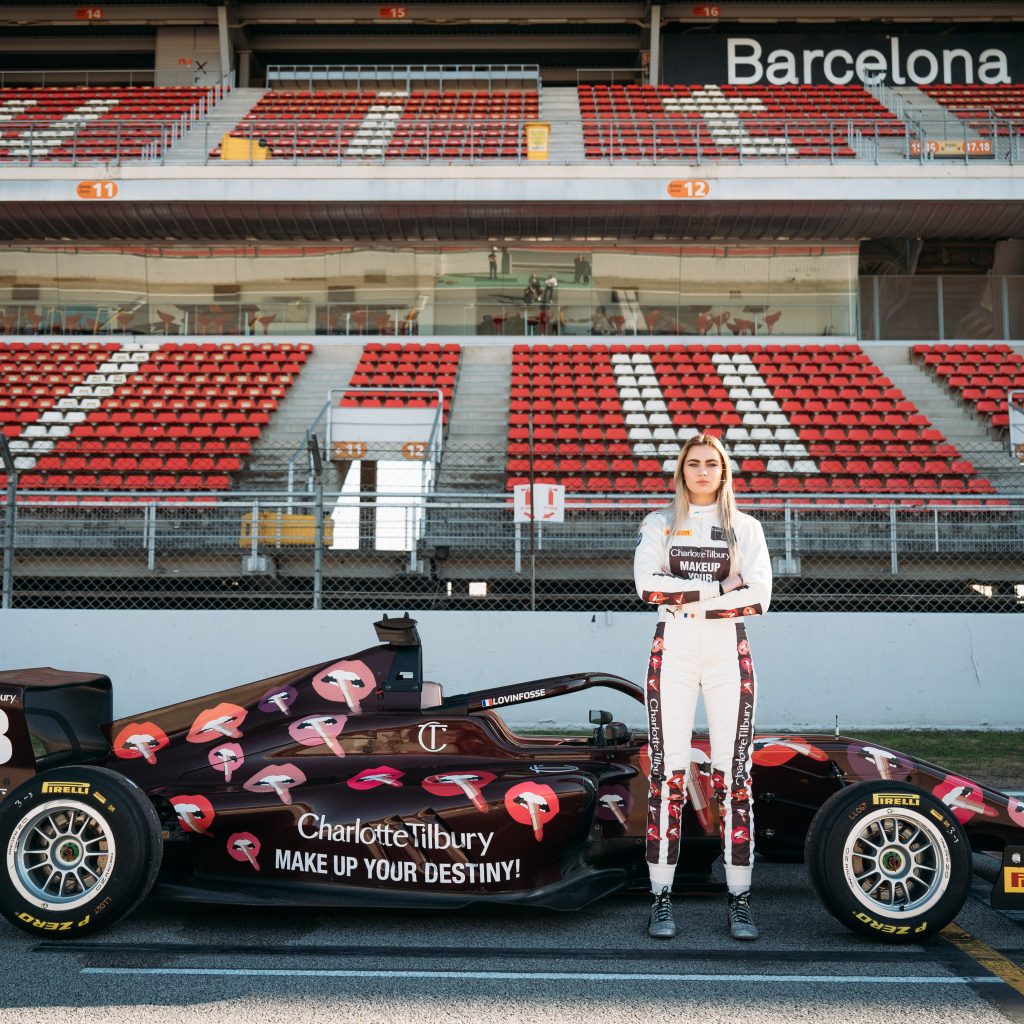
Orridge points to Charlotte Tilbury’s sponsorship of F1 Academy in February 2024 as an example. Charlotte Tilbury, a leading cosmetics brand, is the first female-founded brand and the first beauty brand to sponsor F1 Academy; F1 Academy is also Charlotte Tilbury’s first ever sports sponsorship.
Combined, these milestones signal a shared mission and new priority of empowering and appealing to young women—a great start, but based on a somewhat constrained outlook.
“Obviously bringing a brand like Charlotte Tilbury to F1 Academy was a great opportunity. It got headlines and attention as it was the first time anyone had done something like this,” Orridge said. “ But in the long term, brands with wider female appeal should be considered too.”
“Representation is so important when it comes to young female fans seeing videos of another female on track, showing that that is a place that is accessible for them and meant for them.”
Additionally, Orridge and Elsbecker both emphasize the potential for female-focused fan experiences, and the importance of making them visibly accessible, to attract women long-term.
“Representation is so important when it comes to young female fans seeing videos of another female on track, showing that that is a place that is accessible for them and meant for them,” Elsbecker said.
She reflected on the 2024 NASCAR race in Austin, Texas, where a week-long initiative invited over 20 female influencers who shared their personal experiences navigating traditionally male-dominated fields in a series of speaker panels.
“I think smaller grassroots programs like that with influencers and how to connect them to the sponsor brands and the series themselves are a good way to start.”
NASCAR also released their own Netflix series in early 2024, titled “NASCAR: Full Speed.” But Sierra Ashley at Race Service notes that they haven’t quite hit it on the head in the same way that F1 did with “Drive to Survive,” which successfully introduced the sport to people in a different way.
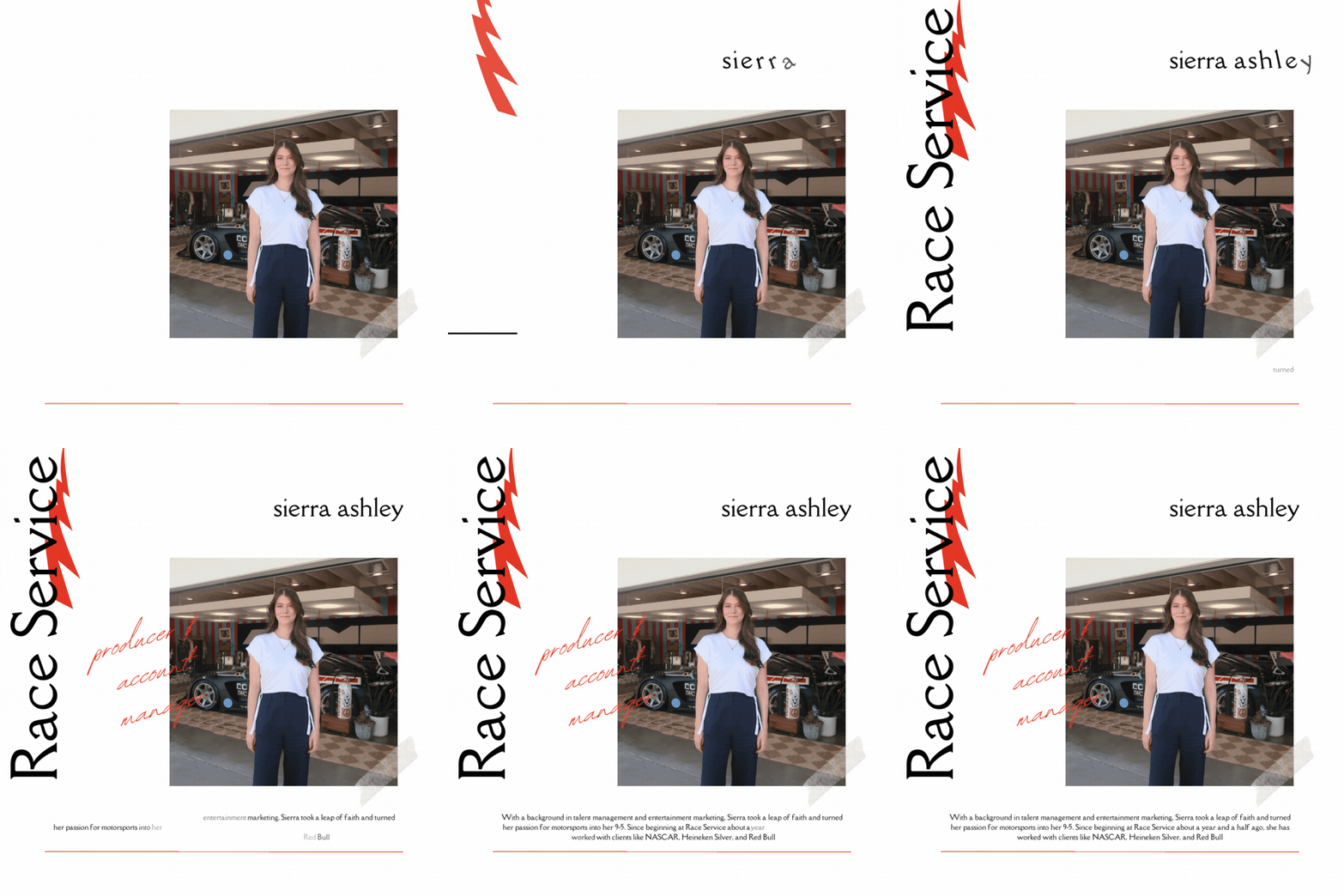
To further engage female audiences as well as younger audiences in general, Ashley believes the focus should be on tapping into social media platforms like TikTok and YouTube.
“People that are older have been watching it now for years and are already established fans of it,” she said. “The younger audience is mostly on TikTok, so probably starting with a platform like that and just creating engaging content. What that content is, I don’t know exactly, but I feel like that’s probably good way to go.”
Clearly, we’ve barely scratched the surface and there are endless possibilities for the industry to increase female interest in the sport, sustaining engagement and driving further growth and revenue. Namely, the focus should be on creating better racing products, innovative brand partnerships, curated fan experiences, and new outlets to engage with younger audiences.
“People just don’t understand the value and the purchasing power of female viewers and female fans.”
But to make a lot of these things happen, we need more women in executive positions—yet sparking that interest and opening the door for women begins with implementing these initiatives and making the space welcoming for women.
Is it a circular problem?
“You see this issue across industries, but especially in sports, that people just don’t understand the value and the purchasing power of female viewers and female fans,” Elsbecker said. “I think they’re just starting to turn that corner and see that it can be profitable long-term. But it takes at least one or two women high up in the industry with the power to make that move.”
“That’s where things feel frustrating as a woman.”
Examining the pipeline to the top, Valen emphasizes that the lack of female talent at those levels reveals a lack of investment placed in developing and retaining those women for executive positions.
“You can get women in the door at junior levels, but if you’re not creating a space for them to grow, for them to develop, for them to move up the organization, and you’re not showing them senior leader mentors who are women at the top, you start to lose a lot of women along the way,” she said. “That’s where things feel frustrating as a woman.”
Apart from women not holding top positions, there are very few that are recognized as the face of teams and companies.
“That’s where the problem starts to rear its head for me,” Valen said. “It’s about that retention along the way, and so I think it’s a more nuanced narrative than what gets portrayed in the media.”
Additionally, Elsbecker highlights the restrictive practices of Liberty Media, the American mass media company that owns F1. They control media rights and who can be a sponsor, and many current Liberty Media executives hail from Bernie Ecclestone’s time as CEO; Elsbecker coins the group as an “old boy’s club.”
“A lot of that is going to have to ebb and flow to open themselves to newer advertising campaigns and partnerships,” she said.
“I would like the stigma to change.”
Outside of the boardrooms, another place that is lacking adequate female representation are STEM fields like engineering, mechanics, and strategy.
This was a common discovery shared by my interviewees: they noticed that the women who currently work in motorsports tend to work along the lines of communications, marketing, brand strategy, and social media, rather than in those STEM roles.
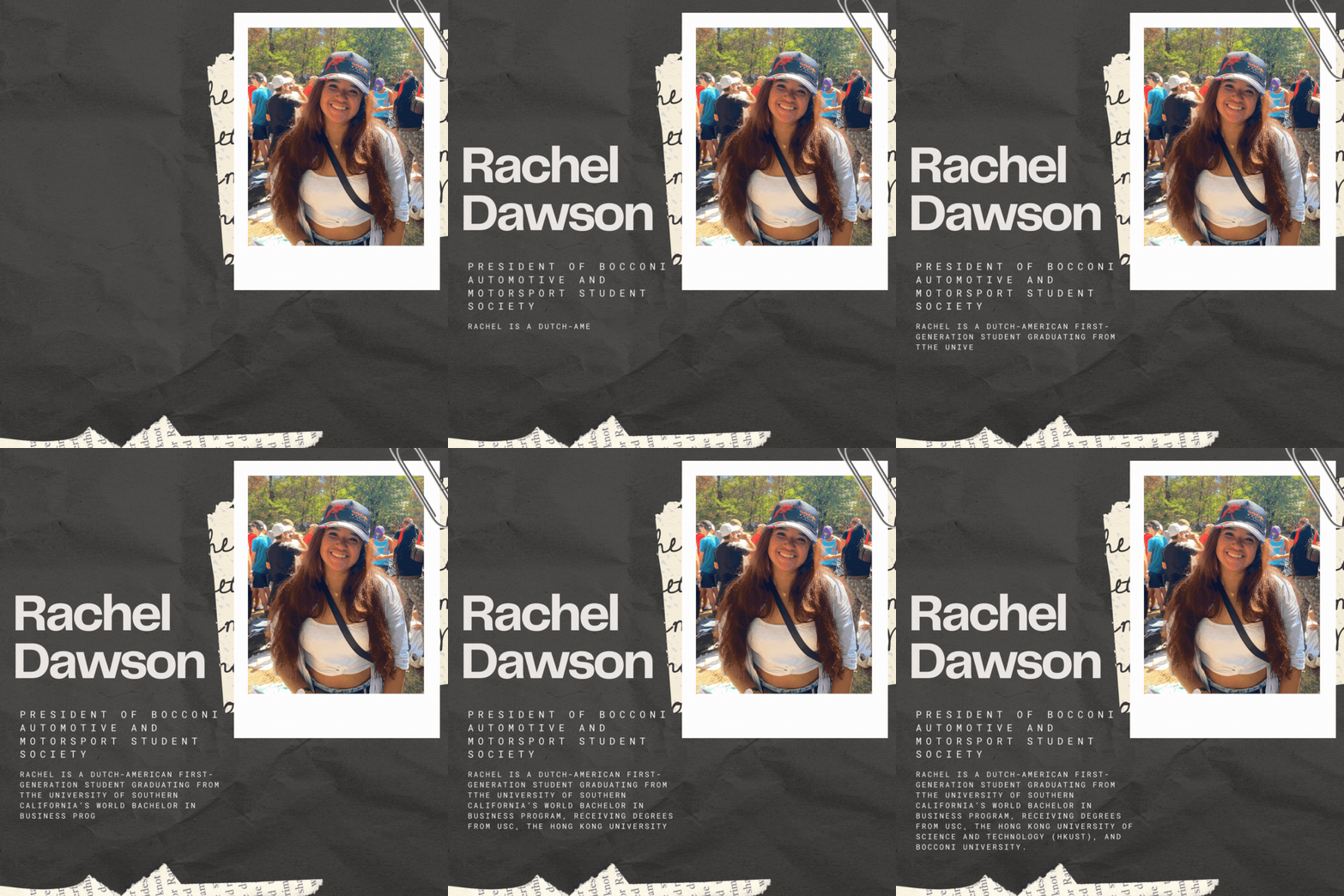
“I would like the stigma to change,” said Rachel Dawson, a senior at the University of Southern California aspiring to work in the sphere of F1 partnerships.

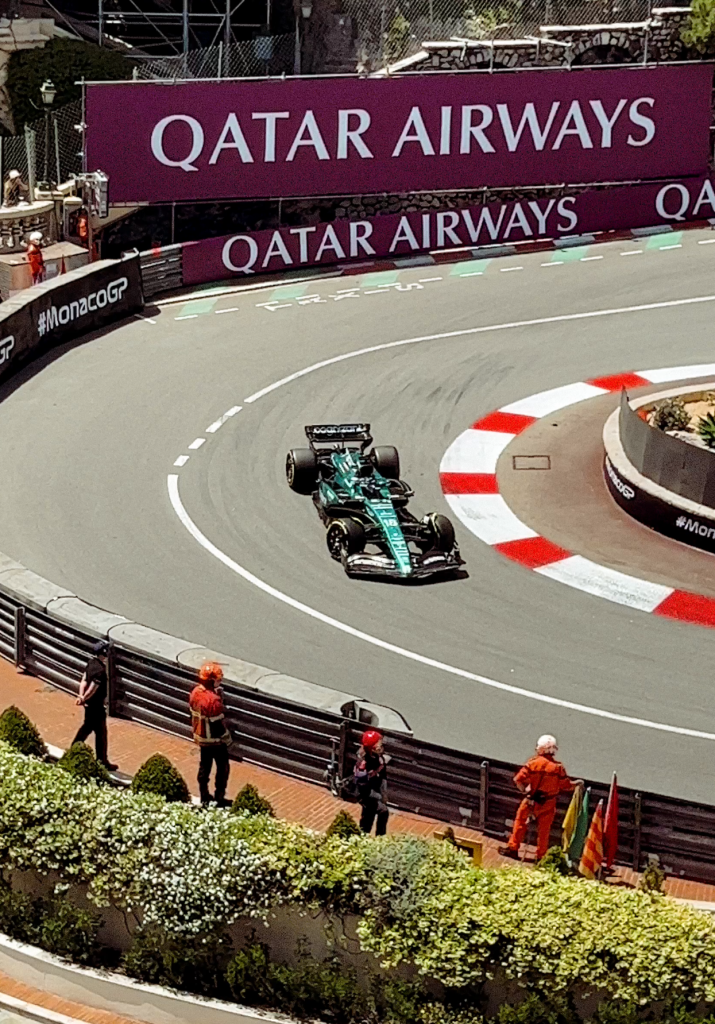

Rather than a lack of interest, this imbalance is potentially due to the inherent lack of women in STEM fields in general. And regardless of gender, there have always been few available roles in the motorsport industry, which Orridge and Dawson believe will always be a limiting factor, particularly in STEM-focused areas.
“F1 is a very niche thing,” Dawson said. “So I think it’s even kind of harder to get women in STEM to be like, ‘Hey, do you want to use your degree and use your skills and put it into motorsport?’ Because you don’t have as many women that are interested in sport, or motorsport, for that matter. So you’ve got a small fraction, and then of that, the ones that are interested in F1 is an even smaller fraction.”
Ashley agrees that the gender imbalance is felt more in motorsport’s STEM fields of work.
“If I were a woman and I grew up loving math and engineering and I wanted to get into motorsport that way, I think that scene would look very different than entering the industry in a marketing or brand role,” she said.
“But they exist,” Ashley said. “I know they exist.”
Dawson points out that for more logistical and technically-focused STEM-related roles, there might not be as big of a difference in the impact of bringing in more women, compared to more creative roles like communications and brand strategy.
“But at the same time if there’s no difference, then I think we should be seeing more gender equity, and we’re not,” she said.
As Dawson completes her USC World Bachelor in Business degree at the Università Bocconi in Milan, she is the only woman on the executive board of the Automotive and Motorsport Student Society, serving as the organization’s president. According to Dawson, around 10% of members of the professional organization are female.
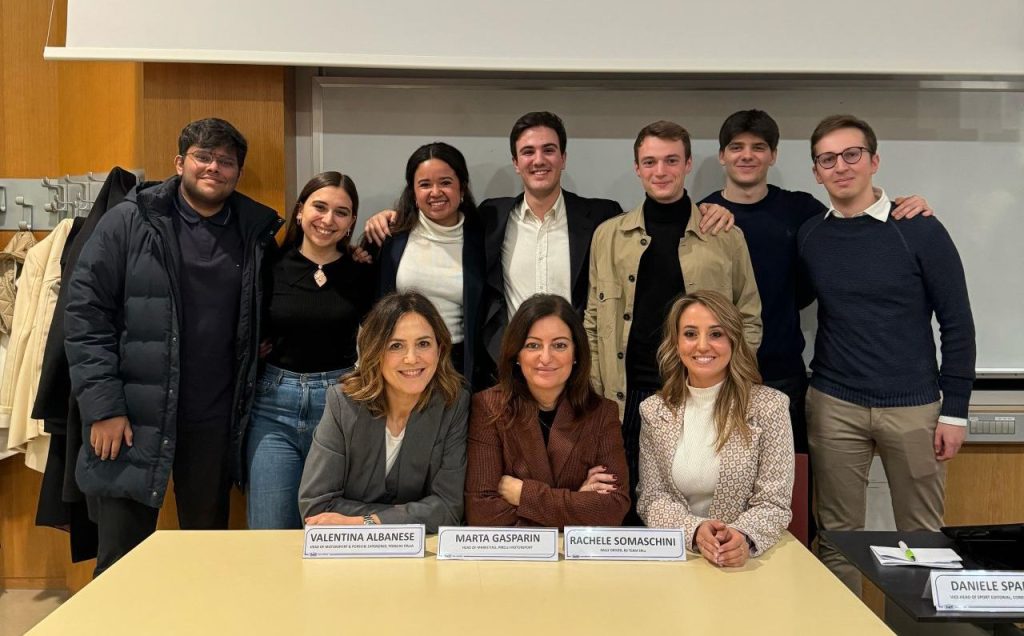
Photo Credit: Rachel Dawson
“You’ve got girls who are interested in motorsport, but you’ve got even less who are considering it as a profession,” she said.
Dawson believes this divide between being a fan of motorsport and wanting to work in the industry is partly why there are not as many girls in the organization, as well as girls feeling intimidated to apply in the first place.
That’s why in 2020, Orridge founded the non-profit Driven by Diversity after seeing the need to help open the door and usher in the new generation of workforce members to the motorsport industry.
Orridge also founded The Motorsport Collective in 2015. Initially, it acted as a cost-effective networking group for people who worked in motorsport. There were no restrictions on membership—anyone and everyone at different career levels as well as varying specializations could join, for an annual membership fee of £50 per year.
“The barrier to entry in motorsport is largely about getting a foot in the door to network with people who can help further your career, so I wanted to help do something about that,” she said.
Dawson agrees that networking is a major reason behind how she built connections within the industry and is working towards a career in Formula 1.
“It’s kind of frustrating, because it’s a very exclusive industry,” she said. “It’s very much who you know, it’s also very difficult to get on the phone with any of these people, especially during the season it’s nearly impossible.”
Dawson reached out to over 150 people, cold emailing and LinkedIn messaging. Although she was repeatedly ghosted and rejected, her persistence as well as her passion for the sport ultimately paid off when she received opportunities to speak with industry professionals like Orridge, among many others.
Ashley’s start at Race Service follows a similar storyline.
“I thought that the only hubs for working in motorsport were either in like Indianapolis or England and Europe,” she said. “So I was looking all over the place. I was applying to a lot of different things. I was in a deep hole on LinkedIn and I found Race Service.”
Although they weren’t hiring at the time, Ashley cold-emailed Jacob Agajanian, the co-founder, and the rest is history.
“It’s a better environment than what I thought.”
Despite facing media misrepresentation and the insular nature of the industry, these women offer a common hopeful realization that they have come to after successfully breaking barriers and paving their own paths.
“I feel like women in motorsport are pitied a lot and they’re just kind of looked at with puppy dog eyes, like they’re these little fragile things and it’s such an industry that’s against you,” Dawson said. “And that’s not typically what it is.”
“I think mostly the issues that new people will encounter coming into the industry will be more to do with your lack of experience, network, and knowledge more than anything gender-specific,” Orridge said. “That’s not to say that I and other women haven’t had unpleasant experiences whilst working in the industry, but I would happily say that 99% of the men I have and continue to work with are respectful, engaging and positive people who I feel proud to work alongside.”
“What I found is that it’s a better environment than what I thought,” Ashley said. “Everyone has been very welcoming, very supportive, very kind, and I feel very much like an equal here in that we all have the same opportunities.”
“We are all better to have women at the table.”
There’s still much more work to be done to create a truly inclusive environment. Yet, the resilience, determination, and talent of women in motorsports serve as a powerful reminder of the innovation and growth that is possible when those obstacles are challenged and female voices are amplified.
“We are all better to have women at the table.” Valen said. “Women bring so much to the motorsport world, to the boardroom, to whatever it may be—we have so much to offer and I just think if we’re not spotlighting the voices who are already doing that, it just becomes harder for younger women to be inspired and to see that they too can do that.”
“Getting towards the peak [of motorsport] for me would be like going out to a bar and being able to watch a race, like how you do for football or any other American sport,” Ashley said.”We’re so not there yet.”
Words of Advice
Audio: Tiggy Valen
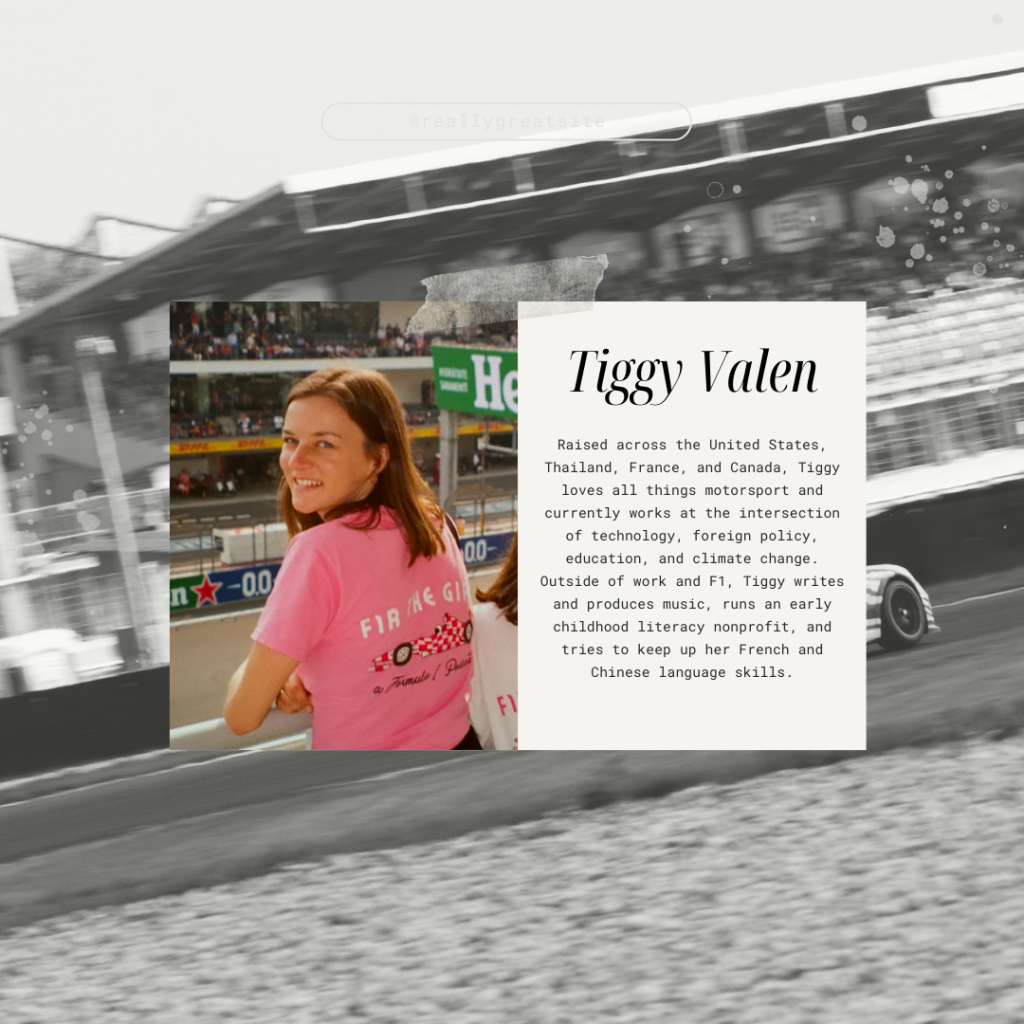
“”Absolutely do it, but pick something that you’re really excited about and is authentic to where your interests lie. There’s tons of room to grow and to succeed in this space.”
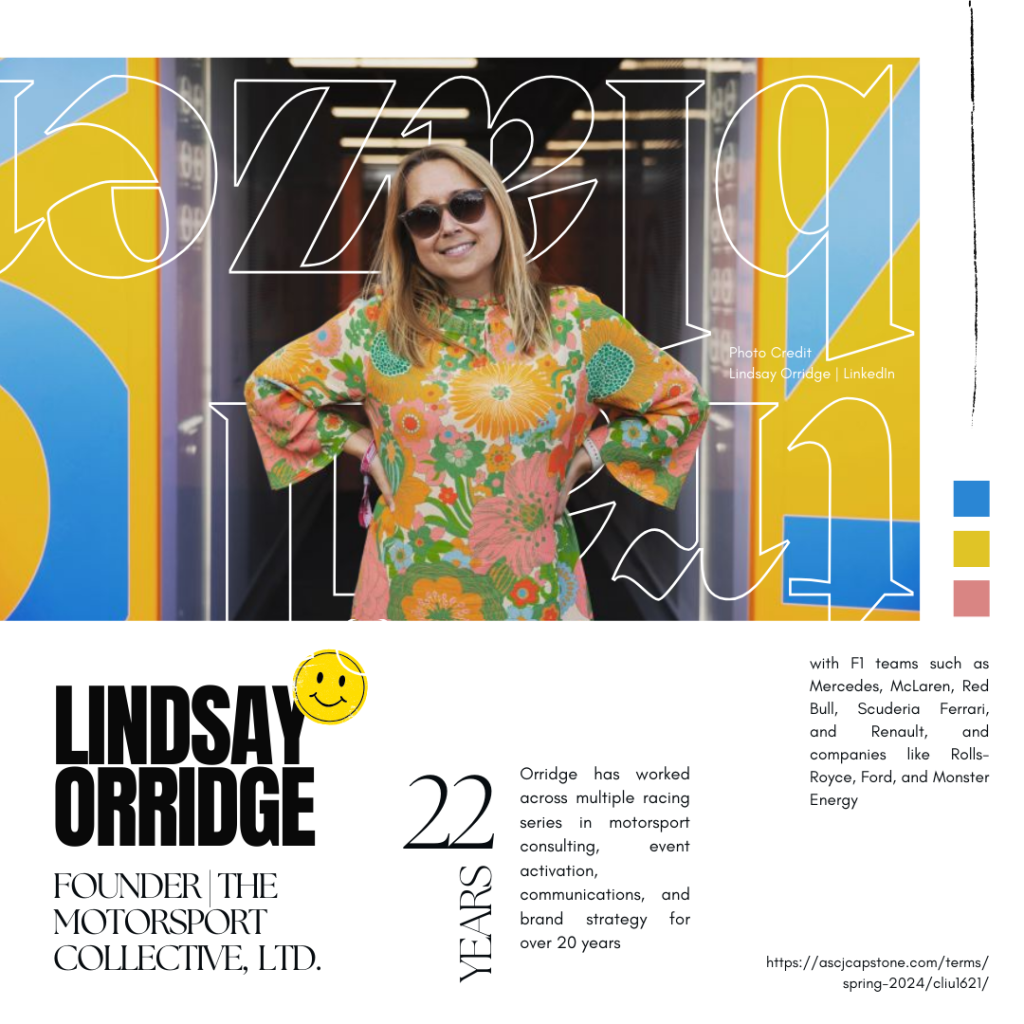
“I would really encourage any woman looking to join the industry to not assume that they will be unwelcome—far from it—and that on the whole, you will be treated with professional respect by anyone that you work with. If you have the required skills and resilience to work in the industry, once you’re in the door, you will find opportunities to have a career as long as you would like to. But it’s worth noting that there are not thousands and thousands of jobs available in the F1 industry, and they are also largely focused geographically in the UK and small parts of Europe. Making a meaningful impact to me is more about being professional, resilient, strong, and being confident about voicing my opinions and ideas with anyone I work with, and most importantly of all: being myself.”
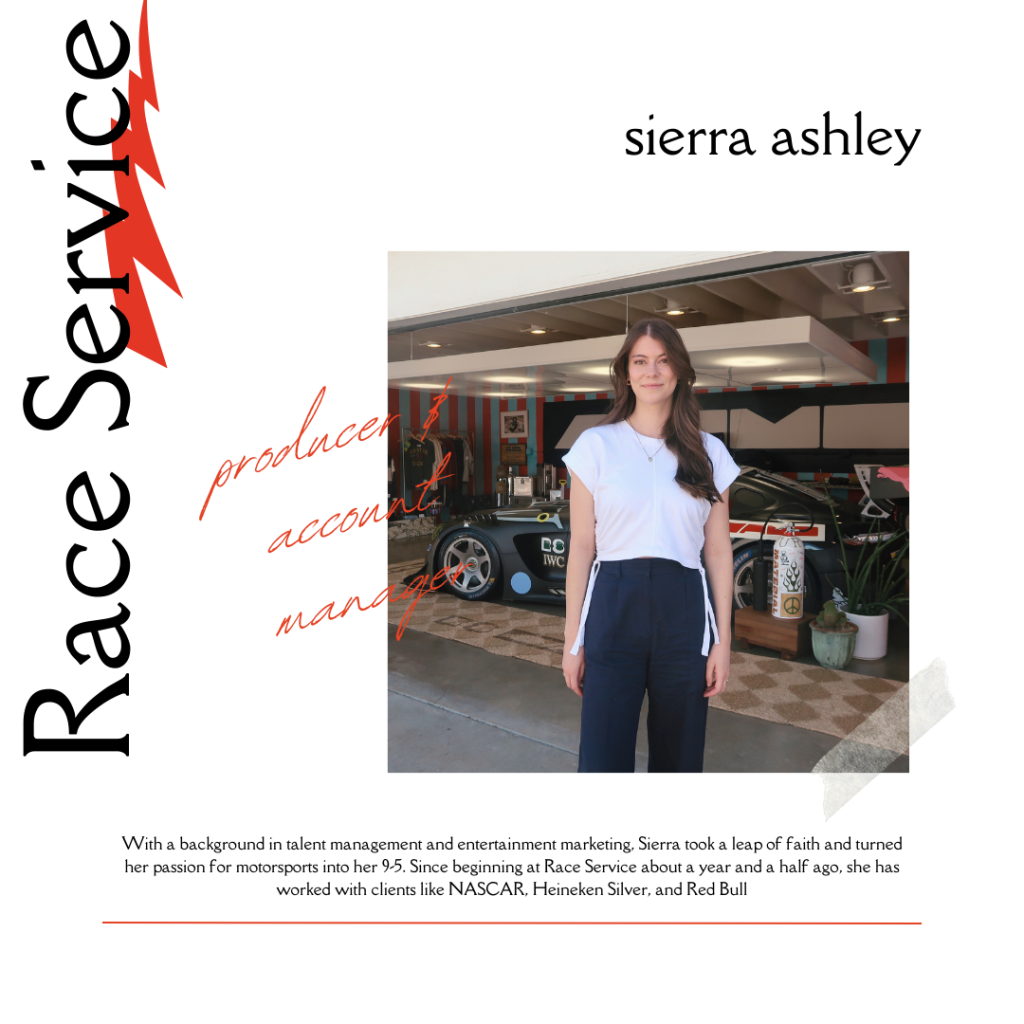
“”Sometimes you won’t get an answer, sometimes you will, and even if a job or a connection doesn’t come out of talking to some person, it’s at least valuable just to hear their path and maybe that’ll help spark an idea for you.”
“Having another route for yourself to be able to grow in the company is important, because looking at the overall composition of these executive teams, most women are squared away in marketing—which is an incredibly important department—but if they are only in marketing that becomes a ship they can’t really direct as much compared to maybe bigger decision makers in the financing department or the partnerships and sponsorships.”
Audio: Sierra Ashley
Audio: Emma Elsbecker