English as a Second Language programs are empowering immigrant families in Los Angeles
Moving to another country is hard for many reasons, but for some people learning a different language is the hardest step to integrate more effectively in the community.
Dora Oliva is a mother of two children who moved to California 20 years ago from Guatemala. She said she moved from her country because she was looking for independence from her parents and more personal growth opportunities for herself, on top of running away from the violence and dangers of Guatemala at the time. “I wanted something different, I did not know the obstacles I was going to face or anything but I wanted to take care of myself,” she said.
Oliva was able to find a job in domestic services for an American family who only spoke English, which motivated her to learn the language. “We communicated with each other almost by signs, but I learned with them over time,” she said. “I learned only by listening and reading dictionaries by myself.” Then, she got married, had kids, and started taking care of them at home.
Her older son, Adriel Lugo is 11 years old, she said that she is happy because he has the opportunity to learn English from a young age at school and has educational opportunities that she did not have when she was his age. He is now also part of Step Up Tutoring program, a non-profit organization that drives the success of primary and elementary school children by providing high-impact in-person and virtual tutoring to help them overcome educational obstacles.
“Every day I see my mom as a hard worker trying to feed us and working for us so that we can have a peaceful life,” Lugo said. “She encourages me to do my work and has been helping me as much as she can… Now that I am in more difficult classes, I have been struggling. So, Step Up [Tutoring] has helped me get better.”
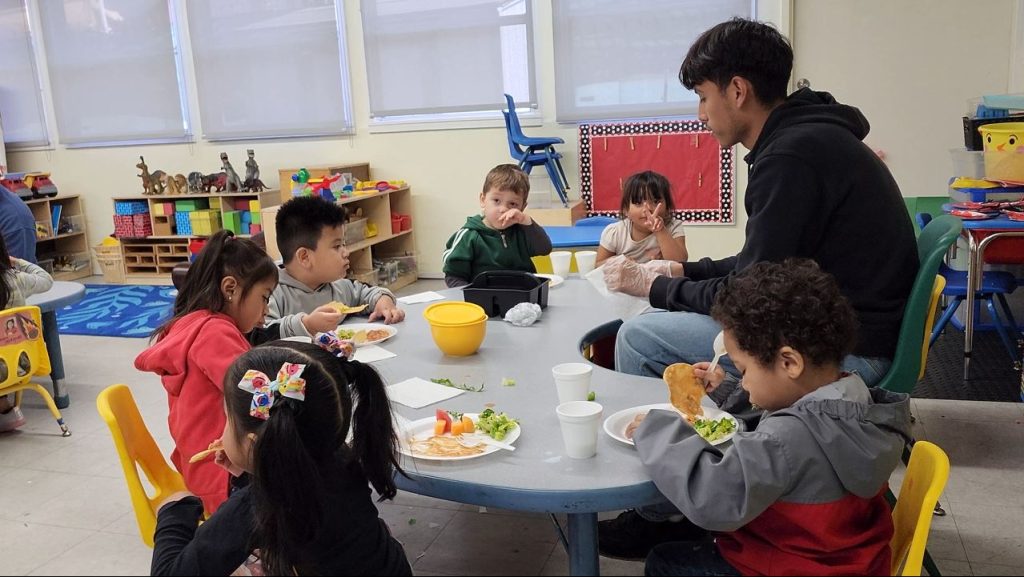
Like Oliva, many other people immigrate from other countries to the United States looking for a better life for themselves and their families and to find better economic and professional opportunities. And for a lot of them, especially those from Hispanic and Latino communities, California is a hot destination to look for the American Dream.
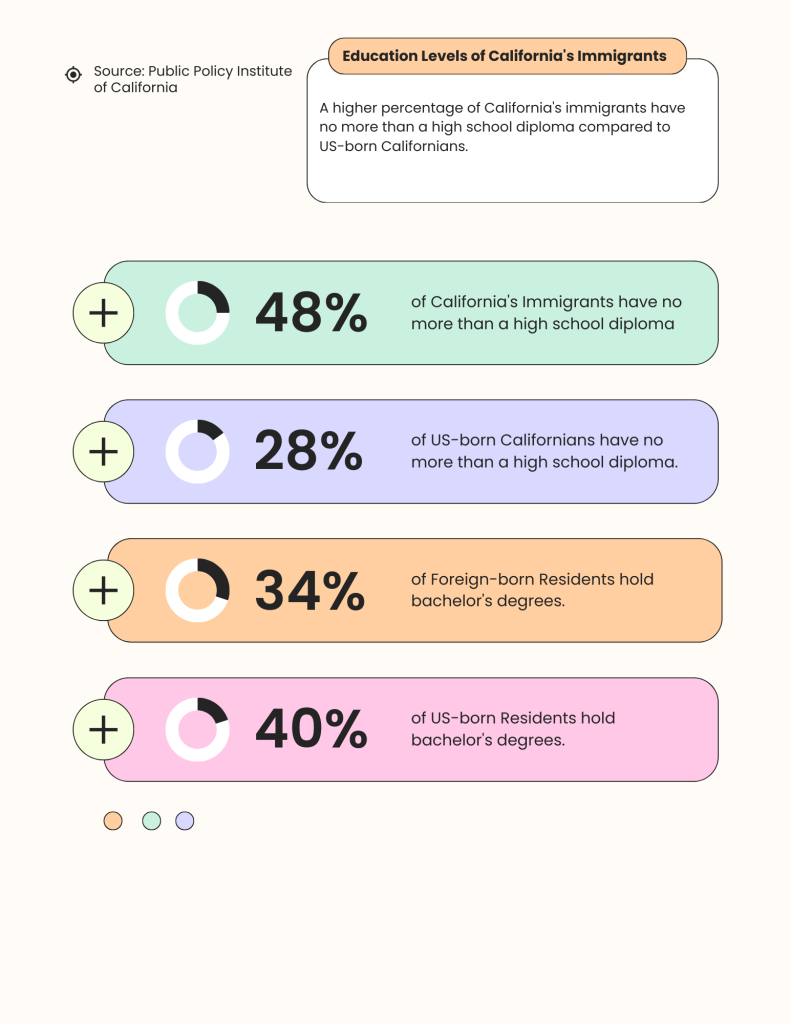
About half of California immigrants don’t have a high school degree
California is home to more than 10 million immigrants, 23% of the foreign-born population nationwide, and people who identify as Hispanics and Latinos represent about half the population of Los Angeles County, according to the census estimates in 2022. This is the largest ethnic/racial group in the county, but still, around 48% of California’s immigrants have no more than a high school diploma, compared with 28% of U.S.-born Californians, according to data from the Public Policy Institute of California.
Keily Gómez is also a Guatemalan who came to this country looking for a better quality of life. She moved when she was only 14 years old along with her little brother who was 10. “My mom was a single mother at the time and she got us here with her efforts and hard work,” Gómez said. “For me, it was hard because the high school system is different and everyone spoke English… I felt uncomfortable because I did not know what to do or where to go.”
Gómez now has three children and is graduating from the English literacy program at the South Central Los Angeles Ministry Project this Summer. This is a non-profit organization that offers English as a second language classes and parenting programs funded by a group of congregations of Catholic sisters in 1992 to assist the community.
Gómez said that she was not able to finish high school because she became a mother, but her next step now that she speaks more English is to go back to school and finish her degree to improve her education. “I know I can do it and if I set my mind to it, there is no obstacle I can’t achieve,” she said.
Language barriers not only affect people’s ability to communicate with others and express themselves but also to be able to find opportunities to improve their financial needs.
Elvira Chay is another Guatemalan mother of three daughters who now sells organic eggs at her house, but to make her own small business, she faced many obstacles as a Latina immigrant mother. She moved to the United States when she was a teenager, and as a minor and Latina who did not speak English, it was hard for her to earn a salary and sustain herself.
“There’s a lot of poverty in my country and I come from a big family,” Chay said. “I came here to help my parents move forward when I was only 16 years old and it was hard to find a job.” She said that she worked sewing for many years until she had her first daughter and became a stay-at-home mom.
Chay is also graduating this year from the South Central LAMP English program, and she said she feels happy and proud of herself not only as a woman but as a mother because now she is able to share her Guatemalan native dialect, Kʼicheʼ, and Spanish with her kids but also communicate on English.
“You need to know at least the minimum to understand and express yourself with other people and this was something that I always wanted to do,” Chay said. She added that it was hard for her to find the time to learn the language because she needed to work and also take care of her daughters.
“I tried before learning English at night but it was hard because I needed to work, go to school, go back home, cook, do my things and it was really hard,” she said. Chay said that it took her years to find a program that worked for her and now she can focus on learning the language and not worry about her kids because South Central LAMP starts the children’s program at the same time.
For Laura Patricia López it was also hard to find a job when she came from Mexico because she was not able to speak the language. She said that the biggest challenge for her was the need to choose between her studies and work because she did not have time to do both at the same time. “From the moment I came I started studying English but the schedules were not working for me,” she said.
López, who has two children, expressed that because she is able to attend the English program with her younger daughter, she can focus on her studies by being close to her and knowing that she is in good hands. “If I would have known about this program when I had my first son, I would have taken the advantage already,” she said.
All these mothers shared that because they are able to understand more the language, they can assist their children and their needs more efficiently. They shared that now they don’t need to stay long hours in the hospitals waiting for translators or at their children’s schools and that they can even have more fun and enjoy the little things.
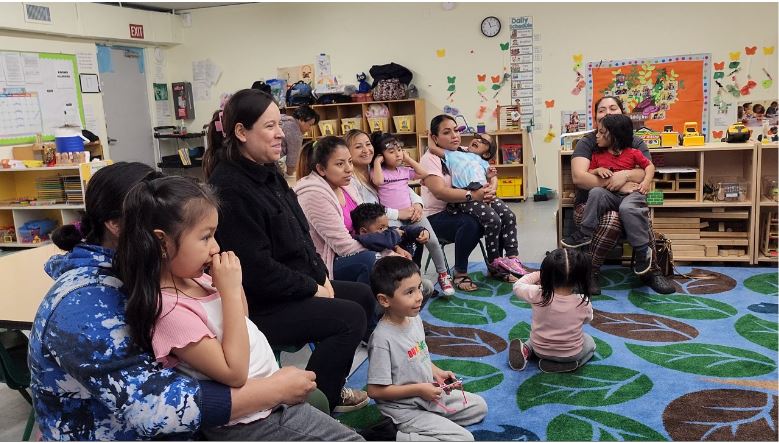
“I am proud of being able to go to a restaurant and order my own food without help and go to a movie theater with my children or drive while they tell me about their day at school and understand,”
Gómez said.
Free programs help immigrant families learn English
There are more programs available for immigrant families to assist them with the language barriers and educational gaps of them and their children such as the Migrant Education Program and resources under the Los Angeles County Office of Education. But for a lot of people, is hard to make the first step, and in many cases, they don’t know that there are resources available to help them with their struggles.
Salvador Sanabría is the CEO of El Rescate, a non-profit agency that provides immigration legal services and legal representation for migrant families. He has been able to meet and help many immigrants from other countries facing obstacles to integrate into a new society, one of them being the new language. “Even though Spanish is spoken a lot in California, for formal and legal procedures the official language is English,” he said. “That’s the first cultural shock that immigrants face coming to this new adoptive nation.”
El Rescate also helps these families by connecting them with other resources and programs they may need to help them go through these obstacles. Sanabría said that even though they don’t offer educational programs, they can connect people with these resources and many others.
“Every school from the Los Angeles metropolitan area has advisors there to assist families and students… they should not be scared of asking what they need to assist their children or the family like access to food, health and educational resources, and even to find a career to improve the economy of the household,” Sanabría said. “These are paid by their own taxes to serve families in need of overcoming these challenges.”
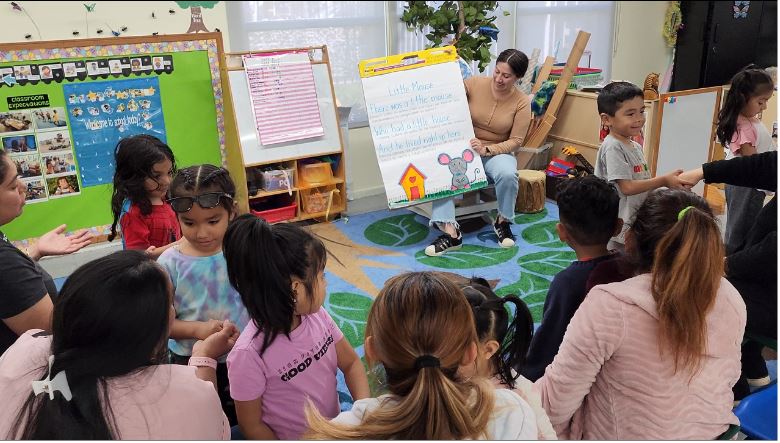
Programs and organizations like Step Up Tutoring, South Central Lamp and El Rescate are only a few of the many other resources available to help families who come from other countries, especially from the Latino and Hispanic communities. Leaders from these organizations are willing to do the best they can to provide these to the people and help them not go through these challenges alone.
Alina López, the Step Up Tutoring family engagement manager and student enrollment, said that since many of the parents of the students in the program only speak Spanish or other languages, they try to recruit tutors/volunteers who speak more than English to address their needs. “California is one of the most diverse places in the country, so it is necessary for us to extend our services to families who speak more than just English.”
George Mu, their chief product and program officer, said that even though they have been focused more on math, they are working on adding more bilingual resources to their curriculum.
“We need to find a curriculum that is available in Spanish and find more tutors who feel comfortable tutoring in [that language],” he said.
Mu added that this is a very complex topic and that they need to do more research on how to better accommodate these families who have different experiences and language levels.
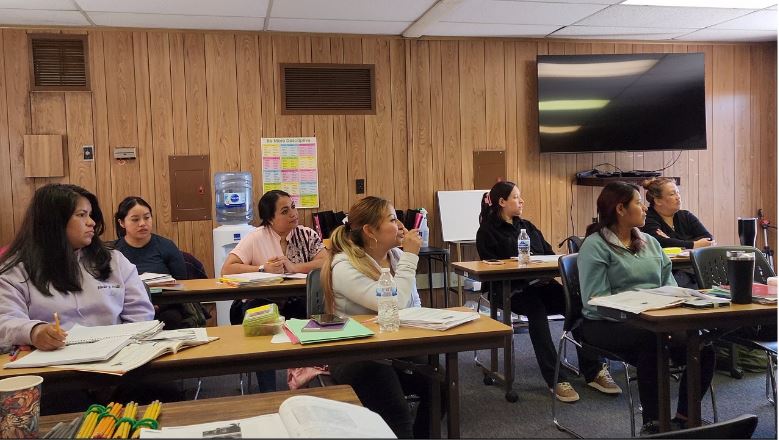
To Diana Pinto, the Executive Director of South Central LAMP, helping the women from the community is the first step to assist their families since she said that a lot of times, they are the ones who raise their children and educate them. “Studies have been done that when women are educated, they help the family as well,” she said.
“We want to help our community succeed and although sometimes life is difficult, I believe that God puts little angles around them and we are all here with the idea that we want them and their children to succeed,” Pinto said.
Families like Oliva, Chay, Gómez and López said they feel grateful for these opportunities available for them and their children, and they would have loved to know that they were available from the moment they moved to the country.
“I am happy because I went through a lot of poverty,” Oliva said. “I try to make the most of it [for my children], so it’s a blessing that they are in a country where they have more opportunities than in ours.”
Hi, this is a comment.
To get started with moderating, editing, and deleting comments, please visit the Comments screen in the dashboard.
Commenter avatars come from Gravatar.