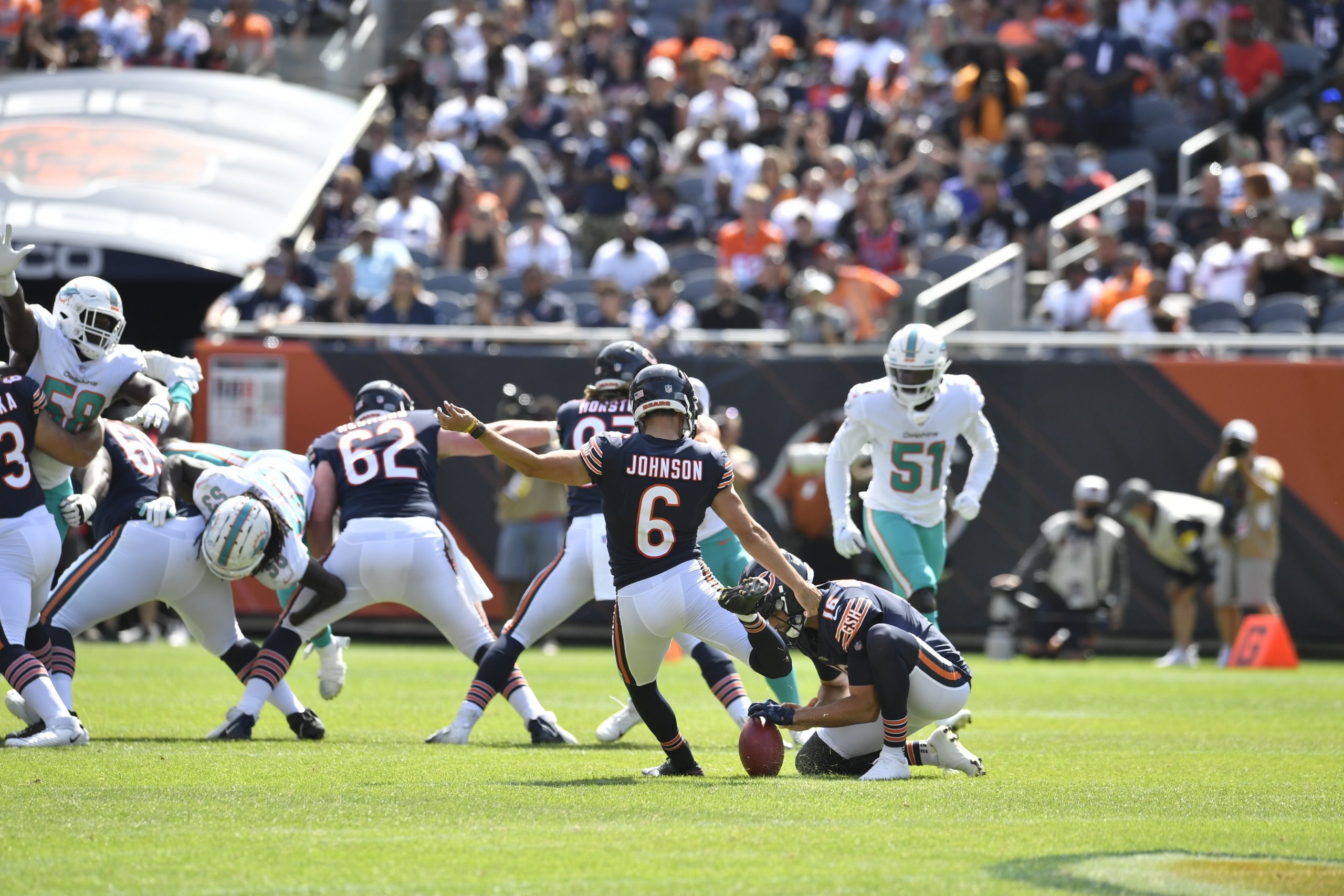
Kicked out?
The instability of football’s most unpredictable profession
by Sullivan Maley
Any professional athlete faces instability, from injury woes to the impacts of poor performance. But football’s criminally-underrated heroes often find themselves on the outside looking in for seemingly no reason.
Photo courtesy of Brian Johnson.
Every year the NFL draft sees 200+ new players enter the fold of professional football, with plenty more signed to free-agent contracts in the days that follow. Of those, a handful will be kickers, and of those few, only a sliver will carve out their place in the league.
Kicking is a unique profession in that a player’s value to their team over the course of a season may be lower relative to other positions, but most kickers will find the outcome of a game placed in their hands multiple times throughout the year. Anyone else on the team who might be given such responsibility would be in the running for a massive contract if they perform—the starting quarterback, star wideout, workhorse running back—but a kicker is lucky to make even a few million a year.
Pay inequity, however, isn’t the only thing that makes kicking unique. In fact, it’s realistically one of the smallest of many factors. The oddities that define kicking are those of the ups and downs of the game: who succeeds and who fails, who stays around and who gets cut, and the fact that these two dynamics often have little to do with one another. All that to say plenty of good kickers go jobless while plenty of bad ones cling to a roster spot. Kicking is a job determined not by skill or efficiency, but by a twisted and often inconsistent set of rules and considerations that often lead otherwise-savvy coaches and general managers to make boneheaded decisions when it comes to the position that can often be the difference between playoff gold and watching the Super Bowl from the couch.
In this year’s draft, the Minnesota Vikings made veteran Alabama placekicker Will Reichard the first leg off the board. They picked him 203rd overall, in the latter half of the sixth round.
Reichard is as seasoned of a prospect as a kicker can be. A four-year starter for the Crimson Tide, he holds the all-time college football scoring record—across all positions—with 547 career points. In 60 games at Alabama, he has a career field goal percentage of 84%, and only missed two extra points across 297 attempts.
It might seem as though Reichard is on the perfect track for a long, successful career in the NFL. And he may be. But as any scout, special teams coach or former kicker would tell you, efficiency far from guarantees a career as an NFL kicker.
That’s because Reichard is entering an industry wrought with inequity, inconsistency and baffling double standards that often bounce legitimate talent in favor of mediocrity. Special teams is perhaps the most unpredictable section of any NFL roster.
Some veteran players are given enormous leeway to make mistakes, with teams electing to shut down the younger hot leg for a struggling older player who they believe will get out of his rut. Other veterans receive the opposite treatment—bounced during their primes to save their team a bit of cash. Some rookies stick around after seemingly awful first seasons, while others put on near-perfect performances but can’t seem to find their placestick around.
Reichard himself is aware of the sticky situation he’s been drafted into. When asked in March at the NFL Combine about his approach to his time in the pros, he had the following to say:
“You’re trying to keep your job every single week.”
Will Reichard (Alabama, 2019-2023) on the instability of the kicking profession. Reichard was drafted by the Minnesota Vikings.
Video by Sullivan Maley
Perhaps Reichard will be one of the (talented? Lucky? Both?) few that gets over the hump, or maybe he’ll end up one of many talented kickers to never cement an NFL career—that has yet to be seen. But what’s for certain is that his journey, wherever it may take him, will be across the bumpiest of roads in professional football.
Getting over the hump:
the rookie conundrum
Any NFL fan is aware that a late-round draft pick or undesignated free agent (UDFA) signing is far from a guaranteed spot on a 53-man roster. NFL squads can carry up to 90 players before the beginning of the regular season, meaning over a thousand players get the boot every year on cutdown day.
For skill positions, any number of reasons can put a player out in the cold. A team gives the undersized but productive running back a chance but find his role is too limited. The Combine-MVP corner has great athleticism but just doesn’t cut it in man coverage. And there’s always the read-option quarterback whose running ability can’t make up for his lack of arm strength or throwing poise.
Kickers are a more straightforward position to look at because there aren’t so many intangibles, no wide array of pros and cons to analyze, no consideration of “scheme fit.” They either make field goals, or they don’t, plain and simple. There’s exactly one number to look at, and usually, it’s pretty clear if that number is good, bad or mediocre.
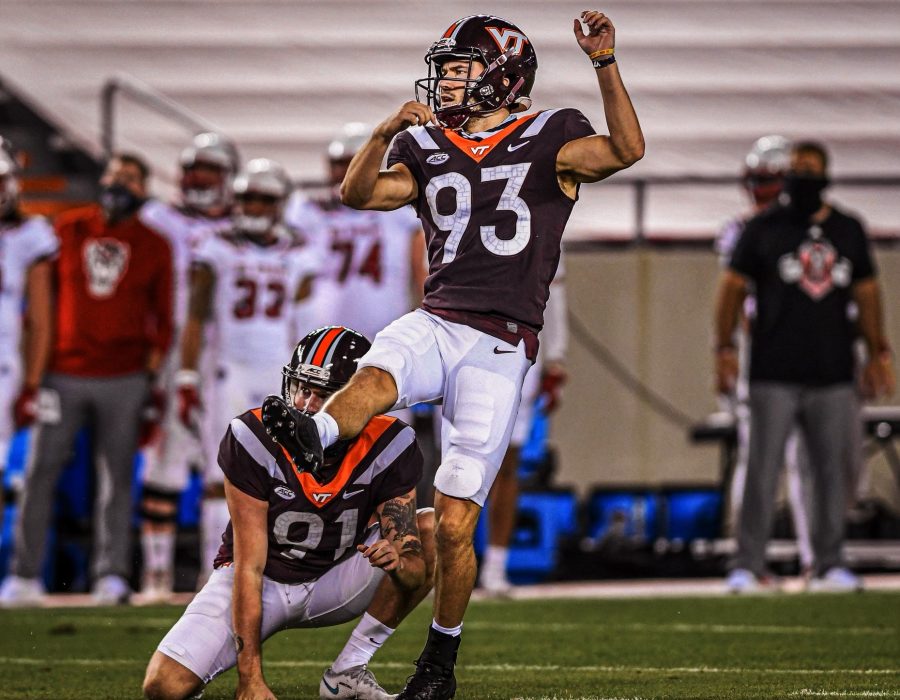
That’s why it’s so baffling when players like Brian Johnson, a three-year starter at Virginia Tech who had stints with Chicago, New Orleans and Washington in his short-lived 2021 career, can’t stick around in the league.
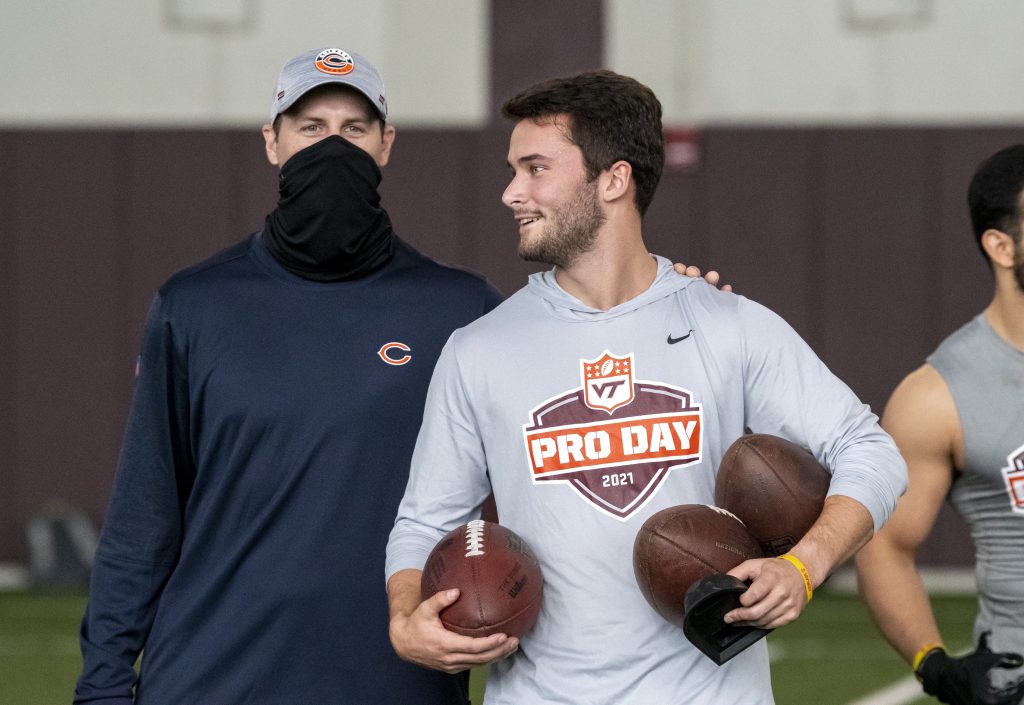
“A lot of it is just luck of the draw,” said Johnson when I spoke to him over the phone this past March. “There are hundreds of kickers out there that are all just as talented. But when they’re first getting started in [the] first two years of their career, you know, something may swing their way.”
Johnson, unfortunately, was not one of that lucky few. But it wasn’t for lack of trying, or succeeding. In his short stint in the league, Johnson went 10-for-10 on field goals, including multiple game-winners, and 9-for-13 on extra points.
The other unique thing about playing kicker is that special teams positions virtually never command a rostered backup. Teams reserve one spot each of 53 for their kicker, punter and long snapper. That means that after the preseason, there’s no such thing as getting benched—only cut.
So when Johnson missed two extra points to lose his fourth-ever professional football game with the Saints, it didn’t matter that he had hit a game-winner just three games before. It didn’t matter that he went 3-for-3 on field goals the week after, including a go-ahead score with 1:41 left in the fourth quarter. His overall 8-for-8 record on field goals in his four weeks with the team just didn’t matter because, at the end of the day, he messed up once, and that’s all it takes for a rookie leg to get bounced.
“That’s how this league is, you know,” said Johnson. “If you’re not proven and you show any signs of weakness, basically they are pretty willing to quickly move on from you, and I learned that firsthand.”
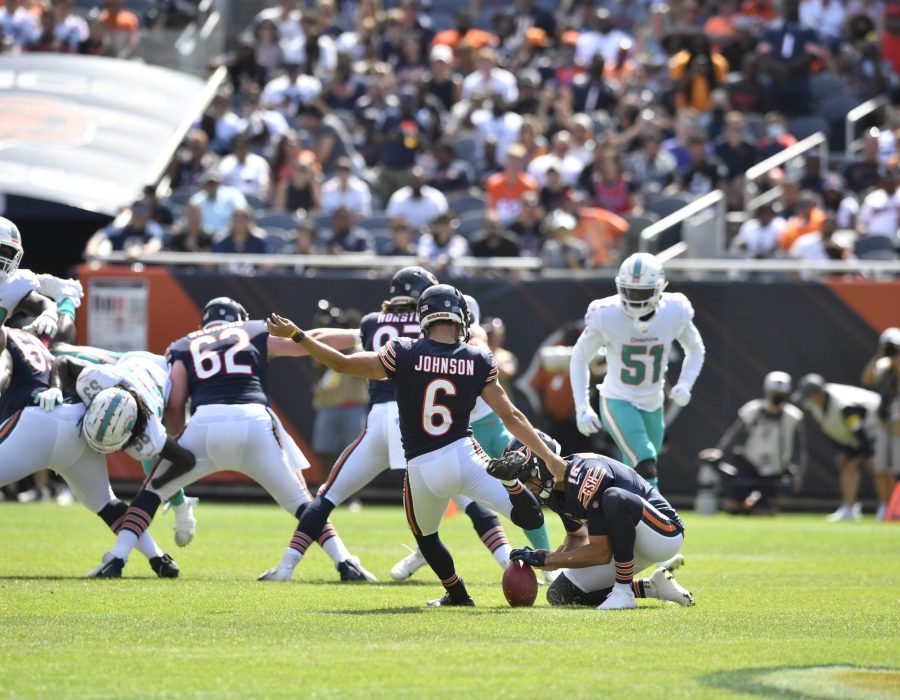
The next few weeks were a whirlwind. Five days after the game, on a Friday, Johnson was waived. After clearing waivers over the weekend, Johnson was signed to the Chicago Bears’ practice squad, where he had spent the beginning of his season.
Two days later, on Thanksgiving, the Bears played the Lions. Johnson traveled with the team for the matchup, then flew home to Washington, D.C. to spend the holiday weekend with his family. On Monday, he got another call.
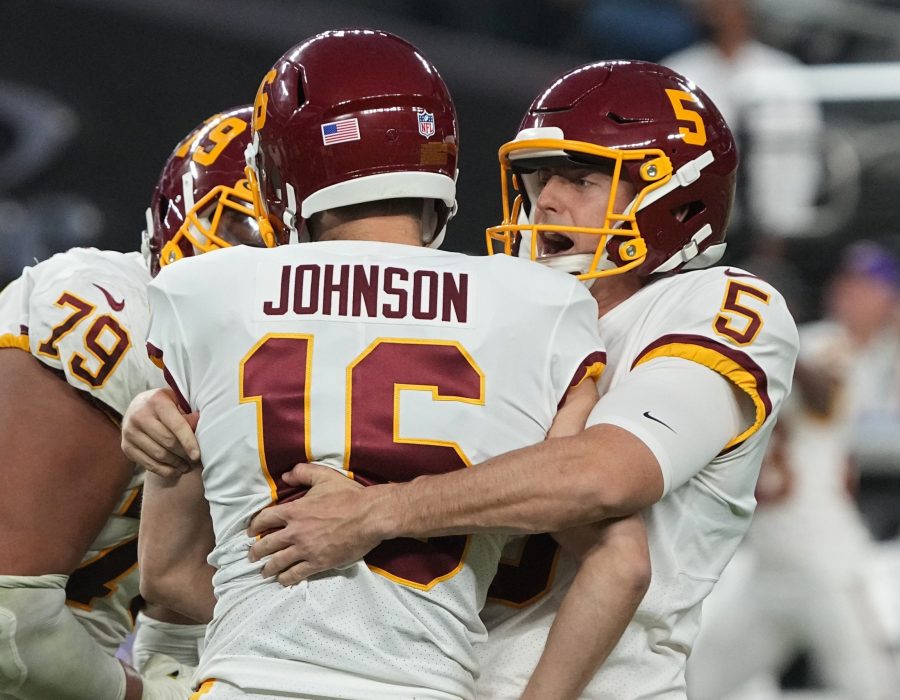
The Washington Football Team was in need of an interim kicker after Johnson’s former teammate, Joey Slye, injured his hamstring chasing down a blocked PAT return. Just 11 days after being cut by the Saints, Johnson had another shot for none other than his hometown squad.
In his first three games in the burgundy and gold, Johnson was 2-for-2 on field goals and 4-for-5 on extra points. The team’s performance on the whole was rocky, but Johnson filled Slye’s shoes perfectly.
Sounds like a rosy ending, right? Think again. Those three games were the last time Johnson would ever put on the pads, with his final time on the gridiron being a perfect game. But it didn’t matter—he wasn’t, as he would say, “proven” enough to stick around.
Slye came back off Washington’s inactive list, took his spot back and Johnson found himself unemployed once more. After a series of workouts the next year that didn’t yield any contract offers, Johnson decided to put his long-term health first and hang it up.
“After I got released for Washington, I went that next season, that 2022 season, you know, I had six or seven workouts with teams. Throughout the season, I was going like every Tuesday traveling around, and I had this ongoing knee issue and so I ended up having to get my patellar tendon repaired in my left knee.”
Johnson’s story may look like a sad one, but he’s made peace with his decision. He left the game healthy, which he claims was his ultimate goal upon entering the league.
“If I really could have made it back there, you know, that’d be great, but I never I’ve never looked back on my career like, I could have done more.”
While Johnson looks back on his time in the league as a fun part of his past, a chance to live out a dream even if just for a while, his story also represents a great example of a larger trend: winning just isn’t enough to stick around as a kicker.
Brian Johnson: a timeline
All slideshow photos courtesy of Brian Johnson.
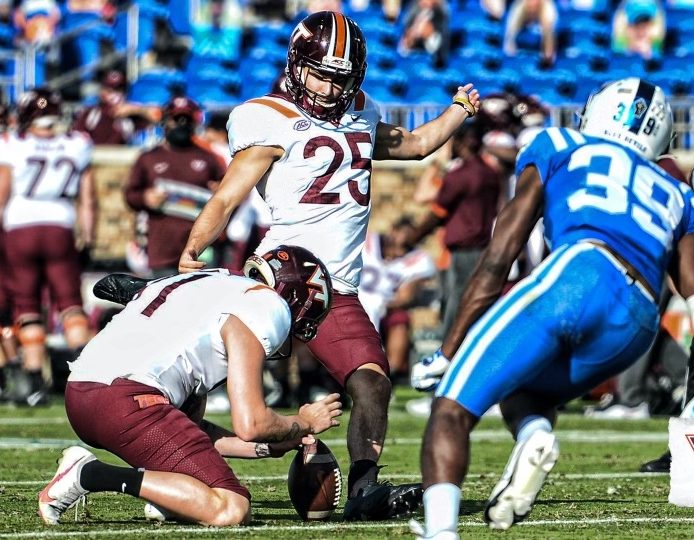
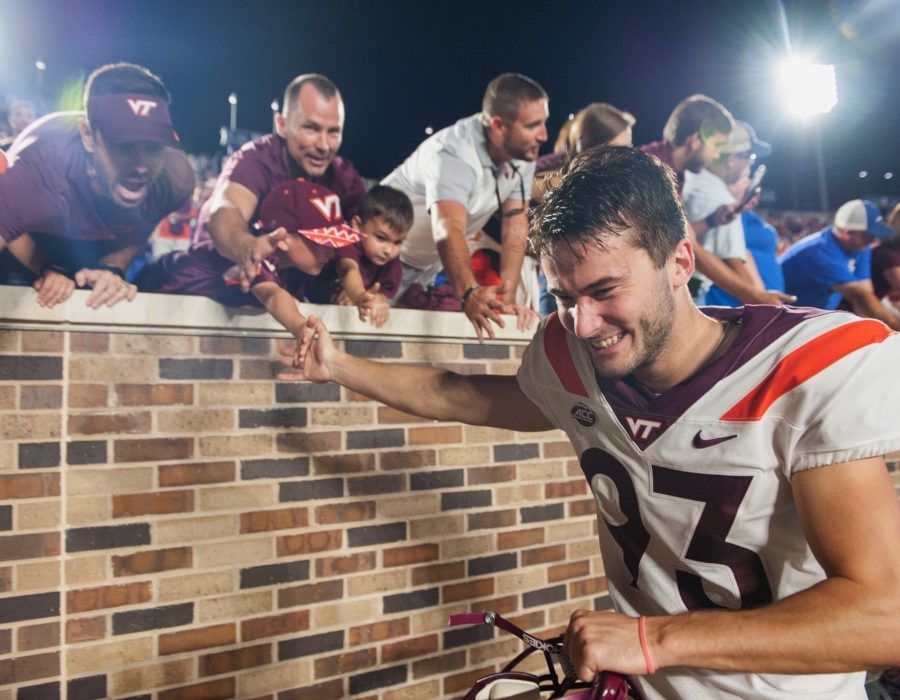
 Johnson began his football career at Gonzaga High School in Washington, D.C., home to football talents such as Caleb Williams, Olumuyiwa Fashanu and Roman Oben.
Veteran minimum:
price over performance
Kickers (and punters) in the NFL hold a job that is unlike anything else in professional sports. Each team only needs one—no roster spots for backups—and until a job comes open, there’s no room for new ones to break into the league. But jobs can come open for any number of reasons in a confounding cycle that often leaves talented, proven athletes on the outside looking in.
The NFL has a figure called the veteran minimum. For a player’s first four years of service (a season of service is defined by at least six regular season games spent on a team’s active, inactive, injured reserve or physically unable to perform lists), the minimum amount which he must be paid annually for his services increases.
For instance, a 2024 undrafted rookie must be paid a minimum of $795k for a full season of games, while a player entering their fifth season must be paid $1.125M. This means that from a player’s first contract year to their fifth, the minimum amount that they must be paid increases by almost 42%.
For positions where average pay is comfortably above minimum (just about anything that’s not special teams), this figure rarely factors into a team’s contract and cap considerations. Position players who get signed for minimum are usually either unproven rookies or fringe league-worthy guys who are just happy for the roster spot. Either way, they’re not players who have the leverage to negotiate higher salaries, and so teams take advantage by stocking the bottom of their roster at the cheapest rate possible.
But plenty of the league’s serviceable kickers spend many or all of their years of service being paid minimum, as their position is perhaps the most undervalued in all of football. What does this mean? As a kicker succeeds more and more, and proves himself year after year, a team’s incentive to roster him decreases each and every offseason.
As kickers age into the highest part of this bracket—and prove their skills to the point where they can command even more—they enter an odd conundrum where playing well might not always be what matters.
Take the Patriots, for instance. In 2022, they signed veteran kicker Nick Folk to a two-year, $5M contract with a $1.17M signing bonus and $2.29M guaranteed. After the 2022 season, in which Folk hit 32 of his 37 field goal attempts, the Patriots traded Folk away for a late-round pick, opting to go with Maryland rookie Chad Ryland.
How did this work out for the Patriots? Horribly. In fact, it’s hard to conceive it going worse. Ryland went a horrendous 16-for-25 in 2023, and his 64% completion rate ranked dead last in the league among full-time starters. He cost the Patriots multiple games that were certainly in reach, and he gained the ire of New England fans more and more as the season went on.

At the end of the day, as stated, the decision cost the Patriots multiple games. But cutting Folk’s bloated contract in favor of Ryland’s draft deal also cut $2,643,313 off of their cap hit, a relief for a cap-encumbered New England team.
Would the same view be held for a struggling quarterback, or an unreliable corner? Doubtful.
————
“Hopefully I…develop some stability in the league.”
Joshua Karty (Stanford 2021-2023) on sticking around in the NFL. Karty was drafted by the Los Angeles Rams.
Video by Sullivan Maley
————
Kicking by the numbers
————
“If you go out there, and you think you’re gonna miss a kick, chances are you’re probably gonna miss the kick.”
Cam Little (Arkansas 2021-2023) on his kicking mentality. Little was drafted by the Jacksonville Jaguars.
Video by Sullivan Maley
————
“One kick at a time.”
It’s a phrase you’ll hear from most kickers when asked about their mindset. It’s near-impossible to become successful without it. Kickers are expected to bounce back almost immediately; if one kick is missed, they sure better not miss the next one.
But for many kickers who take things one rep at a time, it’s not about messing up. Their last kick might be a great one, even their best, or maybe it was a horribly-shanked game winner, or perhaps a meaningless extra point with their team down three scores.
Trying to put a pattern to the madness of the kicking profession is futile. Just like a field goal’s flight path, the winds can shift at any moment, and a seemingly sky-high career trajectory can come to a sudden halt for seemingly no reason.
So will things work out for Reichard and the rest of this year’s crop? Who knows. But what’s for certain is that no matter how their time in the league goes down, it’ll surely be rife with confusion, double standards and constant fear.
After all, they’re always just a miss away from being kicked out.