Chapter One: Nothing Rhymes With Orange

The waves crash down on the sandy shores of Newport Beach, California. For tourists, this is the SoCal dream: plenty of sunshine, a cool breeze and miles of scenic coastline. But rewind a few months, and the piers of what could be described as Beachtown, U.S.A., were different.
The rows of local kite vendors and dozing fishermen that lined the old wooden boardwalk were replaced by something more political: a sea of red, white and blue in the middle of October. Stands were full of Harris and Trump merchandise. Protests and counterprotests lined the streets. The Orange County that for so many represented a place to have “fun in the sun” had been inundated with a storm of political activity.
Growing up in Orange County, California, most people would assume three things about me: I knew how to surf, every other word out of my mouth would be “dude” or “bro,” and that I was the textbook definition of a Republican.
While my vocabulary does consist of those same two expressions, I have never truly learned how to “shred the nard” to this day. But as for the last assumption, I grew up as a Democrat — though it wasn’t until I was older that I realized politics had always been ingrained in my upbringing and daily life in my hometown.
One of my earliest political memories came in fourth grade. I walked past the chalk-filled blacktop of Golden Elementary when one of my classmates turned to me and asked, “What do you think of President [Barack] Obama? My mom said that he was going to ruin the economy.” Naturally, I had little to no knowledge of what the word “economy” even meant, so I just replied, “Well, my parents have said that President Obama is a good man.”
Later that night, I asked my parents about politics and garnered some confused glances. For the next few minutes, they explained what Democrats and Republicans believe on a fundamental level.
They ended the conversation with something that has stuck with me 12 years later: “Vincent, we might not agree with some people’s views on politics, but we always need to keep an open mind and respect other people’s opinions.”
Growing up in O.C.’s smallest town, Placentia, I had friends of all political stripes: Democrats, Republicans, independents and libertarians. While I disagreed with many of my friends’ views on politics, I always kept my parents’ motto in mind.
As I entered college, I soon realized that for most, it wasn’t as normal to be friends with people who held different political beliefs. In my mind, it’s those differences that help broaden our understanding of people and communities across the country. When those contentious moments arise and I interact with people who oppose my worldview, I find it exciting rather than frightening. I view it as an opportunity to better understand the world around me.
I thank my community for that: for making me curious about what draws people to support the causes they do. The 2024 election was my first time diving into how a once-Republican stronghold became a battleground for political ideologies. Just like how nothing rhymes with the word “orange,” nothing quite encapsulates the political melting pot that is Orange County.
Chapter Two: An Ocean of Blue and a Sea of Red
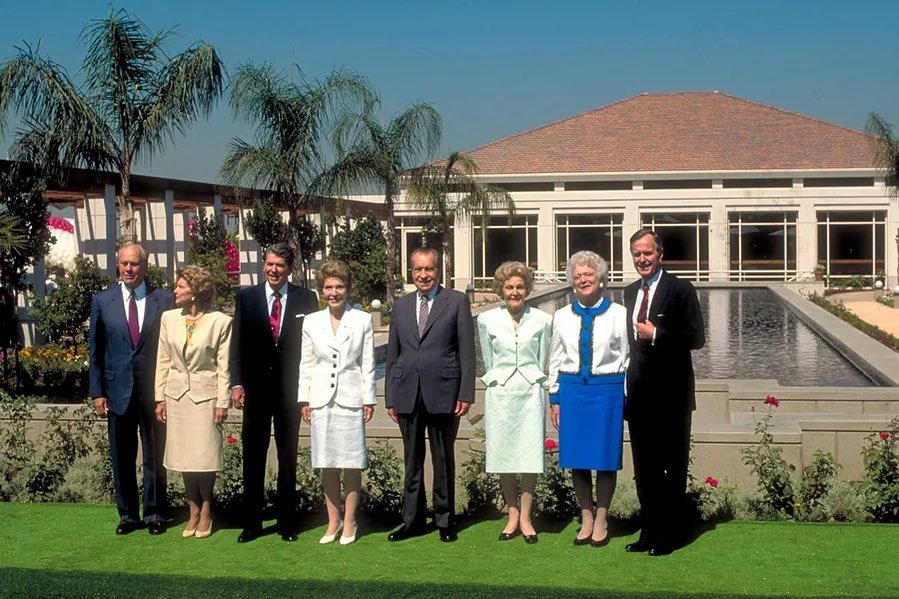
“Orange County is where the good Republicans go before they die,” the late President Ronald Reagan once said. For decades, the “land of Reagan and home of Nixon” had been a small red dot in a state that remained a Democratic stronghold. From 1940 until 2016, the county voted for the Republican presidential nominee in 19 consecutive election cycles.
Janice Jannsen, age 75 and a former New Yorker, moved to Huntington Beach just before the beginning of the pandemic. For her and her family, it was a great place to retire and get away from the hustle and bustle of New York City. That is, until the city’s political scene became front and center
“We wanted to get away from the big city. We didn’t realize the culture of Huntington Beach until after we moved here, and boy, does it have quite the history,” said Jannsen. “It’s been real up and down. Huntington Beach has a not-so-nice flavor right now.”
Huntington Beach has fallen to some local controversies in recent years. In 2024, former mayor Gracey Van Der Mark’s ties to the right-wing organization, the Proud Boys, were revealed by an investigation conducted by the city council. Protests also had broken out when the City Council banned flying the LGBTQ flag at City Hall.
“We’re liberal New Yorkers, but it surprisingly still feels like it’s 50-50 in Huntington Beach. Even if the city council has taken a big turn and… has kind of fallen off the wagon. It’s kind of unfortunate,” said Jannsen.
Twenty-one-year-old Jordyn Murray has been an environmental and political activist since her freshman year of high school. She is no stranger to the world of Orange County politics.
“When people think of California, I think they automatically think Democrat, liberal and leftist. But Orange County is not the case at all. Our [county] is really a small-scale version of the country,” said Murray. “Living in Orange County is kind of like how you would imagine living in a swing state would be, just not on a presidential scale.”
A pocket of purple in a solidly blue state like California might seem surprising for many Americans. But for Californians, it comes as no surprise. According to the Orange County Registrar of Voters, the county is home to roughly 649,000 registered Republicans, 694,000 registered Democrats, and 73,000 registered independents — a fairly even split compared to many other areas in the state.
“I mean, we’re pretty divided,” Murray said. “That’s reflected in our congressional districts, in our school board races.”
But that’s not the only area where the county’s makeup is fairly split. The county is home to 3.1 million people, the sixth most populous in the United States. Currently, the population is 37% white, 34% Hispanic and 23% Asian American, according to the U.S. Census Bureau. Just 30 years ago, the demographics looked very different: In 1990, the population was 65% white, 23% Hispanic and 10% Asian American.
Placentia resident Jennifer Talbert, 52, believes that demographics may have played a role in the transformation of the county’s political makeup.
“In the ’90s, you saw a lot of immigrants coming in … and [the county] still stayed red,” said Talbert. “And now you see the [current] demographics and it’s probably … the children of those immigrants from the ’90s, who I guess are voting blue.”
Talbert moved to Orange County at age 20 in hopes of getting a job after college, but she never described herself as politically involved. She did, however, grow up in a conservative household and voted Republican in a majority of presidential elections — with the exception of 1992, when she voted for independent candidate Ross Perot.
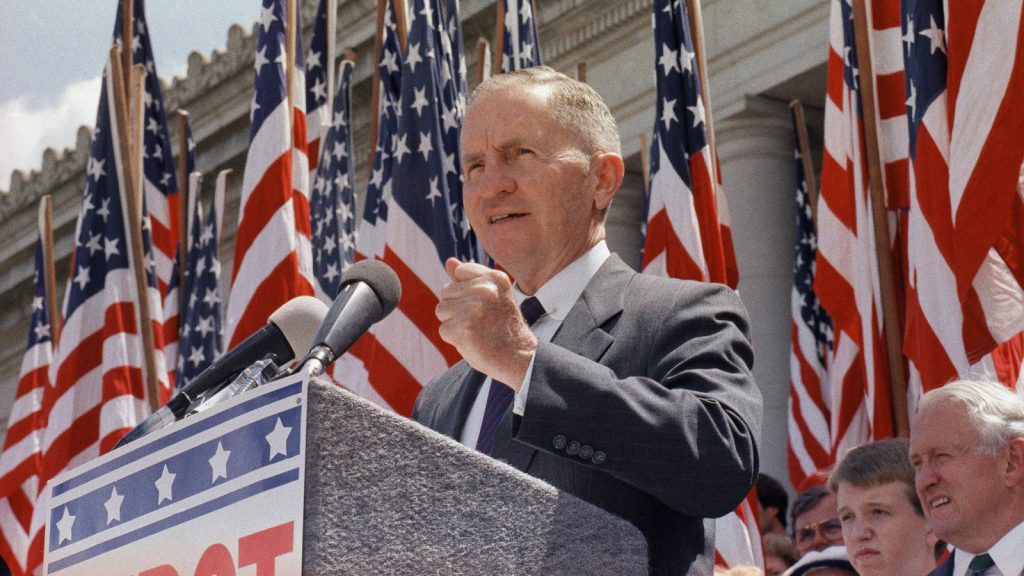
For Talbert, the county became noticeably more political as the 2016 election cycle gained momentum.
“When I moved to the O.C., it wasn’t so compartmentalized or divided. You weren’t put into buckets like you are now,” Talbert said. “I didn’t really notice a change until 2016. And then I asked myself, ‘Is this real? How did this happen?’”
Centrist Tim Murray, 53, is a teacher at Woodbridge High School. His classroom is covered with pictures of American presidents, plenty of Philadelphia Eagles memorabilia and posters from previous presidential campaigns. For the AP U.S. history professor, the reason for the change in 2016 was simple: It was Donald Trump.
“I had some very close friends of mine that I went to high school and college with, and we could all always have these [political] conversations. That is until Trump became president,” said Murray. “The conservative Republican is not the same as it is now, and a lot of the party has gone much further to the right. I think that’s turned off a lot of people in the middle.”
Throughout his lessons on political giants from Teddy Roosevelt to Ronald Reagan, Murray stresses to his students an old adage: History repeats itself. “I teach U.S. history. What’s interesting about politics is, anytime we go too far to the left, guess what happens next? We go back to the right.”
Talbert has a different approach to the Republican Party and President Trump.
“Trump is an asshole. Personally, I don’t want to date him, but I like his policies,” Talbert said. “He says what it comes down to, and people can’t seem to see through that.”
Chapter Three: “A pleasant place to live”
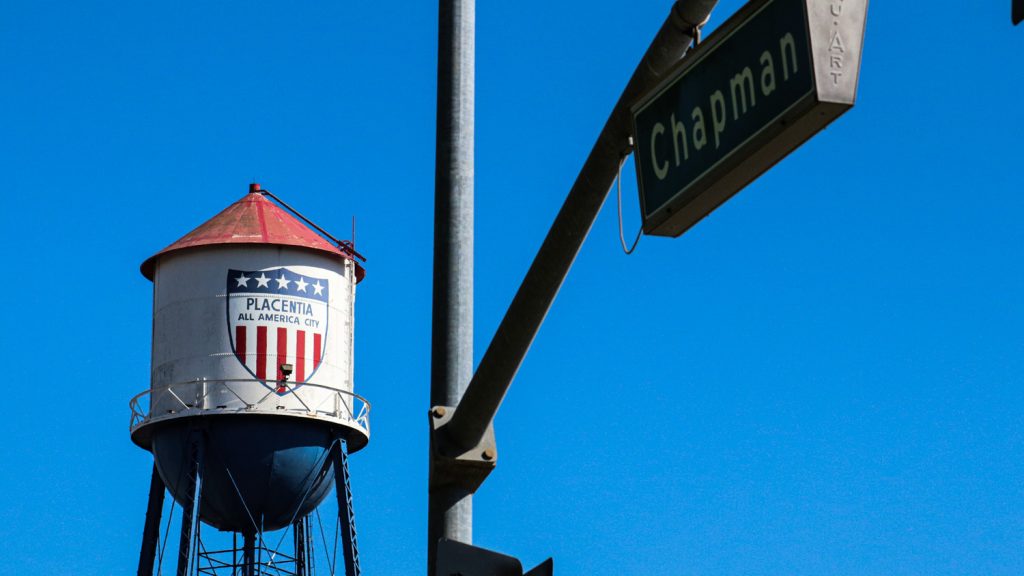
Out of Orange County’s 34 incorporated cities, the city of Placentia is a perfect representation of Orange County as a whole.
Nestled among a backdrop of cascading hills lined with yellow flowers is the city of Placentia. This northern Orange County city has sunsets fittingly marked with a reddish blue hue. Behind this scenic backdrop is a sign reading: “A pleasant place to live.” That’s the city motto, and it’s exactly how one would describe it: a community where the people make the town.
“Placentia is kind of boring and sleepy, which is kind of fabulous,” said Talbert. “We don’t have a lot of fireworks in our politics. I mean, occasionally, we have… stuff like our school board, which is interesting and crazy.”
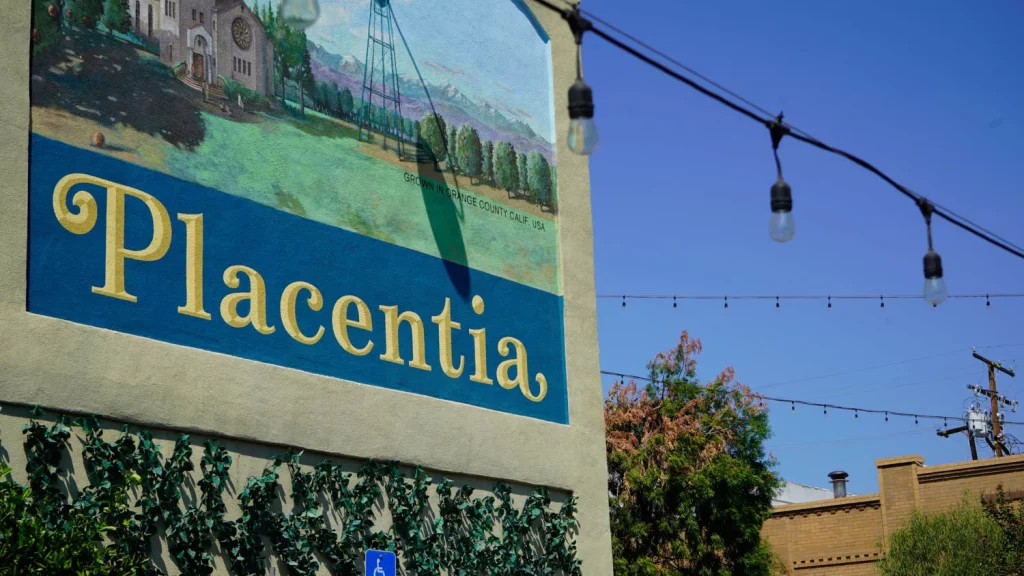
Tricia Quintero spent more than 20 years in her quiet Placentia neighborhood attending her son’s high school football games, serving as president of her kids’ Parent Teacher Association and teaching elementary school students. So, when she decided to serve her community in another way by running for the school board, it was a bit of a change of pace for her role in her “small” town community.
“This community is tight. It’s a small-town vibe, even though we have the big city amenities,” Quintero said. “I think when someone from the outside comes in and tries to ruin that vibe or the reputation of putting the kids first, people get offended. People are like ‘woah, woah! You’re messing with my community’.”
In the past few years, education has been a hot topic for residents of Placentia, as the school board’s key priorities have fluctuated among its five different members.
“For those who don’t know, Placentia-Yorba Linda school district ended up in the middle of a culture war because some board members who were elected…brought in some very right-wing politics,” said Tim Murray. “It all started with COVID-19… now many parents want school board members [who] were going to fight for some of those things that they believed in politically.”
Despite the politics surrounding a traditionally non-partisan position, Quintero still went door to door canvassing for her candidacy.
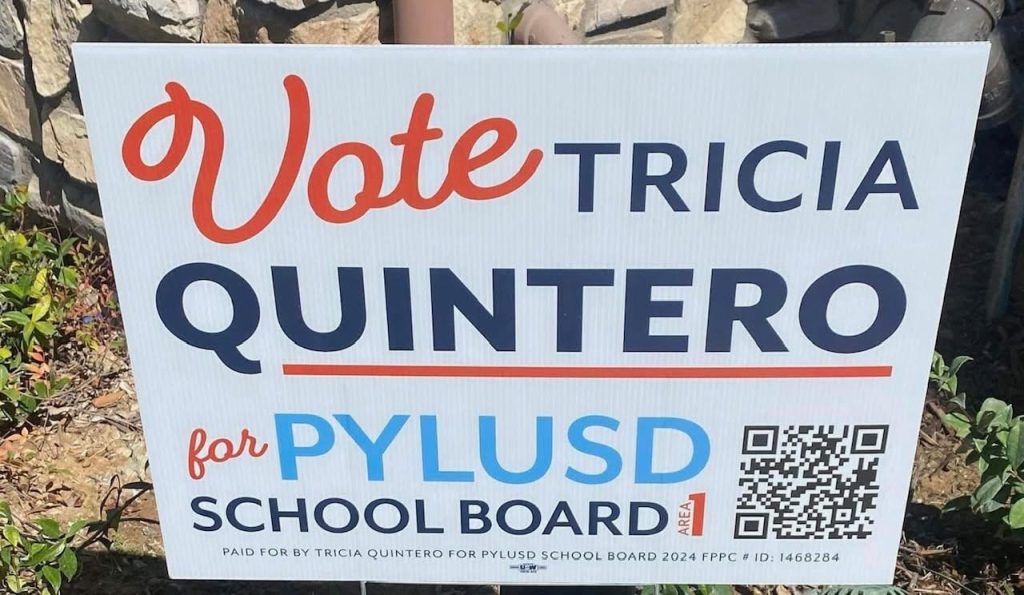
Local candidates for office can use an app called PDI, which collects voter data to help grassroots efforts and door-to-door canvassing. The app marks how many people lived in the home, and their registered party. Quintero found out that her community had a 10-point Republican lead, leading her to realize that she would have to make inroads across the aisle.
“I needed some of those Republicans to vote for me. So we hit everybody. We tried to hit moderates, and we also tried to reach out to [Gen Z],” said Quintero. ” But in a way, I think people’s percetions or opinions on national and state issues ultimaly got pushed down to us [locally] sometimes.”
Quintero was sitting in an airport terminal in Indianapolis, visiting her son at Purdue University, when she found out she had won the school board election.
“We were checking everything. And it was like ‘Is this really happening?’ It was surreal and nerve-wracking, a little bit at the same time,” she said. “The community wanted a change, and I am so happy that they believed in me to bring it.”
“A pleasant place to live” is more than just a motto for the city of Placentia in encapsulated what it means to live in Orange County. Living in O.C. means having a desire for change and a desire to shape the communities we have called home. The county is constantly evolving, changing just like the people who call it home.
As Tim Murray puts it, “We have the sunshine, we have this little pocket where it’s a really nice place to live, and a really nice place to grow up. It’s a great place to raise a family. We just have sort of this balanced dynamic [ both as a county and politically].”
So while you can never take the Orange out of Orange County, you can certainly come and find out that Purple is the new Orange.