A Collector’s Journey
Cooper Berella, 25, has dedicated over two thirds of his life to blind boxes.
An avid collector, freelance illustrator and an art director for Kouhigh toys based in Los Angeles, Berella has hundreds, reaching upwards of even thousands, of blind box figurines in his collection – a collection that began when he was eight or nine years old.
“It’s a legitimate art movement, it's a legitimate form of expression [and] it's a legitimate form of emotion, you know? And I think it's a beautiful thing to celebrate,” Berella said.
Berella shared that his favorite part of collecting these aesthetic figurines was the immersion into new cultures, designers and aesthetics. The first time Berella had seen a figurine as a young kid was met with curiosity and fascination – one that would carry throughout his life.
“I was very intrigued by it,” Berella said. “I'm the kind of collector who doesn't exactly like having everything of one character. I like the variety of blind that blind boxes offer. You know, I like that blind boxes are in just different styles. They introduce me to different types of things that I wasn't super familiar with before.”
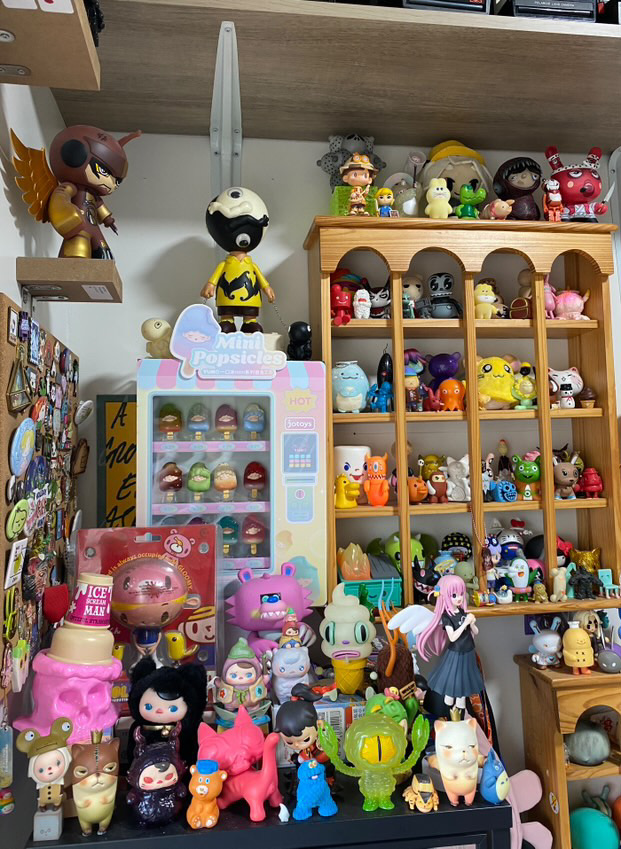
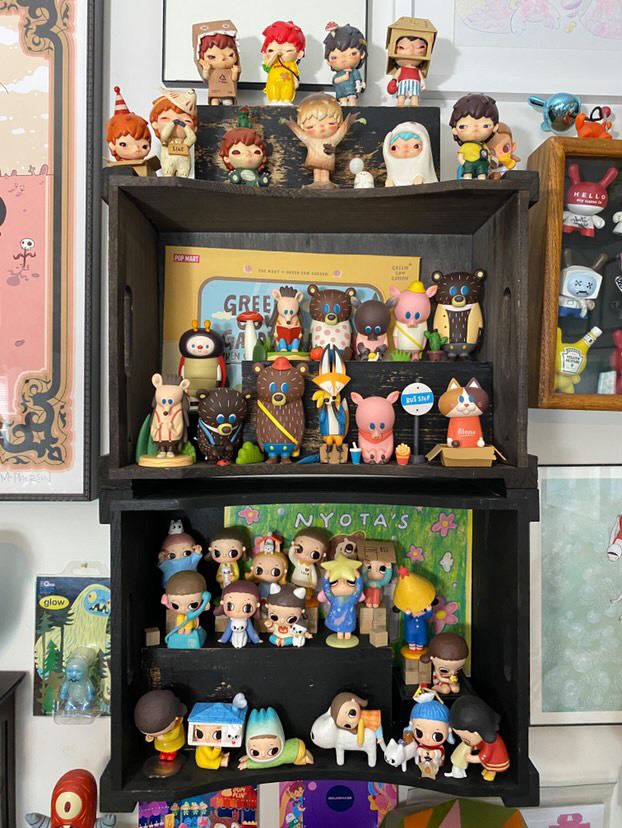
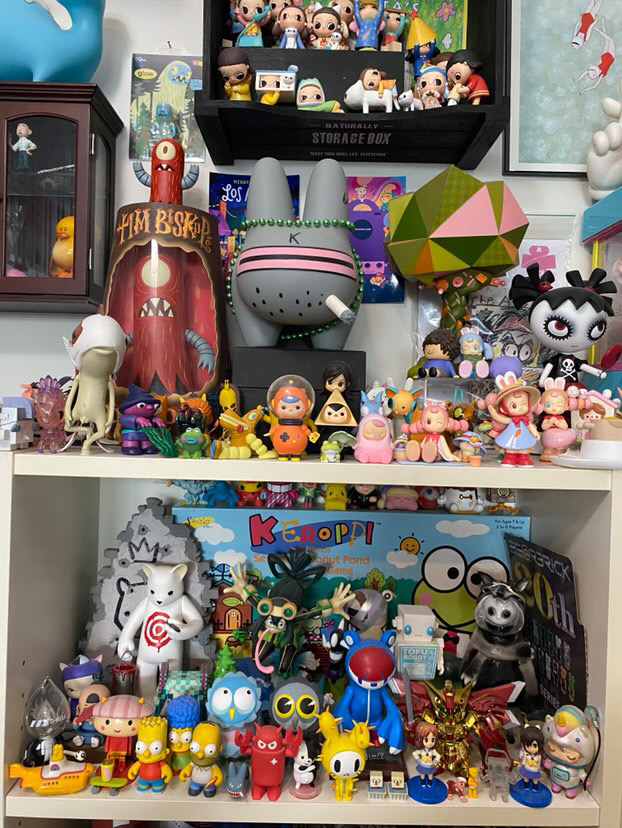
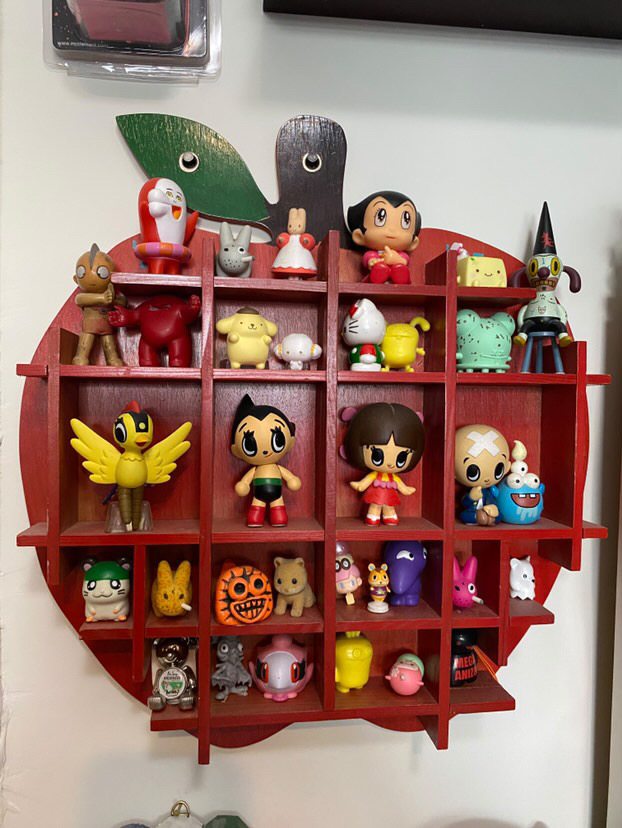
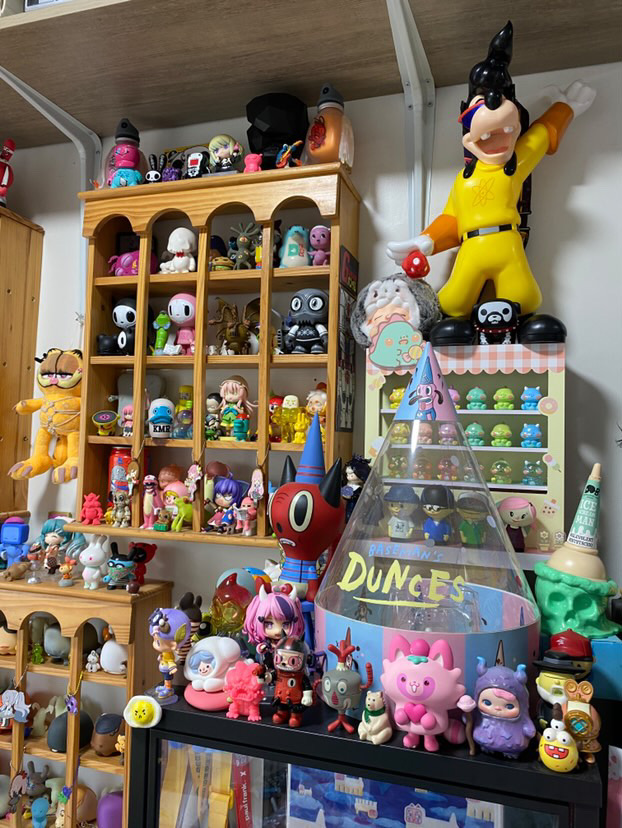
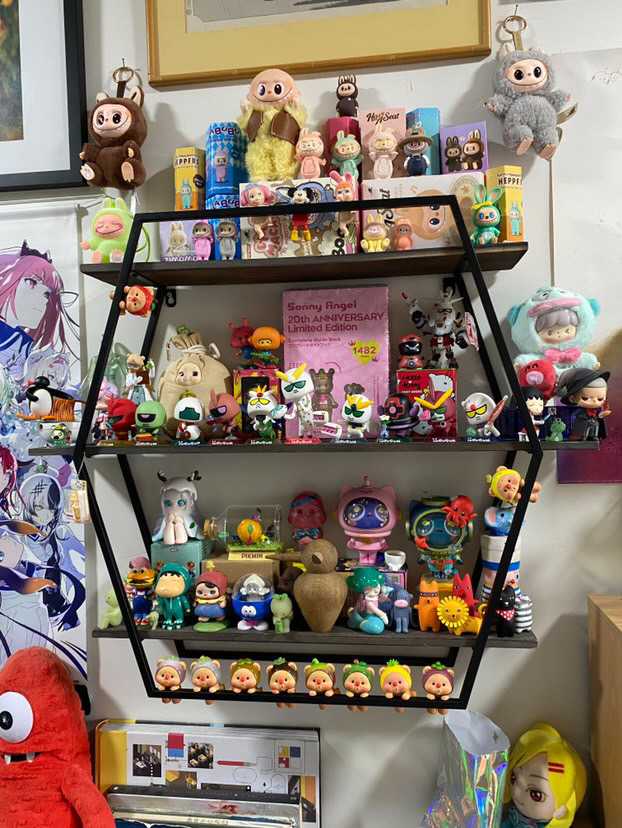
Berella's figurine collection/ Photo Credit: Cooper Berella
Whether that be learning more about a specific Asian culture or stumbling across an artist in London, Berella found the experience of blind boxes to be a gateway for new discoveries.
“They were a learning experience. They were almost even, like a cultural experience,” he said. “Being introduced to these different types of styles, being introduced to these characters and to these artists, it was very educational for me, and I think it makes my shelf look more interesting as a result.”
“Toys can really… inspire [people] to pursue toys as an art, and again, as a form of expression.”
— Cooper Berella
This interest quickly turned into a lifelong passion – having racked up nearly a thousand figurines over more than a decade, Berella’s room is decorated with figurines of all sizes, colors and designs – which became reflected in his career pursuits as an artist and designer.
“These were art movements that I wasn’t super familiar with as a child, but it introduced me to things like lowbrow art, pop surrealism, you know, and it inspired me to become my own artist,” he said. “Toys can really… inspire [people] to pursue toys as an art, and again, as a form of expression.”
As a veteran collector, Berella views his toy collection as a curation of history; his toy collection dating back to the early 2000s.
“I kind of feel like it’s my duty, I guess it is kind of my job, to keep this culture going,” Berella said. “I think that some of these figures could be in a museum someday, [and] I think it should be the responsibility of collectors to not gatekeep this stuff, to really share the knowledge for as long as they can.”
The Economic Superpower of Cuteness
Karen Lee, 21, began her collection in 2023 as a sophomore in college. Lee has known about blind boxes since her high school days, but her collection did not start until she stumbled across Smiskis – small, green, glow-in-the-dark figurines. Lee, who loves the color green, found herself drawn to Smiskis purely for aesthetic reasons.
“Personally, I’m not a hoarder. I don’t like collecting things, [and] I don’t like things ‘just because’ if they don’t have a purpose,” she said. “But I think my mindset changed over time, and [when] I saw [Smiskis], I was like, wait, this is really cute.”
Lee reflects a certain type of one-brand collector – one who takes interest in a specific character that they are especially drawn to, and collecting the majority of that line. It takes just one figurine that matches your taste that determines how necessary or purposeful a figurine is.
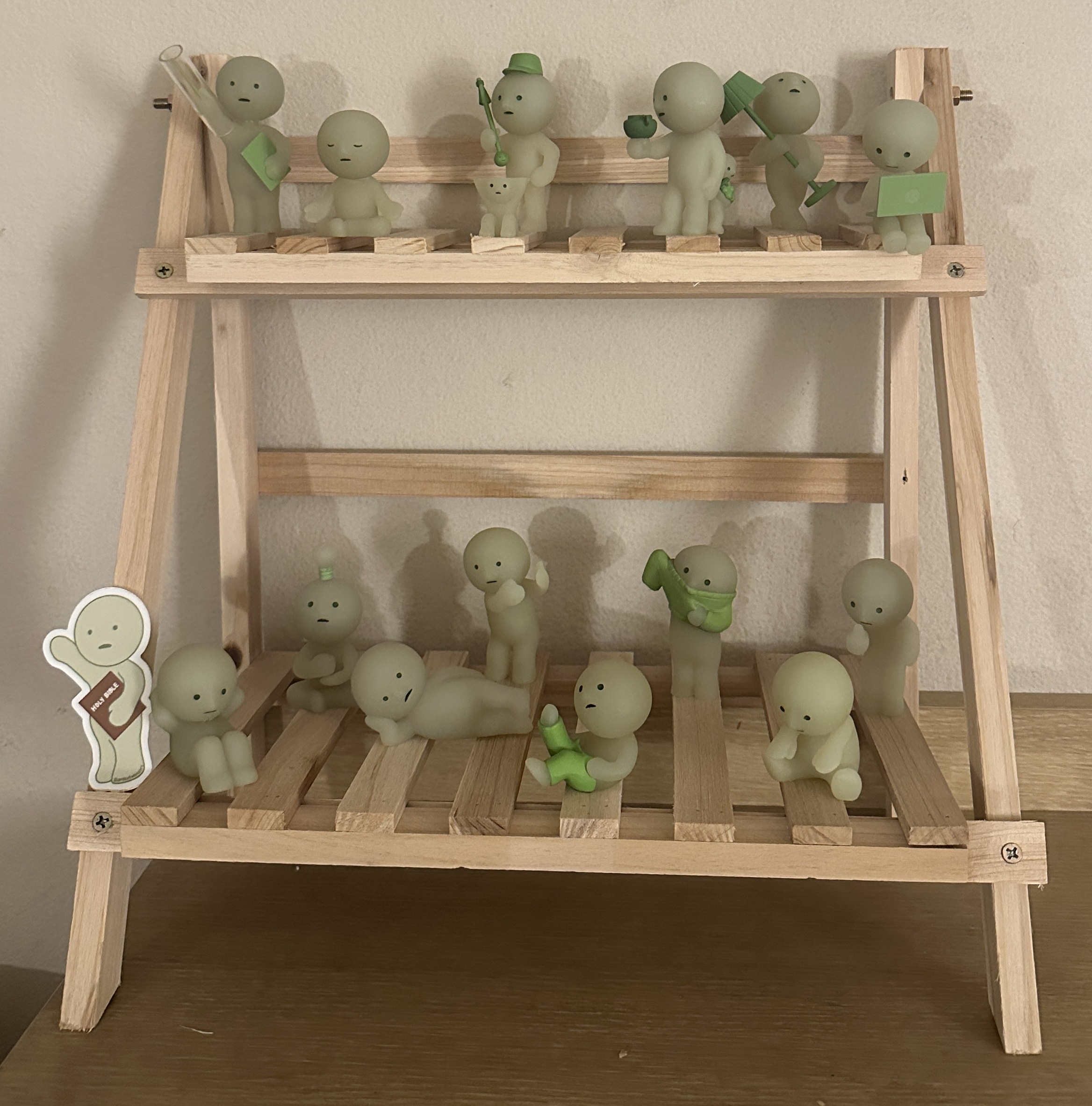
Lee's Smiski figurine collection/Photo Credit: Karen Lee
The economic superpower of blind boxes relies precisely on its cuteness - the ability to sway a consumer into purchasing despite no real practical use. According to Professor Marianne Szymanski, a toy entrepreneur and expert, “the cuteness factor is a great example because that plays into many different kinds of toys – dolls, plush toys, cute, squishy things – people buy a product and packaging and product design.”
“You see something aesthetically pleasing, you’re like, I have to have that, but do we need it? No, but you want it,” Szymanski said. “It’s an emotion, you had to have it for the novelty, and I think that blind boxes are very much an aesthetic, pleasing novelty that people just want to have because they’re cool and cute.”
Blind boxes originate from Asia, dating back to as early as the 1980s in Japan, and have experienced incredible growth in the Asia-Pacific market within the past decade. The global blind box market is valued at approximately $14 billion as of 2024 and is expected to reach a valuation of $31 billion in 2031. Pop Mart, one of the biggest collectible toy store companies worldwide, was founded in Beijing, China in 2010 with hundreds of brick-and-mortar stores now found across Asia in countries like Taiwan, Japan, Vietnam, Singapore, Malaysia and South Korea.
Given the popularity of the blind boxes, Pop Mart opened its first store in the United States post pandemic in September 2023 at the American Dream Mall in New Jersey. Since then, Pop Mart has expanded throughout the North American continent.
Kouhigh toys, a blind box store in LA’s Melrose neighborhood, also opened post-pandemic in 2021, originally as an e-commerce store that sold Asian snacks and cosmetics. The pivot to blind boxes came in an attempt at breaking into a less saturated market, and at the time, less companies were selling blind boxes. Serena Shen, the marketing manager of Kouhigh toys, cited the universal appeal of cuteness as a major factor that contributed to the success of the toy store.
“People just want something to accompany [them] with, something that is not that expensive, and is easy access, and can bring them happiness,” Shen said. “I think that people are the same, so we were pretty sure that blind boxes would be good [in the United States].”
But Shen realized early on that blind boxes sold better in-person, when customers were able to interact with it.
“We found that it’s so hard to sell blind boxes because it’s a product that requires immersive experiences,” Shen said. “People need to be at your store, they need to see the displays, they need to feel it, to shake it, they need all these kinds of interactions with the products.”
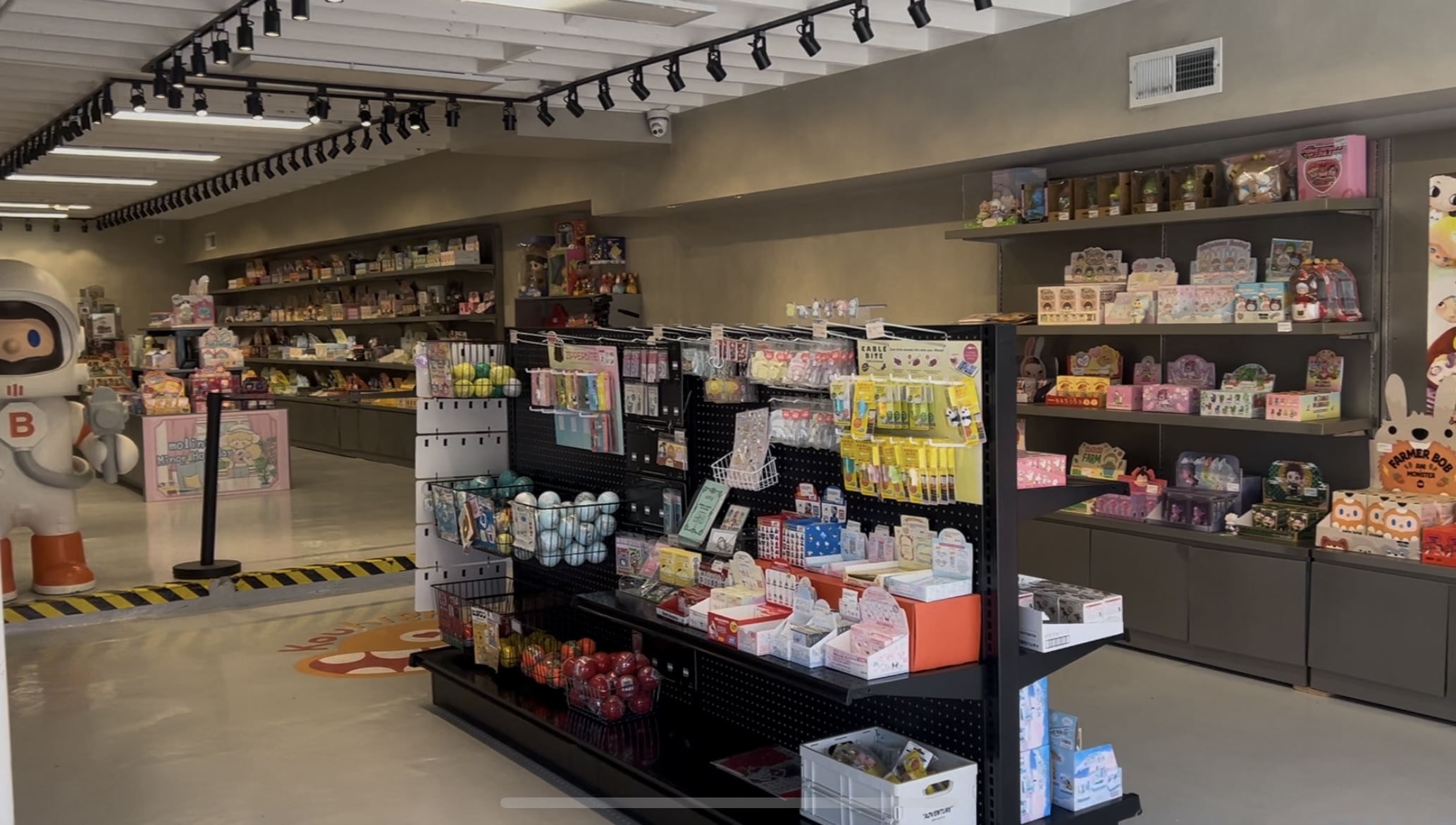
Blind boxes on display at Kouhigh Toys in Melrose
This prompted Kouhigh Toys to transition from an online website to an in-person location, with the first physical location opening in Melrose in 2023. A year later, the toy company opened a second location in Irvine, with plans of a third store opening in Torrance in the near future.
But beyond the aesthetics, the price of blind boxes, which range on average from $10 to $20, are an affordable luxury that Gen Z can indulge in from time to time.
“It’s just like the lipstick [effect]... the economy is not that good currently, and these cute things are not that expensive, most of them are under $20, so it’s very achievable,” Shen said. “So people might turn to [those] kinds of things to gain some happiness.”
But blind boxes are nothing new. According to Professor Szymanski, Pokemon cards or even baseball cards also served as popular collectibles within the past two generations, operating under the guise of surprise. Blind boxes are another rendition of the surprise collectibles market, hinging on the cuteness factor.
“But then all of a sudden, within the last ten years, toy companies have put together – after the trend of YouTube unboxings – literally boxes of toys of surprise, so kids could recreate that emotion and you didn’t know what was inside. So it became a collectible… All of a sudden, this whole category was formed,” she said.
These are interactive 3D figurines — click and drag to explore them!
HIRONO The Other One Series, "The Monster"
Nyota Growing up by Your Way Series Figures, "Friends"
HIRONO The Other One Series, "Nowhere Safe"
Nyota's Fluffy Life Series Figures, "Daze"
HIRONO The Other One Series, "Being Alive"
How Blind Boxes Gave Birth to a Community
The toy community is multifaceted and robust – and unboxing its intricacies reveals a spirited, creative amalgamation of collectors and enthusiasts who aim to restore whimsy in the world of adulthood that has largely forgotten the essential role of toys.
At Kouhigh’s various locations, Shen shares that she often witnesses organic interactions between customers who find similar interests in certain characters that serve as a natural icebreaker. Kouhigh Toys further facilitates these exchanges with monthly trade and swap parties, where blind box enthusiasts exchange items in their collection for a new item.
“[It] currently is a kind of bridge to connect people because I think currently it’s so hard to make new friends; that’s what we are doing now.” Shen said. “We have trade and swap parties every month, and the reason we are doing that is because we want to connect other people together, we want to create a community so that people can communicate with people who share the same interests with them.”
While Shen has observed a diverse demographic of collectors, Shen has primarily seen Gen Z women as the main enthusiasts for blind boxes.
Jenny Guo, the Overseas Marketing Manager of Jotoys, a blind box collectible brand, shared her insight into the element of community in the United States, and how it differs from China, where Jotoys originates from. For instance, hipper figures are blind box figurines that come with reusable adhesives so they may be attached to items like laptops and phones. Guo shared that hippers sell incredibly well in America, whereas they tend to be less popular in China, selling 100 pieces within one week at one store location in New York.
“The people in the US…they want to enjoy [the] community,” Guo said. “They want to share opinions and they want to show off like, ‘I’m interested in this brand right now, and this is my blind box, and I got what I want.’”
Guo also shares that “the culture behind [the] product is the most important thing in the US.”
“If you want a product to have a long life, you know, have a long standing selling life in the US, you have to have the culture behind the product. That's a little bit different from the Chinese market,” she said.
The Creator-verse behind Blind Boxes
While household names like Pop Mart tend to dominate the market of blind boxes, the blind box craze has also given birth to many indie designers, many of whom produce their own blind box toys.
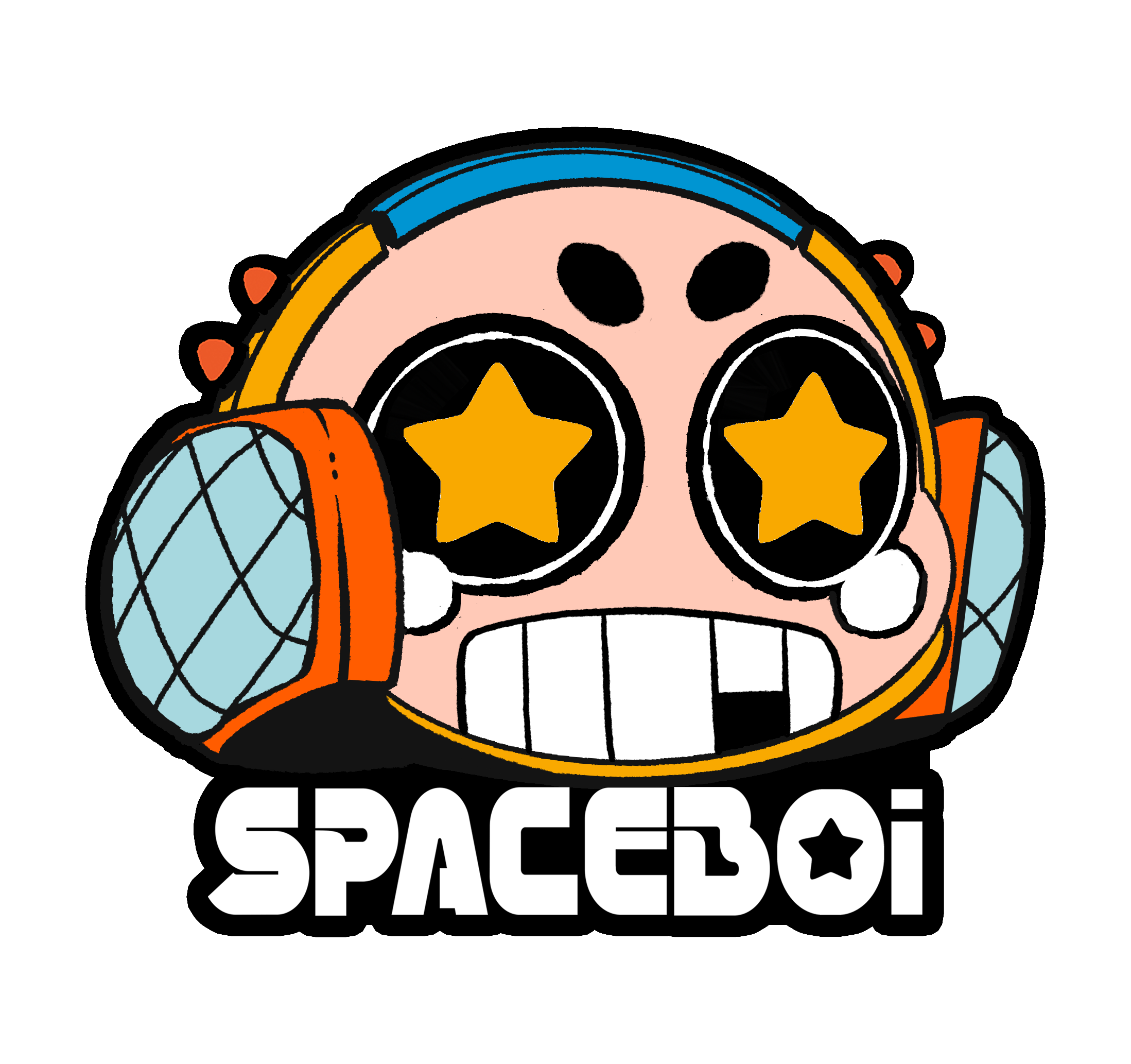
Andrew Pena is an art director and has worked in animation for around six years. But during his free time, he has invested time and energy into creating his own character IP called SPACEBOi, inspired from Pena’s childhood watching Cartoon Network’s Toonami, which broadcasts Japanese cartoons.
“Everything on that was kind of what I love watching, but also just cartoons in general, from when I was younger, and the games that I was playing, all of that, I like to kind of combine it all and put it into SPACEBOi,” Pena said. “And so my favorite thing is when SPACEBOi reminds people of what his references are. And I love it because from his posing to his body shapes, to his expression to his colors, everything about him should inspire like a memory from when you were a kid.”
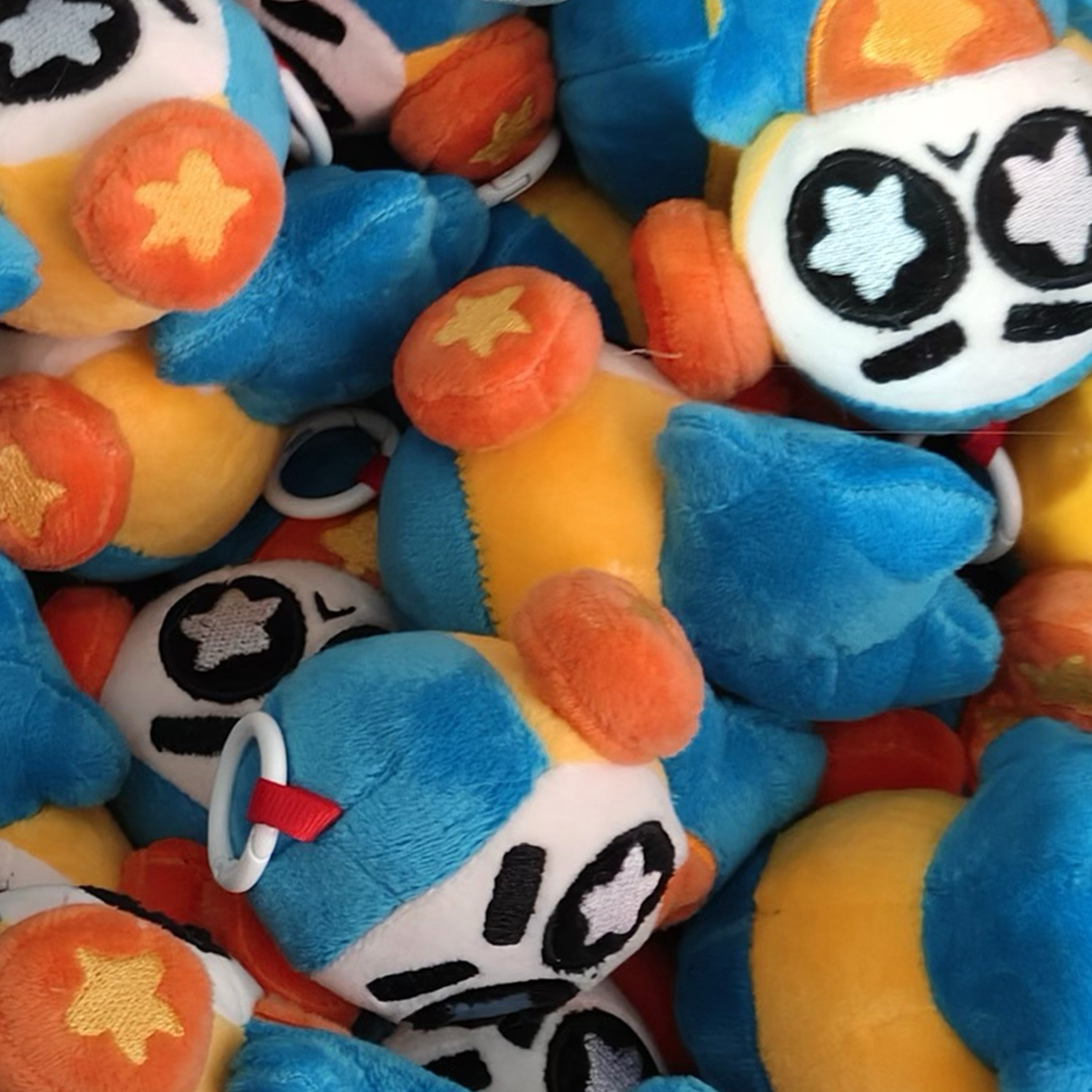
All photos from the SPACEBOi LookBook / Photo Credit: Andrew Pena
Besides producing SPACEBOi blind boxes, Pena also creates toys, plushies and other products, which stemmed from a passion project during the COVID lockdown.
“I’m a big extrovert, so I don’t like being stuck inside, which I was stuck inside, so I needed something to pass the time, but also to put all my energy into and I’ve always collected toys,” the SPACEBOi creator said. “If we were at my house, you would just see toys on shelves everywhere.”
The process of creating an original blind box, however, isn’t easy. Marred with trial and error, many indie artists take it upon themselves to learn how to make a mold of the toy with 3D printing, often requiring an independent garage space and workshop in order to produce their toys. Pena himself began after working with acquaintances with 3D printers “who really wanted to test out their skills on being able to print and do resin cast and all the fancy toy stuff.”
“So I [made] a model, and I just gave it to them, and that's kind of, really where the whole thing took off,” he said.
But with the blind box trend taking off, manufacturers have understood that a growing demand for indie toys, helping bring costs under.
“Before you had to make 8000 to 10,000 of something, [but now] you can get away with making 200 of something, which is still a lot for inventory, but it's really different than the 1000, you know. It's still hard to get to but it's within grasp,” Pena shared. “Then there's stuff like Kickstarter, where you have a lot of people that support stuff like that…where people want something to be made. And if your design is that good, and you do the work together [with] enough hype for it, then people will help you fund to be able to get these products out.”
“So when you meet other people that are just taking their own funds, funneling it into their own project, making it happen from the ground up, and you find someone else that's creating. It's just creators finding creators.”
— Andrew Pena, SPACEBOi
Pena also touched upon the robust community of creatives coming together and supporting one another. By demystifying the manufacturing end of creating toys, Pena contributes to open and honest dialogues of what occurs behind the scenes.
“It’s not an easy thing to succeed with, and you want to help people build. That's what I do a lot of…people come with questions, I'll give them all the answers, and I'll try to give them any access to whatever links and manufacturers and ideas that I have to hopefully see their idea grow.”
Annual events like DesignerCon also help solidify these relationships, taking creators from city to city like Los Angeles to Las Vegas, where familiar creatives mingle and call each other by their toy names.
“You've got all these independent artists that are making exactly what they want, and there's nothing more inspiring than that,” he said. “So when you meet other people that are just taking their own funds, funneling it into their own project, making it happen from the ground up, and you find someone else that's creating. It's just creators finding creators.”
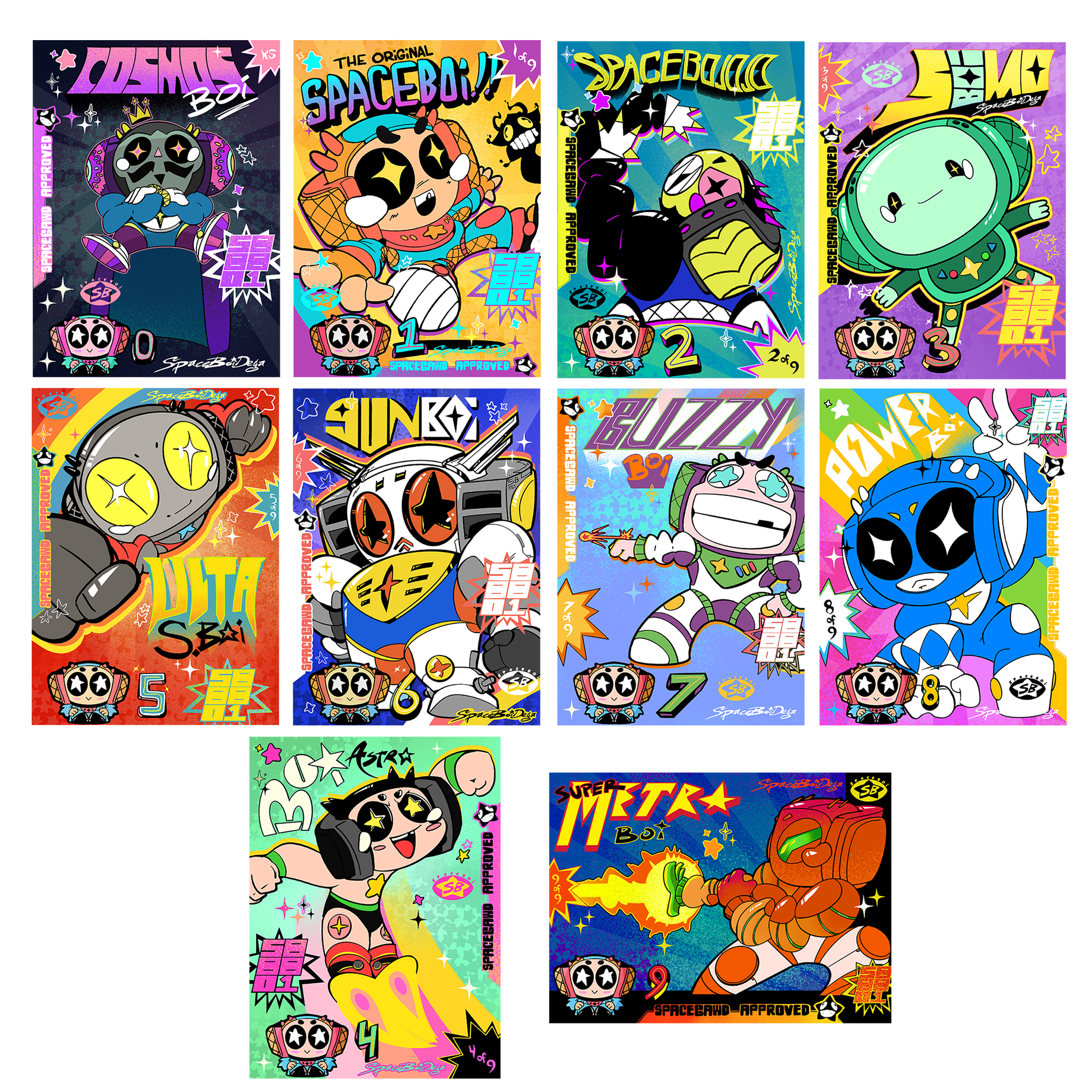
All photos from the SPACEBOi LookBook / Photo Credit: Andrew Pena
Looming Tariffs and Uncertainty: The Cost of the Unknown
But despite the simple joys toys offer, blind boxes are hit with a complex issue: the looming global trade war likely to deploy expensive consequences for blind box consumers.
Most blind boxes are produced and manufactured in China. For Chinese companies like Pop Mart and even domestic stores like Kouhigh toys, China’s production of blind boxes means the goods will likely be hit with a 34% tariff imposed by the Trump administration, according to CNN.
For store owners, this heavy reliance on imported goods means a costly venture is quickly underway, and store owners are bracing themselves for the unknown.
Shen shared that Kouhigh toys currently follow the manufacturer’s suggested retail price (MSRP) when pricing their blind boxes. But with tariffs on the horizon, Kouhigh is relying on bigger stores like Pop Mart to adjust prices accordingly, with smaller brands like Kouhigh likely following suit.
“It is a concern, but we are still not sure how to deal with it,” Shen said. “We’re waiting for bigger brands, such as Pop Mart’s reaction…we might need to raise the price.”
Lee, who has grown her collection to 14 figurines, has spent only $50 after implementing cost-cutting measures such as relying on friends who travel to Japan to purchase a Smiski blind box, where prices tend to be around half of the US pricing. For Lee, tariffs will not be impacting her purchasing habits because she specifically only purchases blind boxes abroad.
“I’ll just wait to buy another one, but I have a friend going [to Japan] next month,” Lee said when asked about the future of her collection.
The increasing cost has also signaled to the micro-gambling habits blind boxes enable, with multiple sources describing the unboxings as “addicting.” As a veteran collector, Berella has expressed concern about the fast-paced consumerist aspect.
“I guess it’s rich coming from me, the guy who has a giant shelf over here, but it didn’t exactly show up overnight; it built up over 15, 16 years,” Berella said. “In my 16 years of collecting, it’s never been this hyped up – and I love the hype, I think the fact that people are excited about these figures is great – But I think there’s a lot of unhealthy habits that have grown because of overconsumption.”
“It’s like a micro-trend where it’s like, everyone’s just moving past it so quickly. It’s like they’re not really in the moment,” Berella said.
As a long-time collector, Berella shared a valuable lesson in collecting: it doesn’t always have to be expensive, and various avenues provide accessible means of gathering unique blind box figurines.
“Even if you don’t get a super expensive figurine that you want, use that as an opportunity to go out to a flea market or maybe pick out a tiny pocket blind box,” he said. “I’ve gotten a lot of cool stuff from flea markets for like, a couple of bucks. I’ve gotten toys that are missing parts, but still are kind of interesting – they tell a story, and someone else owned it before you.”
The Road Back to Nostalgia
The blind box trend reveals that toys don’t have an expiration date; instead, it has cradled the beginnings of a booming community of collectors, many of whom have learned big lessons from small boxes.
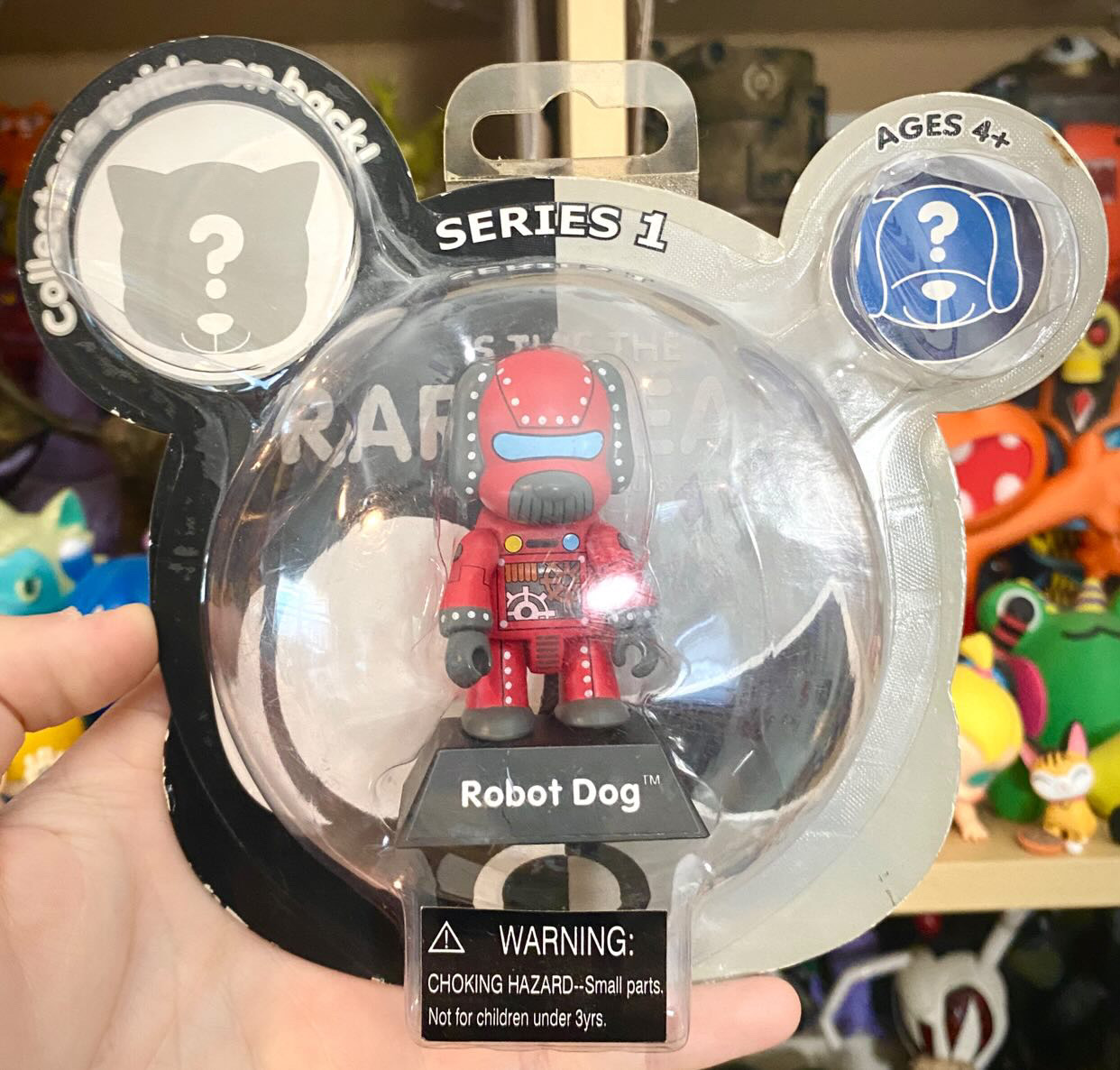
A photo of the toy2r qee that got Berella interested in collecting blind boxes/Photo Credit: Cooper Berella
“Toys can also teach us how to care for one another…the social aspect of trading and stuff like that, I think it can also teach us that being childish is okay,” Berella states. “There’s a lot of adults who kind of take themselves too seriously.”
“A lot of adults that you know they, they think they can just, you know, throw away their childhood…they have the societal pressure to become a different type of person, but toys, they kind of bring that sense of nostalgia and that sense of that childlike joy back to ourselves in a way that is very artistic.”
“I wish, sometimes, that I could start over again… kind of relive that wonder of getting into blind boxes for the first time,” Berella said. “Because it's such a wonderful feeling to just discover this weird thing, and then it just swallows up your whole life, you know? And you meet people through it, and you start building these lifelong friendships through it and it’s a beautiful thing. And again, I think anyone can do it.”