By: Nick Virnich
In an era of music dictated by algorithms, streaming services and digital downloads that come at our fingertips, one sound format known for its warm hiss and a reel of magnetic tape spooled with nostalgia and authenticity.
The cassette tape, not long ago regarded as a thing of the past, is experiencing a new resurgence thanks to young listeners, independent artists and even mainstream pop icons. Before digital audio, the portable form of audio that everyone owned was the audio cassette tape. Despite being a small niche now, the cassette tape is more prevalent than it was 20 years ago, when people were still listening to CDs and were thrilled by the inventions of the MP3 and iPod.
The cassette tape remains a pivotal invention for portable physical media and as a means of recording and distributing music. Despite being able to access most music through the internet, people are buying tapes once again – whether it’s from big artists like Taylor Swift, aspiring local artists or some old Bruce Springsteen albums.
Robert Fink, a professor at UCLA’s Herb Alpert School of Music, says that cassettes have a sophisticated framework that still makes them relevant today. “On the one hand, the music released on cassette tapes is pretty much the same as the music released on LP commercially,” Fink said. “But there are all kinds of activities that cassette culture enables, most of which pick up from this idea that this was originally a lower fidelity, more democratic [and] somewhat subversive way of taking music recording into your own hands.”
As we rewind through the history and creation of the audio cassette tape, it is time to now fast forward to look at the prevalence of tapes today and what their return has done within the landscape of music.
“In the world of people who talk and think about popular music and culture, there is a sort of romance of obsolete technology. It was sort of time for cassettes to come back, because they were the next thing after LPs, and the LP has been assimilated back into the music industry’s ecosystem. So now you can walk into Walmart and find a rack of cassettes somewhere, so that technology has been resurrected.” – Fink
The Past and Present of the Cassette
Introduced in 1962 by Philips engineer Lou Ottens, the compact cassette became one of the most popular formats for music from the late ‘60s until the early ‘90s. They were a cheaper alternative to vinyl and people gradually bought more as many different portable tape players became available to purchase throughout the decades.
Though the cassette faded into obscurity in the early 2000s, being replaced by CDs and then digital files, it is no longer just a vintage novelty. It’s gradually being brought to popularity again, both as a collector’s item and a legitimate format for new music releases.
Today, CD sales are still significantly higher than cassette sales, however, cassette sales have seen a recent resurgence. Despite cassettes still having a very small market compared to CDs, cassette sales are growing at a faster rate than CD sales, which are generally declining. While CDs still sell far more units, the percentage increase in cassette sales is higher due to their unique appeal.
Despite making up just 0.41% of physical music sales, cassette tape sales have grown steadily over the last decade. Whether it’s a Gen Z fan picking up a Charli xcx tape or a garage band releasing a new EP, the cassette is reestablishing itself not just as nostalgic memorabilia but as a meaningful medium to have in your possession.
I remember when I was a kid in the ’70s, the tape recorder that we took with us on trips where we played the Beatles’ albums on tape, was a machine that could have been used for dictation in the office. It was not a boom box. It was before the boom box. It was this thing that was designed to be laid on your desk, where you press the record button and speak into a little microphone. But we used it to play music. Of course, it was an incredibly lo-fi experience. The speaker was tiny and was mono, but we didn’t care. The cassette tape was multi-channel, but a lot of people just played it on whatever device. – Fink
The Cassette’s Comeback Story: How Cassettes Survived and Adapted
The National Audio Company, an audio duplication company that is the largest manufacturer of audio cassettes in the USA, was able to take advantage of the dwindling cassette tape market. Initially distributing for major tape companies, they began manufacturing their own tapes in 2016 when other manufacturers stopped production.
“We discovered in 2016 that all the companies making good music on great cassette tapes were quitting,” said Steve Stepp, NAC’s president. “That wasn’t going to cut it for music sales, especially when we were already working with major labels. They don’t want a murky, muddy-sounding tape.”
At the time of our interview, Stepp said he had recently gotten a call from one of the last manufacturers of CDs and said they are stopping in August of this year due to declining sales. “It’s awfully hard to predict what’s going to happen. You don’t know what the markets are going to do. You don’t know what new unforeseen things will happen. But the audio cassette has been very reliable, very stable and is still a very strong medium up there,” said Stepp.
Stepp believes the appeal of the cassette today is more about reliability and emotional resonance than mass-market convenience. And surprisingly, the cassette’s renaissance isn’t driven by those who grew up with them.
While cassette tapes have been experiencing a strong revival, it is not mainly within the generations – Gen X and Boomers – who grew up with them but rather younger generations like Gen Z and later Millennials.
“Who’s buying them? People 30 to 35 years old and younger,” said Stepp. “This is not a market for people who are 60 or 70. It is a market for people who have discovered audio cassettes again, just like they’ve discovered vinyl again. And that’s where the market is strong. That’s the people who are buying them.” -Stepp
According to data from Luminate, the top ten cassettes that were sold in 2024 were from contemporary artists who are popular across younger Gen Z and Millennial audiences. These include artists like Taylor Swift, Charli xcx, Chappell Roan and Twenty One Pilots. All three volumes of the Guardians of the Galaxy soundtrack also made the top ten list.
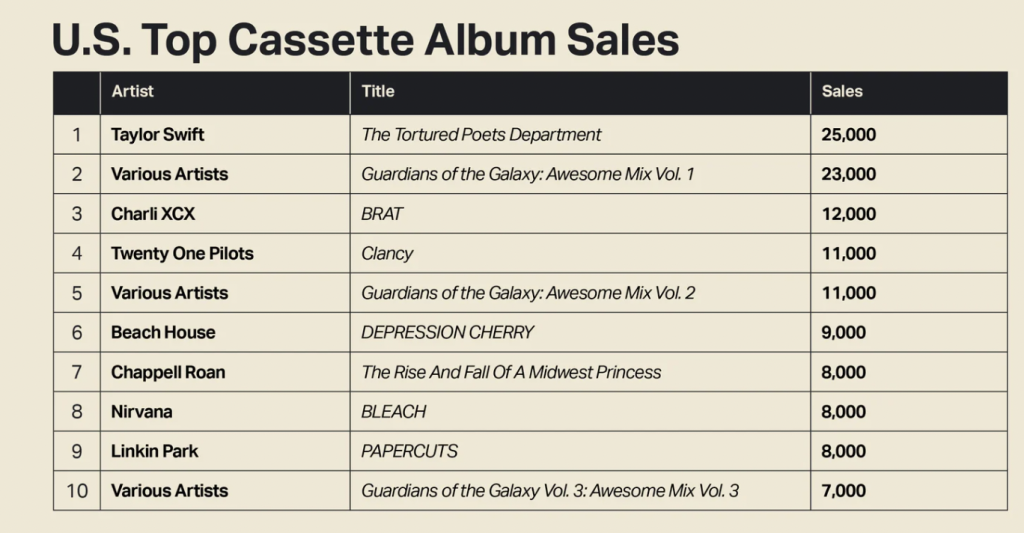
Today, the National Audio Company makes tapes for major label artists like Taylor Swift, along with smaller independent artists. In 2014, NAC was able to take advantage of the reintroduction of cassette culture through the Marvel film Guardians of the Galaxy by releasing the Awesome Mix Vol. 1 on cassette. “That was the first million seller since 1994 when we did that, so that was pretty impressive,” said Stepp.
The cassette release was made to be identical to the mixtape the main character Star-Lord played in his Sony Walkman throughout the movie and this helped expose younger generations to the portable music their parents and even grandparents grew up with.
“I mean, the Guardians of the Galaxy thing, that was a novelty. That was actually pure nostalgia and part of the appeal of the storyline,” said Fink.
Due to the rise in tape manufacturing and the return of tape players in popular media, cassettes are a lot easier to find now, whether you go to a Walmart, Target or your local record store. However, many people still wonder why people would choose cassettes as their preferred medium.
A Frugal ‘Fetishized’ Format for Fans and Artists
People collecting physical media today also realize that it is a more economical form of listening to music compared to other formats like vinyl. Danny Garcia, a local musician from the South Bay and business partner at Under the Radar Records, talks about how this trend is especially prevalent amongst younger generations, particularly those who drive older cars with cassette and CD players.
“I think a lot of it has to do with our current economic state, where a lot of kids our age – Zoomers, later millennials – all have old cars with cassette machines. It’s what we can afford, so that’s just to our accessibility,” says Garcia. “And not only that, [but] I think from a band perspective, it’s also a lot cheaper to manufacture them compared to the typical vinyl record.”
There are indie and punk labels that decide to make cassettes their primary form of physical media because some have managed to get a hold of the industrial equipment so you could make a couple hundred copies of a cassette in a short amount of time. Some record stores like Under the Radar have tape duplicating machines.
“If a band wants to bring us their tapes, we usually put them out. We also have a tape duplicator here at the shop as well, for anyone that’s interested in that,” said Garcia.
A lot of up-and-coming artists from various scenes today continue to promote and share their music via cassette tape. A lot of shows today at smaller, local venues will oftentimes have various forms of physical media for sale as merchandise, including cassette tapes.
“You could give it out or sell it to people after shows. And you could personalize it and you could do some things to make it have what you might call ‘fetish value,’” Fink said. “It can become a kind of merch, but you’re not handing out CDs. Why would you even do that, when you could just let people scan a QR code and just download your file?”
Aside from the economic and “fetishized” value for fans, the cassette’s analog warmth also provides a satisfying contrast to the sterile perfection of digital production. “Tape has always been my preferred platform for recording,” Garcia said. “It’s got a warm sound, a nice hiss and it really captures those sound waves without chopping them up.”
Artists who record and release their music on tape
One reason the cassette tape is making a comeback is because of its physical and analog aspects that benefit emerging artists in the indie world. Physical media is still a common way to support an artist, and the cassette tape is cheaper than a vinyl record, which makes it appealing to both artists and consumers. When you go to see a local artist today, you will occasionally see their records for sale on both tape and vinyl.
Fink believes that the cassette is here to stay, especially for the incoming indie artists who want to reach more people with their music. He believes that cassette tapes can be a good stepping stone for artists and part of their progression. Fink also acknowledges that there are many indie artists and labels that prefer to do it that way according to their own ideologies. He believes that they will still be an important utility for that process.
“The cassette itself as an object is not going to be just a fad, because I think there’s a place for it in the fandom environment of music. Especially indie music production,” says Fink. “LPs are back, but there’s never going to be home LP pressing, that can never happen. You can literally do it in your living room, and you don’t have to get anyone’s permission. You don’t have to convince anybody and you still retain enough control over the distribution so that you don’t feel like you’re just pissing into the wind.” – Fink
“The other thing is it’s something physical. A lot of the performers got the feeling that they were being robbed. They had trouble figuring out exactly how many copies of their album sold because they were just downloads,” said Stepp. “So a lot of performers like physical media, audio cassettes and vinyl records, because you can hold it in your hand. You can read the J-card on a cassette. You can hold it in your hand. You can trade it with your friends. And that has become kind of a cultural surprise.”
In 2016, during the height of the resurgence of cassettes, Garcia and his former band NOYES released their EP “Relapse” on the Inglewood-based label All Welcome Records in a limited run. The cover art was done by Steven Gullick, who shot photos of iconic artists like Nirvana, My Bloody Valentine and the Cure, bands that are an inspiration to Garcia.
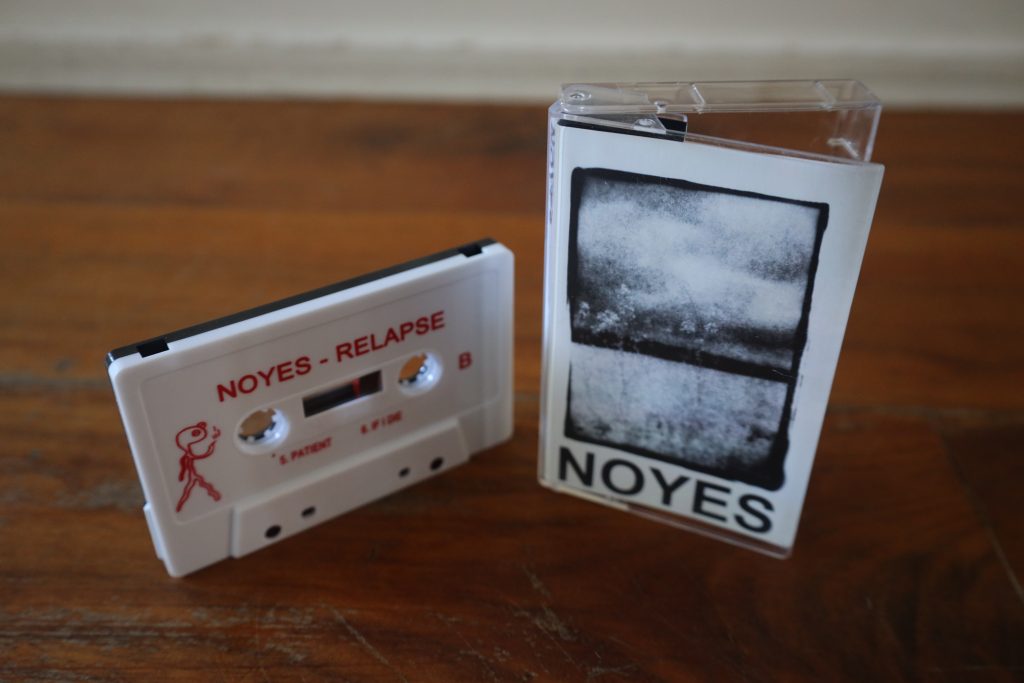
In an era where musical artists primarily produce and release their music digitally, the practice of recording music onto analog formats has also become a sort of niche practice. Garcia is someone who prefers making his music on analog formats like tape as opposed to producing it digitally with a program like Pro Tools.
The Analog Appeal vs. the Digital
The revival is not only related to cost or aesthetic—it’s also about sound quality and a deeper listening experience. “We say our ears are analog. The world around us is analog,” said Stepp. “When you listen to a digital recording like a CD, you won’t hear harmonics. You do it in an analog recording.”
Stepp mentioned how he spoke with someone who is an expert on guitar pickups and he explained to Stepp that digital recordings produce notes that have jagged edges and aren’t smooth due to the overprocessing of the frequencies. People will overprocess their digital sounds to the point where they lose their qualities.
Stepp and Garcia both emphasized how analog formats like tape force musicians to be intentional and present. “When you’re recording on tape, it has to be exact, it has to be perfect,” said Garcia. “You’re working with your limitations and making something that’s entirely yours. No filters, no undo button.”
Digital production, while convenient, can become a dead end. “It’s easy to get carried away on Pro Tools,” Garcia added. “When I started recording on tape, I didn’t have to worry about over-editing. The sound you get is what you get—and that’s real.”
“I like the analog approach, it’s kind of like trying to keep a dead art form alive that you don’t see too often. When you’re recording on a program, it’s very easy to get carried away by mixing up those signals and you add your own effects to it. It’s kind of like slapping an Instagram filter. But when you’re recording on tape, it all has to be real.” – Garcia
Garcia says that he personally likes the lo-fi sound of tapes with their hiss in the background. He believes that they do a really good job of capturing the sound waves he’s creating as opposed to an MP3, which would replicate the sound waves but then compress and chop them up through a laser. This, along with a disdain towards investing money and time to work in a studio, is what inspired Garcia to make his own analog tape recordings in his living room.
How Aspiring Artists Can Record Music on Tape
Since the late ‘70s, musical artists seeking to make their own home recordings have utilized cassette recording equipment like the TASCAM Portastudio. Garcia said that he got more into recording music on tape during the pandemic when it was harder to go to a studio and when he had more time to himself. From there, it became his preferred format.
Garcia said that he also doesn’t like the digital studio environment as much. Although there are more limitations and restrictions for recording onto tape, he feels that it is a more authentic and expressive way of recording music and it makes him appreciate his craft more.
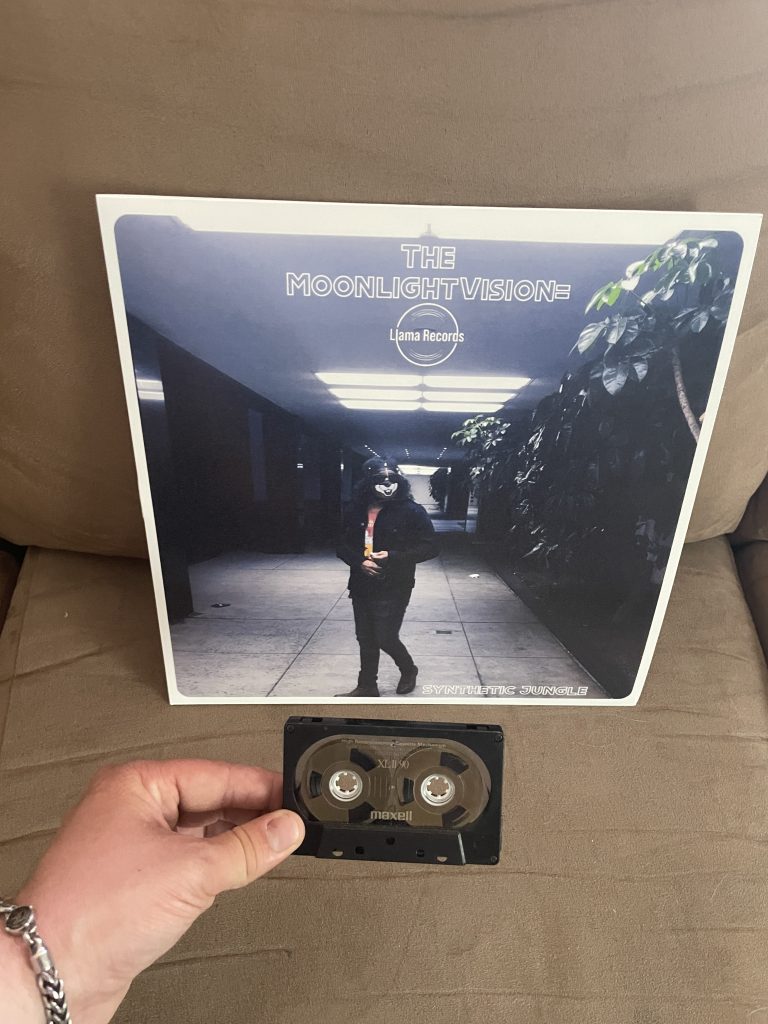
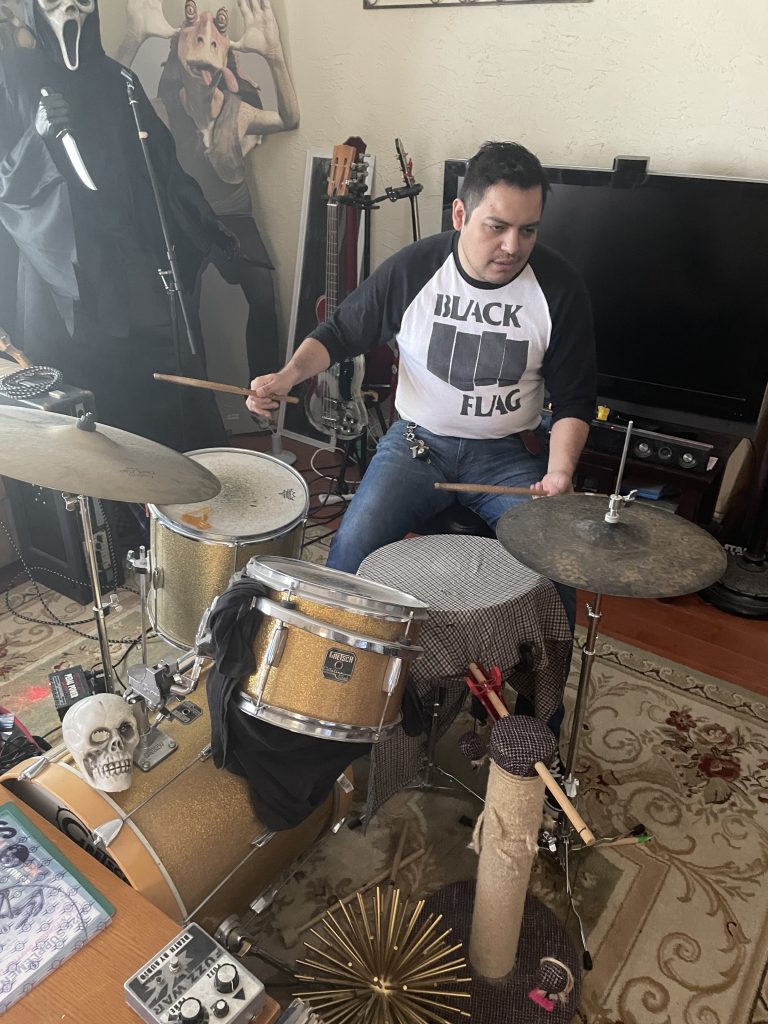
In 2020, Garcia began work on recording a series of songs that would end up on his debut album “Synthetic Jungle,” released 2023 under his label Llama Records with the artist name The MoonlightVision. The album was recorded at Garcia’s home in Lawndale on his TASCAM. He made all of the vocal and instrumental tracks himself, with the exception of a couple of friends playing on some of the drum tracks.
Garcia’s songs use sounds that feature strong bass lines, interesting synthesizer sounds, while delivering an indie, punk rock ethos and attitude. The songs from the album highlight Garcia’s wide array of influences including punk bands like Black Flag, the Beach Boys, the Wrecking Crew and Motown.
A typical cassette is usually split into four tracks, where there are two stereo tracks on each side. When a song is recorded, it goes in one direction, and then you flip the tape over and the remaining two tracks fill the space of that direction. Garcia explains that when he records on a four-track, that signal is being sent through all four tracks in the same direction.
“What I like to do is I record all my instrumentals through a boss BR-600 and I send the signals down to tracks one and two on on my on my TASCAM, and I record my vocals on three and four, and it kind of just glues together as it’s being recorded along, and before you know it, you have a finished song,” said Garcia.
When Garcia is not busy with Under the Radar and other projects, he likes to spend his time recording and listening to music in his living room. Within his musical sanctuary, you’ll find a collection of his albums – on cassette and vinyl – along with other forms of music and pop culture memorabilia, including a Ronettes poster over his turntable and the familiar cutouts of iconic “Star Wars” characters.
Cultural Impact and Symbolism
Tape for a long time was the primary format for recording music, whether in a professional studio or at home with your own tape recorder. “More often than not, a lot of the music you listen to was most likely recorded on tape,” says Garcia. “Not as often in recent years, but a lot of good classic records were done on tape. [And] I still record on tape.”
Before the cassette tape, the portable tapes we relied on were known as 8-tracks. The 8-track was first introduced in 1964 but had been phased out by the early 1980s due to the cassette’s rising popularity due to inventions like the boombox and portable cassette players like the Sony Walkman. The 8-track also had many technical problems as a format for listening to music.
“I’m not sure if you ever put on an 8-track, [but] midway through the song, it would cut off, and then it would kind of spindle through, and then it would restart the song somewhere in the middle of it. [Cassette] tapes didn’t have that issue. It was always a very simple, miniaturized reel-to-reel,” Garcia says.
By the time the 8-track started to phase out, cassettes were starting to reach their pinnacle through commercial album releases, competing with vinyl sales into the mid-’80s. Aside from the commercial albums, there was a widespread practice of making personal mixtapes on cassette tapes. Fink says that these mixtapes are the foundation for streaming culture and the digital playlists we create for ourselves today.
“All music culture is now cassette culture; Spotify was actually pioneered on cassette tape. The idea that I’m going to make you a playlist, you couldn’t do that with records. A lot of those functions are just now built into Spotify and things like that. Everybody does that all the time. There’s a way that certain aspects of the cassette have become just the way we do things, and they’ve been totally separated from the physical medium.” – Fink
Some of the very distinctive things that you can only do with cassettes, you can now do them with Spotify, Apple Music or literally just a folder of MP3s on your computer. You can now do that without really owning anything.
The fad of making mixtapes involved a whole culture of music nerds who made the perfect mixtape as a kind of artisanal skill. This is also what paved the way for a lot of genres of music, most notably hip-hop, which pioneered within the urban inner city environment in America.
“In hip-hop, the mixtape was actually an acceptable form of becoming a kind of recording artist by effectively mixing in your own stuff with other people’s stuff,” said Fink. “And then release a mixtape with the idea that it would be like a professionalized version of the thing that people would have themselves made and put in their boombox.”
Fink also alluded to other musical movements, such as the Grateful Dead along with other jam bands, and how the practice of fans recording and trading mixtapes from live shows created entirely new libraries of music.
“Think about Grateful Dead fans, and their whole trade of mixtapes and recordings,” Fink said. “There’s nobody following the Grateful Dead around anymore because [many of them] are literally dead, but people who are following jam bands around and interested in trading home recordings, they’re now just putting them up on websites. They’re not necessarily involved with tape. They just do that using the same technology we all use.”
Stepp talked about the enduring popularity of audio cassettes, highlighting their historical significance in Poland during Russian control. He recounted how Polish public television staff shared that cassettes were a symbol of freedom, as they could be easily smuggled and used to disseminate information behind the Iron Curtain. This anecdote underscores the unforeseen impact of their product on global events.
“The people from the Polish public television were here and they said, ‘Do you realize the emotional attachment that Polish people have to the audio cassette? It’s our freedom,’” said Stepp. “That’s how they transmitted information back and forth behind the Iron Curtain. So you never know; that’s one of those things [where] it took me about 20 years after that happened, before I heard it. It makes you think about what you are in fact really doing.”
“The fetishized object idea that people like to collect things, and then the idea that recording technologies, where the recording possibility and power is given to the consumer, are actually inherently subversive, and people tend to remember them and keep them alive until they’re needed again. As a way that they’re sort of like viruses that lay dormant until the moment where it’s like, ‘Okay, now we need this.’ And it comes out and it starts reproducing and subverting things. I mean, it’s possible that people will someday think, ‘Well, we needed some of that subversive resistance energy during the Trump era, that’s why that happened.’” – Fink
Fink says that despite their low fidelity, cassettes are valued for their unique sound and cultural associations, especially in hip hop and punk music. They highlight the subversive nature of recording technologies that allow consumers to control and distribute music, contrasting this with the one-way communication of mass-market formats like vinyl and CDs.
As younger generations continue to be influenced by the “fetishization” of physical music formats, the cassette tape will likely continue the act of reification in music culture. This may imply that cassette culture reflects a desire for tangible connections to our everyday music.