

It’s 9 a.m. and Spanish music is blasting through the walls of New Sunrise Adult Day Health Care Center. Just next to the stereo, a Haft-Sin table – a set-up of decorations and offerings for Nowruz (Persian New Year) – sits on display and an array of flags hang from the center’s ceiling. A sea of 75-85 year-olds have already made their way to the dance floor. Participants who haven’t rushed to break out their best moves mingle at their tables, waiting for breakfast to be served. It’s a liveliness that this senior population might’ve missed out on had they chosen to stay home.
“Sometimes when I wake up in the morning I say, ‘Oh god I don’t want to [get up],'” said Maria Escobar, a New Sunrise participant. “But as soon as I start to think about how it is here, I get up and get ready to come.”
Escobar is a 73-year-old immigrant from El Salvador. After complaining of her loneliness from staying home, her daughter surprised her one day by randomly dropping her off at the center. She’s since enjoyed games of musical chairs and bowling, and you can find her sitting at the same table every day, laughing with the friends she’s gained since being here. “I never had any idea of a place like this,” Escobar said.
The National Adult Day Services Association defines adult day services as, “a system of professionally delivered … services provided to individuals to sustain living within the community.” These services differ from assisted living in that their institutions provide care for less than 24 hours, allowing them to be a more affordable option in the world of long-term care facilities. Genworth’s Cost of Care database reported that the median daily rate for adult day care facilities in the U.S. was $101, making them significantly cheaper than homemaker services ($201), in-home health aide care ($220), assisted living ($187) and residential nursing homes ($302- $339 depending on the type of room), according to Senior Living.
This affordability lends itself to how adult day care centers show up for communities of color. 60% of people who use adult day care centers identify as people of color, according to the U.S. Centers for Disease Control and Prevention, making them the most racially diverse long-term care setting.
“These centers have done an extraordinary job of catering to the cultural preferences of these populations,” said Dr. Tina Sadarangani, an assistant professor at New York University and a lead researcher of adult day services. “They typically tend to function as microcosms of their neighborhoods or like communities within communities. If they’re located in an ethnic enclave that’s disproportionately, let’s say, Latino, the center is going to have staff that speak the language, lunch that aligns with their preferences, and games that they’re used to.”

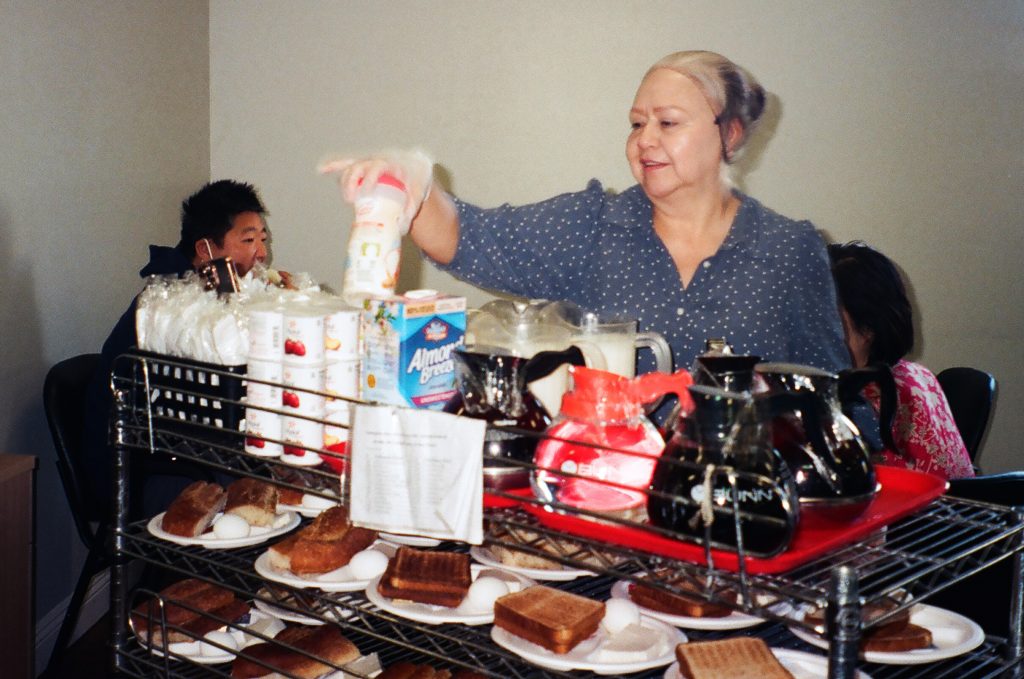

(Photos by Veronique Louis-Jacques)
New Sunrise opened in 2004, just before California’s moratorium – a one-year ban that prevented new adult day health care centers from opening. While New Sunrise began under an Armenian couple – with the center’s name even being translated in Armenian on the front of the building – the center has expanded to represent a wide variety of cultures, primarily catering to three cultural populations: Persian (50%), Hispanic (40%), and Asian/Indian (5%). “You don’t choose the population, the community chooses,” said Lena Haroutunian, program director of New Sunrise since 2016 (after taking over the role from her parents).
To accommodate these different groups, the center prides itself on conducting activities in different languages and hiring staff that is reflective of the populations they serve. Aside from English, bingo sessions are conducted in four additional languages: Farsi, Punjabi, Spanish and Armenian, and English classes are taught by participants and held throughout the week for the dominant cultural populations, Hispanic and Persian.
You don’t choose the population, the community chooses.”
Lena Haroutunian
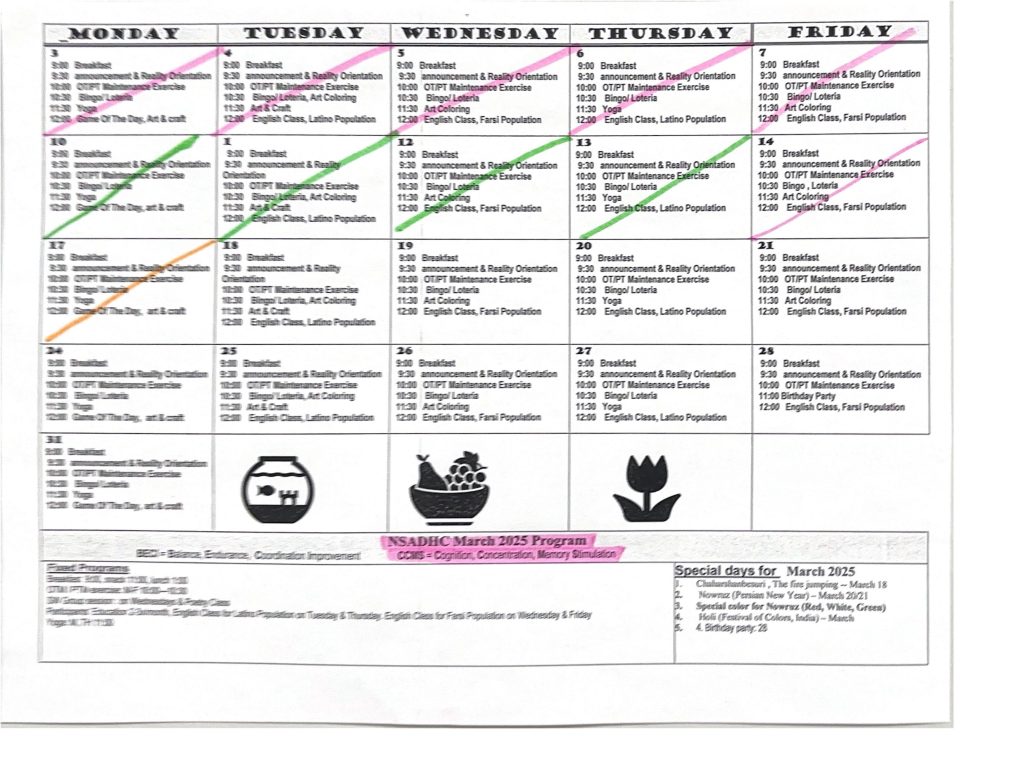
New Sunrise’s calendar for the month of March. (Courtesy of New Sunrise)
Adult day services fall under two types of licensed settings, according to the California Department of Aging: Adult Day Programs (ADP) and Adult Day Health Care (ADHC), to which New Sunrise identifies as. While both seek to provide some form of community, Adult Day Programs are solely concerned with providing aid with “personal care, activities of daily living, and/or supervision for a participant’s protection,” while Adult Day Health Care facilities provide aid for those who need more medical assistance, serving “ frail older adults and younger adults with chronic disabling medical, cognitive, or mental health conditions who are at risk of institutional placement.”
Government officials and medical care providers often misinterpret the influence that adult day care centers can have on the aging population, undermining them as services built purely for socialization. Yet the services these centers provide extends beyond a game of bingo or dominoes, providing critical health services to those in need.
At New Sunrise, core services include case management provided by social workers, health services provided by the nursing staff, physical therapy and access to dieticians, pharmacists and transportation.
“We want to make sure that they don’t go to nursing homes or hospitals,” said Lori Barsoumian, New Sunrise’s charge nurse. “We’re relieving caregivers from exhaustion… because we’re taking care of [these individuals] between our program hours of 9 a.m. to 2 p.m.” Barsoumian has worked at New Sunrise for the past three years and has witnessed first hand the impact that adult day care centers can have on the aging population.
Each morning, Barsoumian and her team check the vitals of the center’s participants. Their main priority is monitoring the participants throughout the day, so that any health concerns or abnormalities can be properly taken care of. As the individuals that see them the most, the nursing staff is in constant communication with the families and primary caregivers, providing necessary health updates. In some instances, Barsoumian and her team have had to handle extreme emergencies (i.e. strokes), stabilizing the situation and contacting the proper channels (paramedics, family members, etc.). “[It’s the] same way I send my kids to daycare and I know that they’re safe and… in a good place,” said Barsoumian. “That’s exactly how my patients’ families feel like. Their parents [or grandparents] are being dropped off and they’re in good hands.


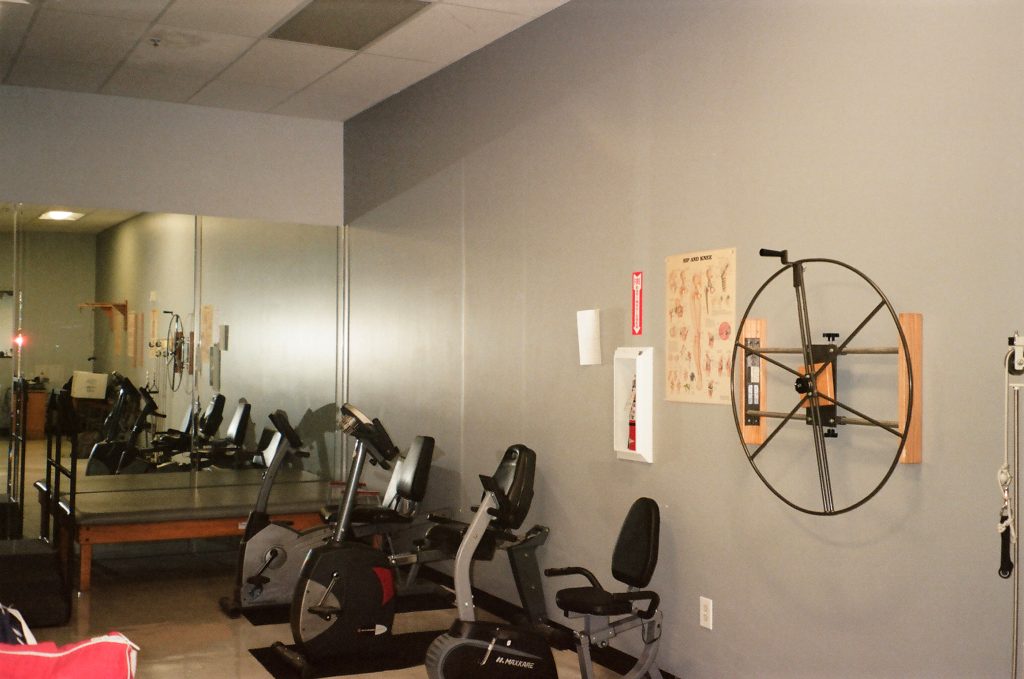
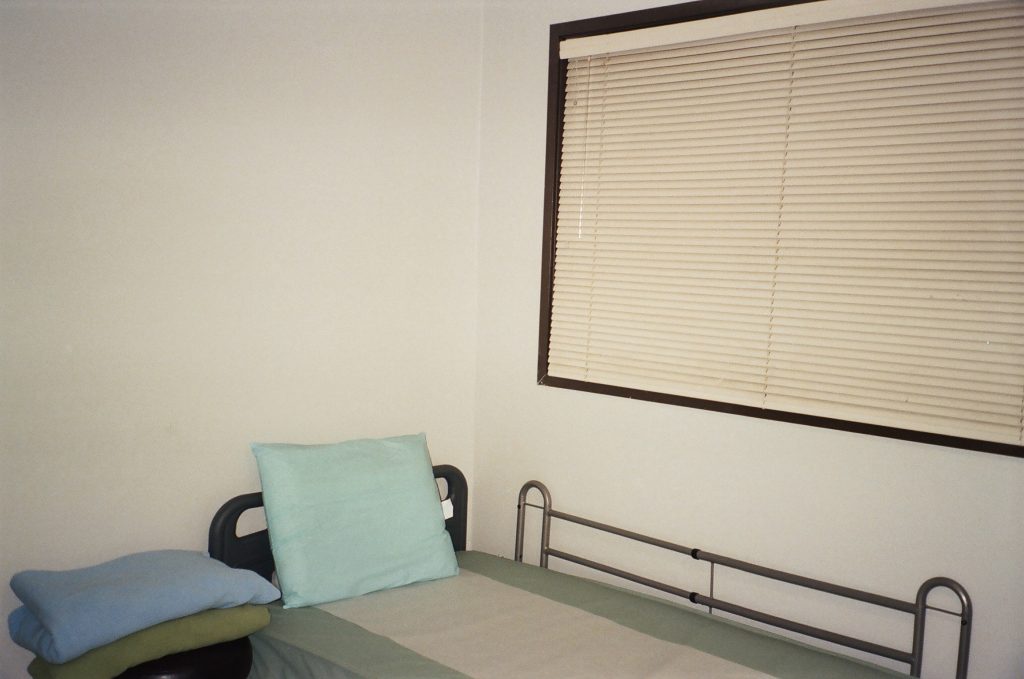
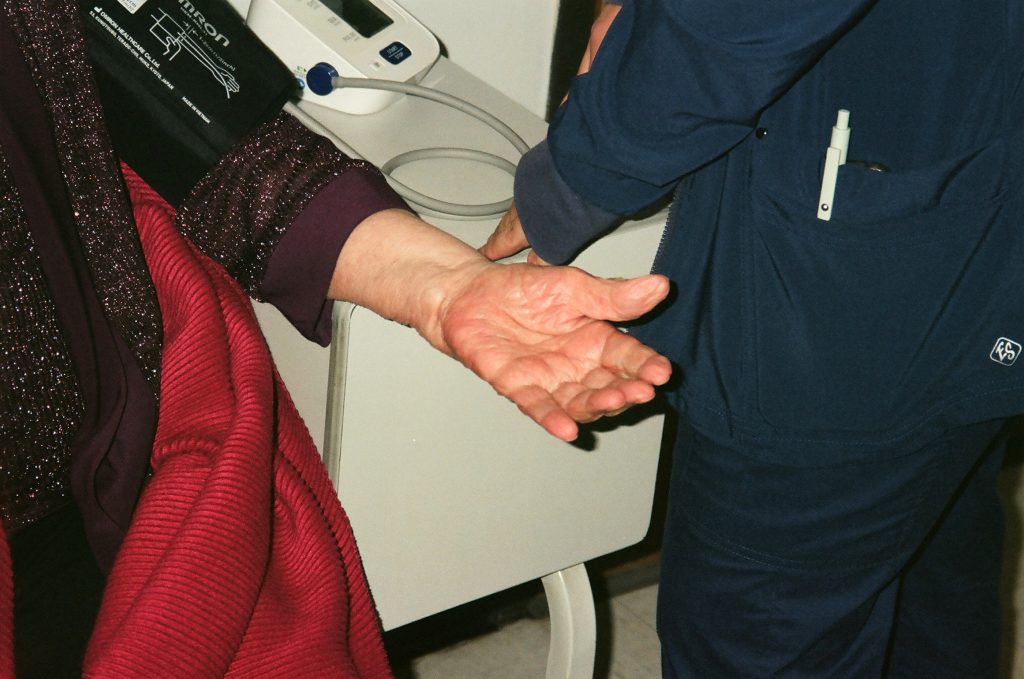
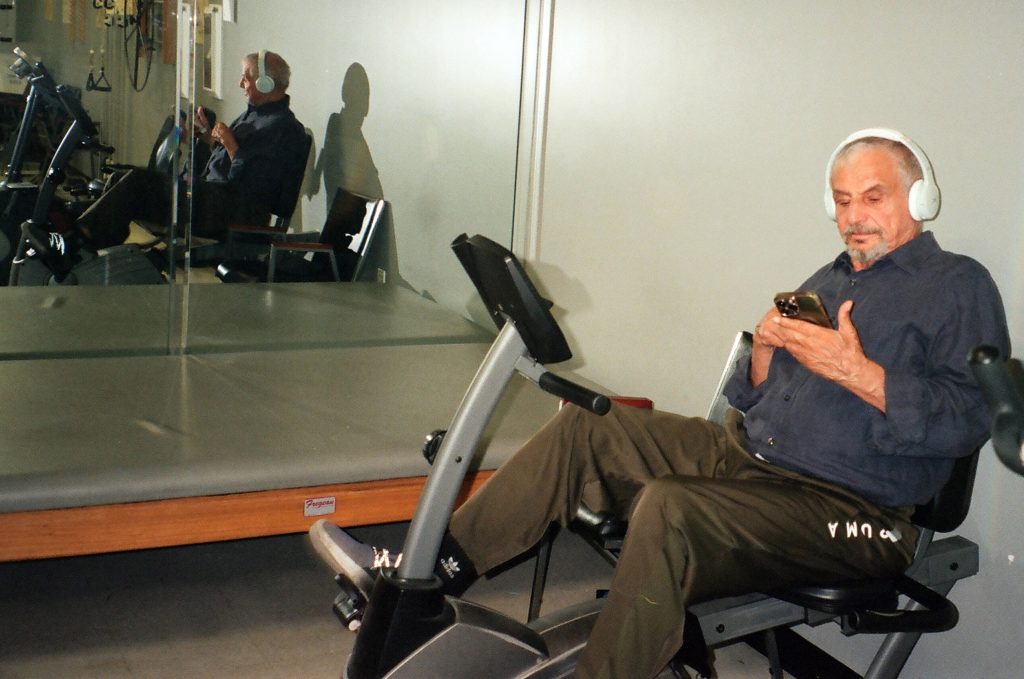
New Sunrise offers a wide variety of health services, including daily blood pressure monitoring, insulin checks and physical therapy. (Photos by Veronique Louis-Jacques)
However, it’s important to give those domino games some credit, as the socialization of these individuals is a crucial part to maintaining their health and overall wellbeing. Research has shown that social isolation amongst the older population increases their risk of physical and mental illnesses like Alzheimer’s, obesity, high blood pressure, anxiety and depression, according to the National Institute of Aging. It is the social aspect that distinctly separates adult day care centers from nursing homes, or even assisted living facilities that might not enforce that same sense of togetherness.
Ali Moore, a 76-year-old Persian participant, returns to Cedars Assisted Living each day after attending New Sunrise’s programming and notes the differences between the two. ““It is completely different,” Moore says. “When I live over there, I sleep every day. I have my own room, my own bathroom… When I come over here, they have exercises and sports and things like that.”
As participants returned to the center following the COVID-19 pandemic and two years of social isolation, Haroutunian was left shocked by just how drastically the health of her participants had declined. “Yes, naturally someone can say, ‘Well they got older,'” Haroutunian said. “But we’ve been operating for 20 years and have participants who have been [coming] for 20 years. The drastic decline we saw in those two years, we’ve never seen before. So, the social component goes hand-in-hand with the health care component, where both of them together are very necessary for our programs.”
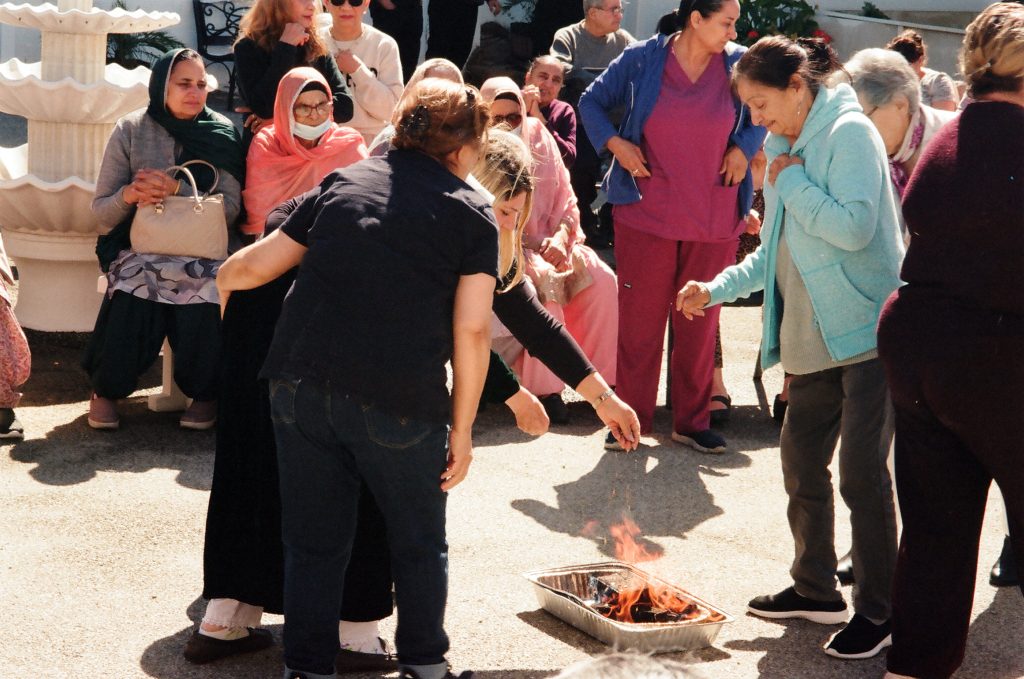
In honor of Nowruz, New Sunrise participants and staff partake in the Chaharshanbe Suri, also known as the “Festival of Fire”. (Photos by Veronique Louis-Jacques)
While California has the most adult day care centers – 302 operating centers as of 2024 – these numbers don’t represent how many of these centers struggle to stay open. “An overwhelming majority are at risk of closure,” said Brian Rutledge, the newly appointed Executive Director of the California Association for Adult Day Services (CAADS).“If something big happened to them, if their HVAC system or some random thing busted, they could literally close down forever.”
Haroutunian knows of this struggle all too well, as looming payments have led to multiple conversations surrounding New Sunrise’s capability to remain open. “There was a point where we had to get multiple loans back to back just to survive [and] I’ve spoken to multiple centers who are in the same boat,” Haroutunian said.
Part of this struggle is due largely in part because of care plan system changes, resulting in delayed payments from participants. In L.A. County, adult day care centers are required to contract with five or six managed care plans (aka insurance companies). Managing all these care plans simultaneously makes it extremely challenging for the operators of these centers. “They have different timelines, they have different paperwork, they have different everything.” Rutledge said. “So, you have to do everything like five or six times just to exist day-to-day.”
Since 2012, for every five centers that have opened, three have shut down, according to Rutledge. This is largely due to lack of funding and government support, as 97% of participants who attend adult day care centers in California pay through Medi-Cal, relying on the state for funding. Through their “Raise Our Rates” campaign, CAADs has spent the last two years advocating for the state to raise the amount of money given to adult day care centers, as 90% of these facilities are operating within a regular deficit (they are not gaining income).
(Courtesy of CAADS)
In July 2024, the Department of Health Care Services raised the published CBAS [community-based adult services] rate for the first time in 15 years – a 10% increase from $76.27 to $83.90, according to CAADS. But Haroutunian, a board member of CAADS since 2020, and many others believe this is still not enough. CAADS continues to advocate for a raise in rates and is currently lobbying for three significant rate increases: $107.49 in July of 2025-26; $121.67 in 2026-27; and $138.26 in 2027-28.
Despite being the most affordable and racially diverse, adult day care centers remain the most underpopulated out of all the long-term care settings. Rutledge hopes that people become more informed on the services adult day care centers provide, noting a lack of awareness as one of the reasons for the decline of adult day care centers across the country. “You’re a person whose parent suddenly has a stroke or gets diagnosed with Alzheimer’s, and you’ve never thought of that before,” Rutledge said. “The problem is not a misconception about what we are. It’s the fact that we’re not even on your radar.”
Hear from a few other centers that make up Los Angeles County.
As the clock strikes 2 p.m., the volume of the stereo goes down to zero, and participants are led outside to their designated transportation, Haroutunian rushes to tell me the story of a participant who I didn’t meet.
Home alone, he’d fallen, broken his hip, and was taken to the hospital. Upon arrival, he was asked to give the phone number of someone the medical staff could call, but only one number came to mind.
It wasn’t his child’s. It wasn’t his friend’s. But instead, it was from the center that had become his home.
Haroutunian and her team had spent that entire afternoon contacting his family members and providing information on the participant’s medical history. “This is not our job.” Haroutunian says. “My responsibility is not that, but we do it.”
“You could serve anyone a meal, …or have a nurse on staff,” Sadarangani said. “But you have to make these people feel a deep sense of connection that if they’re not there, they’re going to be missed.”
The Participants of New Sunrise
Three participants share how they heard about New Sunrise and how their lives have changed since.
Click below to see how New Sunrise participants and staff members take up each space.
Click here to learn more about the adult day services provided in Los Angeles.