FROM THE GROUND UP
Finding alternate building materials for reconstruction
using old-world solutions.
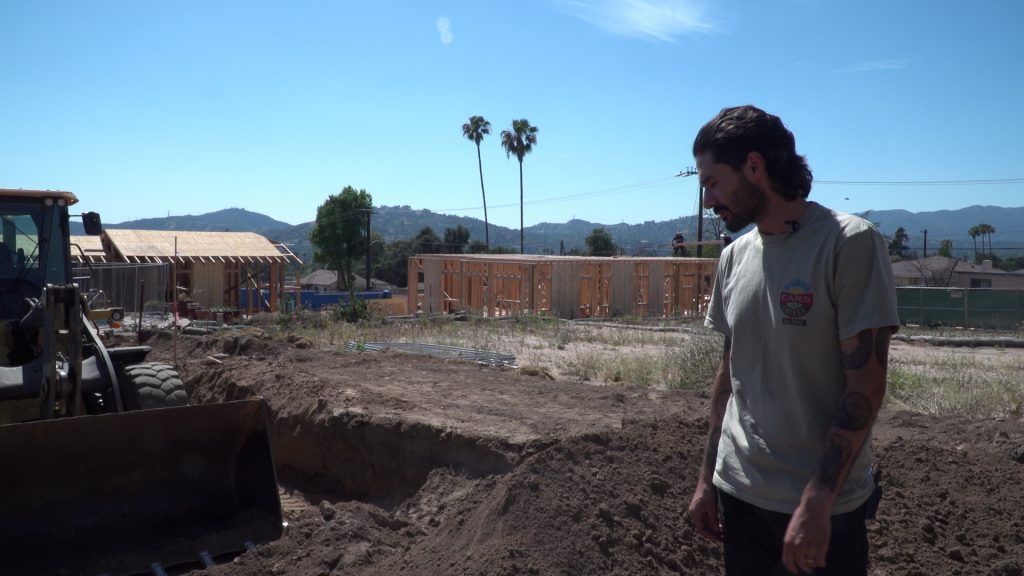
Three years. That’s how long Maxwell May and his wife Lauren Ward had their house in Altadena until the Eaton fire destroyed it in January of 2025.
Along with their two dogs, they fortunately evacuated before the fire destroyed their home. May, a General Motors engineer designing self-driving cars, returned soon after the dust settled to search for anything that survived.
“Once we found out the house was gone, we went through this really bad rollercoaster of emotions when we came back,” said May. “You go through these really big ups where you find something and you’re like, ‘Oh, cool. This is something that I thought I had lost.’ And then you realize, ‘What am I going to do with this? This is all technically trash.’”
Although the structure collapsed and burned down most of the house, May was surprised to find several pieces of his father-in-law’s pottery intact. Unlike the house’s wood framing and stucco, most of the pottery was made of clay at high temperatures in a kiln, allowing it to endure the Eaton fire, a small miracle amid a devastating event.
That durability isn’t unique to pottery. It’s a property of clay itself, one that early settlers of Los Angeles used for centuries in construction methods like adobe.
Many homes in Altadena remain in ruins following the January 2025 LA wildfires. Altadena, a historically Black neighborhood in LA County that has since become ethnically diverse in the past few years, lost about 9,413 buildings destroyed or damaged.
When one of the few things that survives a fire is pottery made out of a seemingly banal and trivial material like clay, a question might come up during reconstruction: What if a home were made entirely of a fire-resistant material? And in a community like Altadena, where previously safe areas were redrawn into high fire-risk zones, the preventive element is especially appealing.
A year later, reconstruction in the Eaton fire burn area is slow. According to the LA County rebuilding dashboard, 2,776 building plans have been approved, 1,346 are currently under construction and 45 are complete as of early May. Thousands of rebuilding efforts are still in progress across the fire-damaged area, assuming residents did not sell their property.
As residents begin rebuilding, some architects and builders are asking whether the materials used in LA homes should change. In the wake of the destruction, locals and experts alike began weighing alternative, fire-resistant options to concrete and other traditional building materials.
“After the fire, the community in Altadena really came together in their will to change. To build differently,” said Rohan Guyot-Sutherland, a regenerative practices builder and professor at Cal Poly Pomona. “And the local government has not been receptive to that at all.”
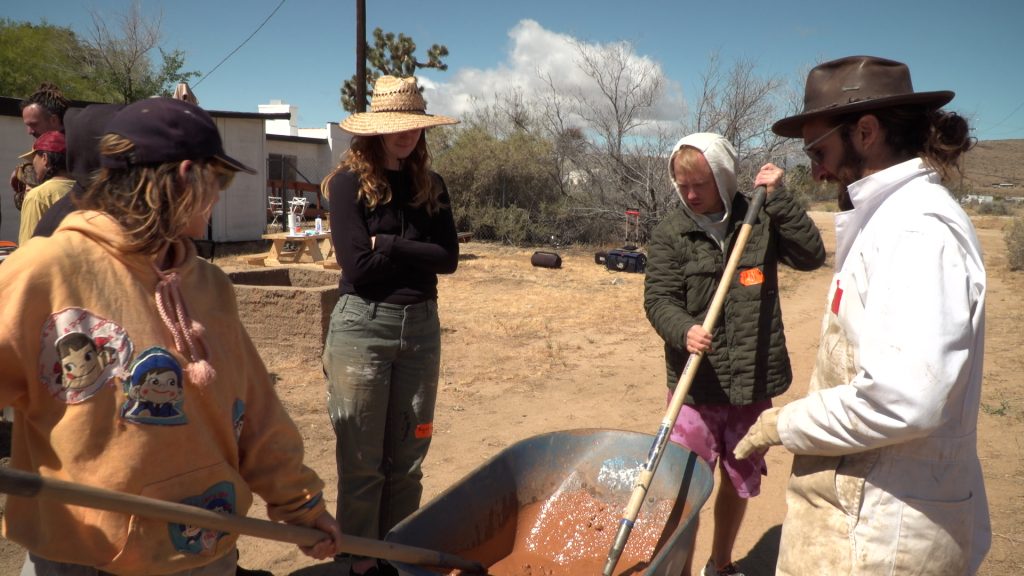
Compared to plywood and timber framing, earth-based materials like adobe and cob have natural insulation that helps them withstand heat. Guyot-Sutherland, who lives in Altadena, has years of practice with these clay-based building materials.
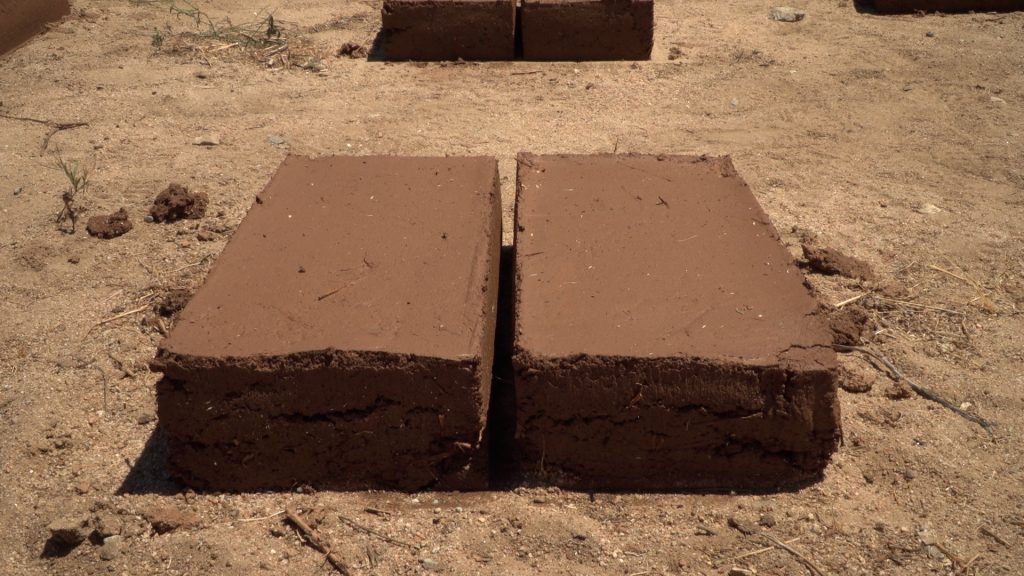
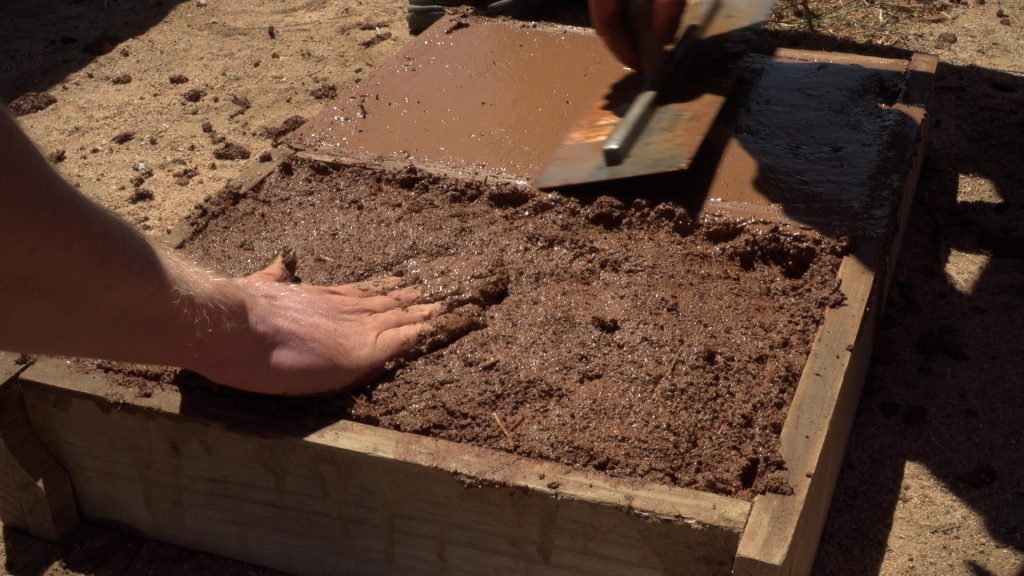
While made of similar ingredients, earthen materials differ from one other in small nuances. Adobe is similar to cob, both being primarily made of the same clay as May’s father-in-law’s pottery. The difference between the two is their construction. Adobe attains its brick shape by mixing soil into water and using straw to form the structural paste. Cob, on the other hand, is made to be more mouldable and free-flowing in shape.
In addition, Guyot-Sutherland points to light straw clay, straw bale and hempcrete as recognized practices approved by the International Residential Code (IRC) and California amendments. Aside from fire resistance, these materials offer other pros, including sustainability and non-toxicity.
“The heat takes so long to move towards the inside that the houses stay fresh during the day,” said Guyot-Sutherland. “And then, when it’s getting colder outside, that heat has now made it to the inside and is able to keep you warm at night…It’s not just insulation as a barrier. It actually functions more like a battery.”
But fire resistance is only part of the equation in Southern California. One caveat to adobe structures is their vulnerability to earthquakes. Due to their large mass, high school-level physics is these clay-based buildings’ greatest enemy.
More specifically, Newton’s Second Law of Motion: Force = Mass × Acceleration. In other words, the density of earthen structures means there’s more damage to be dealt. Wood is also subject to F = ma, but its ductility allows it to flex in the face of an earthquake. Adobe, on the other hand, collapses like a house of cards.
Cost and speed also shape rebuilding decisions. Anthony Dente, vice president at the Cob Research Institute, is involved in ongoing conversations to allow adobe, cob and similar materials to be used for construction at the county level.
Dente, who was the lead engineer in the United States’ first monolithic adobe building approved by the IRC, says most county officials are reluctant.
“They are not going to budge on their existing bar for seismic compliance,” said Dente. “This material is non-proprietary, and there are just a few of us who are passionate about adobe…Alternative materials attract alternative people, and their projects die for alternative reasons.”
He added that within the small, somewhat underground world of professionals and hobbyists interested in earthen materials, there’s a saying when it comes to adobe: “It’s for the very rich and the very poor.”
The material’s niche popularity is not the only thing holding back its potential. IRC regulations can also get in the way of homeowners hoping to prevent another fire from destroying their homes. Traditional building materials like plywood are the standard because they’re fast and inexpensive to use – especially after a devastating wildfire.
California is taking measures to expand wildfire hazard zones and make fire-resistant materials required in some areas. But pressure from local and national officials leaves homes outside of the immediate fire-risk zone more prone to speedy construction efforts rather than careful construction with wildfire in mind.
Ben Loescher is the founding principal of Terrain, an architecture firm with experience using adobe. Like Dente, Loescher is currently working with the LA County Department of Public Works and the City of LA Department of Building and Safety, the two departments responsible for planning and issuing permits.
His interest in adobe emerged in 2008 during time spent in New Mexico. After working on what would become Google’s Mountain View headquarters, he enrolled in an adobe construction program and fell in love with the material. As a proponent and champion of adobe who offers classes open to the public, Loescher believes, “If you can prove that it can be done in California, then that should be significant evidence that it can be used in other parts of the country.”
Access to adobe is limited by county officials who are open to the material and public awareness of the materials’ enduring quality in the face of natural phenomena like wildfires. Echoing Dente’s experience, Loescher often comes across a specific type of contractor when it comes to earthen-based projects.
“Not to generalize, but I’ll generalize. A white dude in an $80,000 pickup truck that’s spotless is the person that you’re talking to to get the bid or the quote,” said Loescher. “He’s like, ‘Well, I don’t know, adobe’s really hard to work with. It’s going to be really expensive.’ I would say about half the time it turns out that they’ve got somebody on their crew who grew up in Jalisco or Oaxaca, [Mexico] that can say, ‘Oh yeah, I grew up in an adobe house.’ Or, ‘I helped my uncle build his adobe.’”
These materials are not unique to Mexico. If anything, they are proven solutions integral to LA’s development. The Tongva people, Southern California’s primary Native American tribe, used similar methods. But it was the Californios who built adobe houses in and around what would become downtown LA.
The city’s history and growth can be traced through streets named after Californios like Sepulveda Boulevard and Los Feliz Boulevard, named after Francisco Sepúlveda and José Vicente Feliz, respectively. In fact, the longest-standing building in LA is the Ávila Adobe, which was built in 1818 by Francisco Ávila, the alcalde, or mayor, of LA when it was El Pueblo de los Ángeles.
Charles Weber, president of the San Fernando Historical Society, gives tours at the second-oldest adobe residence in LA County, the Andres Pico house. Before, houses like it were essential in founding a city. Nowadays, the opposite is true.
“Why are we getting away from what is tried and true? And could last probably longer than most of the buildings we have. Well, part of it, too, is probably the cost,” said Weber. “I mean, it’s very labor-intensive to make those bricks.”
In the case of the Andres Pico adobe, the bricks used in the house’s original construction were laid with little to no mortar. A window on the side of the house shows the original adobe layering, where the bricks are “basically just slapped on top of each other,” according to Weber. Today, the rigid guidelines needed to build such a structure would need careful planning and people familiar with the material.
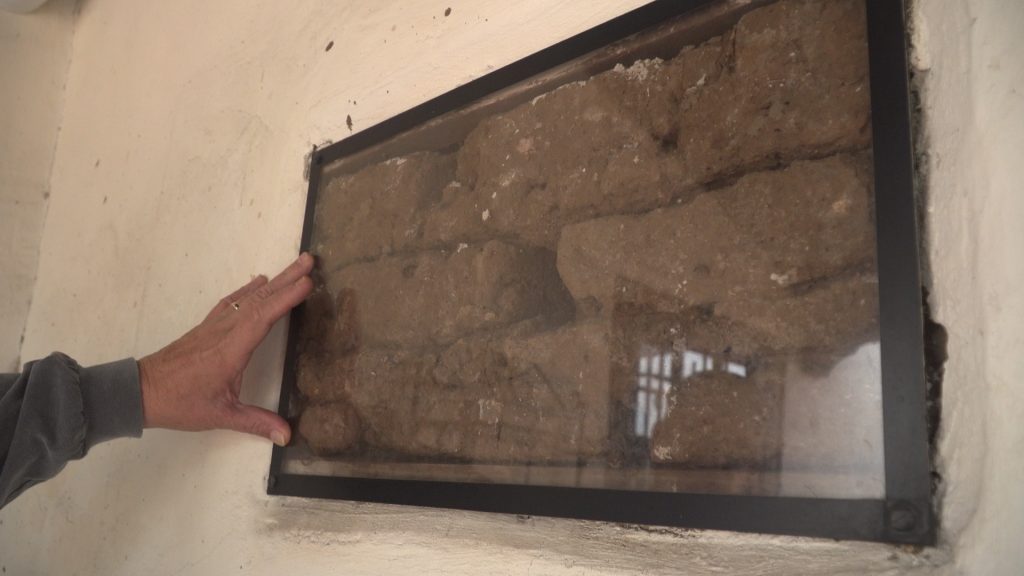
Still, adobe and other earthen materials offer more than a history lesson. Weber and a tight-knit group of volunteers at the San Fernando Historical Society offer adobe-making classes for elementary students, where children make bricks by hand. Despite not being as popular as it once was, Weber thinks the material’s durability is important to consider in the modern day.
“I think what it comes down to, as far as adobe is concerned, is what can it withstand? Well, it can withstand water as long as it’s coated,” said Weber. “It can – to a certain extent – handle an earthquake, if it’s not anything bigger than a 6.0. And it’s something that will hold up better [against] fires and other elements.”
Beyond regulatory hurdles, builders also emphasize the tactile and cultural experience of working with earthen materials. Guyot-Sutherland, the natural builder, had a similar experience when teaching a cob-making class in Chile. One volunteer was initially skeptical about using the material. After convincing him to get in the bathtub and mix the cob himself using his hands and feet, he noticed the volunteer’s demeanor relax.
“There’s something really wonderful [about] working with the materials, mixing them in your hands,” said Guyot-Sutherland. “It’s probably something ancestral inside of us that’s just so used to it. Because all around the world, we did use these materials before. When you do the work, it allows your mind to wander.”
For May, the Altadena resident, simply finding the clay pottery was a small bright spot in the aftermath of the Eaton fire. From there, the building process has been, “faster than expected but slower than preferred.” Although progress to normalize adobe and other earthen materials is slow, the devastation has opened up the conversation around reconstruction.
It’s not about introducing new methods. It’s about giving people alternatives that already exist but are unaware of.