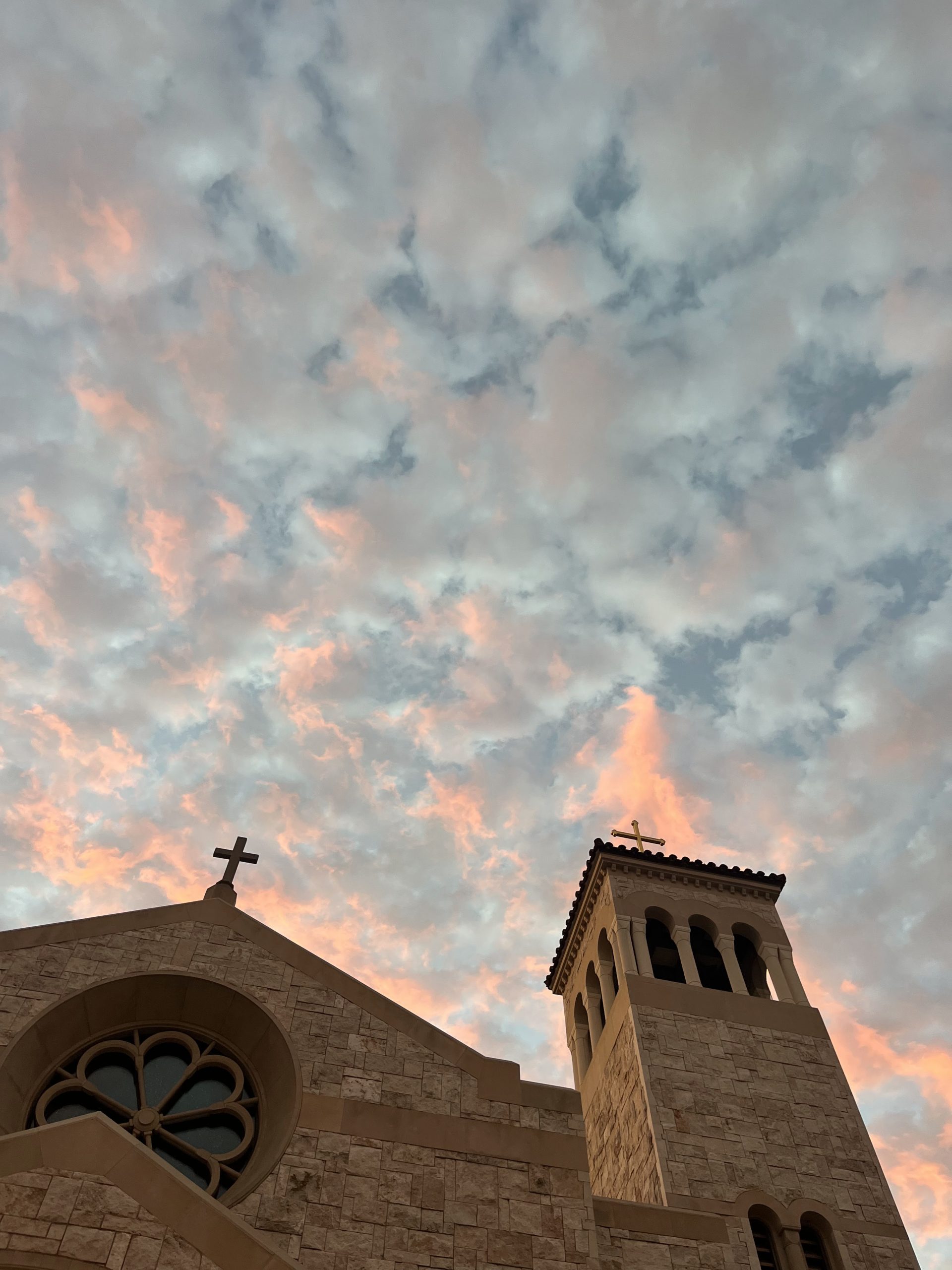
The Rise of Generation Z Catholics
Generation Z is often described as the least religious generation in American history.
Fewer young Americans identify with organized religions than ever before. Many churches have seen declining numbers, and the number of people who are religiously unaffiliated is higher than ever before.
Although this is true. There are larger trends within these numbers.
There has never been a time in America when a generation is more Catholic than it is Protestant. In a generation that often shows skepticism towards institutions, many young people are flocking to the oldest institution in the world, the Catholic Church.
David Albertson, Professor of Religion and Philosophy at the University of Southern California has kept up with the recent data.
“Yeah, I’ve seen the numbers, it’s national, it’s wild.”
“I think, unlike my selfish generation and the even more selfish boomer generation before us, I think young people today really want to be part of something bigger that goes beyond themselves. I think that’s, like, a generational impulse.”
According to data from the 2023 Cooperative Election Study conducted by Harvard University, 21 percent of Generation Z consider themselves Catholic, while 19% identify as Protestant faith.
“I’ve noticed more people my age asking deeper questions about purpose, identity, and belief,” said USC grad student Mary Caulfield.
Why now? The shift raises important questions about faith, identity, and religion in the digital age. The appeal lies in the sense of stability for some. In a fast-paced world full of social media, division, and secularism. Hoping to find identity in one of the oldest traditions in the world.
Diego Liberato, who was raised in a non-religious household, is starting his faith journey into the Catholic faith.
“I noticed a lot of areas where I was struggling as a man. I wanted to seek something that could ground me as an individual.”
He has even inspired some members in his family to maybe give the Church a chance. “Something that warms my heart is that my sister seems out of all my family really intrigued in following in my footsteps. He added. “My Dad has been taking her to mass every now and then. I hope my whole family can one day follow in the faith.”
“I think in particular young men are discovering the treasures of prayer of Grace,” said Father Matthew Wheeler of USC’s Our Savior Parish. “You look at the numbers, things like Eucharistic adoration (a Catholic practice where the faithful pray in front of a consecrated host which Catholics believe to the body of Christ) going into the silence and allowing God time and opportunity to speak.”
But it is also social media that has seen an increased presence in Catholic influencers. YouTube, TikTok, and Instagram are now places for religious discussion. Wheeler is one of the many Catholic influencers. His account has over 182 thousand followers, with many of his videos reaching millions.
His content includes fun light hearted challenges such as acting out how different people pray and showing how holiness can become a “flex”
During an interview with Fox and Friends Wheeler shared his thoughts on the rise of Catholicism amongst the generation.
“ I think people are really seeking and searching for something deeper, something that can really rest their lives on and they’re encountering the love of Christ and it’s drawing them to the Catholic Church.
Other priests like Father Mike Schmitz, use social media to produce content about daily life and lessons from the Bible. There are also prayer apps like Hallow with viral content.
For some, however, the return to the church goes beyond social media. Caulfield found comfort in Catholicism after a tragic event in her life.
“After my mom’s cancer diagnosis and death, I found myself leaning on God in a way I never had before,” she said. “I turned to Him for comfort, strength, and understanding when things didn’t make sense. And since then my faith has felt stronger—more intentional and something I actively choose to carry with me every day of my life.
Long Beach State junior Jaemi Toledo concurs with Caulfield.
“My faith has also become especially important during difficult times. Whenever I’m struggling or unsure, I turn to God for comfort and guidance. It reminds me that I’m not in control of everything, and that there’s a bigger plan.”
Still, there are other young Catholics who have not returned because the church hasn’t kept up with the 21st century.
Santiago Arevalo who is a Communications major at the University of California Santa Barbara states, “I think many people leave the Church not because they dislike the faith but because they feel unheard by it.”
Others, like Gio Hernandez, are confirming their faith. He has joined OCIA (Order of Christian Initiation of Adults) to receive the sacrament of confirmation. (Sacraments in the Catholic Church are sacred rites instituted by Jesus Christ and entrusted to the Church that Catholics believe give Gods grace)
Hernandez stated.”It was a very amazing experience that helped me reconnect and learn a lot about my faith and grow in community with my church. It was incredibly important for me to be confirmed, and it was a very special occasion and mass that I won’t forget.
This process, which can take up to a year, has him more engaged with his faith.
A leadership roundtable surveyed over 3,000 Catholics and found that 18- to 29-year-old Catholics are “by far the most engaged.” And that they “are more likely than any other age group to attend Mass daily, weekly, or monthly, are far more likely to engage in parish activities beyond Mass, and are more likely to go to Confession, to engage in Eucharistic Adoration, to attend social events, and more.”
Albertson shares there’s something about community that people this age are searching for. He is also Senior Fellow at the Nova Forum for Catholic Thought Initiative. The statement on their website is “Introducing students to the Catholic intellectual tradition, sharing its resources, and equipping the next generation.”
“There is something that’s kind of enduring in its appeal, of joining a community, that God comes to the community and God reveals to the community,” Albertson said. “And even Jesus doesn’t appear as an isolated individual that you shake hands with as another individual. But Jesus comes and is incarnated, as a lot of Catholic theologians say, into a community from the very beginning, always a community, and so that’s always appealing. And they’re looking for causes and they’ve maybe made their peace about.”
The sense of community can also be found here on campus. Whether its campus ministries, youth groups, retreats, or bible talks, students have been able to connect with the faith steps away from their dorm.
Luke Donahue, a Sophomore communications major at USC, has noticed a huge uptick in mass attendance since he started here.
“So I just like many of the Gen Z yearns for more by asking myself why do I believe I believe I started studying history and the more I got into it the more I realize this is the one true church established by Jesus.”
Sophomore USC business student Miles Dela Cusack stated “one thing that the church offers is both guidance in how they should try to live out their future, but also give them a community of other people who they can talk to and you know also like-minded and happy ability to help and get through.”
The election of Pope Leo XIV, the first American-born pope, could also be igniting a renewed interest in the faith in this country. Although it is too early to determine the long-term effects. It will be interesting to see how the American Pope influences fellow Americans.
“There usually is a pop when you have a new pope,” states Father John Love who is a Chaplain with the California Air National Guard, and currently pastor for Santa Clara Parish in Oxnard,California. Serving many years as Pastor for St. Mark’s University Parish in Santa Barbara just blocks away from UCSB.
Almost every mass he gives a special shout out to young people who made it to church and he has noticed this resurgence over the past couple of years first hand“I would say definitely there have been more young people returning to the faith that is now statistically validated throughout most of the world”
For a generation often labeled as disconnected from the real world this growth toward Catholicism suggests something more nuanced. It is not a rejection of modern life, but an attempt to navigate it.
Leaving people searching for meaning, identity, and community in an increasingly uncertain world.
Whether this shift lasts or is a passing moment remains to be seen. But for now, it reveals a generation actively searching not just for answers, but for something enduring. For many young Catholics there is something enduring about a church that has been around for almost 2,000 years.
“I think the future is bright because we’re starting to see growth again.” – Father Love