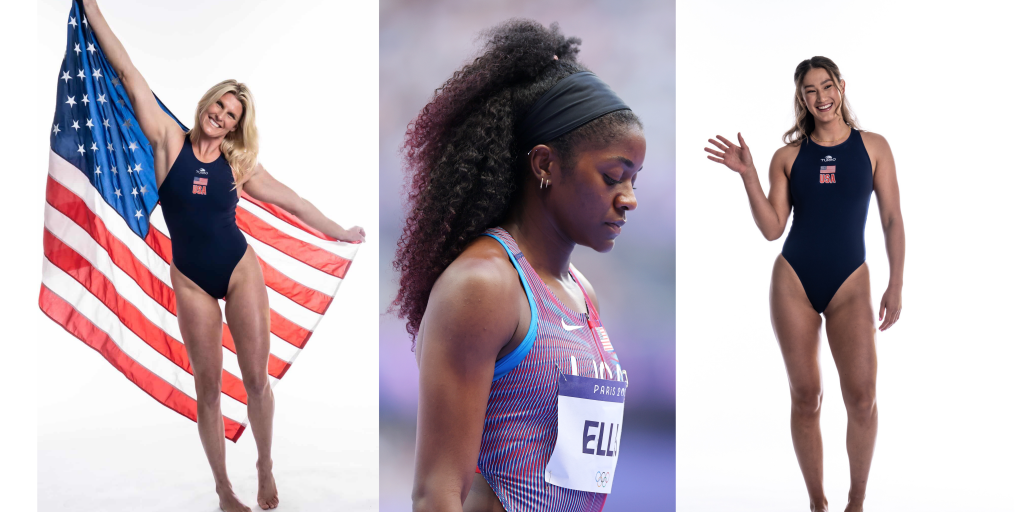
“How disgusting that we’re treating our athletes like this, and the people who go and represent our country like this,” said Kendall Ellis. “This should not be the case.”
Images provided by athletes
Team USA Olympians Forced Out of Their Sports Due to Low Financial Compensation
By: Malieya Pittman
The roar of the crowd, the American flag waving behind her, the weight of gold resting on her neck, Amanda Longan had just achieved the highest pinnacle of water polo. This moment is something 99.9% of people could only dream of. The memory of her 2020 Tokyo Olympic victory is all that keeps her going some days at her JOB.
“I am a full-time water polo player, but I’m pursuing my master’s through Pepperdine as a clinical psychologist… and I coach,” Longan said in an interview in March conducted via Zoom. “I’m doing it almost out of fear of having savings… If I were to start all of this after [retiring], I’d be in a massive, loan debt hole.”
Longan is only one of the multiple Team USA athletes who are being forced to leave their sports following the LA28 Olympics due to lack of financial compensation.
With athletes like Simone Biles’ net worth being estimated at $25 million dollars, and Michael Phelps at $100 million dollars, it is easy to associate the life of an Olympic athlete with glitz, glamour and a lot of money. However, for many Olympians this is far from the reality. According to a survey of nearly 500 Olympians, conducted by Global Athlete, 58% of Olympians reported that they do not feel financially stable.
Current Team USA athlete Daniella Ramirez and former Team USA athlete Monica Aksamit discuss struggling to afford the cost of living on Olympic salaries.
The International Olympic Committee does not directly compensate athletes for competing or winning medals. According to the organization, it distributes about 90% of its revenue, roughly $4.2 million per day, to national Olympic committees and international federations, which then decide how that funding is allocated to athletes.
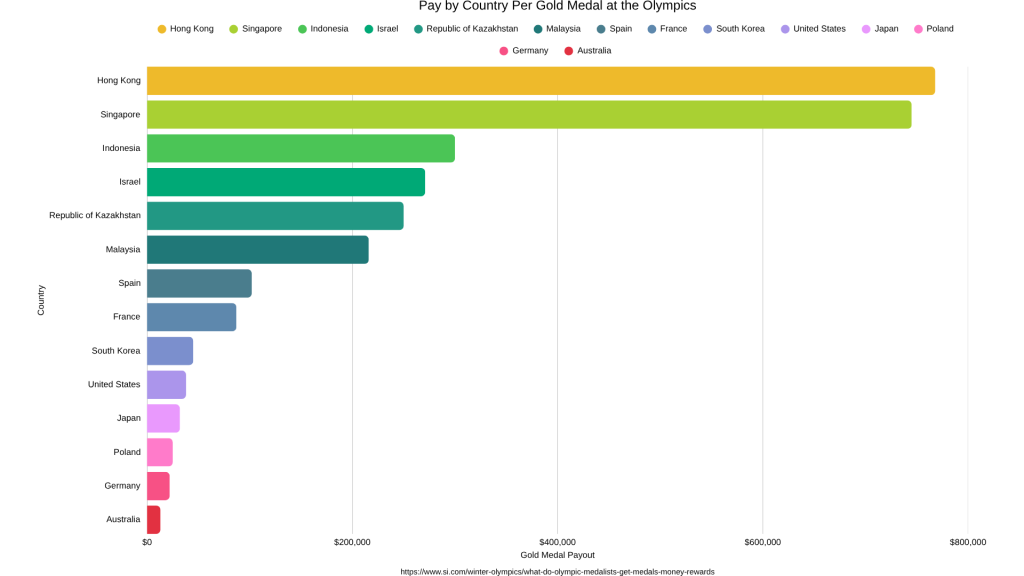
This amount falls on the lower end of medal payout according to country/territory, with the top country payout sitting at $792,000 for Olympic gold from Singapore.
Many Olympians find themselves forced to find other means to pay their bills. This often involves finding a job while they are training for the Olympics — a full-time job in itself.
Images provided by athletes
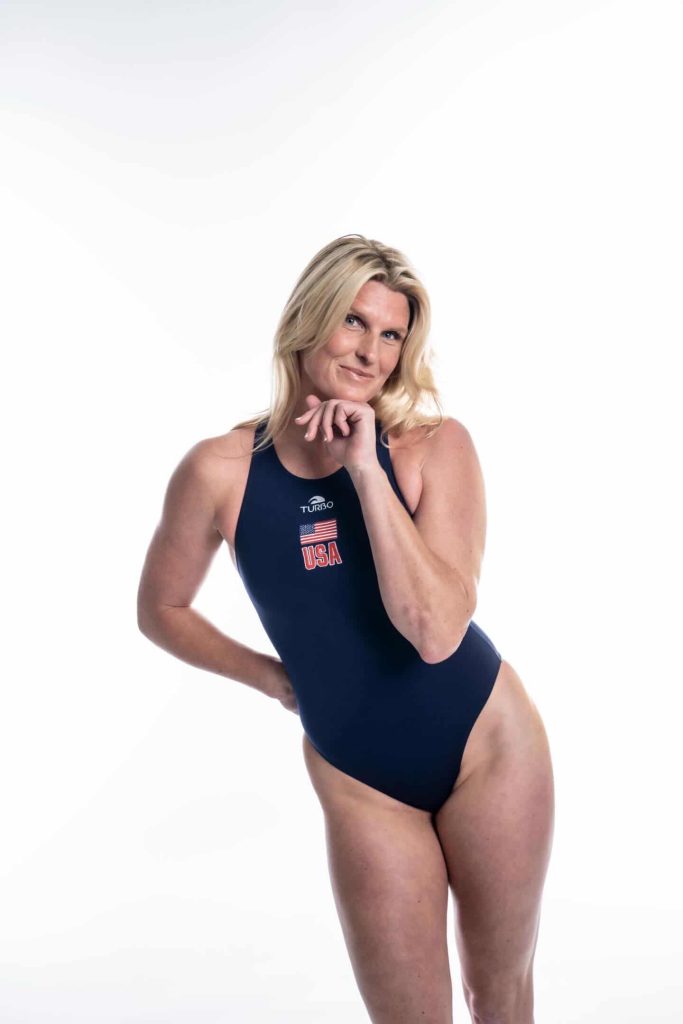
Longan is a two-time Olympian for Team USA Women’s Water Polo. She is a Junior World Champion, two-time National Champion, four-time World Champion, and Olympic gold medalist. She was the goalkeeper for the 2020 Tokyo Olympics, when the team secured its third Olympic gold in a row. Despite her vast accomplishments as a professional athlete, Longan must work two other jobs coaching high school water polo and studying for her master’s in clinical psychology at Pepperdine to ensure her financial security.
Longan has a packed schedule this offseason leading up to the Olympics. She must balance working unpaid clinical hours to obtain her master’s degree, coaching the Oaks Christian girls’ water polo team, and finding time to keep up her training.
A typical day in her life looks like this:
- 8:30 a.m. – 2:15 p.m.: Practicum for psychology
- 3:30 p.m. – 6 p.m.: Coach @ Oaks Christian High School + training
- 7 p.m. – 9 p.m.: Orange Theory workout class
- 9 p.m – 10 p.m: Training in the pool
- 10 p.m. onward: Finish school work and prep to do it all over again
“It’s been really hard this year because I entered the practicum phase of my master’s program, and I still have two classes a week,” said Longan. “Then the girls would have tournaments on the weekends, or I would have a national team practice in the fall, a couple weekends… So it’s been really hard to balance.”
Longan lives day by day off of the monthly stipend granted to her by Team USA water polo.
When a reporter asked how much she was given a month, Longan explained she was not allowed to disclose that information. However, she could discuss it in general terms.
“We do make enough where we can pay rent,” said Longan. “It limits your options as to what you are renting for sure, but we can pay for rent, gas and food. So we are supported.”
Longan and her teammates must live together to be able to afford paying rent in California. Her monthly rent payments take up half of her stipend.
When the money from her monthly stipend runs out, she must turn to coaching to cover any other bills.
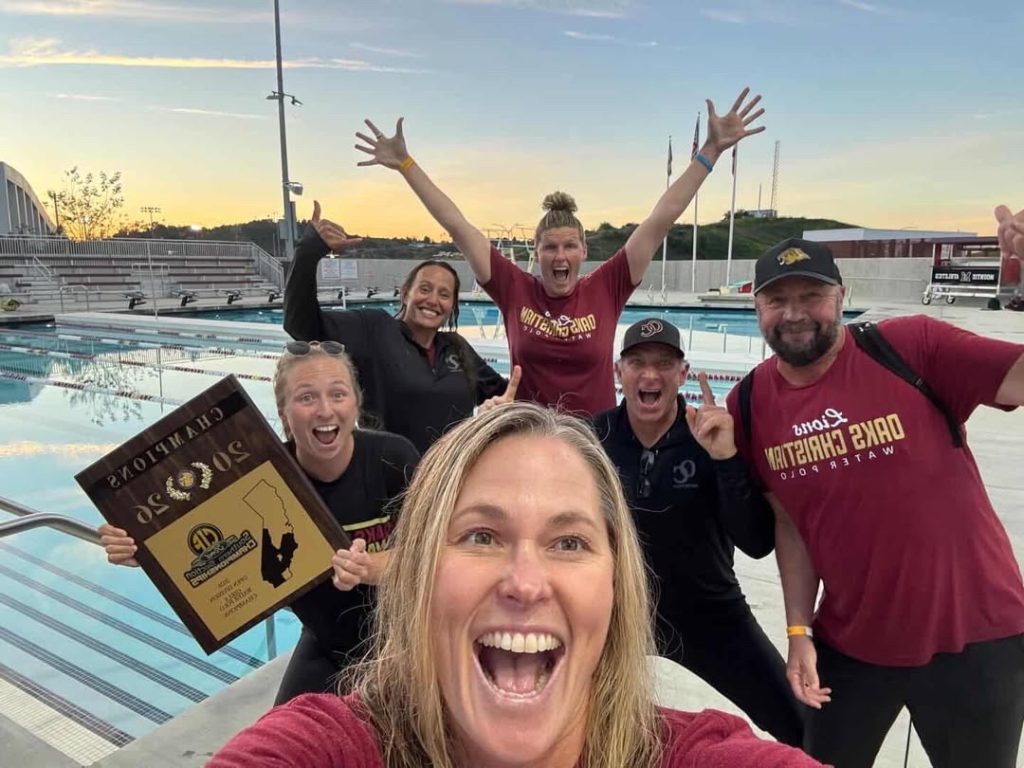
Image provided by athletes
“I love [coaching], and I would continue to do it. It is tough to fit into my schedule, but it’s also another source of income for me that I kind of need to do, to start creating a savings fund for myself or setting myself up to buy a home in the future,” said Longan.
However, leading up to the Olympics, Longan must drop everything on her tightly organized schedule to prioritize her training.
“I have to take a leave of absence from school for my summer session and push back school to the fall quarter so that it’s undistracted training until the end of August,” said Longan. ‘Everything basically goes on pause. And coaching at Oaks goes on pause while I go do my national team things.”
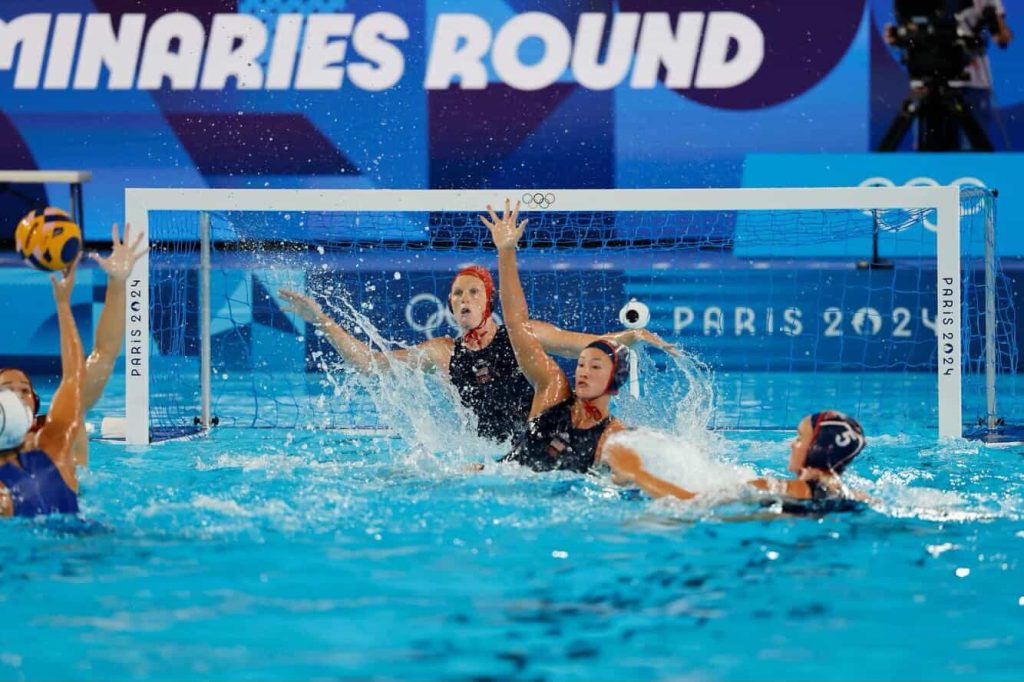
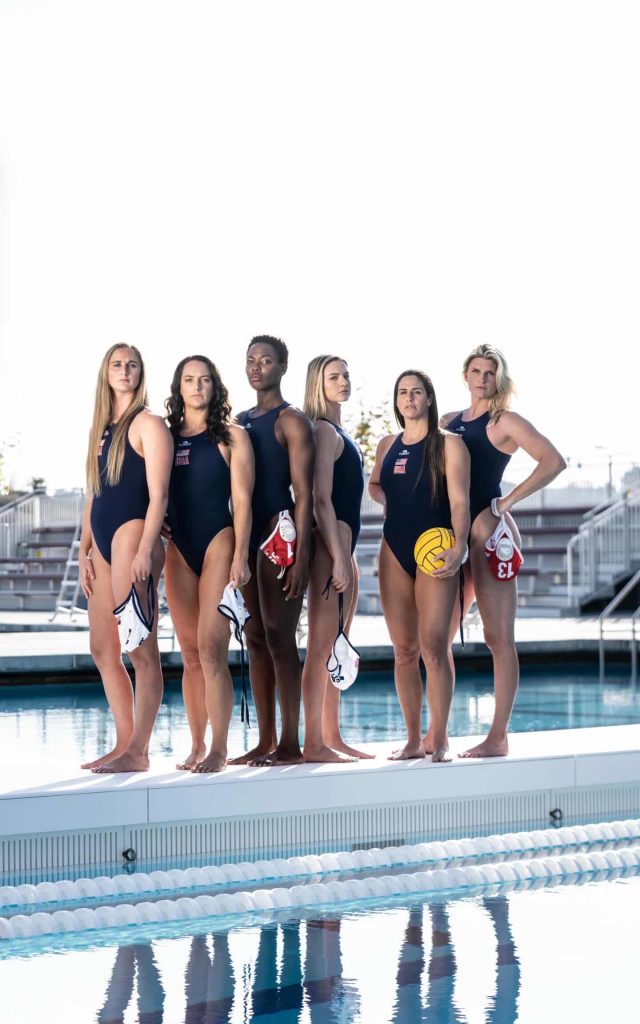
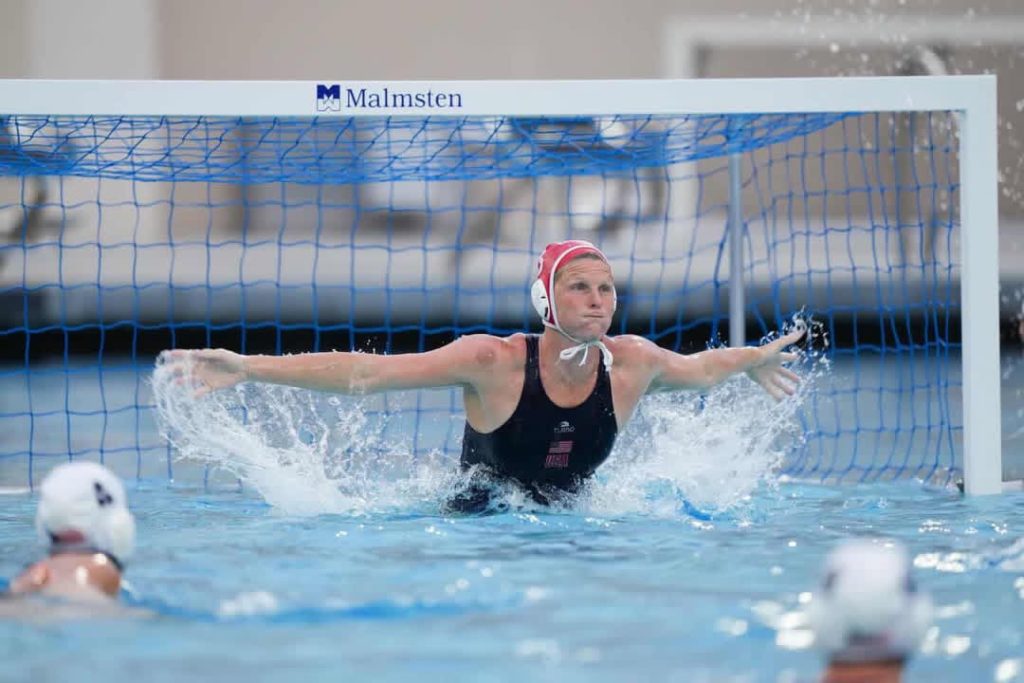
Images provided by athletes
During the height of her training Longan and her team practice anywhere from three but typically six hours a day from Monday to Saturday, only getting Sunday off. During this time athletes on her team receive stipends from Team USA Water Polo to alleviate some of the financial burdens. But, this amount only covers the bare necessities.
Asked if she’d be able to live fully off of the salary of a professional water polo athlete in the U.S., Longan at first offered context.
“If I was strictly just training with the national team, single, female, paying rent, gas, food, you know, clothes, here and there. And sometimes you could, like, save up money to, I don’t know, buy a concert ticket,” she said. “Yes, we can do that.”
After taking a momentary pause for reflection, her answer changed.
“But then when I think about it, I’m thinking about now car insurance. Before that, I wasn’t paying for that… And the phone bill thing is a new one for me, too,” she said. “Now I’m like, shoot, I don’t even know.”
Despite her financial circumstances, Longan is still able to positively reflect on her situation.
“I am super grateful to the women before us who didn’t even receive what we did at all and still paved the way to be a top tier team without all of it,” said Longan. “If they didn’t make that push and also drive for excellence at the same time with minimal money, we wouldn’t even have that resource now.”
Even though she is grateful, the harsh reality of her circumstance at now age 29 has drastic implications for her future inside and outside of the sport. When asked if she would continue to play for Team USA in the future, her answer was uncertain.
“If the funds changed and I could pursue therapy… but still be able to train and be financially okay. Then I would probably do it again,” said Longan. “I think right now, just based on how things are, I’m just going to see it through to LA and then see what the next stream is. But, I definitely want to be in my mom-era. And on this budget, I can’t do that.”
Longan isn’t the only player on her team with concerns. Even one of the newest additions to the pool is already facing financial worries.
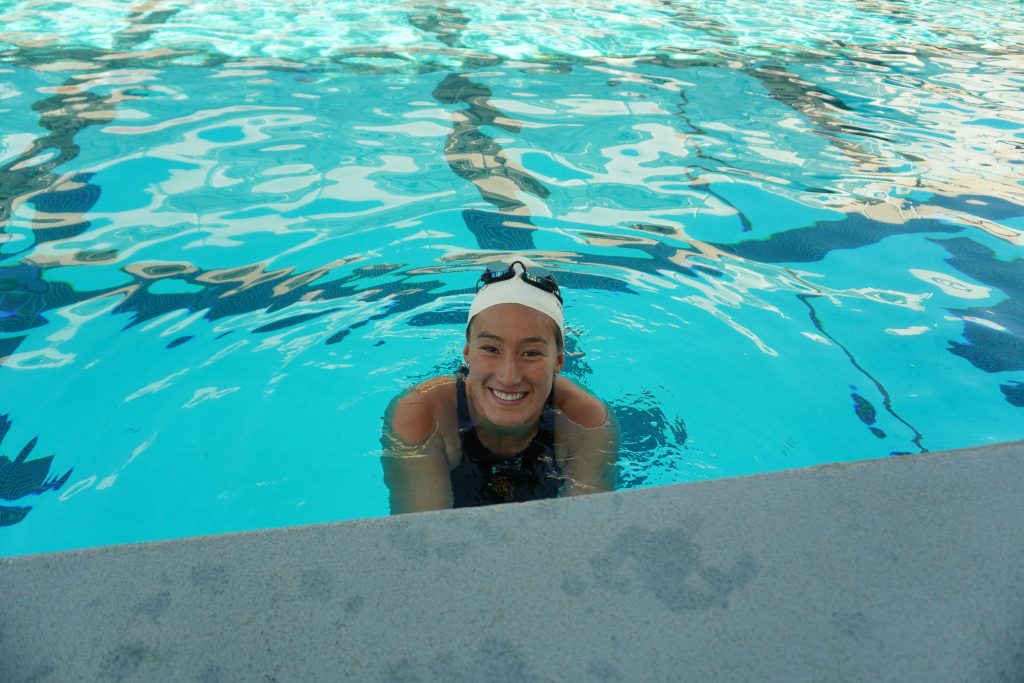
Emily Ausmus is in the pool warming up before practice. Taken by Malieya Pittman
Emily Ausmus is a rising star in water polo. She recently won the NCAA national championships with her college team at the University of Southern California and was named for a second time to the Cutino Award Watch List — equal to the Heisman trophy of the water polo world.
She was the youngest member to play with Team USA Women’s Water Polo at the Paris 2024 Olympics, at just 18. Having placed 4th at the Olympics that year, she is hungry for the top prize.
“My next goal is definitely to make the 2028 team and bring home the gold,” said Ausmus.
Now in the process of actualizing her dreams, she has another hurdle to face.
“Our pay doesn’t really cover our necessities, and so it’s kind of hard to go after your Olympic dream while you’re also trying to balance your budget,” said Ausmus.
Team USA Water Polo athletes are awarded monthly stipends, during the Olympic training season, with different tiers that determine the amount of money an athlete receives. These tiers are based on whether the athlete has qualified for the national team, competed at the world championships, then the Olympics, and how many years the player has been on the team.
“I remember in 2023 I just graduated high school, and I hadn’t technically made a world championship team. I was an alternate on that first team, so I was there, but I wasn’t in the water,” said Ausmus. “So I remember my rent that I had to pay to live for that full-time year was more expensive than what I was getting paid. I was basically losing money half of the year just to pay my rent. And that didn’t even cover groceries, gas, miscellaneous stuff when we travel, stuff like that.”
Even though there is room for financial growth, the difference between the tiers is only a matter of a couple hundred dollars. This has led Ausmus to take a substantial risk of studying engineering while balancing and being a full-time athlete at the University of Southern California. It’s a choice most student athletes would never dare to make.
This is what a day in her life looks like, competing for the World Qualifiers, while in the middle of final examinations at her university.
Even though Ausmus has a heavy schedule, having a civil engineering degree will ensure her financial security for the future, as she will not find it through her career in water polo.
Due to the way finances are distributed among Olympic teams, the sport an athlete plays has substantial consequences.
“Popularity has an impact on how much you get financially. And I think that’s where we have grace is that water polo isn’t a huge sport, so financially, it’s hard to find funding,” said Ausmus. “Growing the sport is really important just to get financial support for us athletes.”
Outside of compensation provided by the USOPC and its respective governing bodies for each sport, another way to earn extra money is through brand sponsorships.
Although obtaining a paid sponsorship can prove to be immensely difficult for less popular sports, it seems to be a norm among top track and field Olympians.

For Kendall Ellis the shoes she wears matter more than her performance in the sport. They are her entire means to be able to support herself financially.
“It’s necessary to have a shoe sponsorship unless you are willing to work another job,” said Kendall Ellis.
Ellis is a Team USA Track and Field athlete who won a gold and bronze medal at the 2020 Tokyo Olympics. Ellis is sponsored by the shoe company New Balance, so she receives funding from the sponsorship and Team USA Track and Field. Still, Ellis has concerns over financial compensation in her sport.
Image provided by athletes.
“I was surprised to find out that track and field is one of the better off sports… I think that’s largely in part to our popularity when it comes to the Olympics,” said Ellis. “It’s already not well paid… so if we’re getting not much, [other sports] are getting nothing.”
For Ellis the thrill of the sport, not the financial compensation, is what keeps her competing.
“If I were in this for money and solely money, I would have been retired,” said Ellis. “I have a master’s in business. I graduated from USC. I can go and do another job and likely make more money, but I enjoy this.”
Large discrepancies exist between Olympic sports, but in track and field they also exist relating to the popularity of the event an athlete competes in.
Kendall Ellis is training at the University of Southern California. Video provided by athletes
“Let’s say the lowest track athlete is getting paid 80k then a top 100 meter sprinter is certainly making more than 160k,” said Ellis. “You could talk to like, 10 different track athletes, and we would all have a different experience across the board, and the contracts that we sign are essentially NDAs. So we don’t even truly know how much someone is being paid.”
As a reporter spoke to 4 individuals about compensation, a theme emerged: the athletes themselves say they have limited knowledge relating to payment across different Olympic sports. Ellis speculates that this might be more than a coincidence.
“I do believe it’s very much intentional and so that we don’t have as much bargaining power as we would if we knew exactly what each person was making,” said Ellis.
A reporter requested specifics about the exact amount athletes were awarded by their Team USA sports organizations. They were not allowed to disclose any information regarding specific amounts.
With articles across the official Team USA Olympic website highlighting Olympians who work multiple jobs, Ellis believes it is necessary to stop glorifying Olympians’ financial struggle.
“You don’t hear about NBA players having to also be truck drivers… That is not a story that we should look at and be like, Wow. How inspiring. We should say, How disgusting that we’re treating our athletes like this, and the people who go and represent our country like this. This should not be the case,” said Ellis. “And so I just I’d like to see that change. I’d like to see the narrative changed around it, and I’d like to see athletes being supported, financially, emotionally, and mentally in the sport.