
DOpamine fix!/?
Source: public domain
Humidity thickens the air in Santa Monica in summertime, and I could feel each individual bead of sweat as I ran, all too aware of how tight my shoes were, the unidentifiable clicking noises my knees were making, and how constricted my lungs felt in my chest. You never realize how important music is in disguising all these factors as a “good workout” until it’s gone.
That July day I learned that running without music is a form of modern torture.
But I’m convinced it was for a good cause. I was enduring this pain in the name of dopamine fasting. Call it junk science, call it biohacking, but I was determined to rewire my brain in an effort to reduce my dependence on my phone by whatever means necessary.
I made myself patient zero in a social experiment to determine the possibility of breaking daily habits of pervasive social media usage. The “wake up, check phone, get ready, check phone, drive to work-oh wait, red light-check phone, eat lunch while checking phone, fall asleep while on phone” cycle was just not working for me anymore. By reducing my own dependence on my phone, I aimed to build a healthy relationship with the digital world that allowed me to be more present in my own life while still being able to use social media in constructive ways professionally and socially. The most refreshing part of this process was discovering that many of my friends, colleagues, and peers felt similarly. By investigating the science behind social media addiction and hearing the experiences of young people endeavoring to accomplish goals similar to mine, I determined that breaking these destructive patterns of behavior is not only possible, but highly achievable.
That said, I lasted two days running without music. A decided victory for Spotify, no contest.
From May to August I was caught in a vicious cycle of my own creation: offloading Instagram, redownloading it to see if my ex-boyfriend unfollowed me yet. Deleting my Twitter, reactivating it because I didn’t want to pay for cable news and everyone knows it is the best place to read hard news stories. Not looking at my phone for the first hour of my day, starting my day looking at my phone in order to turn my alarm off and seeing alluring group texts that needed my input. Putting my phone down an hour before going to bed, picking it back up because what if I got an urgent, time sensitive work email?
It wasn’t always easy, I wasn’t always consistent, and I couldn’t always tell if it was working, but in the spaces between my lapses in willpower, I felt present in my life in a way I can confidently say I hadn’t in over a decade. I had hobbies again, my mind was clearer, and I could watch a movie and actually follow the plot instead of picking up pieces of information between TikToks. I realized I didn’t care what the thousands of people I follow yet don’t ever interact with were doing on a daily basis, and if and when my ex-boyfriend unfollowed me, I would probably survive.
When I started dopamine fasting, I operated under a “three-day” policy. I identified every social media platform that was sucking the life out of me on a daily basis via the startling statistics in my screen time settings (I still want to know where those five hours I spent on Instagram on Wednesday, May 17 came from and how I don’t remember losing them) and I decided to offload those apps for three days, one at a time. Instagram, Twitter, TikTok, Snapchat, Facebook, and even Linkedin (why did I really need to go through every comment on a mutual friend from high school’s job posting anyways?). I attempted to get rid of Spotify and Pinterest but decided I was allowed to experience some joy.
When I only had one app offloaded at a time, the fasting was easier than expected. I realized the void I thought I would feel in the absence of social media was not as abysmal as anticipated.
At the end of July, I went cold turkey.
I can only equate that experience to a 21st Century Spiritual Awakening. I realized how much silence there is throughout the day when every spare moment isn’t spent in a digital world, and I’m fairly certain I regained my five senses.
In an effort to not replace social media with other forms of media, I limited myself to one movie or episode of a TV show a day. I tried to only respond to urgent text messages, phone calls, and work-related emails. Once I overcame the initial withdrawals of being unable to exist within a digital sphere at all hours of the day, life just got better. I am well aware of how melodramatic this sounds, but I found myself once I stopped viewing my phone and social media platforms as an extension of my identity.
Lily Petrucelli made a similar decision, but instead of offloading apps from the comfort of her apartment, she joined a spiritual community in Costa Rica with a primary objective being to transform her psychological and emotional landscape by connecting with the world around her and eliminating all outside information and technology.
Now this is hardly equitable to my experience with the fasting, but Lily’s ideas surrounding social media and its presence in her life after spending months without access to it on her retreat did mirror mine in many ways.
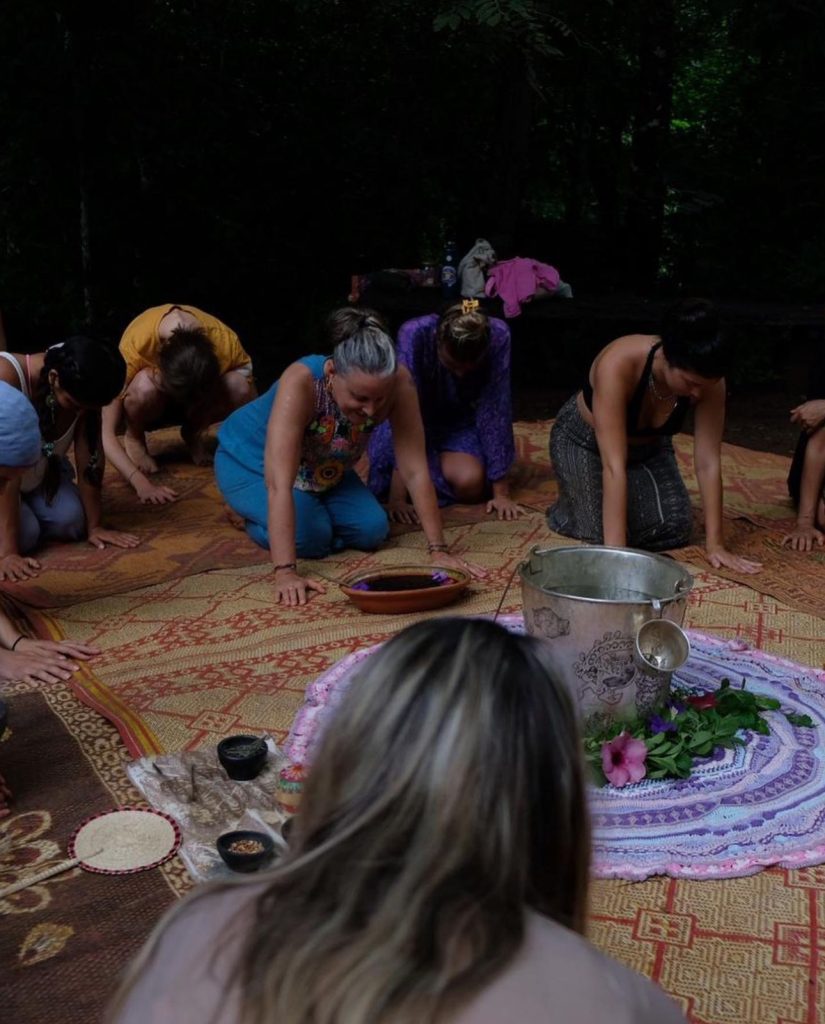
“About two or three weeks into being technology-free in Costa Rica I still found myself reverting back to some of those habits. I wasn’t using my phone at all, but I still slept with it right beside me on my cot. There’s just so much unnatural attachment there and without having access to social media, texts, or emails and anything like that, I realized just how strange of a concept it really is to need this thing so much,” said Lily, a recent college graduate who was determined to make some big changes in her daily life in addition to beginning her career and moving across the country.
As the weeks — and eventually months — went by, Lily realized that the idea of being dependent on social media was far stranger than not having access to it at all. She formed strong ties with others on her retreat and was fully immersed in her experience in Costa Rica; the idea of returning to the corporate world and her political consulting job in Washington D.C. seemed practically unfathomable.
“I will say I don’t suggest going cold turkey like I did if you want to actually break a social media addiction,” Lily said, laughing. “As soon as I got back from my retreat I was back to scrolling on TikTok for hours before bed, checking Instagram at work, all of that. My months in Costa Rica without using my phone or social media were some of the best in my life, so now I guess I’m just trying to find a way to gradually get rid of it again, you know, a few days a time, offloading different apps, that’s easier in the world we live in.”
Lily Petrucelli at Pachamama in Costa Rica during a yoga healing session.
Source: Lily Petrucelli
Lily’s experience was cause for me to reflect deeper on my own experience with the dopamine fasting. I felt as though, once completed, I have been able to keep my social media usage at a minimum while still using it to engage when necessary. Naturally, this increased my confidence in my non-trademarked method.
Now I won’t claim that dopamine fasting is a tried-and-true scientific endeavor. It’s not. In fact, as Anna Lembke notes in her book “Dopamine Nation: Finding Balance in the Age of Indulgence,” it’s a relatively new area of study. However, scientists do know that the unpredictable rewards system put in place by notifications, likes, comments, and messages we get on social media platforms works to release dopamine in the brain, activating receptors and forming synaptic connections between neurons which, when they occur too frequently as a product of telephone usage, can upset the homeostasis of dopamine signaling within the brain producing addictive responses and patterns of behavior.
In theory, by limiting the synaptic connections that take place as a result of social media or phone usage, we can break or alleviate these “addictive” patterns and support a more natural, sustainable balance of neurological stimulation as a product of dopamine receptors.
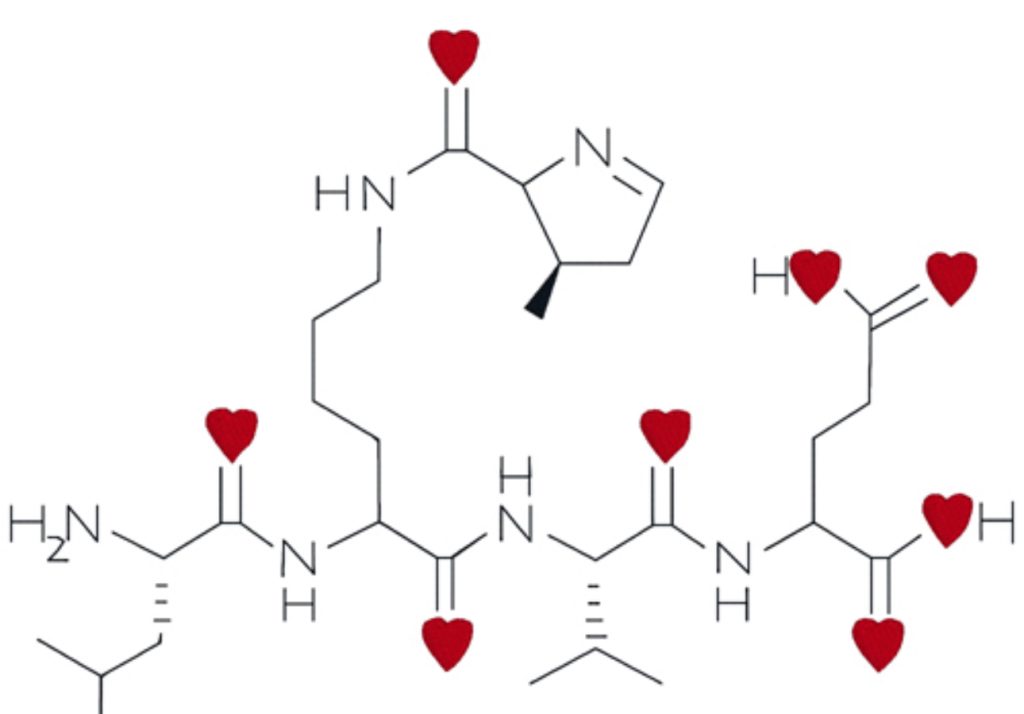
OXYTOCIN
+ love/social connection hormone
+ prompted by real/perceived connection via messaging, liking photos, commenting, etc.
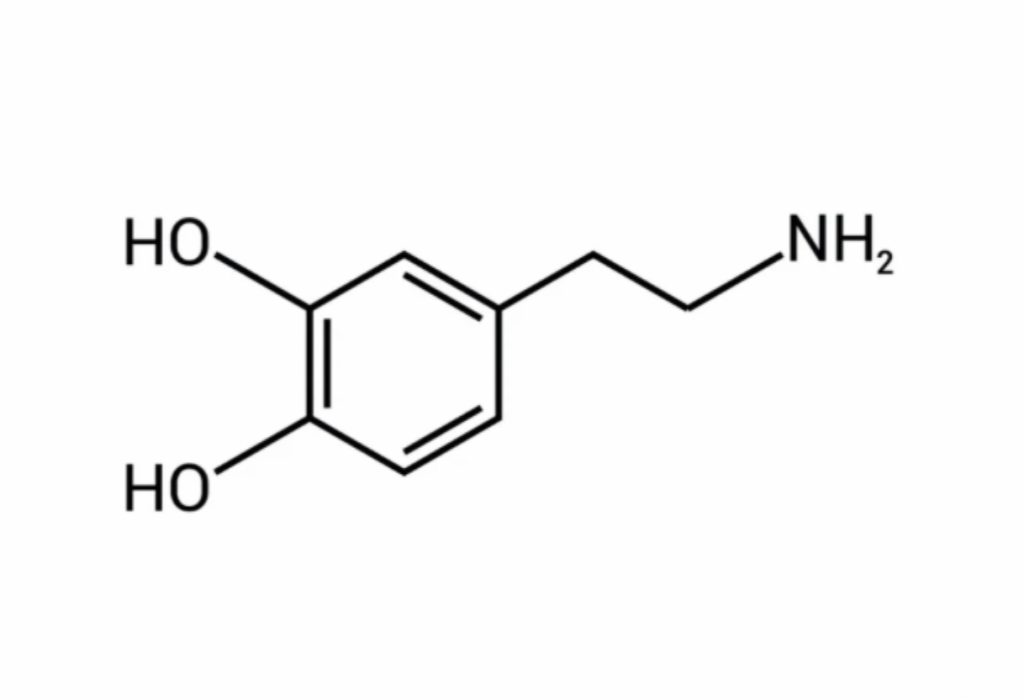
DOPAMINE
+ a neurotransmitter that works as a reward system/ builds habits
+ released when we receive and sort of positive stimulation via technology, forming addictive tendencies
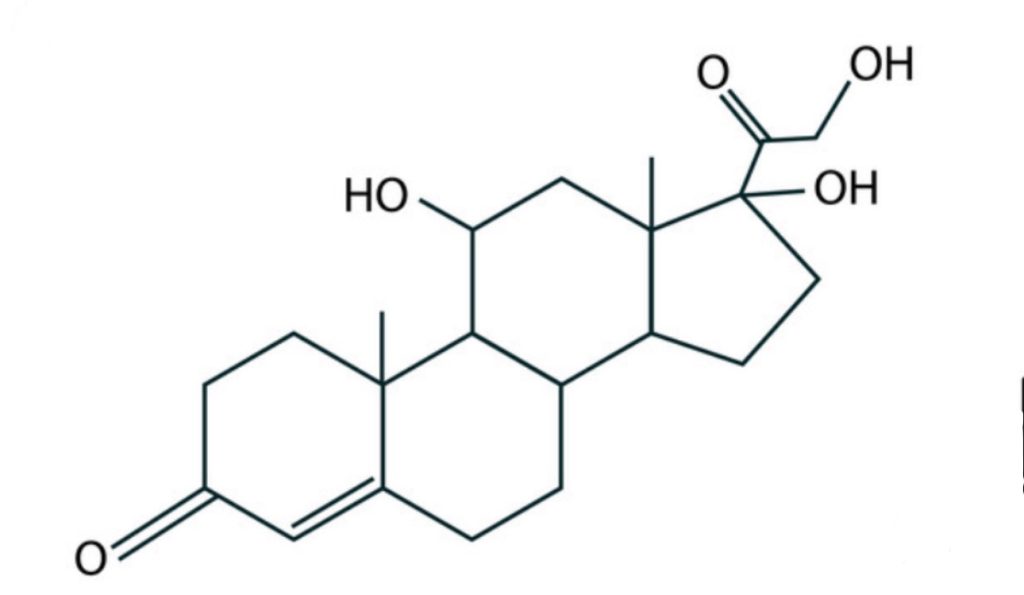
CORTISOL
+ fight or flight hormone
+ released when we put down our phones or don’t have access to/can’t check them
Lembke, “Dopamine Nation: Finding Balance in the Age of Indulgence”
Image 1: https://www.acs.org/molecule-of-the-week/archive/o/oxytocin.html
Image 2: Abigail Gutwein
Image 3: Abigail Gutwein
However, Lembke also notes that excessive and frequent use of social media which results in excessive dopamine release and the activation of dopamine receptors can desensitize the brain to the postsynaptic neuron and responses of excitement that typically ensue. As a result, even more dopamine must be produced to cause the same feelings of happiness or satisfaction. Dopamine is known for being closely tied to addiction, and dopamine released as a product of social media and phone usage is no exception.
“It’s like if you were to eat a piece of candy every single time something happened in your life. You walk outside, check your phone. You walk inside, check your phone. You get a text from your friend, check your phone. When you’re getting dopamine the entire time, it makes it a lot harder to enjoy your life,” said Jack Longely, a Junior at USC pursuing a career in education.
Jack chose to participate in a NOLS (National Outdoor Leadership School) Trip where he spent months in the wilderness without access to his phone or any other form of technology. It was an experience he talks about frequently, and passionately, adamant that his quality of life increased while on the trip.
While his experience is certainly not for everybody, Jack plans on returning to work as a counselor for NOLS, determined to encourage other young people to push themselves out of their comfort zone by engaging in the world around them sans phone. Even once he returned, Jack found his personal thoughts and feelings regarding social media were completely altered.
“Life is just more raw without [social media], you feel everything a lot more, happy and sad. The depth, quality, and ease of social interactions was also exponentially greater. I really think technology is why our generation is depressed.”
Jack Longely
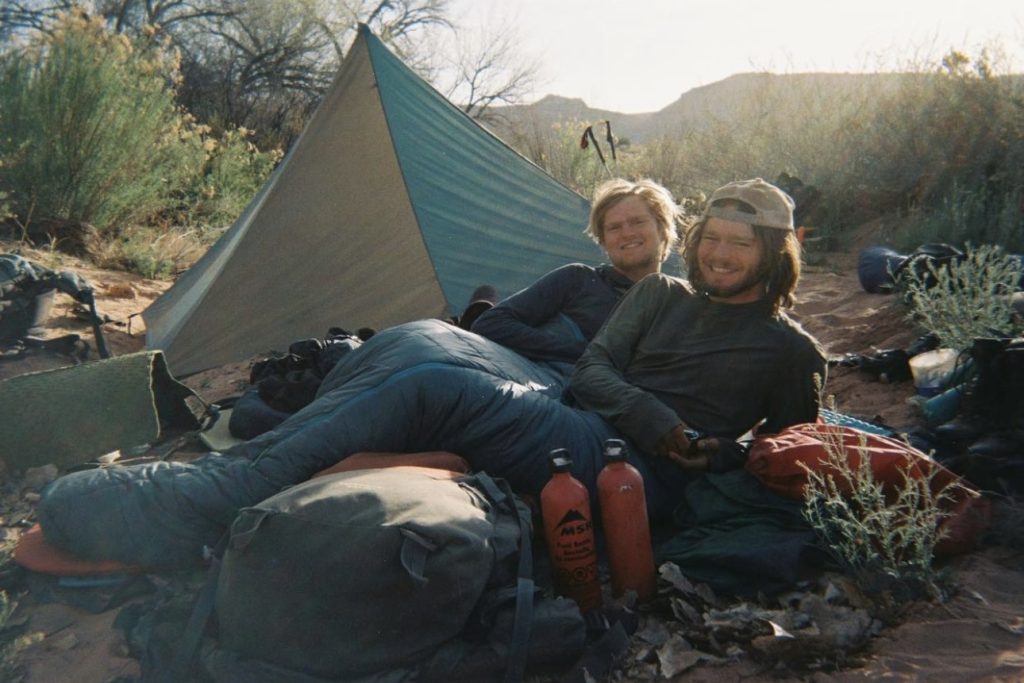
Jack Longely camping in Southern Utah during his NOLS trips.
Source: Jack Longely
In her book “Left to Their Own Devices: How Digital Natives are Shaping the American Dream,” sociologist Julie M. Albright agrees, albeit with more nuance and a healthy respect for the opportunities and connectivity the social media landscape provides.
Albright cites the internet, smart phones, and social media as the impetus for “the biggest generational gap in history.” This digital world has altered not only our day-to-day habits, but the very values we hold and the aspirations we strive for as a generation. Politics, marriage, and religion are all being reframed and reevaluated, sometimes completely shirked, in our modern world.
Amanda Grennan, the co-founder of Dopage, an addiction and overdose education company, is all too familiar with how ingrained social media is in our lives, from a corporate perspective as well as social. As one of the leaders of a fairly new business, there are many aspects of social media that she finds helpful in her day-to-day. However, those are always balanced by the entertainment and social distractions that flood the same spaces she endeavors to use for the good of her company.

“I literally could not get off my phone if I wanted to. Most days the lines get blurred between monitoring social media for work purposes and looking at my friends posts. It gets frustrating, especially when I look up and realize I’ve wasted 15 minutes on Instagram when it should have only been two.”
Amanda Grennan
Audio + Photo Source: Amanda Grennan
Amanda did agree that limiting her dependence on platforms such as Instagram from a social perspective would likely alleviate this issue. However, methods of dopamine fasting are outside of her reach as she cannot delete these platforms entirely due to her work obligations.
There are more than a few obstructions to decreasing a dependence on the dopamine hits provided by our phones and our socials on a daily basis. In a world where it is nearly impossible to “log off” completely for one reason or another, it takes a lot of mental discipline to really make a conscious decision to not use social media, at least periodically, in a recreational sense.
Not to pat myself on the back, but I believe making the effort to reduce a dependence on social media, and our phones in general, from a neurological perspective was one of the most transformative displays of discipline I have ever experienced.
Barriers for people trying to cut out social media/cut down on phone usage
according to a 2021 study by Ofcom
Regardless of whether you want to refute the science of “dopamine fasting,” limiting social media usage and hacking a societally promoted dependence on social media is hardly a bad thing from my perspective. Besides, dopamine fasting is more of an applicable concept to be personalized rather than a strict set of procedures and dos/donts.
Data Source: Ofcom, Graph Source: Abigail Gutwein
Whether you put your phone down an hour before bed, get ready for work before checking your texts in the morning, or offload apps for days at a time, dopamine fasting in all its iterations can get you hours back in your day, and you just might find yourself a little happier and more present in your life. If I have at least marginally persuaded you of anything, put your screen down for a few minutes today. Relax, reset, and if you’re so inclined, fast.