From the Classroom to the Big Screen: How a Neurodivergent Film School is Creating
Industry Pathways
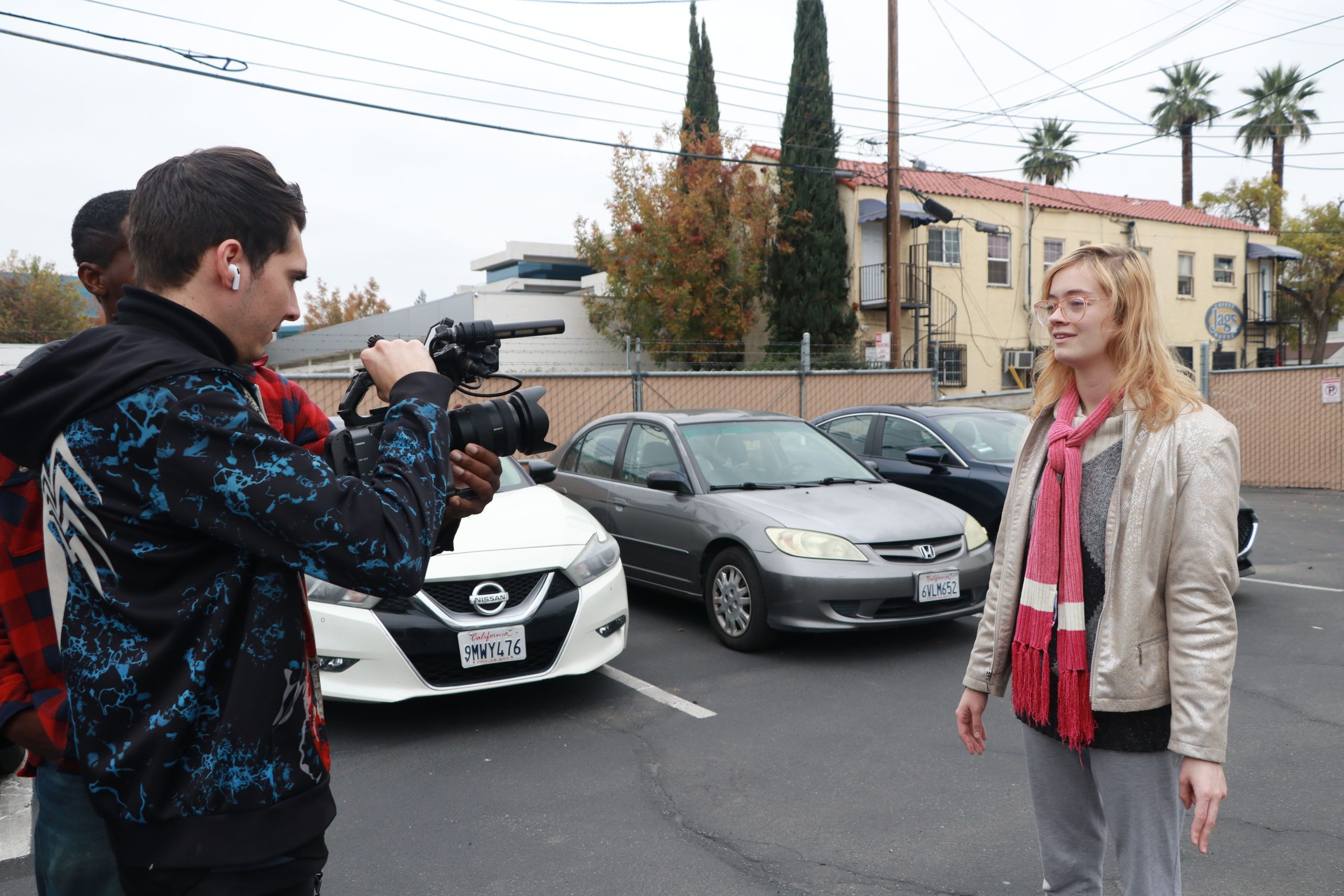
Students practicing their camera and acting for an in-class exercise at Inclusion Films in Bakersfield, CA. (Photo by Malcolm Caminero)
Inclusion Films, a school in Bakersfield, CA, is helping neurodivergent people create their lane in the film industry amid a lack of opportunities, a changing entertainment landscape, and societal prejudice.
By: Malcolm Caminero
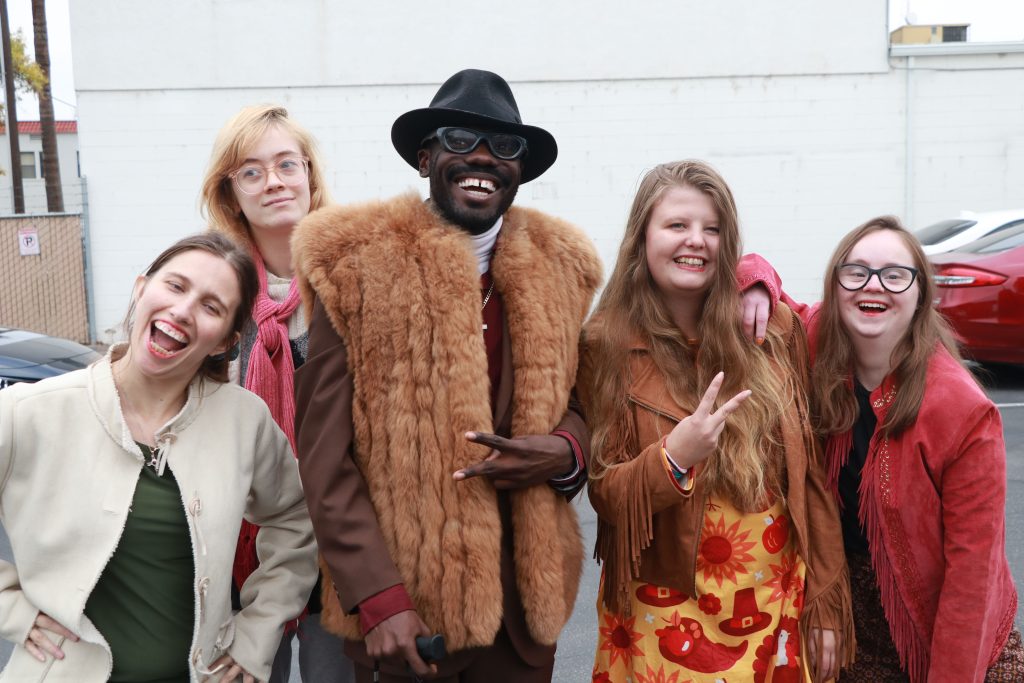
Students at Inclusion Films pose for a picture during acting class. (Photo by Malcolm Caminero)
When Joey Travolta started developing film workshops for neurodivergent people, he never imagined it would turn into a full-fledged school in less than a decade.
“The regional center approached me, and they said, we have a tsunami of young people with autism that are coming into the workplace, and Hollywood is the mecca for filmmaking. Do you have anything that would train or help people with getting work in the film industry?” said Travolta.
In 2004, he founded Inclusion Films, a two-week program where he would travel the country with a group of film producers, hosting film camps for neurodivergent kids and adults who wanted to learn about the film industry. Over the course of two weeks, participants would learn the basics of acting, editing, operating cameras, sound mixing, and writing scripts. By the end of the two weeks, students would work with each other to create their own films.
“We make short films. We developed the short film. Everybody’s a part of it. They act in it. They do camera, they do everything,” said Travolta.
The former special needs teacher-turned-actor and producer started the program because he wanted the entertainment industry to be accessible to everyone. He said when making a film, you feel “like you’re a part of something.”
“For that moment, it’s like a family, and so many people with special needs don’t get to feel that.” They don’t feel like they’re a part of something, and that’s why I started the camps and then Inclusion Films for people to feel like they’re part of something amazing,” said Travolta.
After three years on the road, he decided to headquarter Inclusion Films in Burbank, California, right next to Hollywood.
By 2012, he had relocated the program’s headquarters to Bakersfield, California, and initiated the process of transforming the program into a full-time school.
With the help of funding from the Kern County Regional Center, the school started gaining popularity. With that came an increase in student enrollment, which the center also helped facilitate.
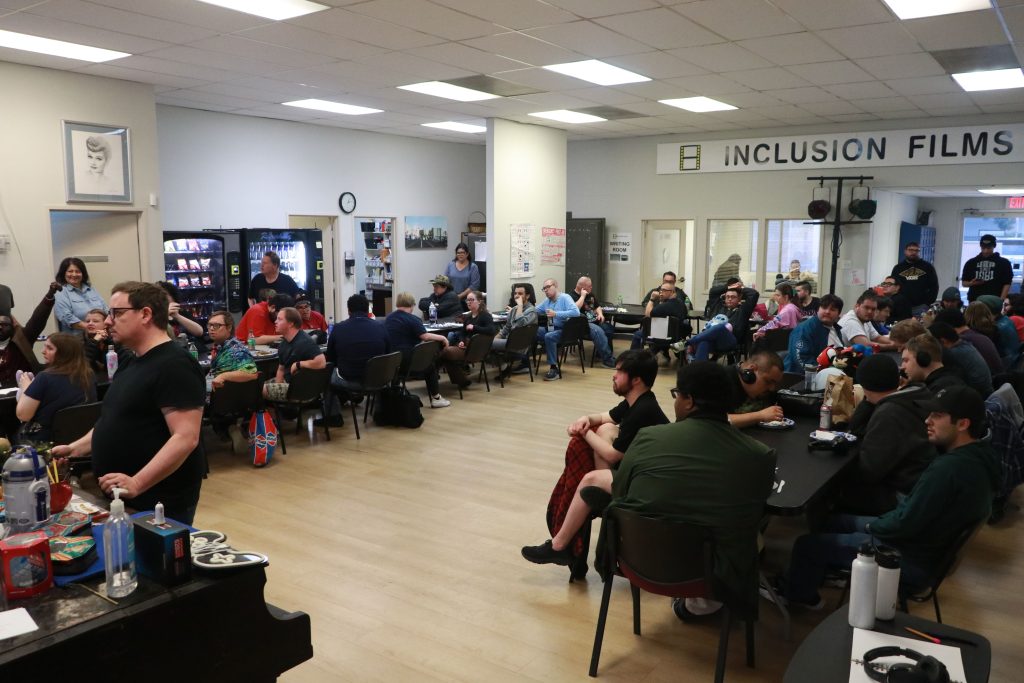
During the program, students take classes during the weekdays where they learn how to act, edit, operate cameras, sound mix, design sets, write scripts, cast and create short films. When they graduate, the program helps them land jobs, using the connections Travolta and his team have created through their collective decades of experience in the industry. The photo to the left is of students sitting in the main area of Inclusion Films, photographed by Malcolm Caminero.
Even for the students who do not go into the film industry after graduation, the skills they come away with prepare them for any profession.
“Everything that goes into everyday life goes into filmmaking. You’re teaching communication, collaboration, confidence, and how to present yourself. Those are all skills that are applicable in any field that you’re going into. So it’s giving them that confidence to go out into the world,” said Travolta.
A Changing Industry
“From 2016-2023, 3.9% of on-screen characters in film or TV have a disability.”
– Geena Davis Institute, nonprofit researching equitable representation in media
It has been over two years since the actors’ and writers’ strikes, and Hollywood continues to face turbulence. With studios leaving Los Angeles for cheaper alternatives in more tax-attractive locations, and the threat of AI possibly replacing human workers. People who work in the film industry are faced with difficult decisions. That issue is amplified for those with disabilities. A study done by the Annenberg Inclusion Initiative showed that only two percent of all speaking characters in the top 1-00 films of 2019 were depicted with a disability. A study done by the Geena Davis Institute, a non-profit that researched equitable representation in media, says that from 2016-2023, only 3.9% of on-screen characters had a disability. The numbers do not exist when trying to find statistics for crew members with disabilities. It is because of numbers like this that the school and its programs were created.
“ I think there’s brilliancy in the way they’re wired, because they can take something and be natural at it without even having schooling in that.“
– Dale Oprandy, Executive Director of Inclusion Films.
While Joey helped start the original in-person school, he has shifted to handling other aspects of the business. For the last 15 years, he handed the reins of the school to his longtime friend and business partner, Dale Oprandy. Oprandy serves as the Executive Director for the school. Every weekday, he stands at the front of a small banquet hall and prepares students for a day of learning. He goes around the room, looks each person in the eyes, and asks them how they are doing and what they are excited about.
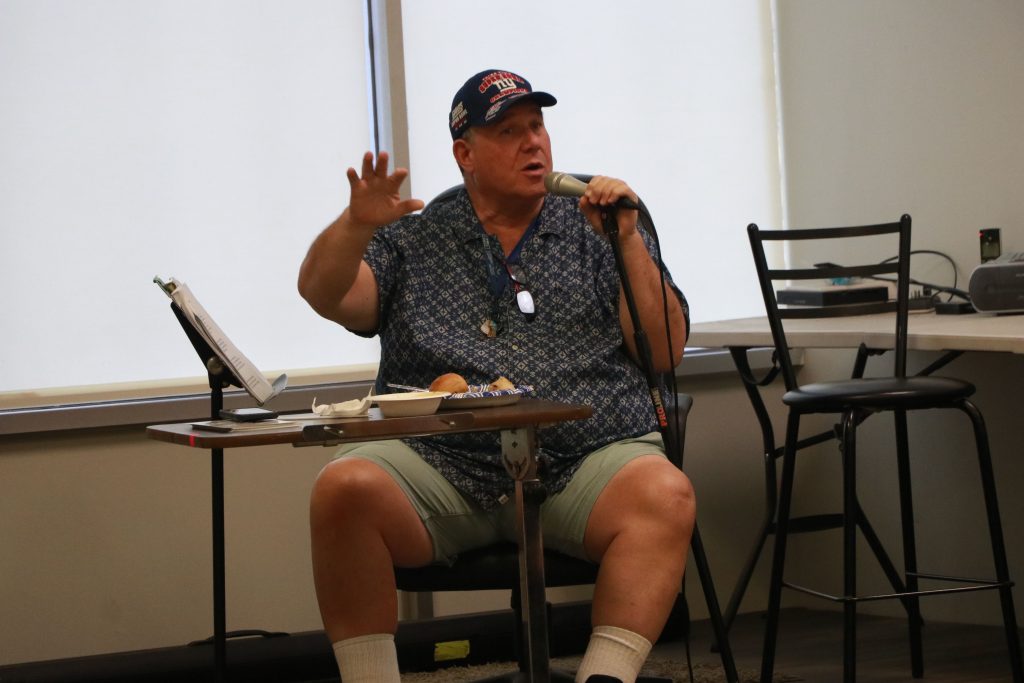
Some students are new and others he has known for years, but his joy for teaching never wanes. Due in part to the way he and the other teachers go about teaching the students and having them embrace what society may not. The photo to the right is Oprandy teaching his students. (Photographed by Malcolm Caminero).
“We don’t look at that. We look at their abilities, what they can do, and that’s what we stress to them, that you embark on your abilities, don’t embark on what your disabilities are, embark on what you can do, and be the greatest, be the best at it,” said Oprandy.
Amid the changes happening in the industry, he is optimistic when it comes to his students finding work after school, despite roles for disabled people being scarce, according to a Disability Belongs report. To Oprandy, it starts
“I think Little by little, the world is changing, and the world is realizing, accept them, okay, accept them. And you can believe me, they’re very knowledgeable of so many things. Don’t, don’t think they’re not, because they’re incredible,” said Oprandy.
“I have autism, but it’s not all I am. I’m also able to do other things.” – Isha Collins
One of those students is Isha Collins, who started at Inclusion films as a student and now leads the special effects and sound department, teaching classes during the week. She joined the program when she was 20.
“When I joined, I just continued to learn everything that I could from each class, and I just continued to work my way up in different classes. And I guess Dale saw something in me [and said], Okay, so now you’re ready to go on jobs,” said Collins
From her experience in school and working on professional sets, she learned more about herself and how the world views her capabilities. She gained confidence in her abilities while also seeing the harsh reality and stigma that can come with being a black woman with autism in a male-dominated industry.
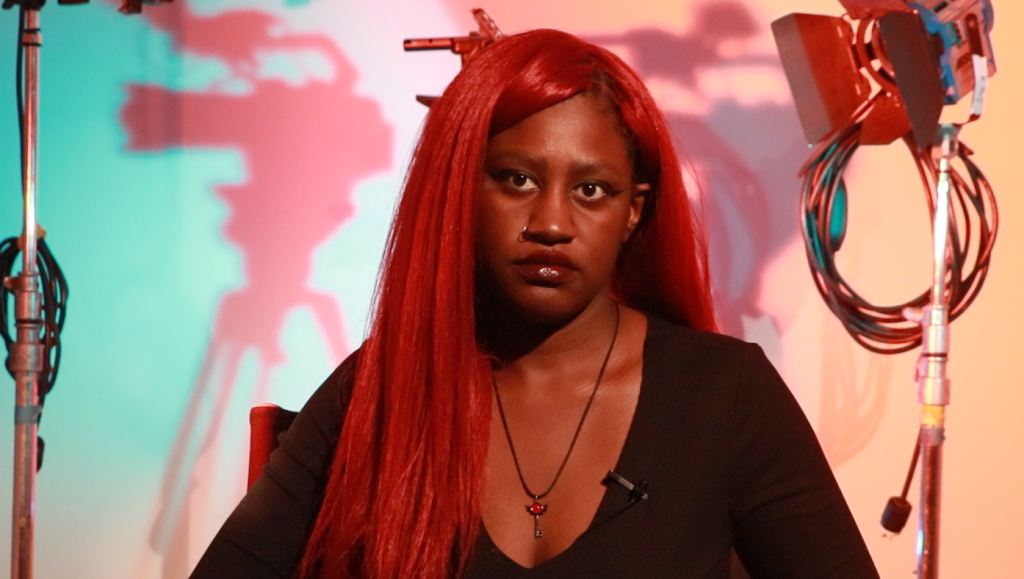
Isha Collins sits down for an interview. (Photo by Malcolm Caminero)
She recalled a time on set for a commercial, where she was the lead for the sound department. Everyone on the crew kept going to her male assistant for sound questions. He kept insisting Collins was the one who could answer their questions. But it wasn’t until after he had left the set that people went to her, where they discovered she was the lead of the sound department.
“It was really funny to see their minds do that mental wiring,” said Collins. She recalled how her crew members reacted to the news.
“He’s like, Wait a minute, She’s, she’s a woman, and she’s, she’s also autistic. What do you mean? She’s in charge of this department?” Said Collins.
“Looks like some girls can do better than you, and this girl just happens to be autistic and a woman,” responded Collins with a chuckle.
Through experiences like this, Collins looks to bring more neurodivergent people into the entertainment spaces, where their stories and perspectives can be told. While being at Inlcusion, she reflected on how her journey has affected her younger self and the kind of advice she would give to up-and-coming creatives with disabilities.
“You are just as valuable, and you are just as worthy of being on that set, no matter what,” said Collins. “Don’t be afraid to take up space, because you deserve that space, and we’ve earned it honestly,”
““I’ve learned to embrace myself a lot more, even though I may be different.”
– Chase Nicholas
Chase Nicholas is one of those students who has gotten comfortable taking up space. He started acting at the school four years ago. He has acted in multiple short and feature-length films produced by his peers. Through acting, he was able to find his voice and learned to block out the noise from others.
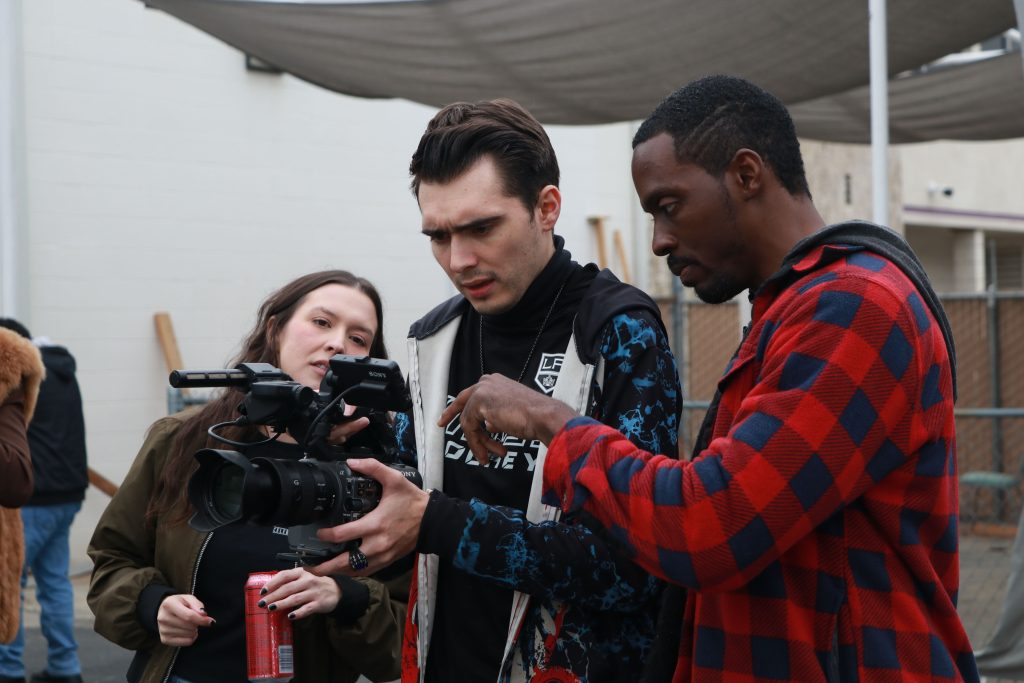
“I’ve learned to embrace myself a lot more, even though I may be different. That doesn’t matter if I’m different,” said Nicholas. The photo to the left is Nicholas being trained by two Inclusion Films teachers. (Photo by Malcolm Caminero).
The school has also made him recognize how other people view him and his community and he wants people to treat them with respect.
“During the times that we are living in right now, people are trying to think, autism or whatever is like, something that could be cured or prevented…that doesn’t make sense. Do you not understand how dumb that sounds? Because it feels like they’re trying to, like, demoralize us,” said Nicholas.
Nichols’s biggest takeaway has been self-confidence and being true to who you are.
“But the lesson that I learned from coming here is that you know you should never be ashamed, no matter…what people think of you and stuff, don’t listen to them, because they don’t know jack shit, to be honest. And I mean that with all due respect.” Said Nicholas.
What’s next?
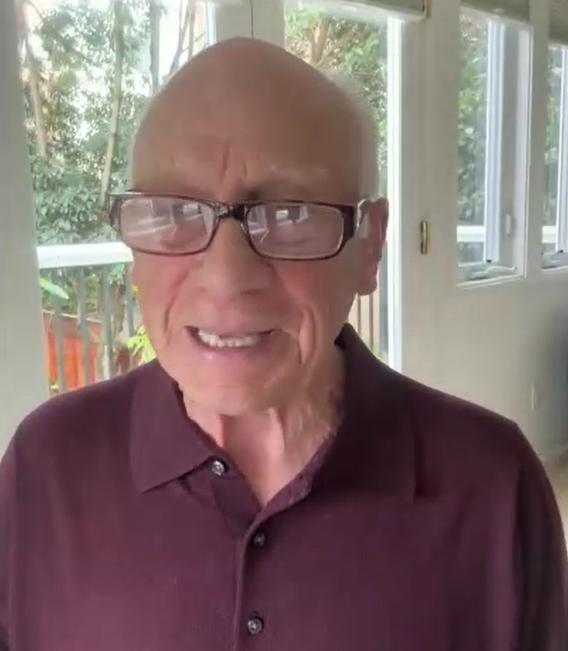
For Joey Travolta, one thing to keep an eye on is the current administration. Since the school is funded through state and federal funds, there is a fear of what might happen if those funds get cut. The photo to the left is Joey Travolta being interviewed on Zoom. (Photo by Malcolm Caminero)
“Right now, we’re funded. They haven’t taken anything away yet. But, you know, it’s scary. It is scary. I think we’re going to be okay, and I’m going to continue going as long as I can.”
Dale Oprandy is taking a similar approach.
“I would hope that you know, the current administration has enough sense to realize how important this is and how important these young adults have to pave a life to where they can be independent,” said Oprandy.
If drastic changes are made and he is willing to stop at nothing to do what he can for the students.
“I will teach these kids, even if we have to go to my backyard and teach them, but I would do whatever it takes to get some funding wherever I can, to keep it going, because these kids deserve this. They deserve to have this path in their lives. And so I’ll do whatever it takes if that ever happens,” said Oprandy.
Above is a video piece about Inclusion Films, shot and edited by Malcolm Caminero. It includes a run-through of what a day is like at the school, the lessons they do, and how they navigate some of the challenges they are facing.
All photos and videos in this project were taken by Malcolm Caminero.