AI in the Entertainment Industry
How students, professors and industry professionals are reacting and adapting to the changes
By Shruthi Narayanan
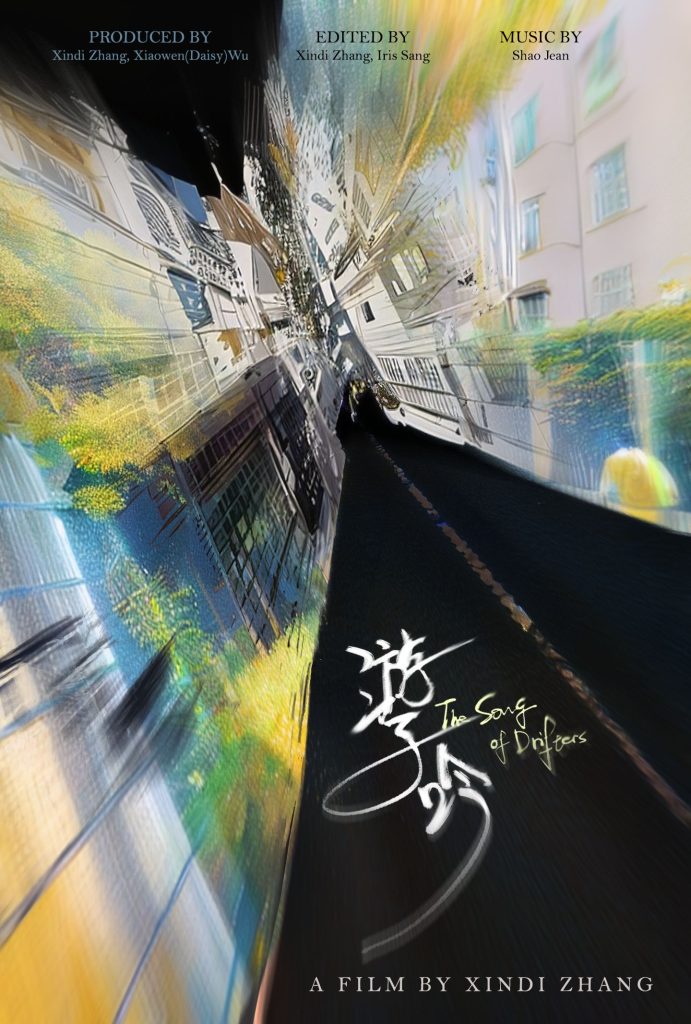
Xindi Zhang is a filmmaker who’s a recent graduate of USC’s Expanded Animation program. Her thesis film “The Song of Drifters” was partially made with the AI tool ComfyUI. “The Song of Drifters” recently won the “Gold” award at the Student Academy Awards, making the film eligible for an award at the 98th Academy Awards.
“I took a deep dive into this medium…”
– Xindi Zhang
“I think people who liked my work, it’s not because I used this tool. It’s more about what story and how I deliver the story,” Zhang said. “And I think this whole process of recognition also makes me more confident.”
AI has upended all aspects of the film and entertainment industries, from creatives to curriculums, and while some embrace the new opportunities it offers, others are strongly opposed to its increasing hold on creativity.
In terms of AI’s uses in filmmaking, it’s not only typing something into a platform like ChatGPT and having it generate images or videos from prompts. There is thought and creativity in how AI is used, and Zhang emphasized how she worked with AI, rather than letting it take her creativity.
And while she’s made several films in the past, her thesis film, an experimental documentary called “The Song of Drifters,” was the first film that she made using AI.
“I took a deep dive into this medium and figured out the way that I can use that to support my creation, rather than replace my creativity,” Zhang said. “Then, I made my thesis film recently, and now I’m kind of digging deeper towards AI and seeing more possibilities.”
ComfyUI is a node-based AI video and image-generation application. A node-based platform allows the user to connect different points to a flowchart and doesn’t require much technical experience, making it easier to use for beginners compared to other platforms.
Zhang enjoyed using ComfyUI because of its customization aspects, compared to other AI tools.
“The first time was definitely the biggest challenge, because honestly, the way I use [AI], it’s almost like visual coding,” Zhang said. “To figure out how to use that and test out each parameter takes a long time.”
In terms of her workflow, Zhang had the entire story and structure of the film complete before she even started using ComfyUI. She transcribed the interviews using ChatGPT, then she talked with her editor to discover the structure of the story, and then she started working with ComfyUI to create the visual effects and illustrations. The illustrations were based entirely on her own work, not of other artists’.
Zhang was satisfied with her workflow and how the film turned out.
“If I would change, then that might be a different version of the story,” Zhang said. “I might be digging deeper into the editing, rather than the technical aspects… I don’t think going back, I can do more with it, and I’m satisfied with what ComfyUI gave to me.”
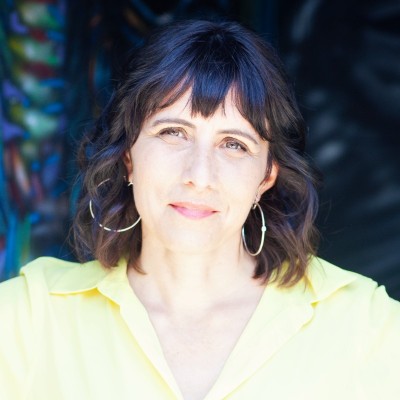
It’s not just students fresh out of school that are embracing AI in their work.
Chara Campanella is an Emmy-nominated creative producer who currently works as a Sora Alpha artist at OpenAI, one of the leading companies behind AI-generating tools. In her workflow, she uses a variety of tools, ranging from popular and known tools like ChatGPT and Sora to lesser known alternatives such as Dreamina and Rev AI. Dreamina is the platform she’s using to create “Shredlings,” and a still from that project is on the left.
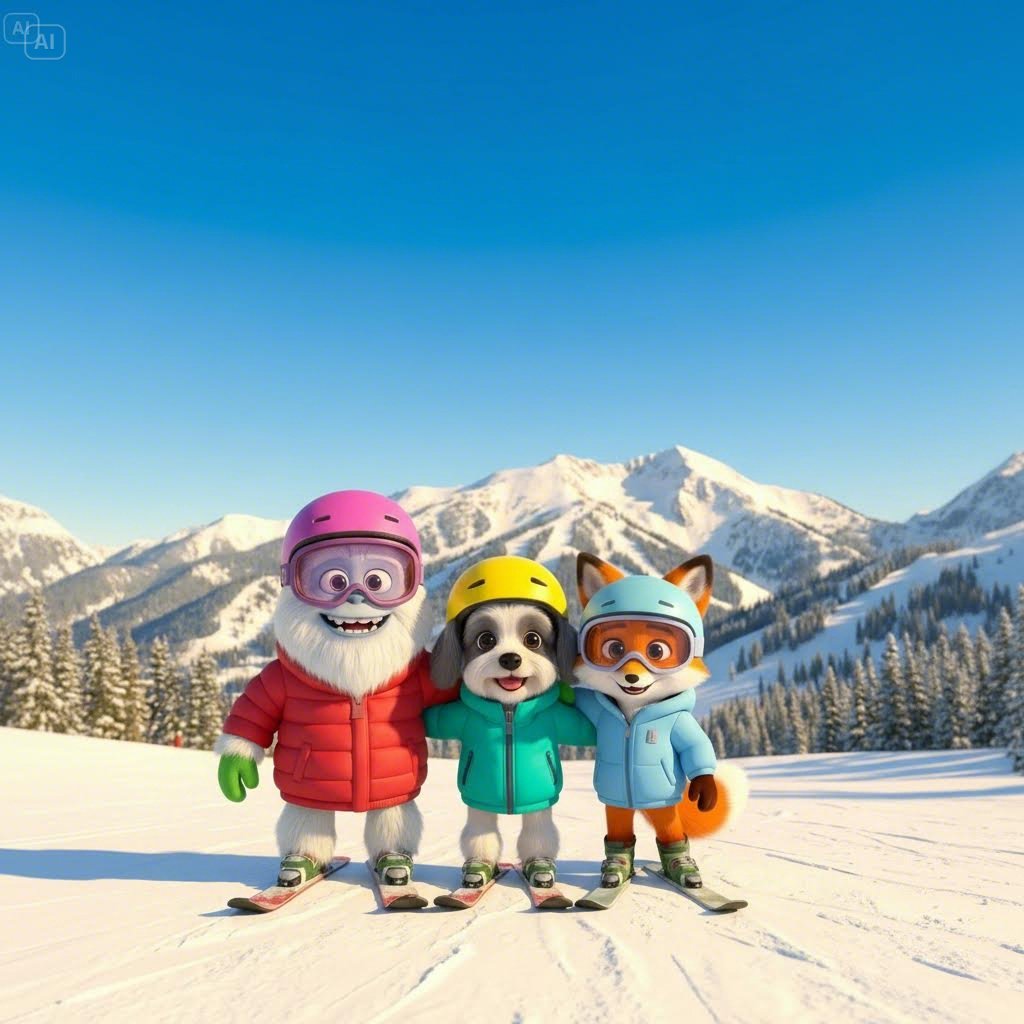
Campanella, who has been using AI for a variety of uses in her work since it first became popular, also stresses the idea of viewing AI as a collaborator rather than something that makes her films for her. For her, AI is mainly used to help her “push past that blank page.”
“It’s not like I prompt the AI and it goes off and it brings me back a movie,” Campanella said. “It’s really eager, and it’s excited to bring you back stuff, but you’re the one who provides the sense.”
Campanella encourages students to take AI courses and learn how to use these tools in their work.
“Even if you hate it, you have to learn it,” Campanella said. “It’s a tool that can help you just tell a story. So even if the AI is not the main character of the class, it can be a secondary character in the class for whatever you’re learning.”
“I create a really nice community where everybody’s very supportive and helpful and excited and working together.”
– Elizabeth Strickler
In her program at USC, Zhang didn’t have any AI courses, but her professors encouraged students to try cutting-edge technologies, like AI. Zhang’s also currently a visiting professor at the University of South Florida. She teaches digital drawing and visual storytelling. She incorporates a little bit of AI into her classes, but not that much.
“There’s a crucial difference between people who are not in this field and who are a pro,” Zhang said. “The outcome of using the same tool will be totally different. So for my courses, I want them to have a good foundation before they jump into this tool, because this tool could be very misleading.”
Elizabeth Strickler is the Director of Media Entrepreneurship and Innovation at Georgia State. Over the summer, she taught a course on how to make an entirely AI-generated film. She shared that in her experience, the people who were filmmakers made “interesting and compelling work” compared to the people who were newer to filmmaking.

Strickler’s class was a weekend-long class that she’s now condensed to one-day. It’s open to the general public. She walked through what a typical day in the class was.
The classes run from 9 a.m. to 6 p.m, with “the first half of the class learning and the second half of the class making.” She shared that in her classes, the environment is one “where everybody’s very supportive and helpful and excited and working together.”
Strickler emphasized that students should come in with a story beforehand, either generated from a form or a pre-existing script that they were working on. Next, she runs the script through a “treatment creator” that creates a “robust treatment.” Then, the storyboard with the characters, locations, and scenes is created by another software called FilmPro. Students can then refine those images, or jump straight to “image to video prompting.” At 5 p.m., everyone shows their films, designed to be complete products.
“I’d rather just draw my idea as is. It’s really difficult to talk to a computer.”
– Zen Thai
For a few USC students, however, the idea of using AI in their courses has been a struggle on their creativity.
Zen Thai is a junior studying film production, specializing in cinematography. Her goal is to be a DP.
“I like to tell stories, whether it was through media in a flat physical form, or through videos, or through a music video or just singing,” Thai said.
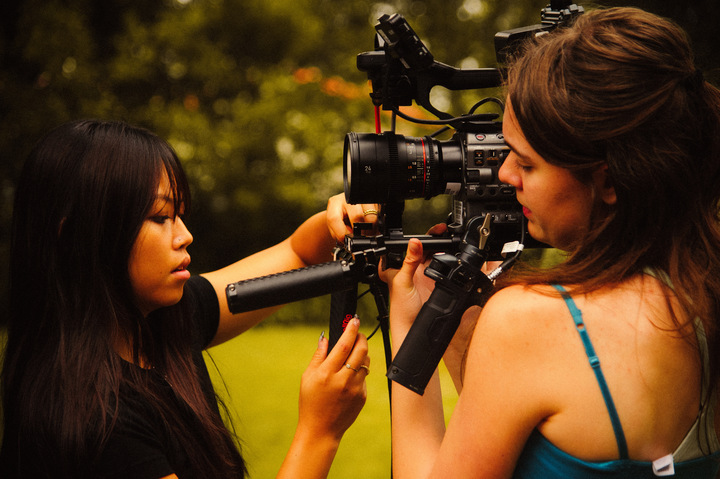
Thai is currently enrolled in CTPR-295: Cinematic Arts Laboratory, a required class for all film production majors. The class is split up into three parts. In one part, students direct a narrative film, in another part, they direct a documentary, and the last part is experimental.
While traditionally, the “experimental” part of the class involves the production of a music video, for this semester, that was changed into an AI class. The AI part of the class is used as pre-production for their CTPR-310 films, which is their junior year thesis.
For Thai, using AI has come with its own set of challenges.
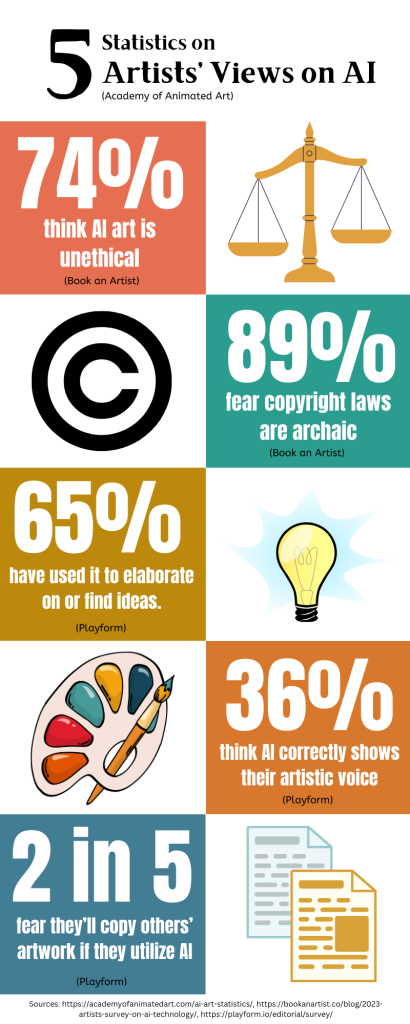
Sources: AI Art Statistics: The Ultimate List in 2024, Survey Reveals 9 out of 10 Artists Believe Current Copyright Laws are Outdated in the Age of Generative AI Technology – Book An Artist Blog, Text-to-Image, is it art? what artists think? How artists use text-to-image?
Graphics Credits: Scale: ©sketchify via Canva.com, Copyright Icon, Lightbulb, and Copied Papers: @pixabay via Canva.com, Paint Palette: @natalieosipova via Canva.com
“I’m not a huge fan [of the AI use] just because I am an artist myself. I’d rather just draw my idea as is. It’s really difficult to talk to a computer.” Thai said. “I remember once I was trying to explain to it: I want this shot of the camera revolving around the character, it’s like a 360. Can you do that for me? And it put out a PowerPoint 360 turn. I was like, ‘oh, that’s exactly not what I wanted.’”
She highlighted specifically what about how the class is framing AI use that she finds lacking.
“Overall, the class is a bit unorganized, and it doesn’t feel like we really get much out of this idea of using only AI, just because I feel like AI will never be able to replace what human connection and human thoughts and what creativity can really give you,” Thai said.
Thai’s not alone in her views of how AI is used in the class.
“I think definitely my classmates are forced to use AI,” Thai said. “We don’t want to, so what we’ll do is we’ll just use AI to turn in our assignments, and then outside of that, we add on to our [CTPR] 310 projects using humans. But it’s all just for the grade at this point.”
“Using AI… you’re depriving what makes it such a special art form.”
– Bennett Weinschenk
Film students aren’t the only ones weary about AI’s impact on the industry.
Bennett Weinschenk is a first-year graduate student studying public relations and advertising. Before coming to USC, he spent five years in the entertainment industry as a production assistant and director’s assistant before pivoting after noticing the instability of the industry.
“All of a sudden, shows are getting canceled, or projects that were going especially weren’t, and fewer things were getting greenlit, and all of a sudden crew members have less opportunities in terms of AI,” Weinschenk said. “At that point, it became a matter of like, the healthiest thing for me to do is to move on.”
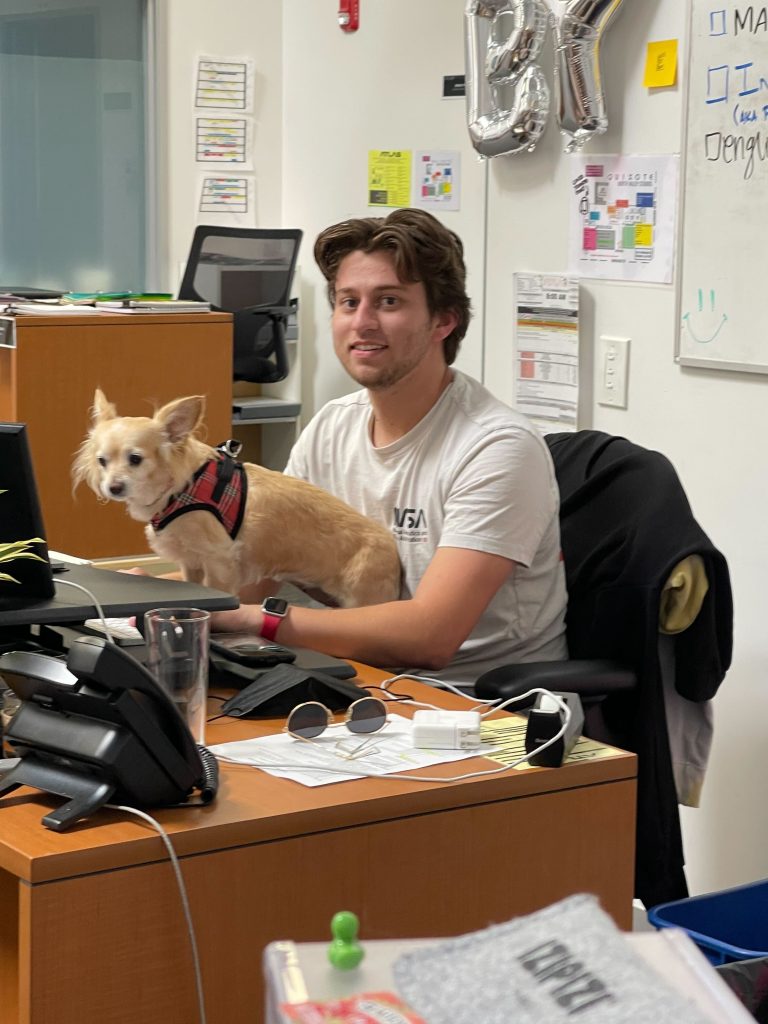
While Weinschenk has always had a negative opinion on generative AI, it’s become more tangible in recent years, showcasing how the industry’s perception and reaction to AI has shifted over the years.
“Back in 2022, when I was working in film and we were talking about AI, it was still very theoretical, and in a way, felt very distant,” Weinschenk said.
For Weinschenk, while he finds the use of CGI in films to be acceptable, generative AI is where he draws the line.
“Generative AI, where a computer or an LLM is telling a story, it can’t come from an original place. It can’t come from a genuine human place,” Weinschenk said. “And I think using AI to do something that only a human can do, which is to express emotion, express genuine emotion, you’re depriving what makes it such a special art form.”
But not all students share this apprehension.

David King is a senior studying public relations and advertising and the current president of art.ificialusc, a club described on their Instagram account page as “The FIRST and ONLY student organization exploring AI in entertainment, design, media and creativity.” The organization has over 300 Instagram followers, showing their significant growth since they were first established at USC during the Spring 2024 semester.
King said that he first joined the club to better understand how AI is impacting entertainment, an industry he hopes to join after graduating.
“I’m just kind of curious about how AI is this imminent thing that we are gonna have to learn how to use,” King said. “Our club is trying to give people some answers to the questions that they inevitably have regarding how this new technology is going to be impacting an inherently very human industry.”
Even though Zhang has used AI in her film, she stressed how she never used it for writing.
“I wouldn’t use that for actual script writing or editing,” Zhang said. “I think in order to keep your original voice, you need to spend more time on your concepts. So for that stage, I wouldn’t rely on AI that much.”
Zhang personally views a bright future for AI and its use in filmmaking.
“It definitely lowers the barrier. Now everybody could be a creator,” Zhang said. “We’ll be overwhelmed by a bunch of low quality and bad stuff and it’s everywhere, but it’s also going to make the people who have a good idea shine up.”
Header Image: Nir Yaniv, CC BY-SA 4.0, via Wikimedia Commons
