by Haylee Clophus
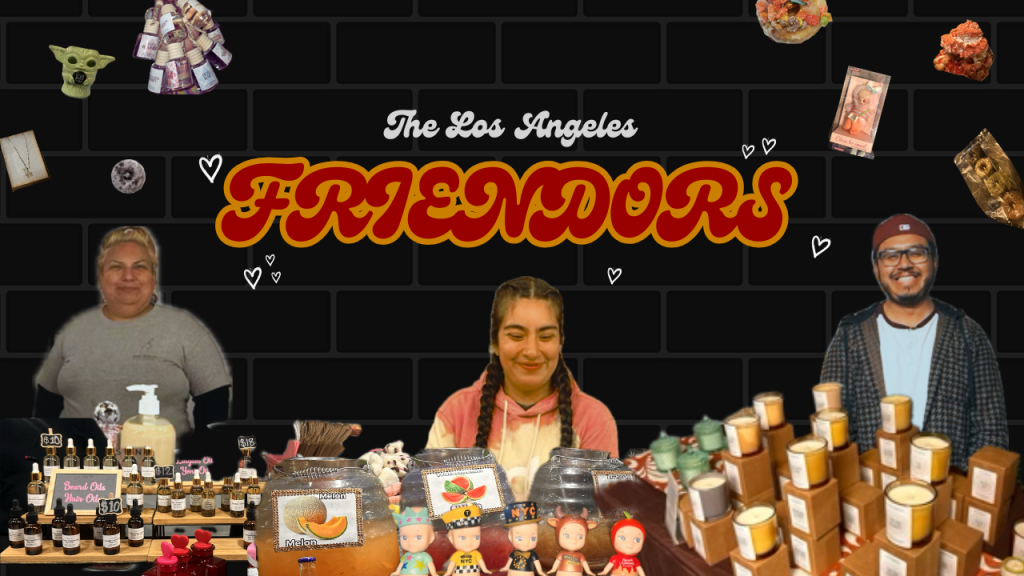
“I’m not the healthiest, so sometimes it takes me a little bit longer,” said Maribel Leyva, owner of Mid G Beauty. “But I believe if I slow down, that’s kind of giving into my illness. I just try to keep going as much as I can.”
Down the row from her, her daughter Iris Martinez sells mini donuts out of a booth she started after helping her mom. “It’s my business, and I’m doing it. Every interaction is different,” she said. “It’s something creative, something not a lot of people have.”
Lino Silva: “We Built This Together”
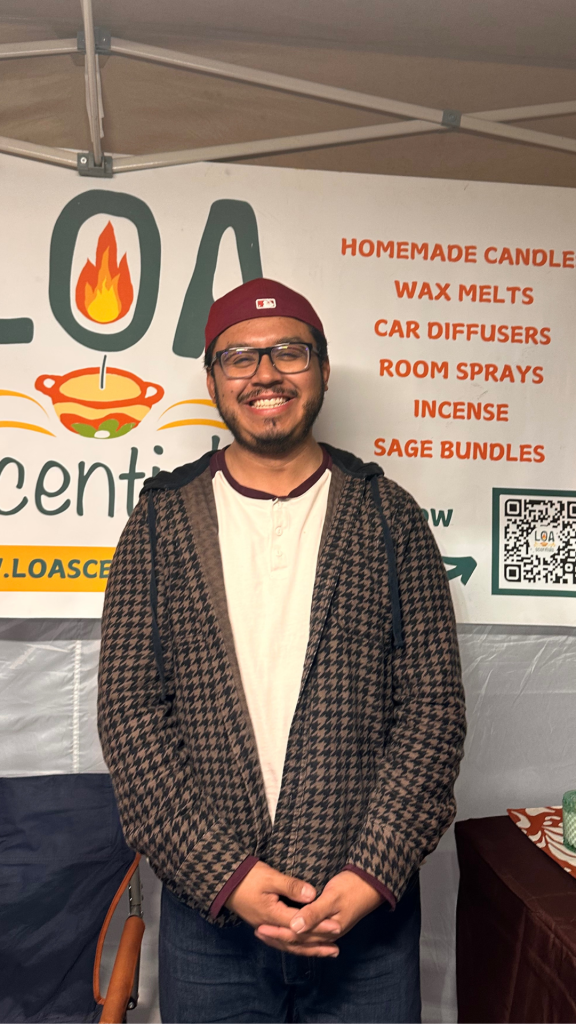
Lino Silva didn’t set out to run a business. He just wanted candles that wouldn’t trigger his headaches. “My husband’s the one that actually said, ‘Why don’t you try to make something for us, for yourself, that’s cleaner to burn?’” Lino recalled. “From there, we took about eight months to really test fragrances, waxes, wicks, containers.”
They called their business Loascentials—a name that includes both of their identities. “He said, ‘This is a we thing,’ and I’m like, you know what, I agree. That’s why we’re married.” Now the pair split their time between full-time jobs and weekends pouring wax, hauling supplies, and vending at pop-ups like Alameda Night Market. But things are getting harder. “We just got some new pieces from Mexico for our candle class, and it took over two months to get everything through,” Lino said. “Normally we’d get things in two months, now it’s taking three. We’re watching every dollar.”
Tariffs on imported materials—like molds and waxes—have ballooned. “It’s just not predictable,” he said. “Shipping used to be $60. Now it’s double that for the same box.” And there’s another cost: dignity. “We’re always questioned. ‘Did you make them? Did you buy them?’” Lino said. “We’ve had to define our space in this business. It’s a labor of love.”
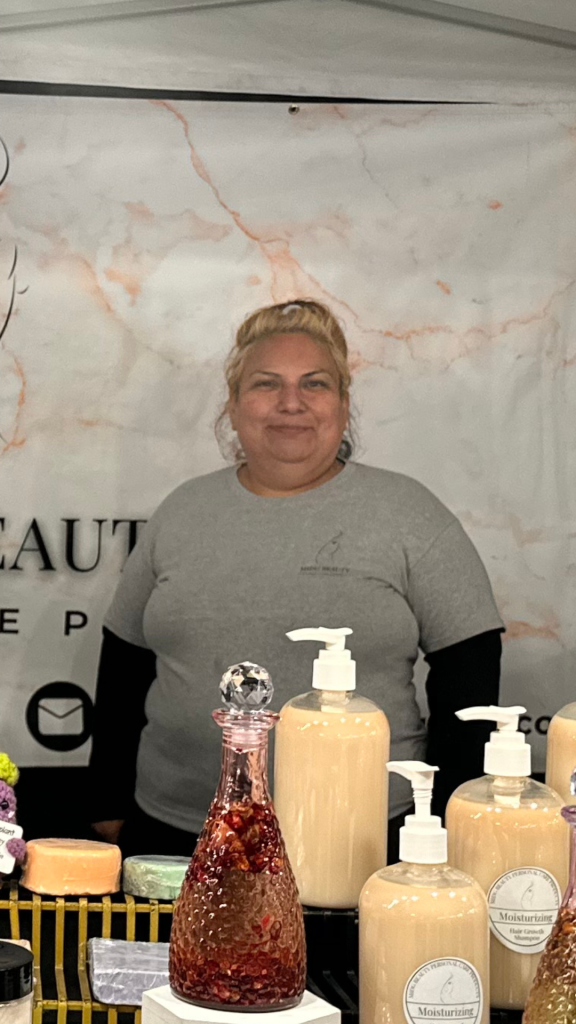
Maribel Leyva: “For Me, It’s About the Body”
Maribel started Mid G Beauty because she couldn’t find clean skincare for her daughter’s sensitive skin. As a single mom, she taught herself to make everything from soap to scrubs, eventually launching her brand at the urging of her family. “I started off with six items,” she said.
“Now I’m up to 270 that I actually make all on my own.” But growth hasn’t come without sacrifice. Maribel works a 9-to-5 in e-commerce, then pours her energy into making products by hand and selling them on weekends. “I have a blood issue that my body rejects iron, so I’m constantly tired,” she said. “I have chronic anemia, and I constantly have to be getting blood transfusions. I have a heart issue too.”
She took a break from vending to prioritize her health but returned three months ago. “If I slow down, that’s kind of giving into my illness,” she said. “I just try to keep going as much as I can.” Still, financial realities hit hard. “All my ingredients are going up approximately 30 to 35 percent,” she said. “But if I increase my prices here, I’m not going to sell.”
Maribel said her Latino customer base often expects lower pricing. “They don’t want to pay six or seven dollars for a bar of soap if they can go to the dollar store and get one,” she said. “But they don’t realize those are full of chemicals.” Even so, she stays loyal to Alameda. “I do try out different markets, but I always come back here,” she said. “I have really faithful customers that look for me wherever I’m at.”
Iris Martinez: “Every Interaction Is Different”
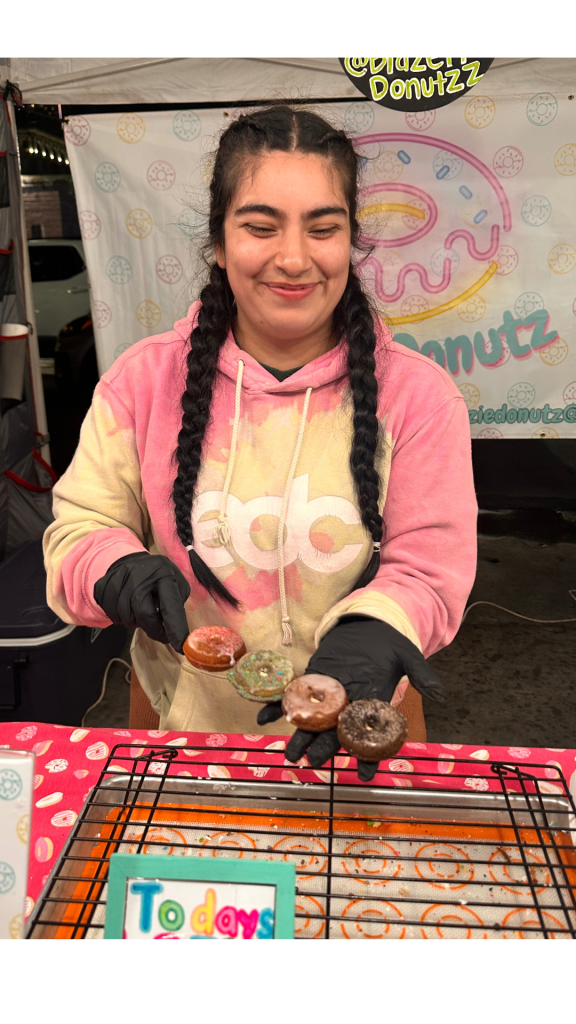
Iris Martinez never expected to start a donut business. But after helping her mom at the night market, she decided to launch something of her own. “I saw people walking around with mini pancakes and stuff, but I never saw donuts,” she said. “I wanted something creative, something different.
So I started Crazy Donuts.” Her signature? Flavor inside and out. “The flavor is not just on top. It’s also in the inside. You get double the flavor,” she said.
But running a booth while attending Cal State Dominguez Hills full-time was too much. “I stopped doing full events,” she said. “Now I do single pop-ups and take Monday and Wednesday off to do orders.”
Iris recently started back at the night market after taking time for school and mental health. “I figured I was like, I can try to keep going, but I needed to take a break,” she said. “But it’s always going to be here if I keep the stuff going.”


Listen in for the History Behind These Issues
The Bigger Picture
Shannon Camacho, Senior Policy Associate at Inclusive Action for the City, has spent years fighting for street vendors’ rights. “Up until 2018, vending was technically illegal in California,” she said. “Vendors were criminalized for simply trying to make a living.” Camacho was part of the coalition that helped pass the Safe Sidewalk Vending Act. But she said many barriers remain. “Permitting is still extremely complicated,” she said. “Some cities require fingerprinting or background checks. That’s terrifying for undocumented vendors.” She said tariff hikes and permit fees stack up against those already struggling. “The system isn’t built for them. It’s built to keep them out,” she said. Now, Inclusive Action is pushing for legislation that would ban local governments from sharing vendor data with federal immigration enforcement. “We’re trying to close the gaps,” she said. “People need to be able to vend with dignity and without fear.”
Looking Forward
Whether it’s candles, scrubs, or donuts, each product sold at the night market carries more than scent or flavor. It carries the weight of survival, community, and dreams that refuse to shrink. “I just want people to do what’s best for their body,” Maribel said. “That’s what pushes me.” “This is a we thing,” Lino added. “We made this together.” And for Iris? “Every interaction is different. That’s why I keep doing it.” The future of night markets in Los Angeles isn’t just about food trends or social media hits. It’s about families trying to stay afloat, in a system that makes them hustle harder for less. But as long as the lights stay lit, and the music keeps on at the Alameda Night Market, they’ll keep showing up. Together.