
The Hidden Artist Community
How the American education system rejects children with disabilities. And what one non-profit is doing to change the narrative.
By Drake Lee
Rachel Curry strolled through the halls at Berendo Middle School in Los Angeles. She arrived at her art class. She wanted to draw, but her schizophrenia prevented her from staying focused. She saw things that weren’t there and heard the other people in the class snicker. “Why is she so retarded?” one of the boys asks rhetorically. After class, Curry confronted those who laughed at her.
“I beat the shit out of them,” Curry said.
Curry is one of many with mental disabilities who face a hostile environment in school from peers and a rigid learning curriculum. More than four-fifths of people with disabilities have experienced bullying, according to the charity Mencap.
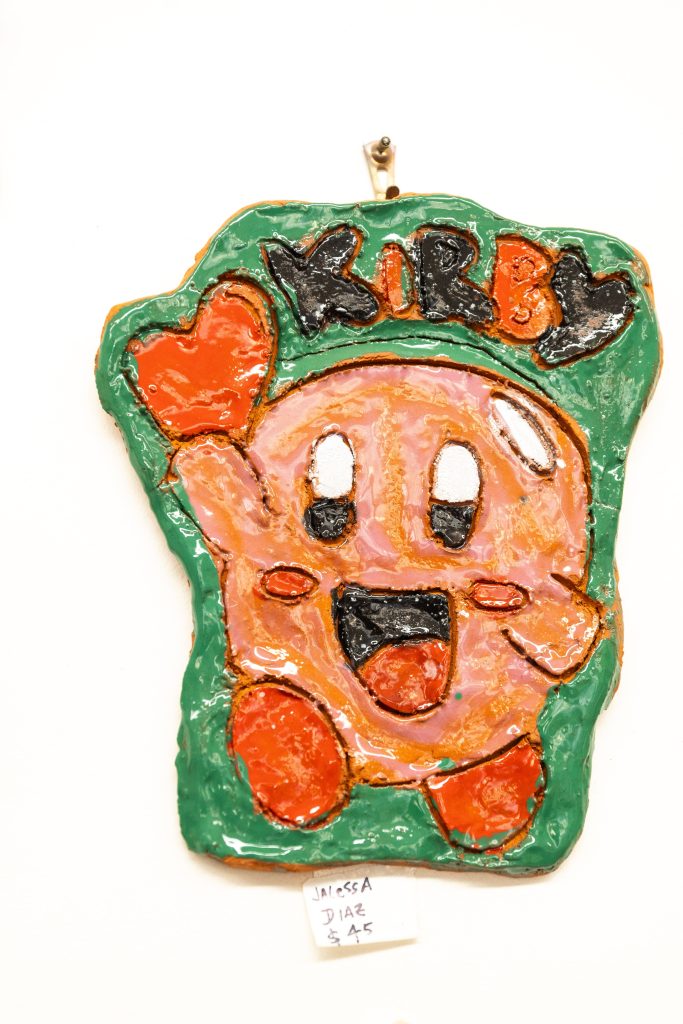
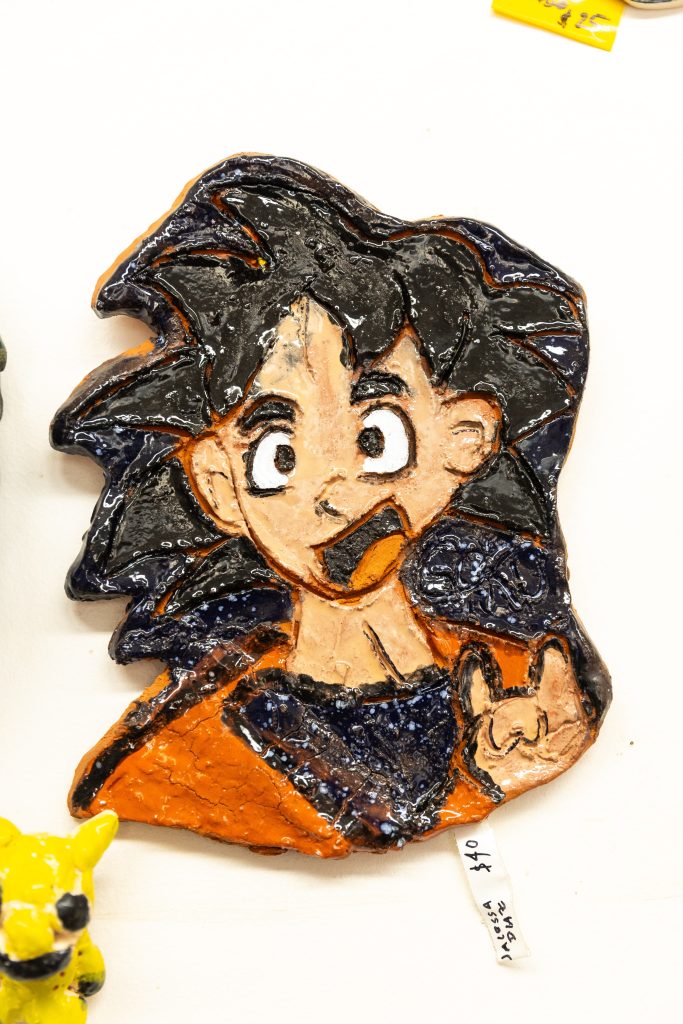
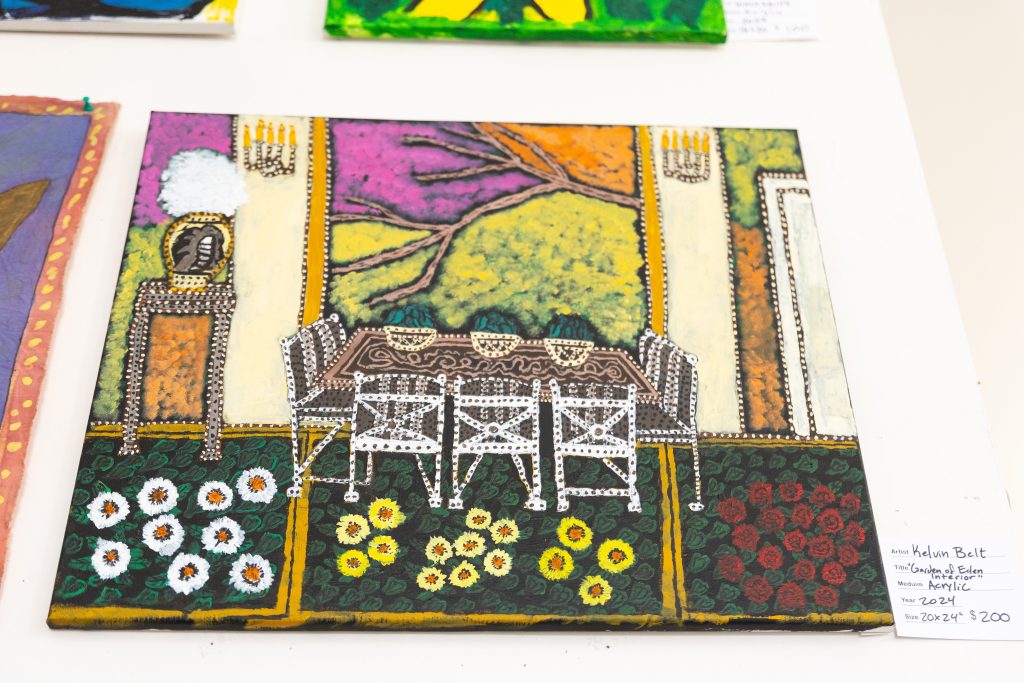
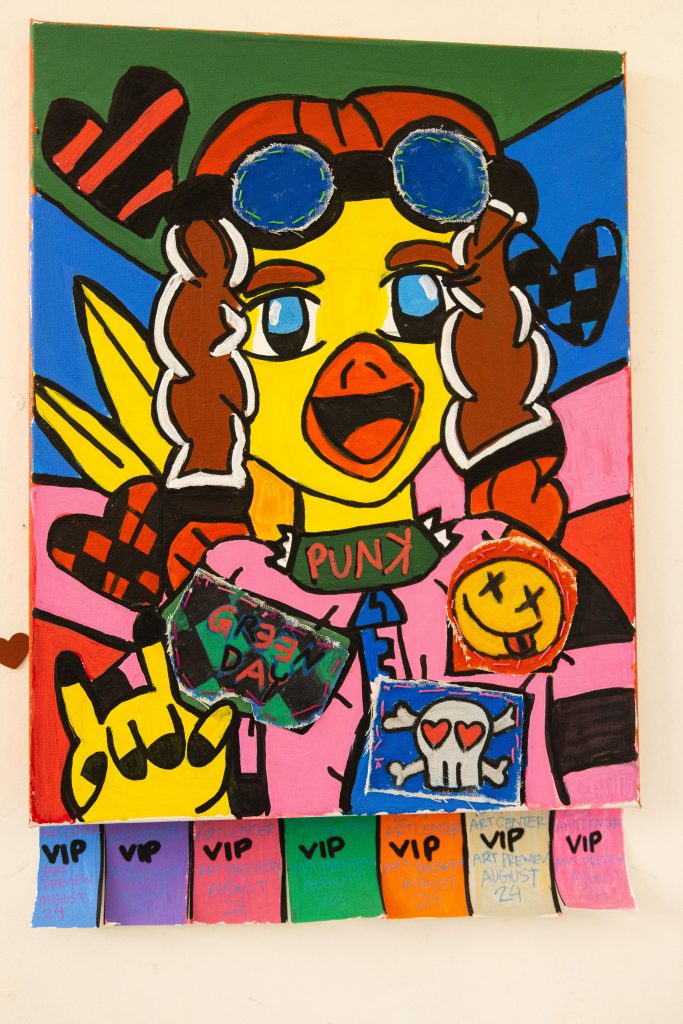
As a result, children and young adults seek other outlets to educate themselves. One of those is ECF, a non-profit organization based in California. The art center initiative in Los Angeles is one of many programs offered by ECF to children and adults with disabilities.
“We offer freedom of creativity, freedom of expression,” said ECF Ceramics Teacher Nicole Winter. You think art is free in the regular system, but you’re still trapped in a box because you’re being assessed. You’re working towards a grade.”
Here more from Winters and her teaching philosophy:
ECF holds art shows throughout the year where sponsors and everyday people can buy art. Half of the revenue goes to the art center; the other half goes to the artist.
“People with disabilities are such a hidden community,” said ECF Art Center Director Isabel Reeves. “It makes regular people uncomfortable, so they don’t want to address it.”
History of Disability Rights
The United States did not officially recognize disabilities in schools until 1975. That year, Congress passed the Individuals with Disabilities Education Act (IDEA) which mandates that all places of learning accommodate children with special needs and prevent them from being discriminated against.
IDEA also set aside a spending budget for special education programs in schools. The Department of Education sends billions of dollars each year to states, which then distribute the money to the local governments.
Since the law was passed, the number of academies that qualify for special education funding has increased by about a tenth. However, the total budget from the bill has stayed the same, according to the National Association of Elementary School Principals, leading to many special education programs being underfunded. Almost three-fourths of U.S. schools reported a shortage of special education teachers, according to a 2023-2024 survey conducted by the National Center for Education Statistics.
“A lot of students in schools aren’t having their needs met,” said USC Associate Professor of Clinical Education Nasser Cortez. “Some of it has to do with a lack of resources and a lack of personnel to support students. And there’s a lot of litigation that puts pressure on districts and schools.”
According to Cortez, students with disabilities can receive an individualized education program (IEP), which is based on a preliminary assessment. The IEP acts as a guidebook for special education teachers to instruct that particular student. If an IEP is violated, parents can sue for discrimination.
Since IDEA was passed, there have been several lawsuits that have offered clarifications on IDEA’s wording. In the 1988 Supreme Court case Honig vs Doe, the U.S. ruled in favor of two California children with disabilities and stated that IDEA prevents schools from excluding children from the classroom if they misbehave.
The numerous legal fees strain financial resources for both families and schools, according to Cortez. Consequently, many school districts have underfunded special education programs or are afraid of teaching children with disabilities out of fear of litigation.
And funding may become even more scarce. On March 20, President Donald Trump signed an executive order to dismantle the Department of Education (DOE), something that he promised during his election campaign. Trump can’t fully close the agency unless Congress passes a bill to do so. However, the DOE said earlier in March that half of its staff was laid off or bought out.
“It has a huge impact on our program,” Cortez said. “How are schools going to be able to maintain what’s already in place with an IEP if there is funding that’s cut? Because if you can’t meet an IEP, you’re out of compliance, and that means a family or an attorney, they have the right to say ‘Hey, you’re not doing what you’re supposed to be doing.’”
The agency responsible for ensuring schools are not being discriminatory towards certain groups, the Civil Rights Office, lost the highest percentage of workers. Less staff means the agency will have a more difficult time processing disability discrimination complaints.
Federal funding for IDEA will not be affected, but Trump said funding for the disabled will be handled by the Department of Health and Human Services. The reallocation of funds has experts worried that the new department won’t be as knowledgeable as the DOE on children with disabilities.
With the current situation in mind, here are some of the artists’ stories:
Rachel Curry
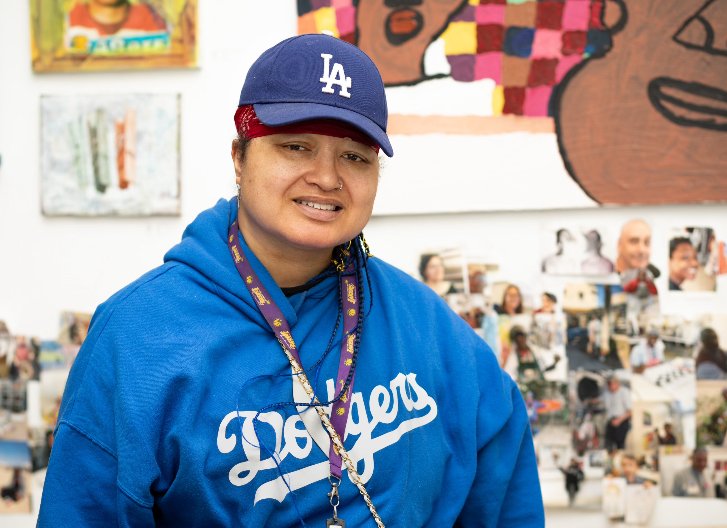
Rachel Curry smiles at the camera. (Photo courtesy of ECF)
Rachel Curry was diagnosed with schizophrenia at an early age; which was passed down through the family. It was so severe, that Curry had to be checked into a mental hospital while she was in school. Curry said she had disorganized speech and thinking in class, which led the other kids to pick on her.
“They used to call me names all day and say I was retarded,” Curry said. And I said ‘No, I’m not retarded.’ I can do math, I can read a little bit. That’s the reason why I got my high school diploma because I did good.”
One day, Curry retaliated against a group of boys who were picking on her, and she got suspended. Curry said she did not receive any help from the faculty when she was bullied.
“I wish one of my teachers was there for me,” Curry said. “I just took care of myself and tried to stay out of the way.”
At the art center, most of Curry’s artwork revolves around a superhero version of herself named Super Rachel. In it, she saves people in Los Angeles alongside her 21-year-old son named A.J. He and Curry live in separate group homes, and they don’t see each other very often.
Curry is afraid she will scare A.J. if they see each other too much in person. Instead, Curry draws him in her artwork as a fellow superhero, as a reminder of their connection.
“I want A.J. to believe that we’re saving the world and keeping kids out of trouble,” Curry said.”
Curry said her dream is to enroll at USC and get an arts degree.
Chris Romero
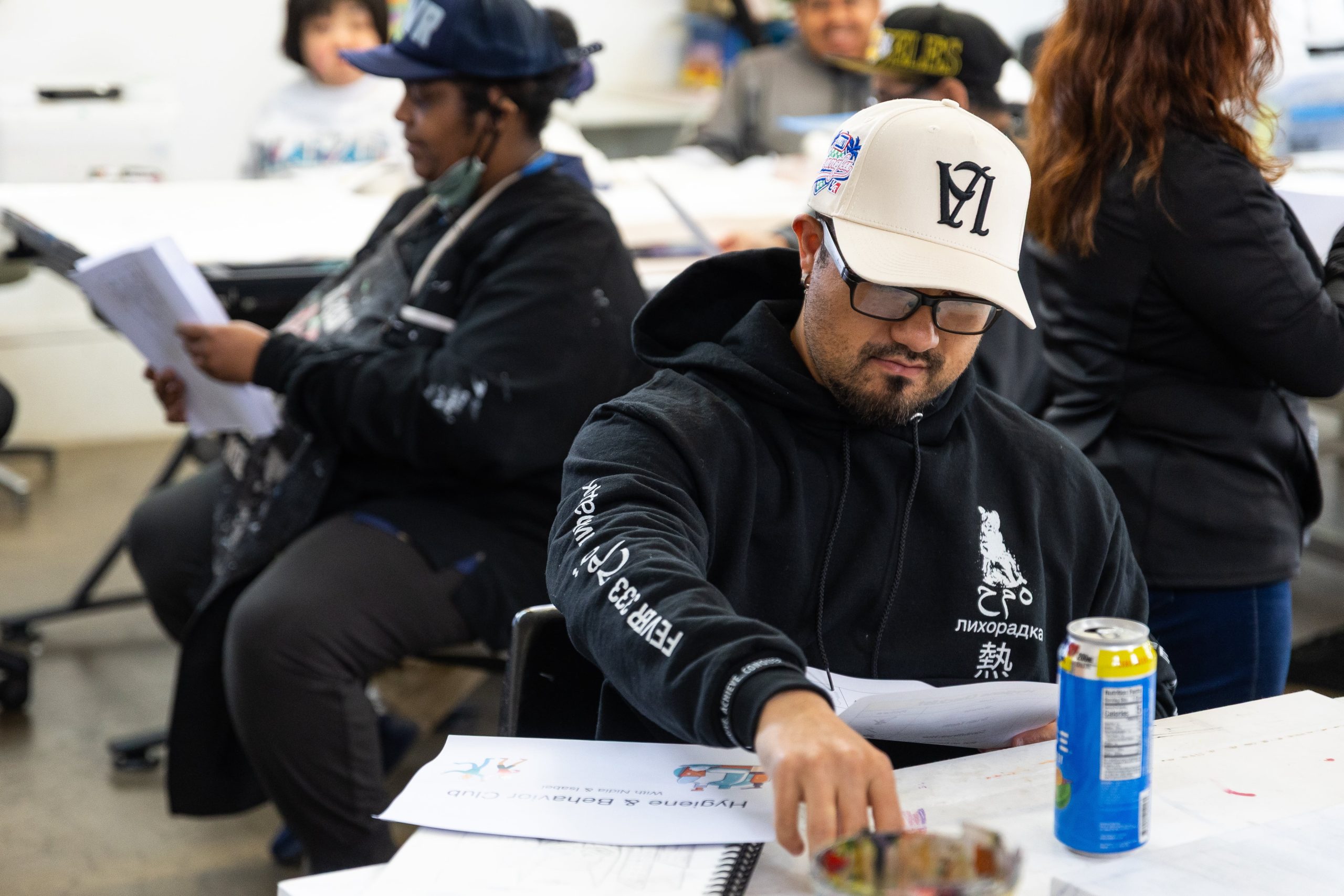
Chris Romero draws while in art class. (Photo by Drake Lee)
Ever since he was little, Chris has been drawing Pokemon.
He attended Virgil Middle School in Koreatown, which is where the problems began. Due to his autism, he wasn’t able to keep up with his colleagues. His peers called him names like “troublemaker” and “bad boy.”
One day, Romero’s friends coerced him into touching a girl’s leg. The girl hit Romero and caused partial blindness in his left eye, and he must wear glasses for the rest of his life. He was also suspended, and the police threatened to arrest him if he did it again, according to Rivera.
“I was pissed,” Romero said. “I was like, ‘What the hell am I doing?’’
After he graduated from college, Romero joined the art center where he has continued his love for drawing Pokemon and other video game characters. He says art is his path to redemption.
“I don’t want to be a stupid kid I was before,” Romero said. “I don’t want to be that stupid kid that I was in middle school.”
Antwan Jones

Antwan Jones speaks while in ceramics class. (Photo by Drake Lee)
Antwan Jones always knew he wanted to do art. When Jones was little, he drew on the walls of his apartment in Downtown LA before his mother put a blank white sheet in front of him and said, “Paper!” It was around this time that Jones was diagnosed with Autism.
Growing up, Jones was sequestered in school, but that was by choice. He said he preferred to read his comic books, which is where he got inspiration for his art.
“I used to read a lot, and I would just be by myself,” Jones said. “Other people would be like ‘What’s wrong with you?’ But back then, I just said, ‘Who needs friends?’ My brain is wired different than most people.”
At the same time, Jones says it’s important for everyone to learn in school.
“Cutting off special education, or education in general, is not really a good thing,” Jones said. “Everybody needs some form of education, even if they’re no longer in school. Nobody can sit up there and say ‘I know everything.’”
Jones went to the Los Angeles Community College District to continue his art education, but the school shut down the program before he could complete his degree. At the same time, he worked different jobs like McDonald’s and in the grocery store, but he could not find that creative spark.
“I felt like a mindless monkey,” Jones said. “I wasn’t using my brain. They were like, ‘Clean this thing here, bring these carts.’ You’re not really thinking, you’re just doing.”
So five years ago, Antwan joined the art center, where he specializes in ceramics and painting pieces about Los Angeles. His ultimate goal is to become a mural artist, something that his ceramics teacher, Nicole Winter, says he has the talent to do.
“He’s got a photographic memory,” Winter said. “Anything from YouTube, he can just copy and recreate it on the paper. You can tell he’s been doing this for a while.”