A New Era of Engaging with Sports: Online Betting
-
“Luka just needs to hit one more three.”
“The Lakers need to score 10 more points.”These are some of the phrases echoing in the room as a group
of college-aged men watch a Lakers game smushed on a couch in their college house.Only a few of the men in the room are Lakers fans,
but the others have something other than fandom keeping them
engaged. It’s less about the game and more about the wager
they placed on a betting platform before sitting down to watch
the game.Watching a game in 2025 with a group of college kids looks a lot different than it did five years ago. Watching a live game no longer means just turning on a TV or going to a game to see your favorite player.
Now, there is an ethical debate – to bet or not to bet.
With a generation so connected to their phones, it’s no surprise that online sports betting has become a popular way for college students to enjoy sports. Today’s version of sports betting is the sport—whether you’re watching the game or betting on it, it’s all part of the same experience.
The prevalence of sports betting prompts this question: Are fans more interested in the actual game or the game of betting?
A 2023 NCAA survey found that sports wagering is popular on college campuses — 67% of students living on campus bet on games. The dialogue around viewing sports games has shifted from “I’m bored, let’s turn on the Lakers” to “I need the Lakers to score more than 70 points tonight to hit my bet.”
There is a new incentive for tuning into games.
“I would say 40% of my friends’ sports bet pretty regularly ,” said Stone Zashin, a current senior at USC.
Zashin, 22, says he has seen a major shift in how his friends engage with mid-season NBA games and random golf tournaments. They are engaged, but not for the love of the game — for the money. It’s never been easier to bet on sports since anyone can simply place a sports bet by just a click of a button on an iPhone.
Chase, who did not want to be fully named for career purposes, is a senior at USC and has become fully addicted to betting.
“I wouldn’t say I am most likely [to bet on every game I turn on], but it does add aspects to the game whether it’s even a $5 bet,” Chase said. “It just makes rooting for a team a little more exciting if you don’t have anything else vested in the game.”
Chase’s approach to when and how he places a bet is not unique. Zashin agreed with that sentiment, saying “I think if it’s done responsibly, it’ll only enhance the actual viewership experience.”
Chase is turning the average game or player into a gamified experience. He wants a deeper level of engagement that has him invested in some way. College-aged students love to “gamify” life. From Wordle to drinking games, there is always something on to turn into a game. Growing up with Nintendo and Wii and being introduced to iPhones at an early age, Gen Z has seamlessly integrated gaming into their daily lives.
Shake, a start-up app, was created to appeal to the Gen-Z cravings for interactive and immersive experiences. The gamified social platform enables friends to compete in free contests and earn rewards from participating brands.
Jack Kinglsey, co-founder of Shake, talked about what makes Shake so unique and what people like to bet on.
Listen to our conversation below.
Kingsley understands the need for some people to do more than root for their favorite team. Shake is taking the two elements of betting that people love the most: competition and winning something. When you place a bet you are “buying into the game,” both physically and theoretically.
Given Generation Z’s addiction to their smart phones, it’s no surprise that their engagement with sports has shifted to mobile platforms. Online sports betting platforms have sophisticated interfaces that want to keep you on the app for as long as possible.
A 2023 NCAA survey found that 58% of 18 to 22-year-olds have engaged in sports betting activities (NCAA). At the University of Southern California (USC), this number is higher. In a survey taken by 37 current USC students, 73% of the students said they had placed a sports bet.
With more ways to bet, there are more people on the online sports books. As of 2025, there are about 30 sportsbooks that are legally operating in the United States. Those 30 sportsbooks constantly feed users ads, notifications for deals and encourage users to bet.
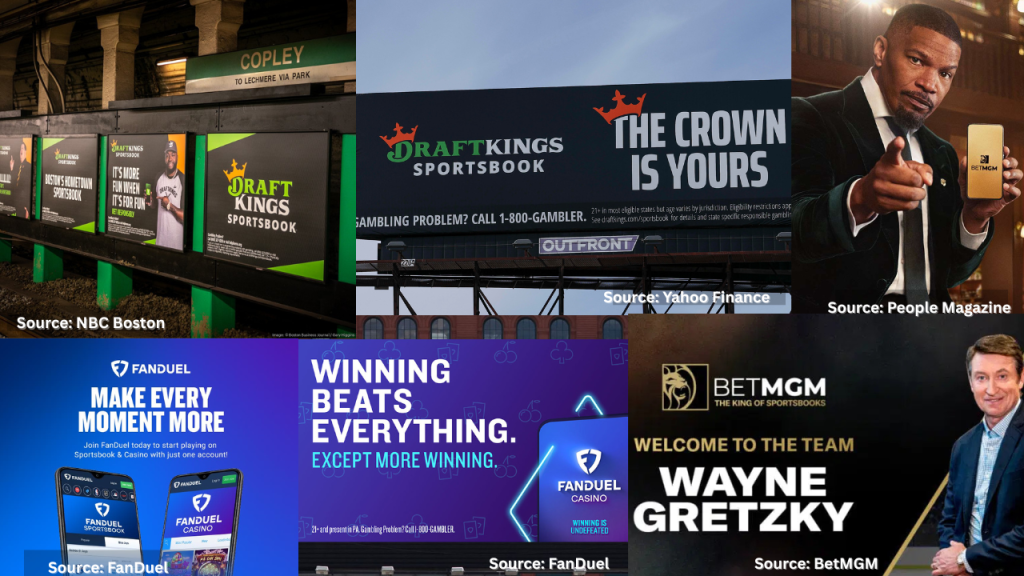
The marketing for online sportsbooks looks to acquire customers as soon as they are legal. Acquiring users is the main priority for the top three sportsbooks: DraftKings, FanDuel and BetMGM.
With 40% of market share, FanDuel spends over a billion dollars on marketing to acquire customers. From promotions to targeted ads, FanDuel employs strategic tactics to attract and retain customers. Turn on any sports broadcast and you will see an ad for an online sports betting platform. Fans are constantly reminded that they can bet on live sports. From player props to spreads, viewers are often betting multiple times on the games they watch, or even other games going on.
Katie Butler, a manager of acquisition and investment strategy, shared insight on FanDuel’s acquisition and marketing efforts.
“We do have that base of customers between 18 to 21 that are using fantasy, waiting literally for their 21st birthday to move over [to betting],” Butler said. “So even just sending them emails, push notifications, maybe some generosity. And by that I mean a promotion basically to cross sell them over to a sports book.”
Butler explained that when creating marketing strategies and campaigns, they keep the responsible gaming effort at the top of mind. This effort aims to build a better and safer gambling culture in the U.S. There are certain rules and regulations that FanDuel has to follow when advertising.
“Customers that have never signed up with us. I wouldn’t say we necessarily target a 21-year-old audience, that’s a little bit outside of our responsible gaming effort,” Butler said.
DraftKings, one of FanDuels biggest competitors, approaches advertising differently. All across Boston, DraftKings has advertisements, especially on the college campuses.
With 36 colleges and universities in Boston, DraftKings understands the demographic they are advertising to, pushing young adults to bet.
FanDuel and DraftKings hold about 80% of the current betting market. However, that market does not include all 50 states. Right now, 38 states have legalized online sports betting. Throughout his time in college, Zashin has watched his peers switch from off-site, illegal books to popular apps like FanDuel and DraftKings. Once the only way to bet, off-site betting books are still a prevalent way to place on sports. Especially since sports betting apps are not legal in large states like California and Texas.
Illegal online sports gambling books act just as a legal sportsbook; oftentimes, they give more generosity and free play because they are competing with large books like FanDuel and DraftKings. Out of 28 college-aged students who were asked about where they bet, seven of them said they use an illegal sportsbook.
Zashin and Chase both agreed that if you are going to engage in sports betting, it’s better to do it on a regulated site. However, the prevalence of illegal sportsbooks means there is a large population of gamblers who do not live in states that have legalized online sports betting. Illegal sportsbooks are dangerous for young gamblers because they do not have to follow any of the responsible gaming efforts, policies and laws. Although illegal sportsbooks remain socially unacceptable, there has been a significant shift toward greater acceptance of betting culture.
Since the legalization of online sports betting in 2018, the rhetoric and culture around online sports betting has shifted from a taboo topic to a welcomed topic within sports media. In 2017, if there was any mention of sports betting on live television, your job was at risk. Now, there are shows dedicated to sports betting and games, with dedicated segments of what the spread is and how Vegas does the odds on games. This positive rhetoric only reinforces to college-aged individuals that it’s okay to frequently bet. The sports media coverage around betting encourages people to affiliate online sports betting with live sporting events.
If you go on Twitter during a live game, you will be flooded with people giving live betting props. Betting is now immersed in the sports media culture. Betting culture is how journalist and podcaster Dan Katz, also known as Big Cat, continues to engage his audience. The podcaster went on a 16-0 betting streak that captivated followers and encouraged them to join his winning picks.
Big Cat is among the many sports media personalities who have fully embraced sports betting, weaving it into his content while also collaborating with sports betting apps on his popular podcast, Pardon My Take. Big Cat’s betting streak is the prime example of how the main engagement for sports enthusiasts has shifted from the game on television to the game of betting.This transformation has sparked a new narrative surrounding sports, reshaping how sports media professionals discuss and predict games to fans and viewers.
Sports teams are now investing in betting. Over seven sportsbooks have opened in or within the area of a pro sports venue. Prominent sportsbooks, like FanDuel, have launched a sportsbook at Footprint Center in Phoenix, while DraftKings opened a retail sportsbook at Wrigley Field.The backing of online sports betting by professional sports teams and leagues is driving the growing trend of integrating betting into Gen Z’s live sports experience.
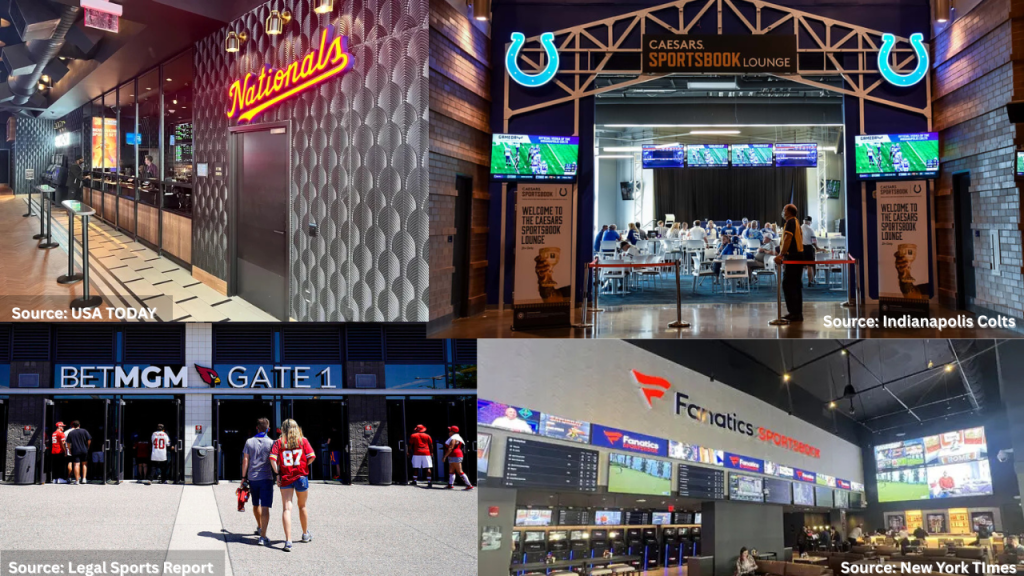
In order to place a bet on a big event 30 years ago, you had to be in Vegas. But today, we live in a society where our phone feeds the addiction.
Even though betting is viewed by society as a vice, regular sports bettors often don’t perceive it negatively because of the benefits they see in it.
“I do think that it’s a bit of a dichotomy, because it also is allowing people to tap into sports and watch teams that they wouldn’t beforehand,” Chase said. “So it’s kind of hard to really say that it’s strictly negative, because you are getting much more of a variety of teams and sports by tuning into games that you wouldn’t know previously, but definitely changes the reason why you’re watching.”
Online sports betting has changed the way college-aged students watch sports, in particular men. Watching the Masters, there were screams for Rory McIlroy to lose, not because they liked Justin Rose or his efforts to come back, but because they placed a high-odds bet on him.
Yes, maybe they would not have turned on the Masters to watch it if they had not bet on it, but are they tuning in for the right reasons? These questions will plague Gen Z for the coming years as they continue to engage with sports in a new way. Sports fans like Chase will continue to engage with sports alongside betting, as the two are becoming increasingly intertwined
“I bet around four times a week, but I only limit myself when I lose money. If I am up that week I will keep placing bets on games I am watching.”
How Sports Betting Has Swept College Students Attention