Muneera went 42 years without her ammi, her mom. They had spent just four short years together before being torn apart.
Her mother seemed to be a forgotten secret kept by the family, alongside many others. They reunited just twice, and by then, Muneera was an adult and had children and grandchildren of her own. Everyone in the family has a different version of the story to tell.
In some ways, this is also my story. A long-lost tale of my grandmother and great-grandmother, straddling two countries undergoing partition, revolution, and historic change. I set out to tell this story to preserve a part of my history and heritage. To uncover the pain and injustices these women endured but never spoke about.
Over the last few months, I have traveled across California and the United States, corresponded with family members for the first time, battled against fading memories, and communicated through language barriers to uncover the truth. Much of it has been incredibly emotional, with most phone calls and conversations pausing for tears and reflection.
The preservation of Brown ancestry and history is not as common or accessible as it is for families of European descent. There was little to nothing online about my family or our history, despite using services such as Ancestry.com and searching through online archives. I grew up believing that we simply didn’t have this knowledge in my family; that dates, family trees, and key details were not preserved during that time or in that part of the world. The consequence of not knowing one’s own history and family stories is a challenge many South Asians and Middle Easterners face, partly due to the conflicts and lingering effects of colonialism that these regions have experienced.
But using the journalism training I’ve learned in college, I finally uncovered my grandmother’s story. This has been a childhood dream of mine, especially after my grandmother passed away in 2013.
Prepared with the millions of questions I wish I could have asked her, I turned to her only sister, who shared both parents out of nine total siblings, and to family members I have never met. My mission: to find out what happened to my great-grandmother and why she went most of her life without knowing her daughters.
Origins
My great-grandfather, Atta Mohammad Goheer, was the youngest of four sons from a wealthy Muslim family living in pre-partition Jalandhar, a city in the north Indian state of Punjab. His father was the headmaster of a local village school, and his Sikh students aided and protected him during his escape to Pakistan once the partition violence began.
Atta Mohammad went on to attend university and graduated with a degree in civil engineering. After getting married and having his first three children, he was recruited by the Anglo-Iranian Oil Company. During this time, the British desired oil and discovered a reserve in the Aghajari region of Iran. With their control of India, the British brought Indians with them for the oil exploration and extraction.


After spending years working up the ranks, Atta Mohammad eventually met and married my great-grandmother in Iran, making her his second wife. My side of the family knew very little about this time or how they met. After getting in touch with a distant Iranian relative, I finally learned the story.
My great-grandmother, Shahzadeh, was raised in a community of oil company laborers. Unlike Atta Mohammad, who lived in a modern house built by the company, Iranian workers and their families lived in a tent camp on the premises. With no high school in Aghajari, Shahzadeh was unable to continue her education after sixth grade.
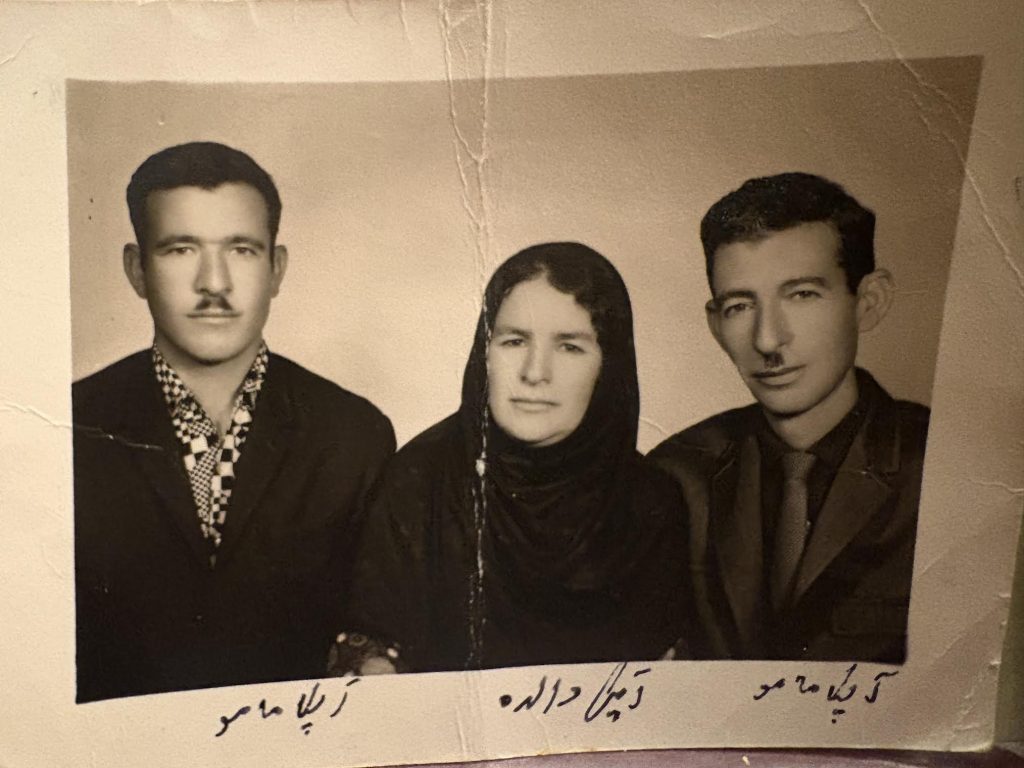
According to Mohammad Hossein Khedri, my grandmother’s Iranian nephew, Shahzadeh first noticed Atta Mohammad’s gaze while shopping at a market with her mother. She was 13.
“She tried to ignore him, but wherever she went in the busy market, she felt his presence. As they reached home, she glanced back and saw him standing at a distance, still looking at her. The thought of him haunted her mind, making her restless and uneasy,” Khedri said.
This occurred repeatedly, yet over time, she grew fond of him. Within months, Atta Mohammad proposed to her through his Iranian friends. After gaining Shahzadeh’s family’s approval, he had to bribe the civil registry officer to alter her age so they could legally get married. Despite having a wife and children in Pakistan, they became officially married. This was not uncommon for the time or in either culture.
After enduring a difficult life with her family, Shahzadeh felt like her dreams were coming true. They lived in Ahvaz, Iran, and were soon parents of two daughters: Nazir and my grandmother, Muneera.
A year after my grandmother’s birth, in 1947, India gained independence, and Pakistan was formed. Many Muslims, including Atta Mohammad’s family, migrated to the new country. In 1951, Mohammad Mosaddegh nationalized Iran’s oil industry, and the British were expelled from the country.
Around this time, Atta Mohammad’s first wife, Aisha, and their children moved to Iran. Shahzadeh was closer in age to Atta Mohammad’s eldest children than to him or his first wife. Although there are varying stories, many family members have said that Aisha was unhappy about her husband’s second marriage and mistreated Shahzadeh when they lived together. My mom remembers hearing stories about Shahzadeh being locked in rooms and kept from her daughters.
Eventually, Atta Mohammad succumbed to the pressure, granting Aisha’s wishes and divorcing Shahzadeh. My grandmother and her sister, who were around four and six years old, were taken away from their mother.
“They just vanished,” is how my grandmother’s brother-in-law, Ihsan, describes it today. “He divorced her, and he did not tell their mother that ‘I’m taking the girls away and I’m leaving for Pakistan.’ So he took them and went to the airport and boarded the plane, and she did not know that her daughters were gone.”
Later in life, my grandmother and her sister learned that their father had asked their mother if she wanted to keep her daughters or trade them for jewelry. Even though she said she wanted her daughters, he ultimately took Nazir and Muneera and disappeared without a word.
“He did not even try to communicate with her about her daughters, and he kept quiet, and she did not have any resources to come to Pakistan. She did not know where he was living in Pakistan. She had no connection. She was left alone. She was abandoned,” Ihsan said.
Stripped of their mother, home, and language, they arrived in Pakistan, and their mother was left helpless and unsure if she would ever see her daughters again.


Sheikhupura
When my grandmother and her sister arrived in Sheikhupura, Pakistan, to live among their half-siblings, stepmother, and father’s side of the family, they had to adjust to their new reality as young girls.
After getting married, Nazir confided in her husband that they “felt strange because they could not communicate with anyone. They could only speak Farsi, and everyone was a stranger.”
Nazir later learned her father dealt with a lot of guilt over what he had done to their mother.
“My relatives, all of them, told me he was always crying and would say, ‘Why does she live there, and both her daughters came with me,’” she said.
Nazir and Muneera gradually adapted, slowly losing their native language as they learned Urdu and Punjabi. They held onto the faint memories of their mother, and their family expanded to a total of 10 children, living on a large property together.
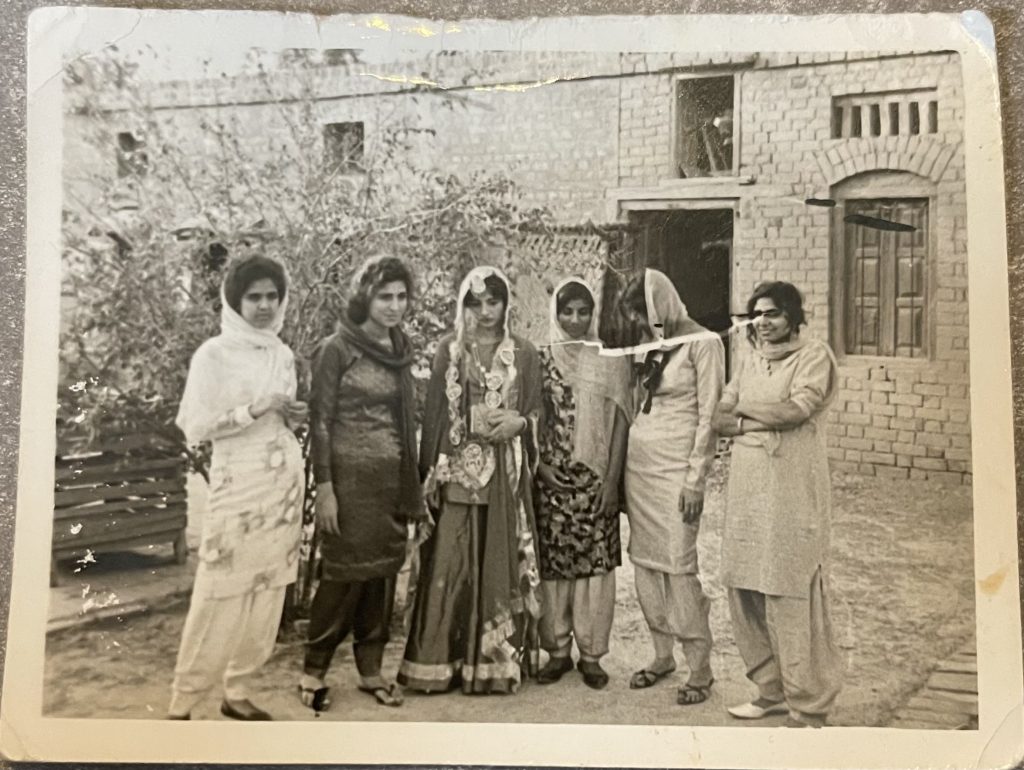
This is where they spent their childhood and young adult lives. The house was always described to me as a magical compound — a U-shaped structure with Atta Mohammad’s family on one side and his brother’s on the other. In the center of the structure was an old brick courtyard where all the siblings and cousins would play amongst nature and their animals.

“They would laugh and remember stories about how they put on plays and how they used to do poetry, and how they used to sing songs. These cousins would all get together in that courtyard, and they’d be up all night,” my aunt recollected from her mother’s stories about the house.
Their childhood sounded relatively happy in those days, until their father died when my grandmother was in third grade. He was only 49. The way my family tells it, he was murdered, but the reasons vary depending on who you ask.
When my great-grandfather returned from Iran in 1950, he was selected to act as one of the town’s elders in a judge-like role. At the time, there were no courts, so these elders would handle many village and local matters.
Everyone in my family agrees that someone came to their home in Sheikhupura and bludgeoned Atta Mohammad to death over a decision he made. Some family members say it was over a land dispute, but others contend that is just what the family said publicly, and the real story is much different.
According to my uncle, my great-grandfather decided to confine a young man who had assaulted a woman. The man’s father was upset that his son was facing these consequences and decided to kill the judge for his role.
I went in search of the details of this story, but couldn’t find any archives or reporting on the incident.
After his death, the family was plagued with financial issues. Now widowed with 10 children, Aisha was left to live with the choices made by her eldest son and her brother-in-laws. According to family members, they gravely mishandled and embezzled Atta Mohammad’s finances. The eldest son and his wife also destroyed Atta Mohammad’s will and my grandmother’s and her sister’s Iranian passports. They never saw any of the money or land that their father had set aside for them.
In Pakistan, it is common for daughters to be cheated out of their inheritance, despite Islamic law, which protects women’s rights to inheritance and property. In the case of Muneera and Nazir, who were young girls and half-siblings, certain family members treated them differently. Even as adults, when their childhood home was sold, they never received the money owed to them, unlike their brothers and sisters.
Different sides of the family have varying opinions about what happened from this point on. Although my grandmother never spoke about being treated poorly, I have learned from others what it was like to be raised by her stepmother after her father was murdered. They say the girls faced unfair punishments, different treatment, and went to bed without dinner some nights. One of the aunts who lived with them would sneak them treats because she felt bad about their situation.
“She did not like both of us, me and Muneera. It was a hard time, this time. My father had died, and my mom is my stepmom,” Nazir said.
In some ways, the Iranian and Pakistani cultures were similar, but in others, they were starkly different. In Pakistani culture, the concept of multiple marriages was frowned upon, and Nazir and Muneera, coming from another wife, were treated according to many social norms.
After their dad’s passing, their mother was never spoken about. Nazir remembers when she asked her eldest brother about her mother, he said that she was dead and discouraged her from talking about it.
I remember the first time I discovered that my grandmother was raised by her stepmother when I was six. I remarked that she was like Cinderella and asked if her stepmother was evil like the story. Despite everything she experienced, my grandmother never spoke poorly of her stepmother, father, or siblings, not even to her husband or children.
“Ammi talked about her dad like he was incredible,” my mom told me in surprise one night after I shared what I had learned about her mother’s childhood.
The Journey to Reunite
After getting married, my grandmother and her sister left Pakistan to live with their husbands and start their own families. It was then, for the first time, that they felt empowered and able to express their wishes to find their mother.
“When we got married, her desire from me was that the most important thing for her was to meet her mother,” Ihsan, my great aunt’s husband, said.
His journey to find their mother began in 1969, right after their marriage. They discovered that an uncle, who worked in Iran alongside their father, had saved an address for their mother after feeling bad about the situation. After obtaining the address, Ihsan, Nazir, and my grandmother began sending letters, but the address was wrong, and they needed to find someone who could translate their Urdu to Farsi so their mother could read it.
It took almost six years, a failed plea to an Iranian ambassador, many translators, and endless searching until a letter finally reached their mother. At this point, it had been over two decades since they were taken from her.
They got their first response from their mother around 1975 and began corresponding with her. They were eager to meet each other and planned a trip for the next year. My grandmother, grandfather, and mom, who was an infant, met Ihsan and Nazir in Saudi Arabia. However, gaining a visa and booking the flights became an issue, and the trip was cancelled. Then, with the Iran-Iraq war in the 1980s, it was too unstable for them to make the trip.
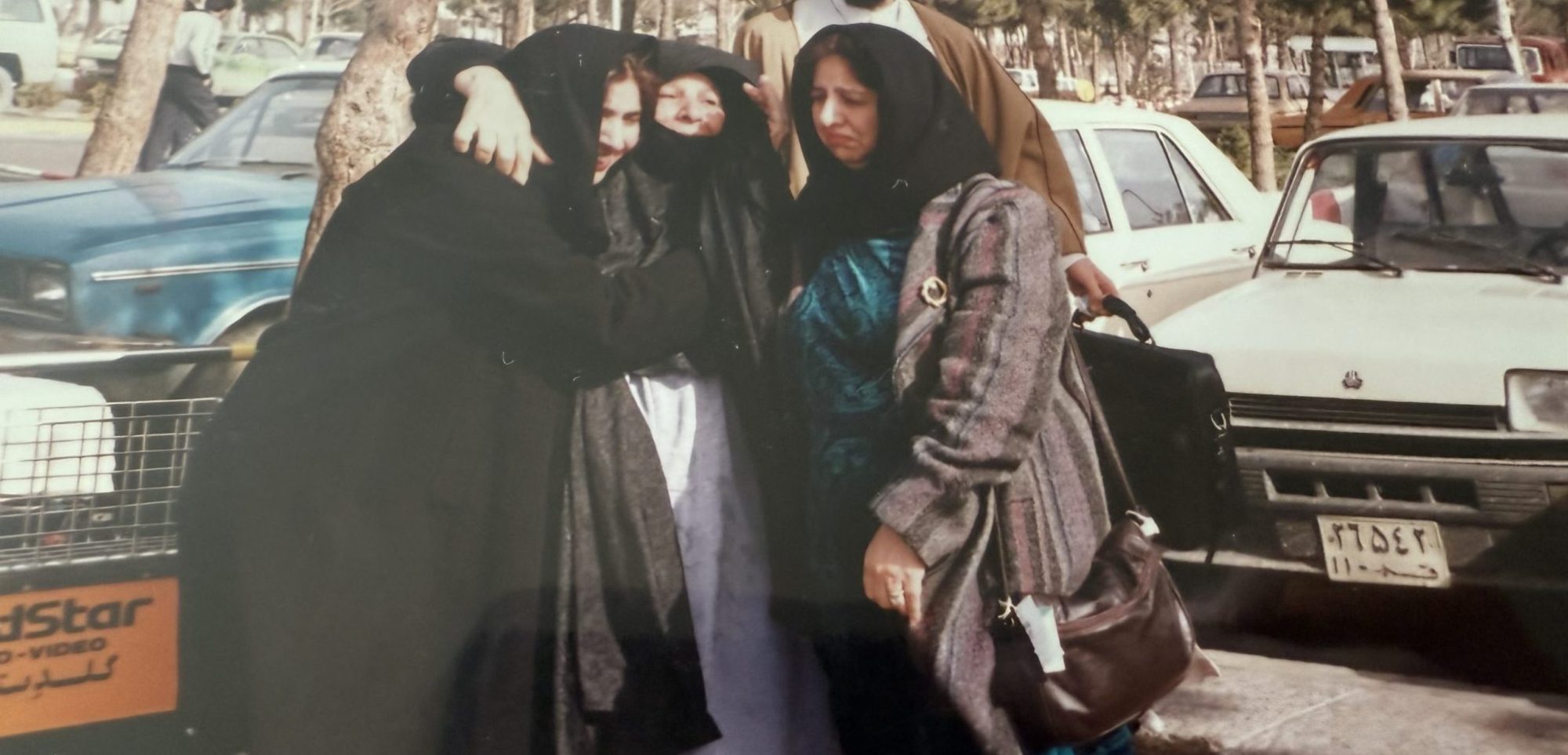
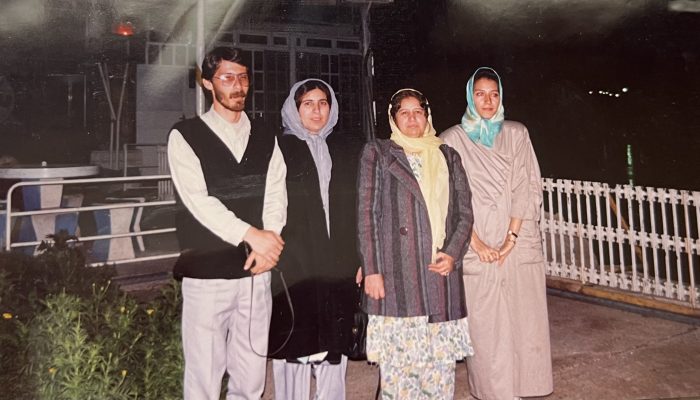
More than a decade after finding their mother and with the help of their Iranian half-brother, Muneera, Nazir and Ihsan finally obtained visas and planned a trip. In 1992, 42 years after they had last seen their mother, they traveled to Iran. Their half-brother picked them up in Tehran and took them to Qom, where he lived. From there, they continued their journey by train to Ahvaz, the city where their mother and the rest of the family resided.
 Muneera, Ihsan, and Nazir (left to right) on their journey to Iran in 1992. (Photo from family archives)


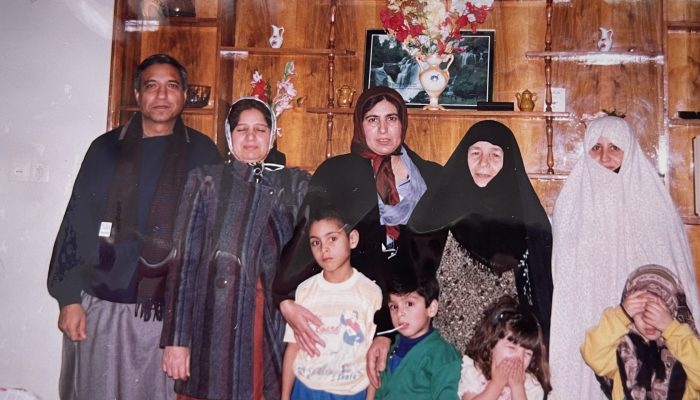
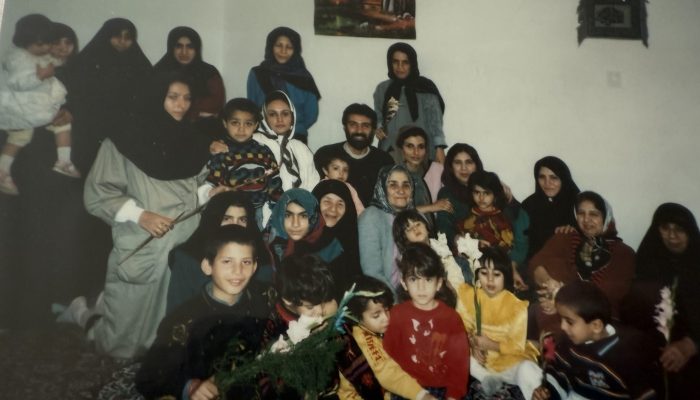


“When we arrived, there were maybe 50 people of different ages to receive us,” Ihsan described as they got off the train to relatives and people who knew their father from his time in Iran. He said they were greeted with overwhelming joy and love, and the sisters were treated as family by all, not half-siblings.
From there, they went to their mother’s house and met her for the first time after more than 40 years.
“I can’t explain … She hugged us so much. She said I miss this part when you want to swing. I miss all of these parts when you were a baby,” Nazir told me, with tears in her eyes as she recalled those first moments together.
Despite the language barrier between the mother and her two daughters, the three of them were inseparable. Nazir remembers how happy her mother was when Nazir asked her to sleep in the same bed. The three of them, now grown with their elderly mother, cuddled every night for the rest of the trip.
“When they reunited, the Iranian family had a porch swing or something, and their mom was an elderly lady at that point. She kept insisting that she wanted to put Muneera and Nazir in the porch swing and she wanted to swing them in there, like when they were kids,” my aunt recalled, a moment that has stayed with her ever since she heard about it more than 30 years ago. It took her a few moments to relay this story over the phone, interspersed with long pauses and tears as she composed herself to express the words.
Shahzadeh had remarried twice in the years after losing her daughters. Family said she had faced domestic abuse in her second marriage, and after separating, she settled down with her third husband, Eliyar, and had four sons and a daughter. Although her life continued, she never forgot about her long-lost daughters.
“She did not forget anything, and although she could not communicate with us directly, indirectly, our interpreter tried to explain to us that she was very upset; she used to cry whenever she thought about them. She used to cry for them,” Ihsan said.
Despite decades passing, the pain of what she experienced and how she was treated was still prominent for Shahzadeh. Nazir remembers asking for forgiveness on behalf of her stepmother for how she treated her, but her mother said she could not forgive how Aisha acted so long ago.
After losing hope of ever seeing her daughters before she passed, Shahzadeh’s reunion with her two baby girls allowed her to live the rest of her life finally at peace. The reunion also motivated her to find her other daughter, Parvin, who also had been taken from her as a baby. Through a series of connections, she ultimately found and reunited with Parvin shortly before her passing in 2013, just a few months before my grandmother passed away. Her family says she left a legacy of resilience and strength.
Finding Our Story
While my grandmother never openly expressed her pain about her childhood, the loss of both of her parents at a young age deeply impacted her. My mom recalls her considering herself an orphan and having a strong desire to help other orphans in Pakistan.
Her sister, Nazir, was her haven, the one person who could uniquely and fully understand the loss and joy she experienced being taken from and then reuniting with their mother.
I went on this journey to be closer to my grandmother, now that she is gone, and to learn more about the resilience that women spanning back generations in my family have displayed. It was therapeutic and emotional, learning alongside my mom about what these women experienced in silence for decades.
After years, I hope that my family will now know their stories. Shahzadeh, Nazir, and Muneera. Now we can honor all they went through and begin to preserve our family’s story to pass on to our children and grandchildren, so that they know more than we did. Now, my younger siblings who never got to know our grandmother before she passed will have a small piece of her to carry forward.
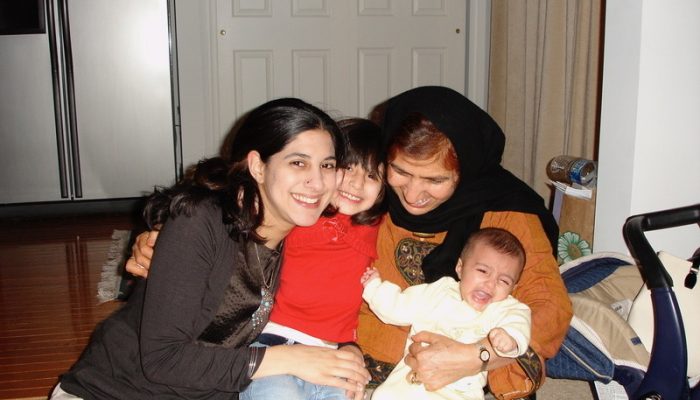
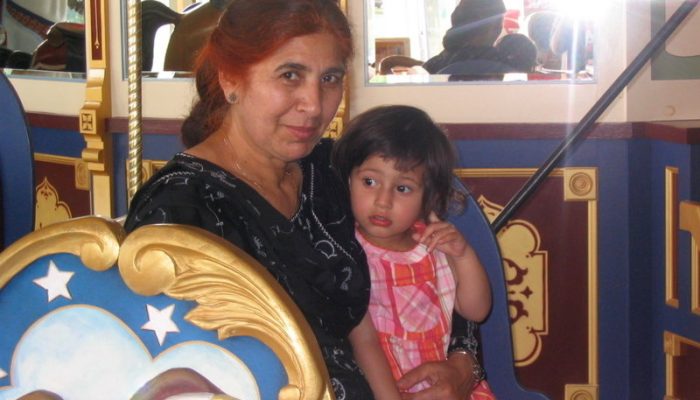
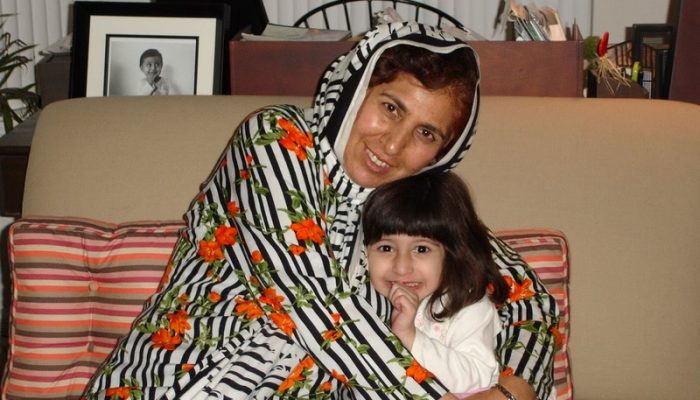 My grandmother and I in 2005. (Photo from family archives)